
As a researcher in the field of photovoltaic technologies, I have witnessed the rapid evolution of thin film solar panels, particularly those based on copper indium gallium selenide (CIGS). The advent of flexible CIGS thin film solar panels has opened new horizons for renewable energy applications, from aerospace to wearable devices. In this article, I will delve into the technological advancements, current status, and future prospects of these innovative thin film solar panels, emphasizing key aspects such as substrate choices, deposition techniques, and industrialization challenges. Throughout, I will use tables and formulas to summarize critical data and principles, ensuring a thorough exploration of the topic. The flexibility of these thin film solar panels is not just a mechanical property but a gateway to ubiquitous solar energy harvesting.
The journey of flexible CIGS thin film solar panels began with the recognition that traditional crystalline silicon panels, while efficient, lack the adaptability required for emerging applications. CIGS, as a second-generation thin film solar panel material, offers a high efficiency potential, with record efficiencies exceeding 23% on rigid substrates. However, the true breakthrough lies in transferring this technology to flexible substrates, enabling lightweight, bendable, and portable thin film solar panels. From my experience, the core advantage of CIGS thin film solar panels is their tunable bandgap and excellent stability, which, when combined with flexibility, can revolutionize how we integrate solar power into daily life. For instance, imagine thin film solar panels seamlessly embedded in backpacks or draped over vehicles—this is the promise of flexible CIGS technology.
To understand the structure of a flexible CIGS thin film solar panel, let’s consider a typical device stack. It starts with a flexible substrate, such as stainless steel or polyimide, followed by a molybdenum (Mo) back electrode, a p-type CIGS absorber layer, an n-type cadmium sulfide (CdS) buffer layer, a high-resistivity intrinsic zinc oxide (i-ZnO) layer, and a transparent conductive oxide (TCO) layer like aluminum-doped zinc oxide (ZnO:Al). Finally, a front grid electrode and an anti-reflection coating are added. This configuration allows photons to enter from the top, generate electron-hole pairs in the CIGS absorber, and be collected as photocurrent. The efficiency of such a thin film solar panel depends heavily on the quality of each layer and their interfaces. In mathematical terms, the photocurrent density \( J_{ph} \) can be expressed as:
$$ J_{ph} = q \int G(x) \, dx $$
where \( q \) is the elementary charge, \( G(x) \) is the generation rate of electron-hole pairs as a function of depth \( x \), and the integral accounts for absorption across the thin film solar panel. The overall conversion efficiency \( \eta \) is given by:
$$ \eta = \frac{J_{sc} \times V_{oc} \times FF}{P_{in}} \times 100\% $$
Here, \( J_{sc} \) is the short-circuit current density, \( V_{oc} \) is the open-circuit voltage, \( FF \) is the fill factor, and \( P_{in} \) is the incident power density. For flexible CIGS thin film solar panels, optimizing these parameters under bending stresses is a key research focus.
The choice of flexible substrate is paramount in developing high-performance thin film solar panels. Substrates must exhibit thermal stability, matched thermal expansion coefficients, chemical inertness, and cost-effectiveness. Over the years, various substrates have been explored, each with its pros and cons. Below is a table summarizing the research progress on different flexible substrates for CIGS thin film solar panels, based on laboratory efficiencies and key attributes.
| Substrate Type | Key Features | Laboratory Efficiency (%) | Challenges |
|---|---|---|---|
| Stainless Steel | High thermal stability, low cost, but requires barrier layers to prevent Fe diffusion. | 19.4 | Impurity diffusion, stress management. |
| Polyimide (PI) | Lightweight, high flexibility, but limited to temperatures below 450°C. | 20.8 | Low-temperature deposition, alkali doping. |
| Titanium Foil | Good thermal match, but expensive. | ~15 | Cost, scalability. |
| Aluminum Foil | Lightweight, but prone to diffusion and thermal mismatch. | ~10 | Barrier layer integration. |
From my perspective, stainless steel and polyimide are the most promising for industrialization. Stainless steel offers robustness and ease of handling, while polyimide enables ultra-flexible thin film solar panels ideal for wearable tech. The efficiency values in the table highlight that flexible CIGS thin film solar panels can rival rigid ones, with polyimide substrates achieving over 20% efficiency through advanced alkali post-deposition treatments. This progress underscores the potential of thin film solar panels to compete in niche markets where flexibility is non-negotiable.
In the realm of flexible CIGS thin film solar panels, several关键技术 demand attention. First, alkali metal doping, particularly with sodium (Na), is crucial for enhancing electronic properties. Na incorporation improves the open-circuit voltage and fill factor by passivating defects and modifying grain boundaries. The doping process can be modeled using diffusion equations. For instance, the concentration of Na in the CIGS layer \( C_{Na}(x,t) \) over time \( t \) and depth \( x \) can be described by Fick’s second law:
$$ \frac{\partial C_{Na}}{\partial t} = D \frac{\partial^2 C_{Na}}{\partial x^2} $$
where \( D \) is the diffusion coefficient, which depends on temperature and substrate material. In practice, Na is often introduced via NaF precursors or post-deposition treatments. For flexible thin film solar panels, controlling this diffusion is tricky due to substrate constraints, but alkali post-treatment has proven effective, as seen in record-efficiency devices.
Second, low-temperature deposition of the CIGS absorber is essential for plastic substrates like polyimide, which degrade above 450°C. Low-temperature growth often results in smaller grains and higher defect densities, reducing carrier lifetimes. To mitigate this, techniques such as radio-frequency (RF) plasma cracking of selenium radicals have been developed. The activation energy \( E_a \) for CIGS crystallization can be lowered by using reactive species, as described by the Arrhenius equation:
$$ k = A e^{-E_a / (RT)} $$
where \( k \) is the reaction rate constant, \( A \) is the pre-exponential factor, \( R \) is the gas constant, and \( T \) is the temperature. By enhancing selenium reactivity, we can achieve high-quality CIGS films at reduced temperatures, paving the way for efficient thin film solar panels on heat-sensitive substrates. Additionally, bandgap grading in the absorber layer, controlled by gallium distribution, optimizes carrier collection. The bandgap \( E_g \) of CIGS varies with gallium content \( x \) according to:
$$ E_g(x) = (1-x)E_{g,CuInSe2} + xE_{g,CuGaSe2} – bx(1-x) $$
where \( b \) is the bowing parameter. Actively tuning this gradient during deposition boosts the efficiency of flexible thin film solar panels.
Third, module fabrication on flexible substrates involves unique challenges, such as monolithic interconnection via laser scribing. The P1, P2, and P3 scribes must be precise to avoid damaging underlying layers. For metal foils, laser parameters like wavelength and pulse duration must be optimized to cut through the Mo back electrode without harming the substrate. The dead area between cells, which reduces active area, can be minimized by advanced scribing techniques. The power output of a thin film solar panel module \( P_{module} \) is given by:
$$ P_{module} = N_{cells} \times \eta_{cell} \times A_{cell} \times P_{in} \times (1 – L_{dead}) $$
where \( N_{cells} \) is the number of series-connected cells, \( \eta_{cell} \) is the cell efficiency, \( A_{cell} \) is the cell area, and \( L_{dead} \) is the fractional dead area loss. For flexible thin film solar panels, reducing \( L_{dead} \) through innovative interconnection schemes is vital for high module efficiencies.
The industrialization of flexible CIGS thin film solar panels has gained momentum, with several companies pursuing different substrate routes. Below is a table comparing the产业化 status of key players, focusing on efficiency, thickness, and production capacity. This data reflects the current landscape for thin film solar panels aimed at mobile energy markets.
| Company/Initiative | Substrate | Lab Efficiency (%) | Module Efficiency (%) | Thickness (mm) | Annual Capacity (MW) |
|---|---|---|---|---|---|
| Company A (Stainless Steel Route) | Stainless Steel | 19.4 | ~12 | 2.5 | 50 |
| Company B (Plastic Route) | Polyimide | 16.5 | ~10 | 0.3-1.0 | 30 |
| Company C (Hybrid Approach) | Various | ~18 | ~11 | 1.0-2.0 | 15 |
From my viewpoint, the stainless steel route offers higher efficiency but sacrifices flexibility and weight, while the plastic route yields lighter, more bendable thin film solar panels at slightly lower efficiencies. The trade-offs highlight the need for continued innovation to bridge this gap. In practice, roll-to-roll (R2R) manufacturing is key to scaling up production of flexible thin film solar panels. R2R processes can significantly reduce costs by enabling continuous deposition on long substrate rolls. However, integrating high-temperature evaporation sources and precise alignment systems into R2R lines remains a technical hurdle. As a researcher, I believe that advancements in automation and material science will drive down the cost per watt for these thin film solar panels, making them competitive in broader markets.
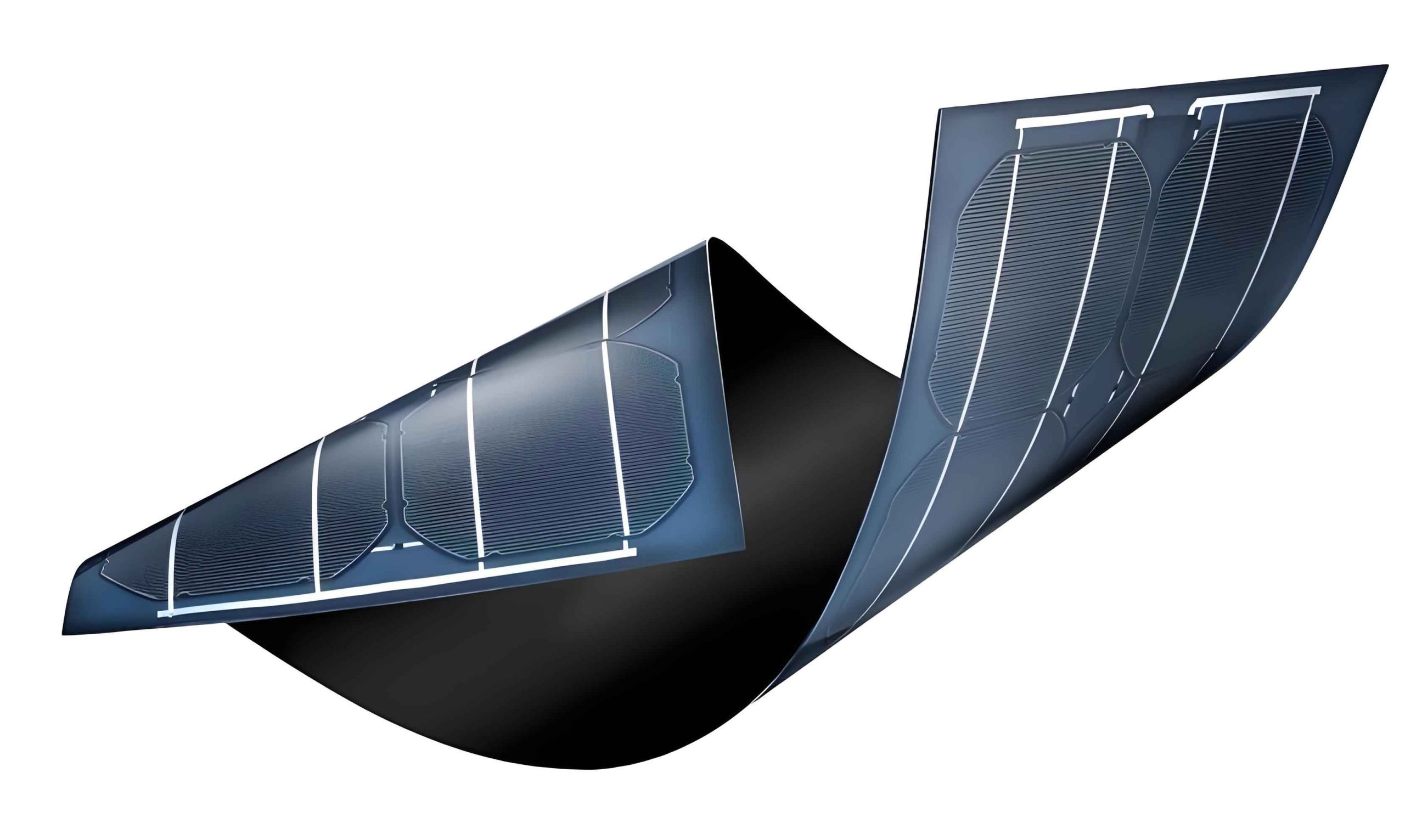
Looking ahead, several critical issues must be addressed to propel flexible CIGS thin film solar panels toward widespread adoption. First, developing low-temperature deposition techniques that maintain high absorber quality is essential. This involves not only optimizing alkali doping but also exploring novel precursors or plasma-assisted methods. Second, new flexible substrate materials with higher thermal stability and lower cost are needed. For instance, ceramic-polymer composites or advanced metallized foils could offer better performance. Third, integrating entire production lines for R2R fabrication requires tailored equipment, such as linear evaporation sources and non-contact scribing tools. These challenges underscore the interdisciplinary nature of thin film solar panel research, combining materials engineering, physics, and mechanical design.
In conclusion, flexible CIGS thin film solar panels represent a transformative technology with immense potential. From my experience, the journey from lab-scale devices to commercial products has been fueled by breakthroughs in alkali post-treatment, bandgap engineering, and substrate innovation. The future of thin film solar panels lies in overcoming the remaining technical barriers and leveraging economies of scale. As we advance, I envision a world where thin film solar panels are integral to smart fabrics, portable chargers, and even building-integrated photovoltaics. The flexibility of these thin film solar panels is not merely a feature but a catalyst for sustainable energy solutions. By continuing to refine the technology and address industrialization challenges, we can unlock the full promise of thin film solar panels, making solar power more accessible and versatile than ever before.
To quantify the progress, let’s consider some performance metrics. The efficiency of a thin film solar panel can be analyzed using the diode equation:
$$ J = J_{ph} – J_0 \left( e^{\frac{qV}{nkT}} – 1 \right) $$
where \( J \) is the current density, \( J_0 \) is the reverse saturation current density, \( n \) is the ideality factor, \( V \) is the voltage, \( k \) is Boltzmann’s constant, and \( T \) is the temperature. For flexible CIGS thin film solar panels, reducing \( J_0 \) through defect passivation and improving \( J_{ph} \) via light trapping are ongoing efforts. Additionally, the bending durability of thin film solar panels can be assessed by measuring efficiency retention after cyclic flexing. Empirical data suggest that thin film solar panels on polyimide retain over 90% of their initial efficiency after thousands of bends, making them suitable for dynamic applications.
In summary, the development of flexible CIGS thin film solar panels is a testament to the ingenuity of photovoltaic research. Through collaborative efforts across academia and industry, these thin film solar panels are poised to redefine energy harvesting. As a researcher, I am optimistic that with continued focus on key technologies and market-driven innovation, flexible thin film solar panels will soon become a mainstream choice for clean, portable power. The journey ahead is challenging but exhilarating, and I look forward to contributing to the next generation of thin film solar panels that are efficient, durable, and seamlessly integrated into our lives.