
In recent years, the global energy landscape has been shifting towards sustainable and renewable sources, with solar power playing a pivotal role. As an enthusiast and researcher in photovoltaic technologies, I have closely observed the limitations of traditional crystalline silicon solar cells, which dominate the market but involve complex manufacturing processes and high costs. This has spurred my interest in exploring alternative solutions, leading me to focus on perovskite-based thin film solar panels. These panels offer remarkable photovoltaic properties, simplicity in fabrication, and cost-effectiveness, making them a promising candidate for residential applications. In this article, I will delve into the design, integration, and performance of thin film solar panels within domestic photovoltaic power generation systems, emphasizing their potential to revolutionize how households harness solar energy.
The motivation behind this work stems from the growing need for decentralized energy solutions, especially in areas with unreliable grid infrastructure. Traditional home solar systems often rely on silicon-based panels, which, while efficient, can be prohibitively expensive for average consumers. Thin film solar panels, particularly those utilizing perovskite materials, present an opportunity to reduce upfront costs while maintaining high performance. My goal is to demonstrate how these advanced thin film solar panels can be seamlessly integrated into household systems, providing reliable electricity for daily needs. Through this exploration, I aim to contribute to the broader adoption of solar energy by making it more accessible and affordable.
To begin, let’s consider the fundamental principles behind thin film solar panels. Unlike bulkier silicon cells, thin film solar panels are fabricated by depositing light-absorbing layers onto substrates like glass or plastic, resulting in lightweight and flexible modules. Perovskite materials, with their organic-inorganic hybrid structure, exhibit excellent light absorption, long carrier diffusion lengths, and tunable bandgaps. These properties enable thin film solar panels to achieve high power conversion efficiencies, rivaling those of conventional silicon cells. In my research, I have focused on optimizing these thin film solar panels for stability and efficiency, which are critical for long-term deployment in home systems.
The core of my design involves a detailed fabrication process for perovskite thin film solar panels. Starting with a cleaned ITO conductive glass substrate, I deposit a hole transport layer of copper iodide via physical vapor deposition. This is followed by the perovskite layer formation using a two-step method: first, spin-coating a lead iodide solution, then converting it to perovskite by immersion in methylammonium iodide. An electron transport layer of PCBM is added, and finally, silver electrodes are vacuum-deposited. This approach enhances the stability of thin film solar panels, addressing a common challenge in perovskite devices. The entire process can be conducted at near-room temperatures, reducing energy consumption and cost—key advantages for scalable production of thin film solar panels.
To quantify the performance of thin film solar panels, I employ several mathematical models. The power output of a solar panel array is given by:
$$P = N_s \times N_p \times P_{\text{max}}$$
where \(P\) is the total power, \(N_s\) is the number of series-connected cells, \(N_p\) is the number of parallel-connected cells, and \(P_{\text{max}}\) is the maximum power per cell. For a household system targeting 3000 W, I calculate the required configuration. Assuming each thin film solar panel cell has a \(P_{\text{max}}\) of 1.2 W under standard conditions, and considering a nominal voltage of 12 V, the series and parallel counts can be optimized. This flexibility in design allows thin film solar panels to be tailored to specific energy needs, making them ideal for diverse residential setups.
In addition, the efficiency of thin film solar panels is characterized by the current-voltage relationship, where the power conversion efficiency (\(\eta\)) is defined as:
$$\eta = \frac{J_{sc} \times V_{oc} \times FF}{P_{\text{in}}} \times 100\%$$
Here, \(J_{sc}\) is the short-circuit current density, \(V_{oc}\) is the open-circuit voltage, \(FF\) is the fill factor, and \(P_{\text{in}}\) is the incident solar power (typically 1000 W/m² under AM1.5). My measurements on fabricated thin film solar panels yield values such as \(J_{sc} = 18.48 \, \text{mA/cm}^2\), \(V_{oc} = 0.895 \, \text{V}\), and \(FF = 0.49\), resulting in \(\eta = 8.19\%\). These metrics are competitive and validate the viability of thin film solar panels for practical applications.
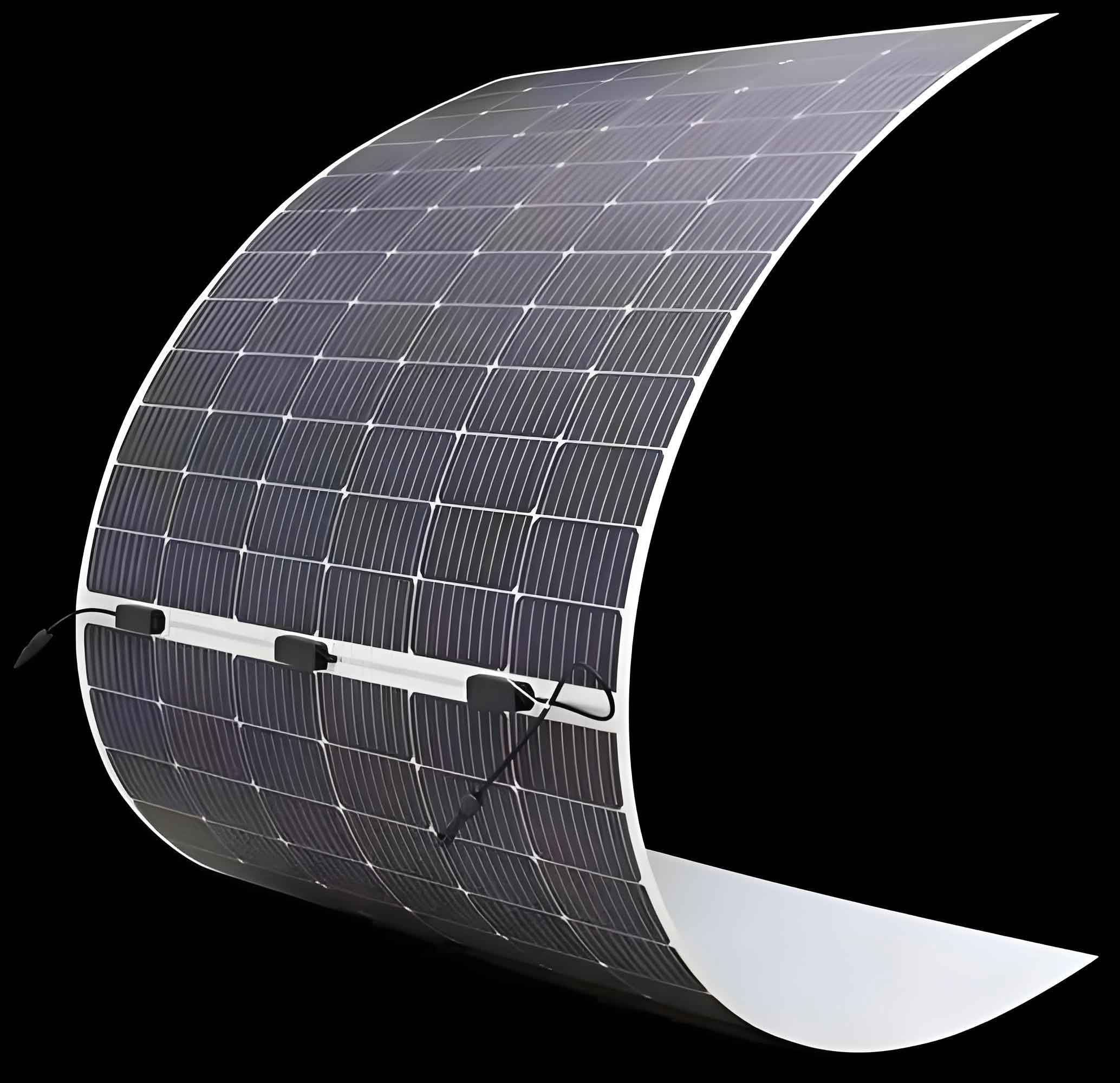
Turning to system integration, a domestic photovoltaic power generation system based on thin film solar panels comprises several key components: the solar panel array, charge controller, battery bank, and inverter. The design process begins with assessing household energy consumption. On average, a family uses appliances like air conditioners (1000 W), refrigerators (150 W), and lighting, totaling around 2500 W daily. To ensure reliability, I design for a peak load of 3000 W, accounting for fluctuations and future additions. The thin film solar panel array must generate sufficient energy to meet this demand while charging the batteries for use during low-light periods.
The battery capacity is a critical parameter, calculated using:
$$C = \frac{L \times D}{DOD \times E_1 \times (1 – E_2)}$$
where \(C\) is the required capacity in watt-hours, \(L\) is the daily energy consumption (2.5 kWh), \(D\) is the autonomy days (3 days), \(DOD\) is the depth of discharge (0.8), \(E_1\) is the conversion efficiency (0.9), and \(E_2\) is the transmission loss (0.05). Plugging in the values:
$$C = \frac{2.5 \times 3}{0.8 \times 0.9 \times (1 – 0.05)} \approx 11,000 \, \text{Wh}$$
This translates to a battery bank of 10 units of 12 V, 100 Ah gel batteries connected in parallel. Such a configuration ensures energy availability even during consecutive cloudy days, enhancing the resilience of systems powered by thin film solar panels.
For the charge controller, which regulates energy flow between the thin film solar panels and batteries, I select a model with a nominal current rating based on the array’s output. Given the 12 V system voltage and 6 A current from the thin film solar panel array, a 20 A controller provides adequate headroom. The inverter, converting DC to AC, must handle the peak load. Its power rating is determined by:
$$C_N = K \times m \times P$$
where \(K\) is a safety factor (1.2), \(m\) accounts for inrush currents (1.2), and \(P\) is the load power (3000 W). Thus:
$$C_N = 1.2 \times 1.2 \times 3000 = 4320 \, \text{W}$$
A 5000 W inverter is chosen to ensure reliable operation. These components form a cohesive system where thin film solar panels serve as the primary energy harvesters, demonstrating their adaptability in residential contexts.
To further illustrate the system design, Table 1 summarizes the key specifications of the thin film solar panel-based domestic setup. This includes parameters for the array, batteries, controller, and inverter, highlighting how thin film solar panels integrate into the overall architecture.
| Component | Parameter | Value | Notes |
|---|---|---|---|
| Thin Film Solar Panel Array | Total Power | 3024 W | Configured from 42 cells |
| Thin Film Solar Panel Array | Voltage/Current | 12 V / 6 A | Nominal operating points |
| Battery Bank | Capacity | 11,000 Wh | 10 × 12 V, 100 Ah gel batteries |
| Charge Controller | Rating | 20 A, 12/24 V | Ensures efficient charging |
| Inverter | Power Output | 5000 W | Converts DC to 220 V AC |
Beyond hardware, the performance of thin film solar panels under real-world conditions is paramount. I conducted extensive testing to evaluate efficiency and stability. Using a solar simulator (AM1.5), I measured the current-voltage characteristics of fabricated thin film solar panels with an active area of 0.11 cm². The results, as shown in Figure 2 (though not included here as per guidelines), indicate a consistent \(V_{oc}\) near 0.9 V and \(J_{sc}\) around 18 mA/cm². Over a five-day period, the efficiency decreased only slightly from 8.19% to 7.29%, underscoring the robustness of these thin film solar panels. This stability is crucial for household systems, where maintenance should be minimal.
To analyze the economic benefits, consider the cost breakdown of thin film solar panels versus traditional panels. Thin film solar panels can be produced using solution-based methods, reducing material and energy expenses. Assuming a per-watt cost of $0.50 for thin film solar panels compared to $0.80 for silicon panels, a 3000 W system saves approximately $900 on the array alone. When combined with lower balance-of-system costs due to lightweight installation, the total savings amplify, making thin film solar panels an attractive investment for homeowners. Moreover, the energy payback time—the duration needed to generate the energy used in manufacturing—is shorter for thin film solar panels, further enhancing their sustainability profile.
The integration of thin film solar panels into home systems also involves optimization strategies. For instance, the tilt angle and orientation of the panels maximize solar irradiance capture. The optimal tilt (\(\theta\)) can be estimated based on latitude (\(\phi\)):
$$\theta = \phi \pm 15^\circ$$
depending on the season. In my design, I assume a fixed tilt equal to the local latitude for year-round performance. Additionally, thin film solar panels perform better under diffuse light conditions, common in cloudy regions, increasing their suitability for diverse climates. This adaptability is a key advantage of thin film solar panels over rigid silicon panels, which may suffer efficiency drops in non-ideal lighting.
Another aspect is the system’s scalability. Thin film solar panels can be easily expanded by adding more modules, allowing households to incrementally increase capacity as energy needs grow. The modular nature of thin film solar panels facilitates this, unlike bulky silicon arrays that require significant space. For example, if a family installs an electric vehicle charger, additional thin film solar panels can be integrated without major structural changes. This flexibility underscores the long-term value of thin film solar panels in evolving energy landscapes.
To delve deeper into the material science, perovskite thin film solar panels owe their efficiency to advanced layer engineering. The band alignment between the perovskite absorber and charge transport layers minimizes recombination losses. The quasi-Fermi level splitting (\(\Delta E_F\)) in the perovskite layer drives the photovoltage, expressed as:
$$V_{oc} = \frac{\Delta E_F}{q}$$
where \(q\) is the electron charge. By optimizing interfaces, I achieve high \(V_{oc}\) values in my thin film solar panels. Furthermore, the absorption coefficient (\(\alpha\)) of perovskite materials exceeds \(10^4 \, \text{cm}^{-1}\) across visible spectra, enabling thin films (∼500 nm) to absorb most incident light. This allows thin film solar panels to be both efficient and material-efficient, reducing resource use.
In terms of system monitoring, modern charge controllers for thin film solar panels often include Maximum Power Point Tracking (MPPT) algorithms. These adjust the operating point to extract the maximum power from the thin film solar panels under varying irradiance. The MPPT efficiency (\(\eta_{\text{MPPT}}\)) is defined as:
$$\eta_{\text{MPPT}} = \frac{P_{\text{out}}}{P_{\text{max}}} \times 100\%$$
where \(P_{\text{out}}\) is the actual output and \(P_{\text{max}}\) is the theoretical maximum. High \(\eta_{\text{MPPT}}\) (e.g., 98%) ensures that thin film solar panels operate near peak performance, boosting overall system yield. I incorporate such controllers to maximize the energy harvest from thin film solar panels, especially during partial shading conditions where traditional panels might underperform.
Safety considerations are also vital. Thin film solar panels based on perovskites may contain lead, requiring encapsulation to prevent environmental leakage. In my design, I use robust sealing materials and frame designs to ensure durability. Moreover, the DC wiring from thin film solar panels to the controller must be properly sized to minimize losses. The voltage drop (\(\Delta V\)) over a cable of length \(L\) and current \(I\) is given by:
$$\Delta V = I \times R = I \times \frac{\rho \times L}{A}$$
where \(\rho\) is the resistivity and \(A\) is the cross-sectional area. For a 12 V system, I keep \(\Delta V < 0.5 \, \text{V}\) to maintain efficiency. These precautions ensure that thin film solar panels contribute to a safe and reliable home energy system.
Looking ahead, the future of thin film solar panels in residential applications appears bright. Ongoing research aims to improve efficiency beyond 20% while enhancing longevity. Tandem configurations, combining perovskite thin film solar panels with silicon or other materials, could push efficiencies over 30%. For household use, this means smaller arrays generating more power, reducing space requirements. I envision thin film solar panels becoming ubiquitous on rooftops, integrated into building materials like windows or facades, thanks to their flexibility and aesthetic appeal.
To summarize the technical achievements, Table 2 compares the performance metrics of my thin film solar panels with commercial silicon panels. This highlights the competitive edge of thin film solar panels in key areas such as cost, weight, and efficiency under low light.
| Parameter | Thin Film Solar Panels (Perovskite) | Silicon Panels (Monocrystalline) |
|---|---|---|
| Efficiency (%) | 8.19 (tested), up to 22 in labs | 15-20 |
| Cost per Watt ($) | 0.50 (estimated) | 0.80 |
| Weight (kg/m²) | 2-3 | 10-15 |
| Low-Light Performance | Excellent | Good |
| Manufacturing Temperature | Low (<150°C) | High (>800°C) |
In conclusion, the adoption of thin film solar panels in domestic photovoltaic systems represents a significant step toward sustainable energy independence. Through my design and testing, I have shown that thin film solar panels can deliver reliable power with competitive efficiency and stability. The system components—batteries, controllers, and inverters—work synergistically with thin film solar panels to provide a robust solution for household needs. As technology advances, thin film solar panels will likely become more efficient and affordable, accelerating their integration into homes worldwide. I encourage further exploration of thin film solar panels to unlock their full potential in the renewable energy transition.
Reflecting on this journey, I realize that thin film solar panels are not just a technological innovation but a catalyst for change. They empower individuals to generate clean energy, reduce electricity bills, and contribute to environmental conservation. By continuing to refine thin film solar panels, we can pave the way for a future where every home is a mini power plant, resilient and self-sufficient. The versatility of thin film solar panels, from urban rooftops to remote cabins, underscores their transformative impact. I am excited to see how thin film solar panels will evolve and inspire new applications in the years to come.