
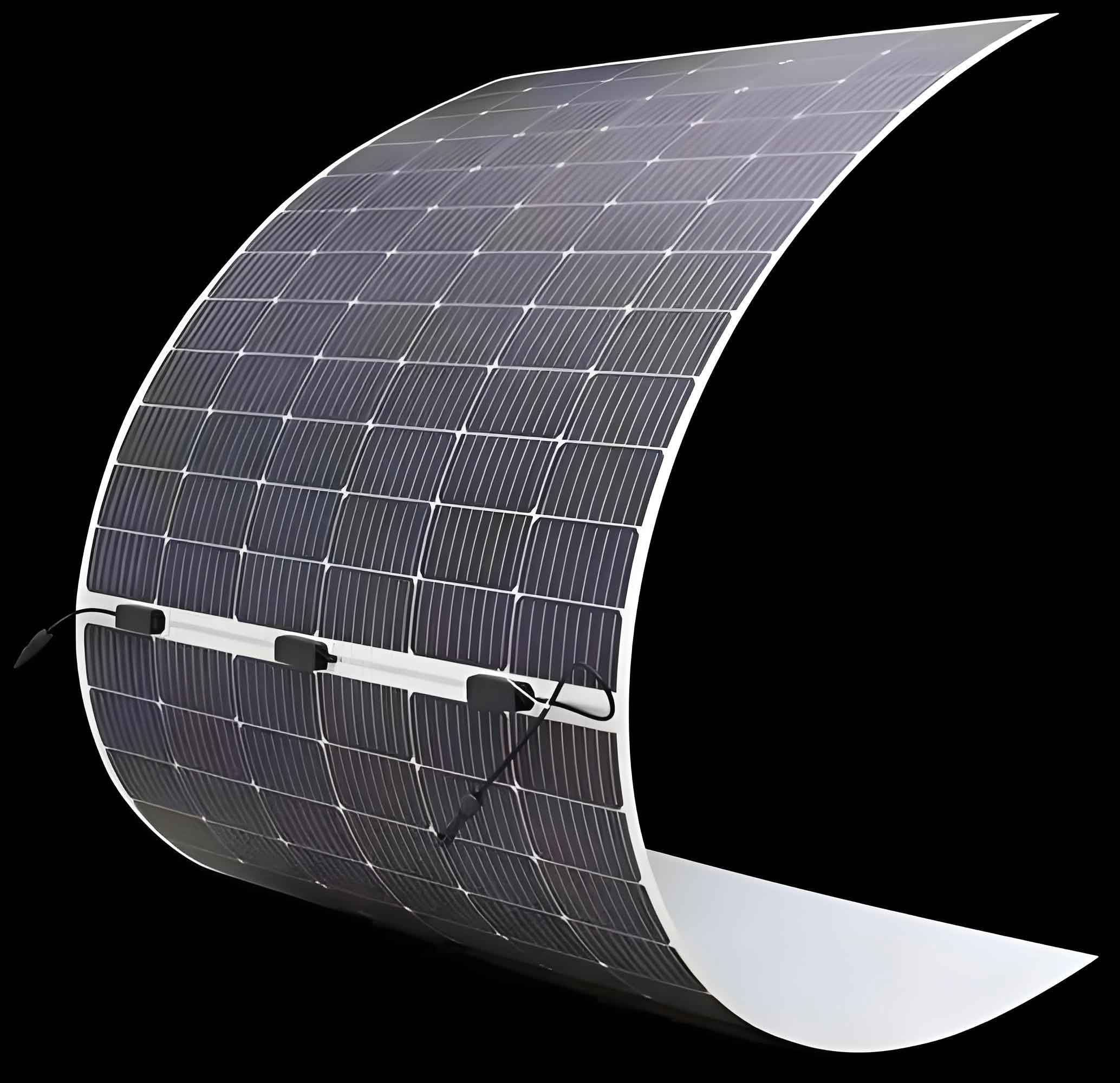
In the global pursuit of sustainable and clean energy solutions, solar power stands out as a pivotal renewable resource. Among the various photovoltaic technologies, the thin film solar panel has emerged as a promising candidate due to its advantages such as flexibility, lightweight construction, and lower manufacturing costs in certain applications. The efficient harnessing and utilization of energy from a thin film solar panel is crucial for powering modern electronic systems, particularly in remote or autonomous applications like wireless sensor networks (WSNs). However, a significant challenge inherent to photovoltaic sources, including thin film solar panel arrays, is the non-static nature of their electrical output. The voltage and current generated by a thin film solar panel are highly susceptible to environmental fluctuations, primarily irradiation intensity and temperature. This results in a widely varying output voltage, which can be detrimental to sensitive electronic loads that require a stable and precise supply voltage. For instance, a typical node in a wireless sensor network might operate at 3.3V or 5V, while communication modules often require 12V. A direct connection from a thin film solar panel to such equipment is impractical without an intermediate power conditioning stage. This paper addresses this critical issue by presenting the design and experimental validation of an intelligent, wide-input-range voltage stabilization system specifically tailored for thin film solar panel applications.
The core objective of this system is to accept a highly variable DC input voltage, simulating the output from a thin film solar panel under diverse conditions, and deliver a constant, regulated DC output voltage. The target specification is to maintain a stable 12V output from an input voltage that can swing between 5V and 40V, a range that encompasses the possible outputs from a thin film solar panel from low-light to peak sunlight conditions. To achieve this over such a broad range, a single conventional linear or switching regulator is insufficient. Linear regulators are inefficient for large voltage differentials, and most integrated switching regulator ICs have a limited maximum input voltage. Therefore, the proposed system employs a hybrid topology combining two fundamental DC-DC converter circuits: the Buck (step-down) converter and the Boost (step-up) converter. The system intelligently switches between these two modes of operation based on the instantaneous input voltage from the thin film solar panel.
The overall system architecture is built around a microcontroller unit (MCU) acting as the intelligent supervisor and controller. The system comprises several key modules: the input conditioning and voltage sensing circuit, the microcontroller, the Buck and Boost power converter circuits, MOSFET gate driver circuits, a relay-based topology selection switch, and an output display module. The input voltage from the thin film solar panel is first scaled down using a resistive voltage divider to a level suitable for the MCU’s analog-to-digital converter (ADC). The MCU continuously samples this scaled voltage to determine the present input condition. Based on a pre-set threshold (e.g., below or above the desired 12V output), the MCU controls a relay to channel the input power to either the Boost circuit (for inputs below 12V) or the Buck circuit (for inputs above 12V). Simultaneously, the MCU generates a Pulse Width Modulated (PWM) signal. The duty cycle of this PWM signal is dynamically adjusted by a control algorithm based on the feedback from the output voltage, forming a closed-loop control system to maintain regulation. This PWM signal drives the power MOSFETs in the selected converter circuit through dedicated gate driver ICs, which are necessary to provide sufficient voltage and current for fast switching. The final output is fed through a linear post-regulator (like a 7812) for additional ripple rejection and precise 12V regulation. A digital display shows the input voltage for monitoring purposes. The block diagram below illustrates this integrated approach to managing the variable power from a thin film solar panel.
The successful operation of this stabilization system hinges on the precise design and understanding of the two core power conversion circuits. The following sections delve into the theoretical principles, design equations, and practical implementation of the Buck and Boost converters.
Fundamental Power Converter Topologies and Their Mathematical Models
The foundation of our wide-input stabilization system for the thin film solar panel lies in the switched-mode power supply (SMPS) technique. SMPS circuits are preferred for their high efficiency, which is paramount for solar energy systems to minimize waste. The two specific topologies employed are the Buck converter and the Boost converter.
1. The Buck (Step-Down) Converter
The Buck converter is used when the input voltage from the thin film solar panel is higher than the desired output voltage. Its primary function is to step down the voltage. The basic schematic includes a power MOSFET (Q1) acting as a switch, a diode (D) for providing a freewheeling current path, an inductor (L) for energy storage, and a capacitor (C) for output filtering.
Operating Principle: When the MOSFET is turned ON by the PWM signal (period Ton), the input voltage is applied across the series combination of the inductor and the output load. Current flows from the input, through the inductor, to the output, storing energy in the inductor’s magnetic field. The diode is reverse-biased during this interval. When the MOSFET is turned OFF (period Toff), the current through the inductor cannot change instantaneously. It continues to flow, but now through the forward-biased diode, completing the circuit and releasing the stored energy to the load. The capacitor smooths the output voltage.
Voltage Relationship: In continuous conduction mode (CCM), where the inductor current never falls to zero, the relationship between input voltage ($$V_i$$), output voltage ($$V_o$$), and duty cycle ($$D$$) is derived from the inductor volt-second balance principle. The duty cycle is defined as $$D = T_{on} / T$$, where $$T = T_{on} + T_{off}$$ is the switching period.
During $$T_{on}$$, the voltage across the inductor is $$V_L = V_i – V_o$$. During $$T_{off}$$, the voltage across the inductor is $$V_L = -V_o$$ (assuming ideal diode drop of 0V). For steady-state operation, the net change in inductor current over one switching period must be zero. Applying the volt-second balance:
$$ (V_i – V_o) \cdot D \cdot T + (-V_o) \cdot (1-D) \cdot T = 0 $$
Solving for $$V_o$$ yields the fundamental Buck converter equation:
$$ V_o = D \cdot V_i $$
Since $$D$$ is always less than 1, the output voltage is always less than the input voltage. For our system targeting $$V_o = 12V$$, if the thin film solar panel input $$V_i$$ is 25V, the required duty cycle would theoretically be $$D = 12/25 = 0.48$$ or 48%.
2. The Boost (Step-Up) Converter
The Boost converter is used when the input voltage from the thin film solar panel is lower than the desired output voltage. Its function is to step up the voltage. Its basic components are similar but arranged differently: the inductor is in series with the input source, the MOSFET switch connects from the junction of the inductor and diode to ground, and the output capacitor is in parallel with the load.
Operating Principle: When the MOSFET is ON, the input voltage is applied directly across the inductor, causing the inductor current to ramp up and store energy. The diode is reverse-biased, isolating the output. The load is powered solely by the output capacitor during this phase. When the MOSFET is turned OFF, the inductor current must continue. The inductor voltage adds to the input source voltage, forward-biasing the diode and transferring the combined energy (stored + source) to the output capacitor and the load.
Voltage Relationship: Applying the volt-second balance principle to the Boost converter inductor: During $$T_{on}$$, $$V_L = V_i$$. During $$T_{off}$$, $$V_L = V_i – V_o$$. The balance equation is:
$$ V_i \cdot D \cdot T + (V_i – V_o) \cdot (1-D) \cdot T = 0 $$
Solving for $$V_o$$ gives the fundamental Boost converter equation:
$$ V_o = \frac{V_i}{1 – D} $$
Since $$(1-D)$$ is less than 1, the output voltage is greater than the input voltage. To achieve $$V_o = 12V$$ from a thin film solar panel input of $$V_i = 8V$$, the required duty cycle would be $$D = 1 – (8/12) = 0.333$$ or 33.3%.
The following table summarizes the key operational parameters and equations for both converter types relevant to our thin film solar panel application.
| Converter Type | Function for Thin Film Solar Panel | Ideal Conversion Ratio | Key Component Role |
|---|---|---|---|
| Buck | Steps down high voltage (e.g., 18-40V) to a manageable level >12V | $$V_o = D \cdot V_i$$ | Inductor stores energy during ON time, releases to load during OFF time. |
| Boost | Steps up low voltage (e.g., 5-15V) to above 12V | $$V_o = \frac{V_i}{1-D}$$ | Inductor stores energy from source during ON time, releases in series with source during OFF time. |
System Design and Component Selection
Microcontroller and Control Strategy
The brain of the system is an STC12C5202AD microcontroller. This MCU was selected for its integrated features that perfectly match the system requirements, eliminating the need for additional external components and reducing cost and complexity. Its critical features include:
- High-Speed 8-bit ADC: The 8-channel ADC with a sampling rate up to 300 kilosamples per second allows for rapid and real-time monitoring of both the input voltage from the thin film solar panel and the final output voltage. This fast feedback is essential for effective closed-loop control.
- Dedicated PWM Outputs: It has dedicated PCA/PWM modules capable of generating high-frequency PWM signals. A high switching frequency (e.g., 100 kHz) is chosen because it allows the use of smaller, less expensive inductors and capacitors in the Buck and Boost circuits, significantly reducing the overall size and weight of the power supply—a beneficial factor for systems powered by a thin film solar panel.
- Sufficient I/O Pins: The MCU controls the relay for topology switching, drives the display, and can manage status indicators.
The control algorithm is straightforward yet effective. The MCU reads the scaled input voltage. If the voltage is below a certain threshold (set around 15V, considering the dropout voltage of the subsequent linear regulator), it sets a digital output pin HIGH to energize a relay, connecting the input to the Boost converter circuit. Conversely, if the input voltage is above the threshold, it sets the pin LOW, connecting the input to the Buck converter circuit. In parallel, the MCU reads the final output voltage via another ADC channel. A simple proportional control algorithm adjusts the PWM duty cycle sent to the active converter’s gate driver to maintain the output at exactly 12V, compensating for load and input variations from the thin film solar panel.
MOSFET Gate Driver Circuit (IR2103)
While the MCU can generate the logic-level PWM signal, it cannot directly drive the gate of a power MOSFET used in the Buck/Boost circuits. MOSFET gates have significant capacitance, requiring a strong current pulse to switch quickly. Slow switching leads to high power loss. Furthermore, in the Buck converter topology, the MOSFET’s source pin is not at ground potential; it switches between ground and the output voltage. To turn the MOSFET ON, the gate voltage must be several volts (e.g., 10-15V) above its source pin. A standard 5V logic signal from the MCU is insufficient for this “high-side” drive.
This necessitates a MOSFET gate driver IC. The IR2103 is a high-voltage, high-speed driver featuring independent high-side and low-side output channels. It includes a bootstrap circuit to generate the required voltage above the source for driving the high-side MOSFET. For the Boost circuit (where the MOSFET source is grounded), the low-side driver channel of the IR2103 is sufficient. For the Buck circuit, the high-side driver channel is used. The driver takes the 5V PWM logic signal from the MCU and converts it into a higher-voltage (e.g., 12V) swing with strong current capability, ensuring crisp and efficient switching of the power MOSFETs, which is vital for maintaining high efficiency when processing power from the thin film solar panel.
Power Stage Design Considerations
The design of the Buck and Boost inductor (L) and output capacitor (C) is critical for performance. The values are determined based on the desired switching frequency ($$f_{sw}$$), input/output voltages, maximum output current, and allowable output voltage ripple ($$\Delta V_o$$).
Inductor Selection: The inductor value must be large enough to maintain Continuous Conduction Mode (CCM) at the expected minimum load but not so large as to cause slow transient response. The approximate formula for the Buck converter inductor is:
$$ L_{Buck} \geq \frac{V_o \cdot (V_i – V_o)}{\Delta I_L \cdot f_{sw} \cdot V_i} $$
where $$\Delta I_L$$ is the desired inductor current ripple (often chosen as 20-40% of the average output current). For the Boost converter:
$$ L_{Boost} \geq \frac{D \cdot V_i}{\Delta I_L \cdot f_{sw}} $$
Output Capacitor Selection: The capacitor is selected primarily to handle the output voltage ripple. The formula for the Buck converter output capacitor (considering only the inductor ripple current) is:
$$ C_{out} \geq \frac{\Delta I_L}{8 \cdot f_{sw} \cdot \Delta V_o} $$
In practice, capacitors with low Equivalent Series Resistance (ESR) are chosen to minimize ripple voltage.
Experimental Results and Performance Analysis
A prototype of the complete system was constructed and tested. A programmable DC power supply was used to simulate the variable output of a thin film solar panel, sweeping the input voltage from 5V to 40V. The system’s output voltage was measured with a digital multimeter and observed on an oscilloscope.
The table below presents a subset of the test data for the Boost converter mode (low input voltage) and Buck converter mode (high input voltage). The system successfully switched between modes at the designed threshold.
| Operating Mode | Simulated Thin Film Panel Input (V) | Measured System Output (V) | Output Regulation Error (%) | Theoretical Duty Cycle |
|---|---|---|---|---|
| Boost Mode | 5.00 | 12.25 | +2.08% | 58.3% |
| 8.00 | 12.20 | +1.67% | 33.3% | |
| 10.00 | 12.18 | +1.50% | 18.3% | |
| 12.00 | 12.15 | +1.25% | 1.7% | |
| 14.00 | 12.12 | +1.00% | N/A (near boundary) | |
| Buck Mode | 16.00 | 12.10 | +0.83% | 75.0% |
| 20.00 | 12.08 | +0.67% | 60.0% | |
| 25.00 | 12.05 | +0.42% | 48.0% | |
| 32.00 | 12.02 | +0.17% | 37.5% | |
| 40.00 | 11.98 | -0.17% | 30.0% |
The results demonstrate excellent regulation performance. Across the entire 5V to 40V input range, the output voltage remained within $$12V \pm 0.25V$$, which corresponds to a regulation error of less than $$\pm 2.1\%$$. This level of stability is more than adequate for powering most electronic loads, including wireless sensor nodes, from an unpredictable thin film solar panel source.
Oscilloscope measurements confirmed the operation of the PWM control loop. The captured PWM waveforms showed duty cycles that closely matched the theoretical calculations based on the input voltage and the mode of operation. For example, with an input of 16V in Buck mode, the measured duty cycle was approximately 75%, aligning perfectly with the theory ($$D = V_o/V_i = 12/16 = 0.75$$). Similarly, for an input of 4.56V in Boost mode, the duty cycle was measured at approximately 62% (theory: $$D = 1 – V_i/V_o = 1 – 4.56/12 \approx 0.62$$). The output voltage ripple was observed to be less than 50 mV peak-to-peak, indicating effective filtering and stable switching operation.
Conclusion and Future Outlook
This project successfully designed, built, and tested an intelligent wide-input voltage stabilization system for thin film solar panel applications. By synergistically combining the Buck and Boost converter topologies under the supervision of a microcontroller, the system effectively solves the problem of widely fluctuating voltage inherent to photovoltaic sources. Key achievements include:
- Wide Input Range: Stable 12V output from a 5V to 40V input, covering the operational envelope of a typical thin film solar panel.
- Intelligent Mode Switching: Automatic selection between step-up and step-down conversion based on real-time input voltage sensing.
- Closed-Loop Regulation: Use of MCU-based PWM control to maintain precise output voltage despite input and load variations.
- Practical Implementation: Integration of critical components like the IR2103 gate driver to ensure efficient power switching and robust operation.
The system validates the concept of using low-cost, commonly available components to build a sophisticated power management solution for renewable energy sources. The integration of the thin film solar panel with this stabilization system creates a reliable power supply unit suitable for off-grid electronics, environmental monitoring sensors, and IoT devices. Future enhancements could focus on implementing Maximum Power Point Tracking (MPPT) algorithms within the same microcontroller to extract the absolute maximum available power from the thin film solar panel under all conditions, further increasing the overall system efficiency and utility. Additionally, the topology could be refined into a single non-inverting Buck-Boost converter to eliminate the mechanical relay, improving reliability and switching speed between modes. The core principle demonstrated here, however, provides a solid and effective foundation for harnessing the potential of the versatile thin film solar panel.