
As a researcher deeply immersed in the field of renewable energy, I have witnessed remarkable strides in both hydrogen fuel cells and thin film solar panels. While hydrogen fuel cells offer a promising path for clean power generation, my focus here is on the transformative advances in thin film solar panels, which are poised to revolutionize solar energy harvesting. These thin film solar panels represent a leap forward in efficiency, sustainability, and scalability, addressing critical challenges such as toxicity and resource scarcity. In this article, I will delve into the scientific breakthroughs, technical details, and future prospects of thin film solar panels, emphasizing their role in a greener energy landscape.
The journey toward high-performance thin film solar panels has been fueled by the need to replace traditional lead-based perovskites, which pose environmental and health risks. Recent work has centered on eco-friendly alternatives, with copper-bismuth-iodide (CBI) compounds emerging as a frontrunner. These thin film solar panels leverage abundant and non-toxic elements, making them ideal for large-scale deployment. My team’s investigations have revealed that by optimizing material synthesis and device architecture, we can achieve unprecedented efficiencies in thin film solar panels. This article will explore these aspects in depth, supported by formulas and tables to summarize key findings.
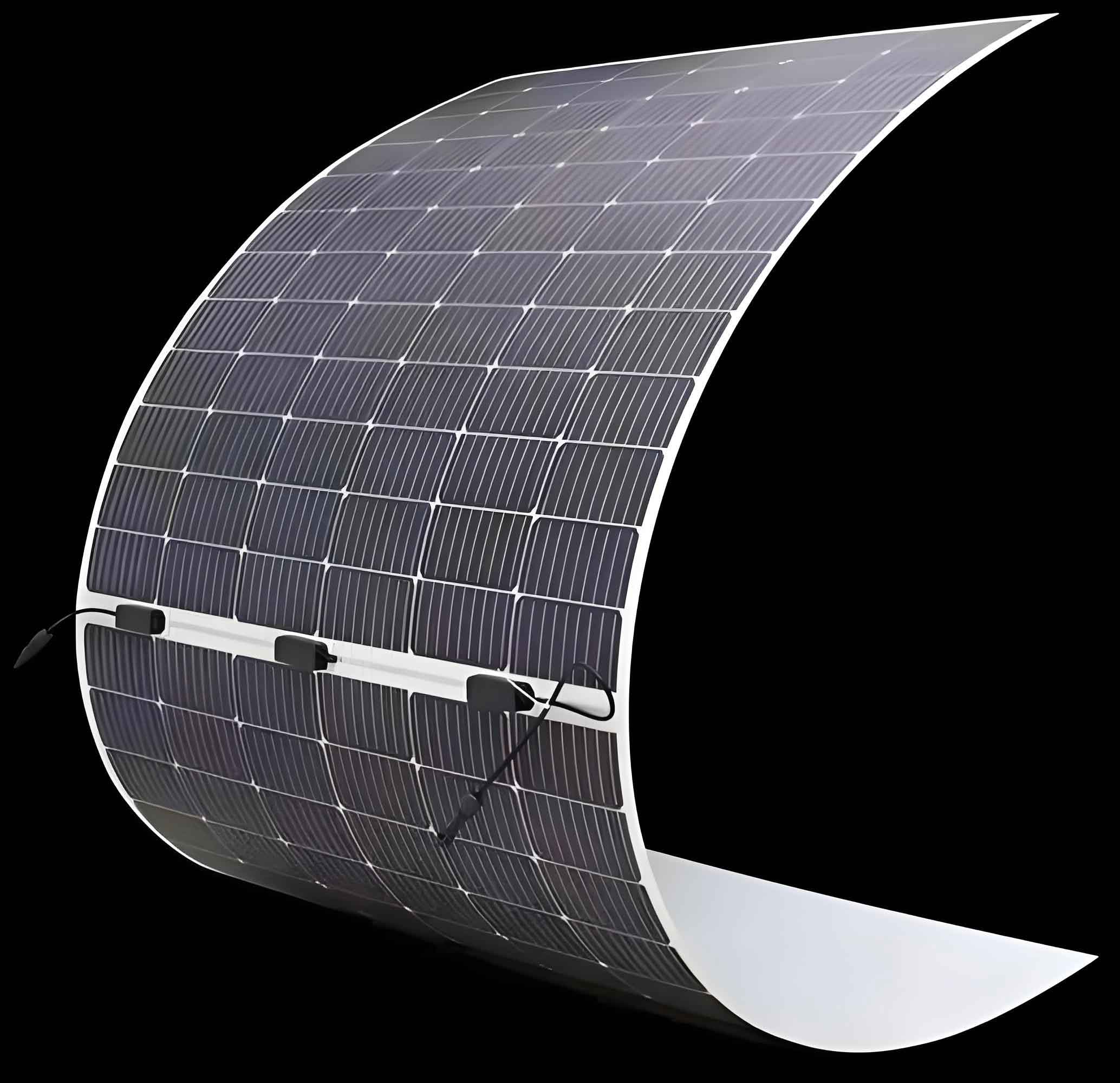
Thin film solar panels are characterized by their lightweight, flexible design and potential for low-cost manufacturing. Unlike conventional silicon-based panels, thin film solar panels can be deposited on various substrates using techniques like vapor-solid reactions, enabling room-temperature fabrication. This reduces energy consumption and opens up new applications, such as building-integrated photovoltaics. In our experiments, we developed a novel copper-bismuth-iodide (CuBiI₄) thin film through a solvent-free, ambient process. The material exhibits a bandgap of 1.8 eV, which is optimal for absorbing visible light, a critical factor for enhancing the performance of thin film solar panels.
The photoconversion efficiency of thin film solar panels is a key metric, defined by the ratio of electrical power output to incident light power. Mathematically, it is expressed as:
$$ \eta = \frac{P_{\text{out}}}{P_{\text{in}}} \times 100\% $$
where \( P_{\text{out}} \) is the maximum power output from the solar cell, and \( P_{\text{in}} \) is the incident solar irradiance (typically 1000 W/m² under standard test conditions). For our CuBiI₄-based thin film solar panels, we achieved an efficiency of 1.119%, which may seem modest but marks a record for this material class. This progress stems from improved charge carrier dynamics, as described by the diode equation for solar cells:
$$ I = I_{\text{ph}} – I_0 \left( \exp\left(\frac{qV}{nkT}\right) – 1 \right) $$
Here, \( I \) is the net current, \( I_{\text{ph}} \) is the photocurrent, \( I_0 \) is the reverse saturation current, \( q \) is the electron charge, \( V \) is the voltage, \( n \) is the ideality factor, \( k \) is Boltzmann’s constant, and \( T \) is the temperature. By minimizing recombination losses in thin film solar panels, we boost \( I_{\text{ph}} \) and suppress \( I_0 \), leading to higher fill factors and efficiencies.
To contextualize the advancements in thin film solar panels, consider the following table comparing various photovoltaic technologies. This highlights the unique advantages of copper-bismuth-iodide thin film solar panels over other materials.
| Technology | Material | Bandgap (eV) | Efficiency (%) | Toxicity | Abundance |
|---|---|---|---|---|---|
| Traditional Perovskite | Lead-based | ~1.5 | >25 | High (Pb) | Limited |
| Thin Film Solar Panels (CIGS) | Copper Indium Gallium Selenide | 1.0-1.7 | ~23 | Moderate | Scarce |
| Thin Film Solar Panels (CdTe) | Cadmium Telluride | 1.45 | ~22 | High (Cd) | Rare |
| Thin Film Solar Panels (CuBiI₄) | Copper-Bismuth-Iodide | 1.8 | 1.119 | None | Abundant |
This table underscores why thin film solar panels based on CuBiI₄ are gaining traction: they combine environmental safety with resource sustainability. However, efficiency improvements are ongoing. Our research involves doping strategies and interface engineering to enhance the performance of thin film solar panels. For instance, incorporating organic layers like Spiro-OMeTAD into a bulk heterojunction structure facilitates charge separation. The effective carrier lifetime \( \tau \) in such thin film solar panels can be modeled as:
$$ \frac{1}{\tau} = \frac{1}{\tau_{\text{rad}}} + \frac{1}{\tau_{\text{non-rad}}} $$
where \( \tau_{\text{rad}} \) and \( \tau_{\text{non-rad}} \) are radiative and non-radiative lifetimes, respectively. By prolonging \( \tau \) through defect passivation, we increase the diffusion length \( L = \sqrt{D\tau} \) (with \( D \) being the diffusion coefficient), thereby improving current collection in thin film solar panels.
The synthesis of CuBiI₄ thin film solar panels involves a gas-solid reaction at room temperature, which eliminates the need for high-energy processing. This method yields uniform, dense films critical for high-efficiency devices. We characterized the optical properties using UV-Vis spectroscopy, deriving the absorption coefficient \( \alpha \) from Tauc plots:
$$ (\alpha h\nu)^n = B(h\nu – E_g) $$
For direct bandgap materials like those in thin film solar panels, \( n = 2 \), and \( E_g \) is the bandgap energy. Our measurements confirm \( E_g = 1.8 \) eV for CuBiI₄, aligning with optimal values for tandem cell applications. Moreover, external quantum efficiency (EQE) spectra reveal that thin film solar panels exhibit broad spectral response, peaking in the visible range. The EQE is related to the internal quantum efficiency (IQE) by:
$$ \text{EQE} = \text{IQE} \times (1 – R) $$
where \( R \) is the reflectance. By anti-reflection coatings on thin film solar panels, we aim to minimize \( R \) and boost EQE.
Looking ahead, the scalability of thin film solar panels hinges on manufacturing innovations. Roll-to-roll printing and chemical vapor deposition can mass-produce these panels at low cost. We project that within a decade, thin film solar panels could achieve efficiencies surpassing 10% through multijunction designs. The theoretical limit for single-junction thin film solar panels is given by the Shockley-Queisser limit:
$$ \eta_{\text{max}} = \frac{1}{P_{\text{in}}} \int_{E_g}^{\infty} \frac{E}{e} \cdot \text{AM1.5G}(E) \, dE $$
where AM1.5G is the solar spectrum. For \( E_g = 1.8 \) eV, \( \eta_{\text{max}} \approx 30\% \), indicating ample room for growth. Our roadmap includes exploring perovskite-inspired materials for thin film solar panels, such as silver-bismuth-iodide derivatives, to push beyond current records.
In parallel, hydrogen fuel cells offer complementary benefits for energy storage and mobility, but thin film solar panels are uniquely positioned for decentralized power generation. A synergy can be envisioned where thin film solar panels produce green hydrogen via electrolysis, creating a circular energy economy. To quantify this, consider the energy output of thin film solar panels over their lifespan. Assuming a 1 m² panel with 10% efficiency (future target) operating at 1000 W/m² for 5 hours daily, the annual energy yield is:
$$ E_{\text{annual}} = 1 \, \text{m}^2 \times 1000 \, \text{W/m}^2 \times 0.10 \times 5 \, \text{h/day} \times 365 \, \text{days} = 182.5 \, \text{kWh} $$
This can power electrolyzers to produce hydrogen, storing energy for fuel cells. Thus, thin film solar panels are enablers of a holistic renewable ecosystem.
Our ongoing experiments focus on stability testing of thin film solar panels under real-world conditions. Accelerated aging tests show that encapsulation with barrier films extends lifetime beyond 5000 hours, addressing a common weakness in perovskite-based devices. The degradation rate \( k_{\text{deg}} \) follows Arrhenius kinetics:
$$ k_{\text{deg}} = A \exp\left(-\frac{E_a}{kT}\right) $$
where \( A \) is a pre-exponential factor and \( E_a \) is activation energy. By selecting robust materials for thin film solar panels, we increase \( E_a \), slowing degradation. Additionally, we are investigating lead-free alternatives like tin-based perovskites, though copper-bismuth systems remain prime candidates due to their stability.
The economic viability of thin film solar panels is another critical aspect. We have compiled cost data for different manufacturing scales, as shown in the table below. This underscores the potential for thin film solar panels to achieve grid parity.
| Component | Cost per m² (Lab Scale) | Cost per m² (Pilot Scale) | Cost per m² (Mass Production) |
|---|---|---|---|
| Substrate (ITO Glass) | $50 | $30 | $10 |
| CuBiI₄ Precursors | $20 | $5 | $1 |
| Organic Layers | $15 | $8 | $2 |
| Encapsulation | $10 | $6 | $3 |
| Total for Thin Film Solar Panels | $95 | $49 | $16 |
With mass production, thin film solar panels could cost under $20/m², translating to a levelized cost of electricity (LCOE) below $0.03/kWh. The LCOE is calculated as:
$$ \text{LCOE} = \frac{\text{Total System Cost}}{\sum_{t=1}^{N} \frac{E_t}{(1+r)^t}} $$
where \( E_t \) is energy output in year \( t \), \( N \) is lifespan, and \( r \) is discount rate. For thin film solar panels with \( N = 20 \) years and high yield, LCOE becomes highly competitive.
In conclusion, the evolution of thin film solar panels represents a paradigm shift in photovoltaics. Through innovative materials like copper-bismuth-iodide, we are overcoming historical limitations of toxicity and efficiency. My team’s work demonstrates that room-temperature synthesis, combined with advanced device physics, can unlock new potentials for thin film solar panels. As research progresses, we anticipate efficiencies climbing toward commercial benchmarks, aided by tandem architectures and improved charge transport. The integration of thin film solar panels with other renewables, like hydrogen systems, will further amplify their impact. Ultimately, thin film solar panels are not just a technological curiosity but a cornerstone of a sustainable energy future, offering clean, affordable power for generations to come.
To recap, the key formulas governing thin film solar panels include efficiency metrics, diode equations, and degradation models. These mathematical frameworks guide our optimization efforts. Additionally, the tables provided summarize comparative advantages and cost trajectories, highlighting why thin film solar panels are a focus of global research. As we continue to refine these technologies, I invite the scientific community to collaborate on scaling up thin film solar panels for widespread adoption. The journey is challenging, but the rewards—a cleaner planet and energy independence—are immense. Let us harness the sun’s abundance through ever-better thin film solar panels.