
As a participant in the recent forum on integrating Building Integrated Photovoltaics (BIPV) with comfortable home systems, I was immersed in discussions that bridged renewable energy and modern living. The event, held at a leading clean energy exhibition center, brought together industry experts, association representatives, and technology innovators to explore how thin film solar panels can revolutionize our approach to energy-efficient and comfortable dwellings. From my perspective, this convergence marks a pivotal shift toward sustainable architecture, where energy generation and consumption are seamlessly intertwined. In this article, I will delve into the insights shared, expanding on key concepts with technical analyses, tables, and formulas to provide a comprehensive overview of this emerging field.
The forum emphasized the critical role of BIPV in reducing carbon footprints while enhancing indoor comfort. BIPV, or Building Integrated Photovoltaics, refers to the integration of photovoltaic materials into building components, such as roofs, facades, or windows, rather than mounting traditional solar panels as add-ons. This approach not only generates electricity but also serves structural and aesthetic functions. A key technology driving this innovation is thin film solar panels, which are lightweight, flexible, and versatile compared to conventional silicon-based panels. These thin film solar panels can be easily incorporated into various architectural designs, enabling buildings to become active energy producers. For instance, their low-light efficiency and temperature tolerance make them ideal for diverse climates, a point repeatedly highlighted during the presentations.
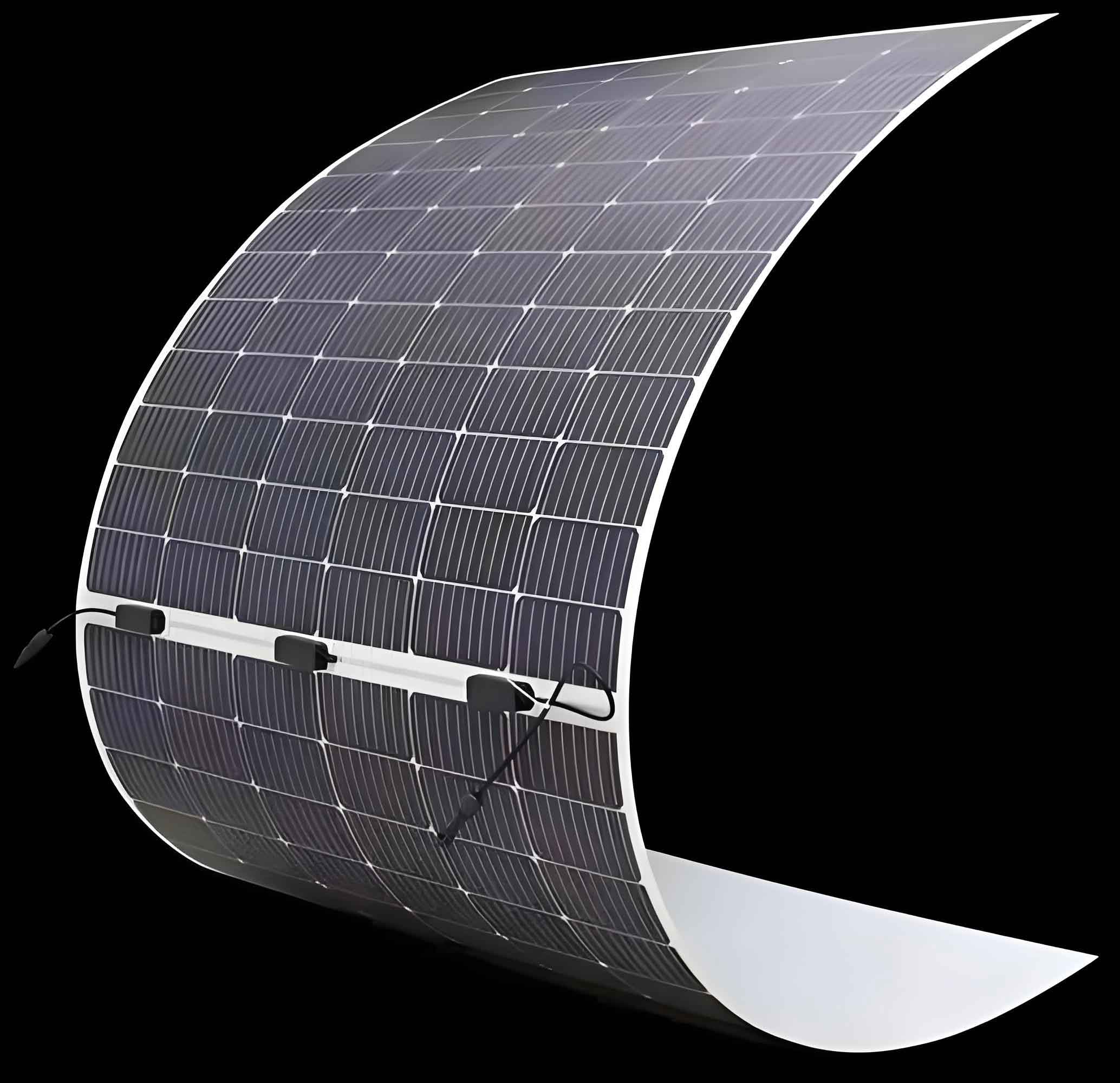
In my view, the integration of thin film solar panels into BIPV systems represents a game-changer for energy-efficient homes. To understand this better, consider the energy conversion process in photovoltaic cells. The efficiency of a solar panel, denoted by η, is given by the formula: $$ \eta = \frac{P_{out}}{P_{in}} \times 100\% $$ where \( P_{out} \) is the electrical power output and \( P_{in} \) is the incident solar power. For thin film solar panels, typical efficiencies range from 10% to 20%, depending on materials like cadmium telluride (CdTe) or copper indium gallium selenide (CIGS). However, their advantage lies in their performance under real-world conditions. For example, the temperature coefficient, which measures efficiency loss per degree Celsius increase, is often lower for thin film solar panels compared to crystalline silicon panels. This can be expressed as: $$ \Delta \eta = \beta (T – T_{ref}) $$ where \( \beta \) is the temperature coefficient, \( T \) is the operating temperature, and \( T_{ref} \) is the reference temperature (usually 25°C). With thin film solar panels, β values are typically around -0.2% per °C, versus -0.3% to -0.5% for traditional panels, meaning they maintain higher efficiency in hot climates.
The forum also explored how BIPV systems can power comfortable home environments, which include heating, ventilation, air conditioning (HVAC), water treatment, and smart controls. From my experience, achieving optimal comfort requires balancing energy supply and demand. A fundamental equation for this is the energy balance in a building: $$ Q_{net} = Q_{gain} – Q_{loss} $$ where \( Q_{net} \) is the net heat gain, \( Q_{gain} \) includes solar radiation through windows and internal heat from appliances, and \( Q_{loss} \) accounts for conduction, convection, and infiltration losses. By integrating thin film solar panels into the building envelope, \( Q_{gain} \) can be managed more effectively—for instance, semi-transparent thin film solar panels on windows can reduce glare while generating electricity. Moreover, the electricity produced can offset energy consumption for heating and cooling systems. To quantify this, consider the annual energy yield from thin film solar panels: $$ E_{annual} = A \times G \times \eta \times PR $$ where \( A \) is the panel area in m², \( G \) is the annual solar irradiance in kWh/m², \( \eta \) is the efficiency, and \( PR \) is the performance ratio (accounting for losses). For a typical residential roof with 50 m² of thin film solar panels and an irradiance of 1500 kWh/m²/year, the energy yield might be: $$ E_{annual} = 50 \times 1500 \times 0.15 \times 0.8 = 9000 \text{ kWh/year} $$ This can significantly reduce reliance on grid electricity for comfort systems.
To illustrate the components of a comfortable home powered by BIPV, I have summarized key elements in the table below. This table outlines how different subsystems interact with energy from thin film solar panels, highlighting the synergistic potential.
| Comfort System | Function | Energy Source from Thin Film Solar Panels | Potential Energy Savings |
|---|---|---|---|
| Space Heating | Provides warmth through heat pumps or radiant floors | Electricity for heat pumps; thermal storage | Up to 60% reduction in heating costs |
| Cooling | Air conditioning or evaporative cooling | Electricity for compressors; passive cooling via shading | 40-50% lower energy use |
| Hot Water | Heats water for domestic use | Electricity for heat pumps; direct thermal conversion | 70% savings with solar thermal hybrids |
| Ventilation | Ensures air quality with heat recovery | Electricity for fans; natural ventilation enhancement | 30% reduction in fan energy |
| Lighting | LED lighting with smart controls | Direct DC power from panels | 80% less energy than incandescent |
| Smart Home | Automates energy management | Power for sensors and controllers | Optimizes overall consumption by 20% |
As seen in the table, thin film solar panels can directly power or supplement various comfort systems, leading to substantial energy savings. During the forum, experts emphasized that this integration requires careful design. For example, the orientation and tilt of thin film solar panels affect energy capture. The optimal tilt angle θ for maximum annual yield can be estimated using: $$ \theta = \phi – 15^\circ $$ where \( \phi \) is the local latitude. In practice, adjustable mounts or building-integrated designs can optimize this. Additionally, thin film solar panels offer aesthetic flexibility, as they can be colored or patterned to match architectural styles, a point that resonated with many attendees focused on residential applications.
Another critical aspect discussed was the economic viability of BIPV systems. From my analysis, the levelized cost of electricity (LCOE) is a key metric for comparing energy sources. For thin film solar panels in BIPV, LCOE can be calculated as: $$ LCOE = \frac{C_{cap} + \sum_{t=1}^{n} \frac{C_{O\&M,t}}{(1+r)^t}}{\sum_{t=1}^{n} \frac{E_t}{(1+r)^t}} $$ where \( C_{cap} \) is the capital cost, \( C_{O\&M,t} \) is operation and maintenance cost in year t, \( E_t \) is energy produced in year t, r is the discount rate, and n is the system lifetime. Thin film solar panels often have lower installation costs due to their lightweight nature, but their efficiency may impact \( E_t \). To illustrate, consider a comparison of different solar technologies for BIPV applications, as shown in the table below.
| Technology | Efficiency Range (%) | Cost per Watt ($) | Weight (kg/m²) | Suitability for BIPV |
|---|---|---|---|---|
| Thin Film Solar Panels (CdTe) | 10-18 | 0.50-0.70 | 3-5 | High – flexible, low-light performance |
| Thin Film Solar Panels (CIGS) | 12-20 | 0.60-0.80 | 4-6 | High – aesthetic integration |
| Crystalline Silicon | 15-22 | 0.80-1.00 | 10-15 | Moderate – rigid, higher weight |
| Perovskite Solar Cells | 18-25 (emerging) | 0.40-0.60 (projected) | 2-4 | Very high – lightweight, but stability issues |
The data underscores why thin film solar panels are favored for BIPV: they offer a balance of cost, weight, and adaptability. In my discussions at the forum, it was clear that advancements in thin film solar panels are accelerating, with research focusing on improving efficiency and durability. For instance, the degradation rate of thin film solar panels, often modeled as: $$ P(t) = P_0 (1 – d)^t $$ where \( P_0 \) is initial power, d is annual degradation rate (typically 0.5-1% for thin film solar panels), and t is time in years, is being reduced through better encapsulation techniques.
Beyond technical aspects, the forum highlighted market trends. The comfortable home industry is expanding rapidly, with systems integrating heating, cooling, and smart technologies. From my perspective, the synergy with BIPV is driven by policy shifts toward clean energy, such as incentives for renewable heating. A representative shared that the market for comfortable homes could reach trillions of dollars globally, and thin film solar panels can tap into this by providing decentralized energy. To quantify the potential, consider the energy demand for heating in residential buildings. The heating load \( Q_h \) can be approximated using: $$ Q_h = U \times A \times \Delta T $$ where U is the overall heat transfer coefficient, A is the surface area, and ΔT is the temperature difference. By incorporating thin film solar panels into the building envelope, U can be improved through added insulation, and the generated electricity can power heat pumps with a coefficient of performance (COP) given by: $$ COP = \frac{Q_{delivered}}{W_{input}} $$ where \( Q_{delivered} \) is heat delivered and \( W_{input} \) is electrical work input. With thin film solar panels, \( W_{input} \) can be sourced renewably, achieving COPs of 3-4, meaning one unit of electricity delivers three to four units of heat.
During the forum, case studies were presented showcasing real-world applications. I recall one example where thin film solar panels were integrated into a residential roof in a temperate climate, providing 80% of the home’s energy needs for heating, cooling, and appliances. The system used a battery storage unit to manage intermittency, with the state of charge (SOC) governed by: $$ SOC(t+1) = SOC(t) + \eta_{bat} (P_{gen} – P_{load}) \Delta t $$ where \( \eta_{bat} \) is battery efficiency, \( P_{gen} \) is power from thin film solar panels, \( P_{load} \) is load demand, and Δt is time interval. This example demonstrated how thin film solar panels enable energy independence, a key goal for comfortable homes.
The forum also addressed challenges, such as grid integration and regulatory hurdles. From my viewpoint, solutions include smart inverters that synchronize thin film solar panel output with grid requirements, and policy frameworks that incentivize BIPV adoption. A formula for grid feed-in can be expressed as: $$ P_{grid} = P_{gen} – P_{load} – P_{storage} $$ where \( P_{grid} \) is power exported to the grid, which can generate revenue through net metering. With thin film solar panels, the variability in \( P_{gen} \) due to weather can be mitigated by forecasting models, such as: $$ P_{gen} = G \times A \times \eta \times f(T, \theta) $$ where f(T, θ) is a function of temperature and incidence angle. Advances in machine learning are improving these predictions, ensuring reliable energy supply for comfort systems.
In conclusion, the forum reinforced my belief that thin film solar panels are pivotal to the future of BIPV and comfortable homes. By integrating energy generation into building materials, we can create sustainable, efficient, and pleasant living spaces. The discussions emphasized continuous innovation, from higher-efficiency thin film solar panels to smarter control systems. As I reflect on the event, the synergy between technology and lifestyle is clear: thin film solar panels not only power our homes but also redefine our relationship with energy. Moving forward, collaboration across industries will be essential to scale these solutions, making comfortable, energy-positive homes a reality for all.