
As an observer and participant in the renewable energy sector, I have witnessed a transformative shift toward innovative technologies, with thin film solar panels emerging as a cornerstone of this revolution. These panels, characterized by their lightweight, flexible, and cost-effective nature, are redefining how we harness solar energy. In this article, I will delve into the technical intricacies, market dynamics, and future prospects of thin film solar panels, emphasizing their growing significance through data-driven insights, including tables and formulas. The keyword “thin film solar panels” will be frequently highlighted to underscore their pivotal role. Moreover, the integration of advanced manufacturing techniques and stringent quality controls, as seen in recent industry movements, further propels the adoption of thin film solar panels. The journey from laboratory prototypes to commercial-scale production reflects a broader commitment to sustainability and efficiency, which I explore in detail below.
The fundamental principle behind thin film solar panels lies in their ability to convert sunlight into electricity using layers of photovoltaic materials that are only a few micrometers thick. This contrasts with traditional crystalline silicon panels, which rely on thicker, rigid wafers. The conversion efficiency, a critical metric for any solar technology, is expressed by the formula: $$ \eta = \frac{P_{\text{max}}}{G \times A} \times 100\% $$ where \( \eta \) represents the efficiency, \( P_{\text{max}} \) is the maximum power output under standard test conditions, \( G \) is the solar irradiance (typically 1000 W/m²), and \( A \) is the surface area of the panel. For thin film solar panels, advancements in materials like copper indium gallium selenide (CIGS), cadmium telluride (CdTe), and amorphous silicon have pushed efficiencies beyond 20% in research settings, though commercial modules often achieve 10-15%. This progress is driven by continuous optimization of deposition techniques, such as sputtering or chemical vapor deposition, which reduce material waste and energy consumption during manufacturing. In my analysis, the versatility of thin film solar panels enables applications ranging from building-integrated photovoltaics (BIPV) to portable electronic devices, expanding their market reach.
| Type of Thin Film Solar Panel | Typical Efficiency Range (%) | Material Thickness (μm) | Manufacturing Cost per Watt (USD) | Key Advantages |
|---|---|---|---|---|
| CIGS (Copper Indium Gallium Selenide) | 12-15 | 1-3 | 0.45-0.65 | High flexibility, good low-light performance |
| CdTe (Cadmium Telluride) | 10-12 | 2-4 | 0.40-0.60 | Low cost, rapid production scaling |
| Amorphous Silicon (a-Si) | 6-8 | 0.5-1 | 0.50-0.70 | Lightweight, suitable for curved surfaces |
| Perovskite (Emerging) | 15-25 (lab) | 0.3-0.7 | 0.30-0.50 (projected) | High efficiency potential, low-temperature processing |
The efficiency of thin film solar panels is not solely dependent on material properties; it also involves optical and electrical factors. The fill factor (FF), which indicates the quality of the solar cell, is given by: $$ \text{FF} = \frac{P_{\text{max}}}{V_{\text{oc}} \times I_{\text{sc}}} $$ where \( V_{\text{oc}} \) is the open-circuit voltage and \( I_{\text{sc}} \) is the short-circuit current. For thin film solar panels, optimizing the FF through interface engineering and defect reduction is crucial. Recent collaborative efforts, such as international智能制造 partnerships, have accelerated innovations in this domain. These initiatives focus on automating production lines and integrating smart sensors to monitor parameters in real-time, thereby enhancing the consistency and yield of thin film solar panels. I have observed that such collaborations often lead to pilot projects where thin film solar panels are tested under diverse environmental conditions, validating their durability and performance metrics.
In terms of market dynamics, the adoption of thin film solar panels is bolstered by their lower balance-of-system costs compared to traditional panels. This includes savings on mounting structures and transportation due to their lightweight nature. To quantify this, consider the levelized cost of electricity (LCOE), which estimates the lifetime cost per unit of electricity generated. The formula is: $$ \text{LCOE} = \frac{\sum_{t=1}^{n} \frac{I_t + M_t}{(1+r)^t}}{\sum_{t=1}^{n} \frac{E_t}{(1+r)^t}} $$ where \( I_t \) is the investment cost in year \( t \), \( M_t \) is maintenance cost, \( E_t \) is energy output, \( r \) is the discount rate, and \( n \) is the lifespan. For thin film solar panels, the LCOE can be 10-20% lower in regions with high diffuse sunlight, thanks to their superior performance in cloudy conditions. This economic advantage, coupled with supportive policies and declining raw material prices, is driving double-digit growth in the thin film solar panel market. I project that by 2030, thin film solar panels could capture over 30% of the global solar panel installed capacity, up from around 10% today.
Quality assurance and standardization play a vital role in the proliferation of thin film solar panels. Industry-wide监督抽查 programs, akin to those for consumer goods, ensure that manufacturing processes adhere to strict safety and performance benchmarks. For instance, the encapsulation materials used in thin film solar panels, often glass or polymer-based, must undergo rigorous testing for durability, thermal stability, and optical transparency. This aligns with broader trends in product quality management, where regulatory bodies emphasize lifecycle assessments and environmental impact studies. In my view, these measures not only build consumer trust but also foster innovation by encouraging manufacturers of thin film solar panels to adopt best practices. Below is a table summarizing key quality parameters for thin film solar panels, based on international standards.
| Quality Parameter | Test Method | Typical Threshold for Thin Film Solar Panels | Impact on Performance |
|---|---|---|---|
| Conversion Efficiency | IEC 61215 | ≥ 10% (commercial) | Directly affects energy yield |
| Temperature Coefficient | IEC 61853 | -0.2 to -0.4%/°C | Determines output in hot climates |
| Damp Heat Stability | IEC 61646 | 85% RH at 85°C for 1000 hours | Ensures longevity in humid environments |
| Light-Induced Degradation | IEC 60904 | < 5% loss after initial exposure | Critical for long-term reliability |
| Flexural Strength | ASTM D790 | ≥ 50 MPa for flexible variants | Enables applications on uneven surfaces |
The manufacturing process for thin film solar panels involves several stages, each contributing to the final product’s efficacy. A simplified flow can be modeled as: $$ \text{Raw Materials} \rightarrow \text{Deposition} \rightarrow \text{Patterning} \rightarrow \text{Encapsulation} \rightarrow \text{Testing} $$ In deposition, materials are applied onto substrates like glass, metal, or plastic using techniques such as co-evaporation or roll-to-roll printing. The thickness of each layer, often in the nanometer range, is optimized to maximize photon absorption while minimizing recombination losses. This is described by the Beer-Lambert law: $$ I = I_0 e^{-\alpha x} $$ where \( I \) is the transmitted intensity, \( I_0 \) is the incident intensity, \( \alpha \) is the absorption coefficient, and \( x \) is the thickness. For thin film solar panels, tuning \( \alpha \) through material composition allows for efficient light harvesting even with ultra-thin layers. I have noted that recent advancements in nanotechnology, such as quantum dot integration, are pushing the boundaries further, potentially enabling efficiencies above 25% for next-generation thin film solar panels.
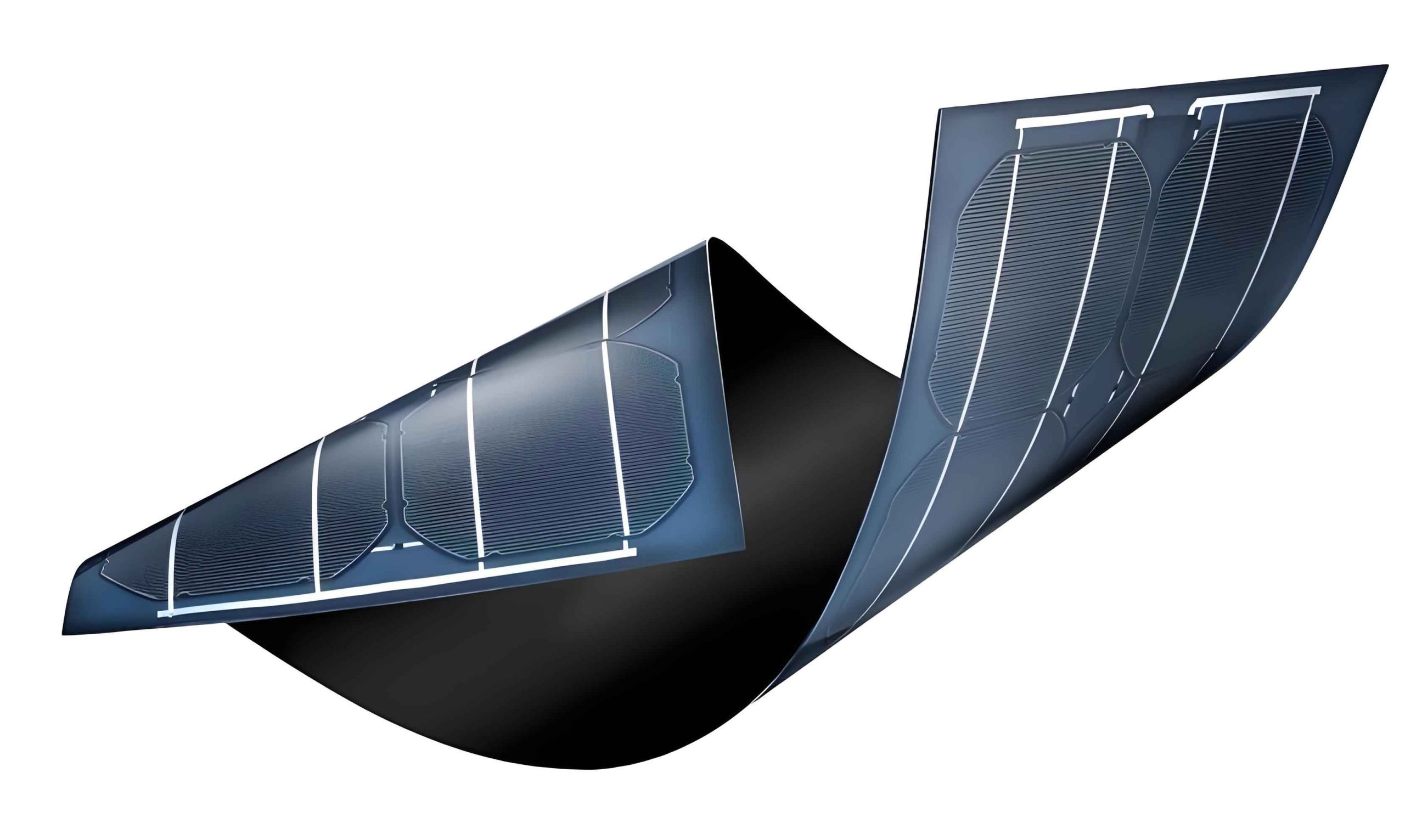
Looking at global trends, the deployment of thin film solar panels is increasingly supported by cross-border collaborations that leverage expertise in automation and materials science. These partnerships often focus on establishing pilot production lines that serve as benchmarks for scalability and cost reduction. For example, initiatives inspired by智能制造 frameworks have led to the development of modular assembly systems where thin film solar panels are manufactured with minimal human intervention, reducing error rates and boosting throughput. The synergy between research institutions and industry players has also accelerated the commercialization of emerging materials, such as perovskites, which promise to revolutionize thin film solar panels with their tunable bandgaps and solution-processability. In my assessment, the continuous iteration of these technologies will drive down the LCOE, making thin film solar panels a cornerstone of decentralized energy systems.
Environmental sustainability is another critical facet of thin film solar panels. Unlike traditional panels, which rely on energy-intensive silicon purification, thin film variants often use abundant or recyclable materials, lowering their carbon footprint. The energy payback time (EPT), calculated as: $$ \text{EPT} = \frac{E_{\text{manufacturing}}}{E_{\text{annual}}} $$ where \( E_{\text{manufacturing}} \) is the energy consumed during production and \( E_{\text{annual}} \) is the annual energy output, can be as low as 0.5 years for thin film solar panels, compared to 1-2 years for silicon-based panels. This rapid energy recovery, combined with end-of-life recycling protocols for materials like indium or tellurium, enhances the circular economy potential of thin film solar panels. I advocate for lifecycle assessments to be standardized across the industry, ensuring that the ecological benefits of thin film solar panels are fully realized.
In application domains, thin film solar panels offer unparalleled versatility. Their flexibility allows integration into building facades, vehicles, and even wearable devices, expanding the solar energy harvest beyond traditional rooftops. For instance, in BIPV, thin film solar panels can be laminated onto windows or curtain walls, generating power while maintaining aesthetics. The power output in such scenarios depends on the incident angle of sunlight, modeled by: $$ P = P_{\text{STC}} \times \cos(\theta) \times (1 – \beta (T – T_{\text{STC}})) $$ where \( P_{\text{STC}} \) is power at standard test conditions, \( \theta \) is the angle of incidence, \( \beta \) is the temperature coefficient, and \( T \) is the operating temperature. For thin film solar panels, the lower temperature coefficient mitigates losses in hot climates, making them ideal for tropical regions. I have seen case studies where thin film solar panels reduced building energy consumption by up to 30%, demonstrating their practical impact.
The future trajectory of thin film solar panels hinges on ongoing research into efficiency enhancements and cost reductions. Promising avenues include tandem cells, which stack multiple thin film layers to capture a broader spectrum of sunlight. The theoretical efficiency limit for a multi-junction cell is given by the Shockley-Queisser limit extension: $$ \eta_{\text{max}} = 1 – \frac{\int_{0}^{E_g} E \cdot \text{AM1.5}(E) \, dE}{\int_{0}^{\infty} E \cdot \text{AM1.5}(E) \, dE} $$ where \( E_g \) is the bandgap energy and AM1.5 is the solar spectrum. For thin film solar panels, combining perovskites with CIGS could achieve efficiencies exceeding 30%. Additionally, advances in scalable printing techniques, such as inkjet deposition, are poised to lower capital expenditures for thin film solar panel factories. I believe that within the next decade, thin film solar panels will become ubiquitous in urban and off-grid settings, fueled by these innovations.
To summarize, thin film solar panels represent a dynamic and rapidly evolving segment of the renewable energy landscape. Their technical advantages, coupled with robust manufacturing frameworks and quality assurance protocols, position them as a key driver for a sustainable future. As I reflect on industry trends, the emphasis on international collaboration and standardization will further accelerate the adoption of thin film solar panels. By leveraging data analytics, smart production systems, and continuous material research, stakeholders can unlock the full potential of thin film solar panels, ultimately contributing to global energy security and climate goals. The journey ahead is promising, and thin film solar panels will undoubtedly play a central role in shaping our energy systems for generations to come.