
The push for renewable energy has catapulted the photovoltaic industry into a period of rapid growth. Among the various technologies, thin film solar panels, particularly those based on amorphous silicon (a-Si), are celebrated for their lower material costs, better performance in low-light conditions, and suitability for large-scale, automated production. However, in my extensive experience analyzing industrial hygiene and safety within high-tech manufacturing, I have observed that the focus on product efficiency and cost often overshadows a critical aspect: the occupational health and safety risks inherent in the production process. Both management and frontline workers frequently underestimate or are unaware of the spectrum of chemical and physical hazards present on the production floor. This article aims to provide a detailed, first-person analysis of the typical manufacturing process for amorphous silicon thin film solar panels, systematically identifying the occupational hazards at each stage and proposing a framework for their effective control and mitigation.
The entire manufacturing chain for thin film solar panels can be conceptually segmented into four major sections: the pre-PECVD (Plasma-Enhanced Chemical Vapor Deposition) process, the core PECVD deposition process, the sputtering section, and the final lamination and assembly section. Each section comprises several discrete process steps, as illustrated in the following workflow. It is within these steps that workers may be exposed to a variety of harmful agents.
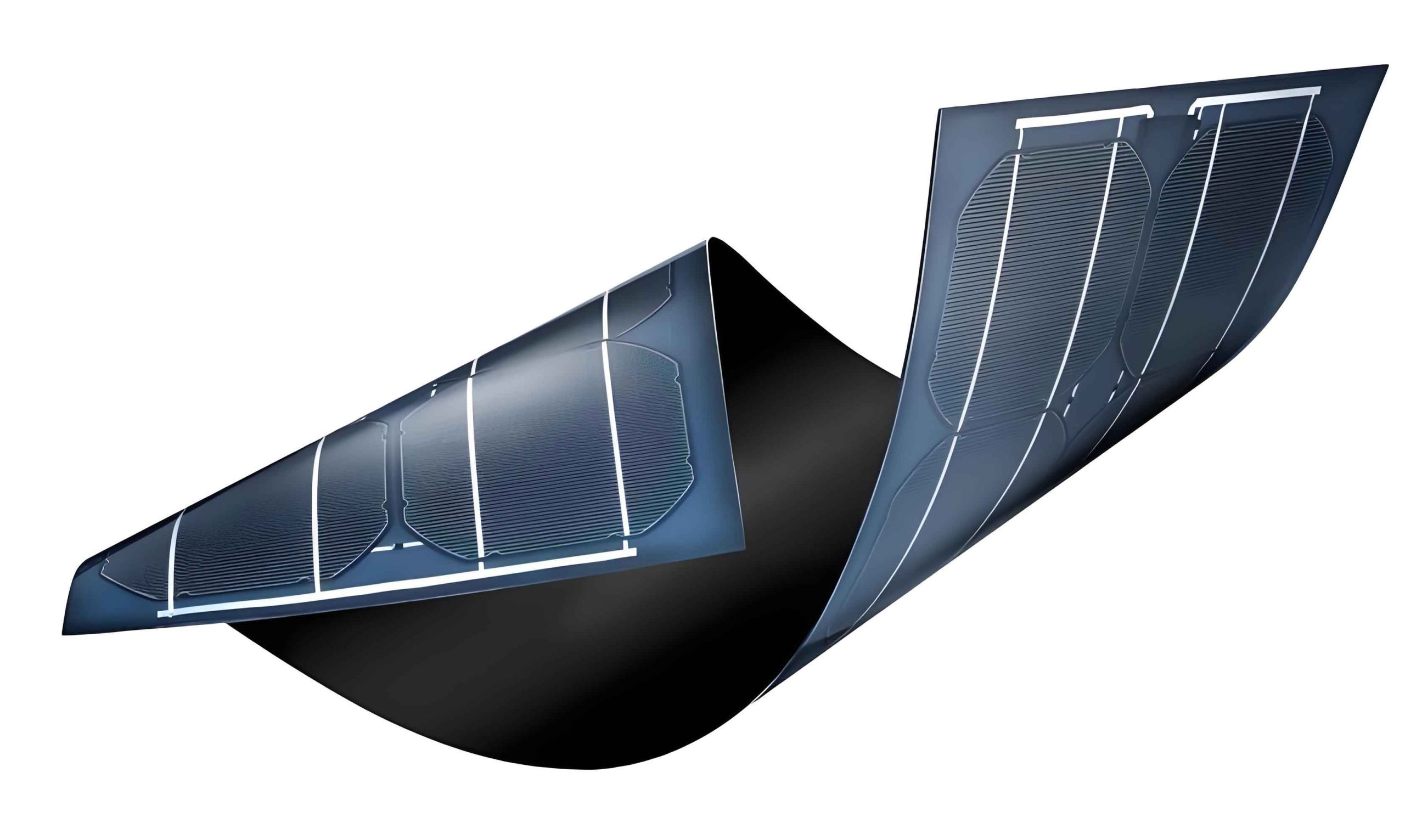
The primary hazards encountered during the manufacture of thin film solar panels fall into two broad categories: chemical and physical. Chemical hazards include toxic and pyrophoric gases, metal fumes, acid and alkali mists, and various dusts. Physical hazards encompass ionizing and non-ionizing radiation (primarily from lasers), high-intensity light, noise, and ergonomic stresses. Understanding these hazards requires a step-by-step examination of the production line for thin film solar panels.
Pre-PECVD Process: Substrate Preparation and Initial Patterning
The journey of a thin film solar panel begins with the preparation of the transparent conductive oxide (TCO) glass substrate, typically fluorine-doped tin oxide (SnO2:F).
1. Glass Edging and Corner Rounding: The first mechanical operation involves grinding the edges of the TCO glass to prevent chipping and ensure safe handling. This process generates significant amounts of respirable crystalline silica (SiO2) dust. Inhalation of silica dust is directly linked to silicosis, a serious and irreversible lung disease. The occupational exposure limit (OEL) for airborne crystalline silica with a content >80% is very low, emphasizing its high toxicity. For total dust, the Permissible Concentration-Time Weighted Average (PC-TWA) is 0.5 mg/m³, and for the respirable fraction, it is only 0.2 mg/m³. Simultaneously, the grinding equipment produces steady-state noise, which, if exceeding 85 dB(A) over an 8-hour shift, poses a risk of noise-induced hearing loss. The 8-hour equivalent continuous A-weighted sound pressure level, $L_{EX,8h}$, is calculated as:
$$L_{EX,8h} = L_{eq,T_e} + 10 \log_{10}\left(\frac{T_e}{T_0}\right)$$
where $L_{eq,T_e}$ is the equivalent continuous A-weighted sound pressure level measured over time $T_e$, and $T_0$ is 8 hours.
2. Cleaning Process 1: The glass is then cleaned to remove contaminants. This often involves an acidic solution (e.g., dilute hydrochloric acid, HCl) spray and brush wash, followed by rinsing with deionized water and drying with hot air knives and infrared (IR) heaters. While dilute acids are used, mists or vapors can be released. The Maximum Allowable Concentration (MAC) for hydrochloric acid is 7.5 mg/m³. The hot air and IR drying stages also create a localized high-temperature work environment, which is a heat stress concern.
3. Laser Scribing P1: This is a critical patterning step where an infrared laser (typically 1064 nm) scribes insulating lines into the TCO layer to define individual cell strips. The process vaporizes the SnO2 layer, creating fumes of metal oxides. Tin oxide fume (as Sn) has a PC-TWA of 2 mg/m³. Furthermore, the use of Class 4 high-power lasers introduces a significant risk of eye and skin injury from direct or reflected beam exposure. The permissible exposure limits for laser radiation are strictly defined by wavelength and exposure duration. For skin exposure to a 1064 nm laser over a duration $t$ between $10^{-7}$ and 10 seconds, the radiant exposure $H$ must not exceed:
$$H \leq 1.1 C_A t^{1/4} \quad \text{(J/cm²)}$$
where $C_A$ is a correction factor (5 for 1050-1400 nm).
4. Cleaning Process 2 & Marking: A second, more rigorous cleaning follows P1 scribing, often using an alkaline solution (e.g., sodium hydroxide, NaOH) and ultrasonic baths to remove scribing debris. The MAC for NaOH is 2 mg/m³. After cleaning, the substrates are inspected and marked with a CO2 laser, which poses minimal hazard due to its enclosure and short pulse duration.
The Core PECVD Process: Depositing the Photovoltaic Layers
This is the heart of manufacturing thin film solar panels, where the active amorphous silicon P-I-N layers are deposited. The process occurs in vacuum chambers using plasma to decompose precursor gases.
1. Loading and Pre-heating: Substrates are loaded onto carriers and pre-heated to around 200°C. Automated material handling systems, such as rail-guided vehicles, can be a source of high-impact, non-steady-state noise during operation.
2. P-I-N Layer Deposition: This sequential deposition involves highly hazardous, often pyrophoric, gases. The table below summarizes the key gases used and their associated risks.
| Layer | Key Process Gases | Primary Hazards | Health Effects & Notes |
|---|---|---|---|
| P-layer (p-type a-Si) | Silane (SiH4), Hydrogen (H2), Diborane (B2H6), Methane (CH4) | Fire, Explosion, Toxicity | SiH4 is highly toxic and spontaneously flammable in air. B2H6 is extremely toxic (PC-TWA: 0.1 mg/m³), pyrophoric, and damages liver/kidneys. |
| I-layer (intrinsic a-Si) | Silane (SiH4), Hydrogen (H2) | Fire, Explosion, Toxicity | SiH4 exposure can lead to respiratory irritation and, upon hydrolysis in lungs, potential silicoproteinosis. |
| N-layer (n-type a-Si) | Silane (SiH4), Hydrogen (H2), Phosphine (PH3) | Fire, Explosion, Acute Toxicity | PH3 is a highly toxic, flammable gas with a low auto-ignition temperature. It is a systemic poison affecting the CNS, lungs, heart, and kidneys. |
The central risk here is the potential for acute poisoning or fire/explosion from accidental releases of these specialty gases. The PECVD reactors themselves also produce intense plasma glow, which is a source of broad-spectrum optical radiation. Continuous monitoring of gas delivery systems and strict adherence to purging procedures are paramount.
Sputtering Section: Back Contact Formation and Isolation
After P-I-N deposition, the panels move to the sputtering section to form the back electrical contact and complete the cell isolation.
1. Laser Scribing P2: A green laser (532 nm) scribes through the newly deposited silicon layers to create isolation lines aligned with the P1 pattern. This generates silicon-containing dust. The laser hazard is significant, with permissible exposures for the eye to a 532 nm laser beam given by a radiant exposure limit of:
$$H \leq 2.5 t^{3/4} \times 10^{-3} \quad \text{(J/cm²)} \quad \text{for } t \text{ from } 1.2\times10^{-5} \text{ to } 10 \text{ seconds}.$$
2. Back Contact Sputtering (AZO/Al): The back transparent conductive oxide (e.g., Al-doped ZnO, AZO) and the reflective aluminum back contact are deposited via magnetron sputtering. This physical vapor deposition process occurs in a vacuum chamber with a high-voltage plasma (glow discharge). While primarily enclosed, viewports can expose maintenance personnel to intense visible light emissions.
3. Laser Scribing P3/P4/P5: A series of subsequent laser scribes (P3, P4, P5) using green and infrared lasers isolate the individual cells and trim the panel edges. Each step produces a mixture of silicon, zinc oxide, and aluminum fumes and dust. For aluminum oxide dust, as an example, the PC-TWA for total dust is 4 mg/m³.
4. Cleaning Process 3 & Burn-in: A final wet clean removes particles from all previous scribing steps. The “burn-in” step applies a reverse voltage to the P3 lines to vaporize any remaining conductive bridges, producing additional metal fumes.
Lamination and Assembly: Final Integration
The final stages involve electrically connecting and encapsulating the fragile thin film solar panel structure.
1. Tab Welding and Soldering: Metal ribbons are welded (ultrasonically or with a laser) to the front and back contacts to interconnect cells. Defects may be repaired with hand soldering. These operations generate metal fumes (e.g., from aluminum, tin, lead-free solder alloys) and, in the case of soldering, soldering fume. Welding fume is classified as a Group 1 carcinogen by IARC, and its PC-TWA is generally 4 mg/m³ (total dust). Local exhaust ventilation is critical here.
2. Lamination and Curing: The panel is sealed between a front glass and a backsheet using an ethylene-vinyl acetate (EVA) or polyvinyl butyral (PVB) encapsulant, laminated under heat and vacuum. While the curing temperatures (135-140°C) are below the decomposition point of these polymers, minor off-gassing can occur.
3. Junction Box Adhesion and Potting: The junction box is glued and sealed onto the panel, often using two-part epoxy resins. This process can expose workers to epoxy vapors, hardeners, and solvents, which are sensitizers and can cause dermatitis and asthma. The variety of chemicals used means a lack of specific OELs for many formulations, necessitating a precautionary approach based on Safety Data Sheets (SDS).
Comprehensive Hazard Mitigation Framework for Thin Film Solar Panel Production
Based on the identified hazards, a multi-layered control strategy is essential to protect workers involved in manufacturing thin film solar panels. The hierarchy of controls should be rigorously applied.
1. Engineering Controls: This is the most effective line of defense.
- Substitution and Process Reform (“革”): Where possible, investigate less hazardous alternatives (e.g., different precursor chemistries, though options are limited in core processes). Automate high-hazard tasks like wafer handling and laser operation.
- Wet Methods (“水”): Use water-based cooling and spray cleaning to suppress dust during glass edging and cleaning processes.
- Enclosure and Isolation (“密”): This is paramount. All PECVD, sputtering, and laser scribing tools must be fully enclosed. Gas cabinets and distribution lines must be sealed and under negative pressure. Robotic arms should handle substrate transfer between tools.
- Ventilation (“风”): Implement a robust ventilation system. Use local exhaust ventilation (LEV) at point-of-operation sources like soldering stations, chemical wet benches, and powder handling areas. Ensure general dilution ventilation is sufficient for the entire facility. The required ventilation rate $Q$ can be estimated if the contaminant generation rate $G$ and target concentration $C$ are known:
$$Q = \frac{G}{C}$$
where $C$ should be well below the OEL.
2. Administrative Controls and Training (“管, 教”):
- Develop and enforce strict standard operating procedures (SOPs) for all tasks, especially those involving hazardous gases, lasers, and maintenance of enclosed tools (Lockout/Tagout).
- Implement a comprehensive chemical management program with up-to-date SDS accessible to all workers.
- Mandate rigorous training for all employees and contractors. Training must cover hazard recognition (specific to thin film solar panel making), proper use of controls, emergency procedures for gas leaks or fires, and the correct use and limitations of PPE.
- Establish and enforce designated areas for eating, drinking, and smoking, strictly separated from production areas.
3. Personal Protective Equipment (PPE) (“护”): PPE is the last line of defense and must be used where other controls are insufficient.
- Respiratory Protection: Fit-tested respirators (e.g., APR with appropriate cartridges for acids/organics, or supplied-air respirators for unknown or immediately dangerous to life or health (IDLH) atmospheres) for tasks like soldering, chemical handling, or emergency response.
- Eye/Face Protection: Laser safety glasses with the correct Optical Density (OD) for the specific laser wavelengths in use (1064 nm IR, 532 nm green). Chemical splash goggles and face shields for wet chemical processes.
- Hearing Protection: Earplugs and/or earmuffs with adequate Noise Reduction Rating (NRR) in areas where noise levels exceed 85 dB(A). The effective A-weighted sound pressure level $L_{A,protected}$ when wearing hearing protection can be estimated as:
$$L_{A,protected} = L_{A,unprotected} – \text{NRR}_{eff}$$
where $\text{NRR}_{eff}$ is the derated effectiveness of the protector. - Skin Protection: Chemical-resistant gloves, aprons, and coveralls to prevent dermal contact with acids, alkalis, solvents, and epoxy resins.
4. Health Surveillance and Monitoring (“查”):
- Conduct regular air monitoring to measure concentrations of key contaminants (SiO2 dust, acid mists, metal fumes, solvent vapors) to ensure they remain below OELs. The time-weighted average concentration $C_{TWA}$ is calculated as:
$$C_{TWA} = \frac{\sum_{i=1}^{n} C_i \cdot T_i}{T_{total}}$$
where $C_i$ is the concentration during sampling period $i$, $T_i$ is the duration of that period, and $T_{total}$ is the total work period (e.g., 8 hours). - Implement a medical surveillance program tailored to the identified hazards (e.g., pulmonary function tests for dust and fume exposures, audiometric testing for noise-exposed workers).
- Perform regular inspections and preventive maintenance on all engineering controls, ventilation systems, gas detection systems, and laser safety features.
Conclusion
The manufacturing of thin film solar panels is a sophisticated process that integrates precision engineering with complex chemical and physical operations. While delivering a product crucial for a sustainable energy future, it generates a significant portfolio of occupational hazards, including highly toxic and flammable gases, carcinogenic and fibrogenic dusts, hazardous levels of noise, and intense optical radiation from lasers and plasmas. A passive or reactive approach to safety is utterly insufficient. Ensuring worker health and safety in this industry demands a proactive, systematic, and science-based strategy. This involves meticulous process hazard analysis, unwavering commitment to the hierarchy of controls—prioritizing engineering solutions over administrative rules and PPE—and fostering a pervasive culture of safety where every employee, from the plant manager to the line technician, is educated, empowered, and accountable. Only through such a comprehensive and vigilant approach can the thin film solar panel industry truly achieve sustainability, not just in its product, but in its most valuable asset: its workforce.