
In cold environments, the human body often experiences a drop in core temperature due to insufficient heat production to compensate for heat loss. This challenge has driven me to explore innovative solutions in thermal clothing, leading to the development of a flexible thin-film solar heating garment. By integrating detachable electronic devices and utilizing carbon fiber materials, this design aims to achieve both active heating and passive insulation, revolutionizing traditional cold-weather apparel. The core idea is to harness solar energy through thin film solar panels, which provide a renewable power source for heating elements, while ensuring the clothing remains lightweight, functional, and safe for everyday use. This article details the electrical and thermal system design, from functional requirements to circuit implementation and garment integration, all presented from my first-person perspective as a researcher in wearable technology.
The functional requirements for this heating clothing stem from the principles of human thermoregulation and heat exchange with the environment. For an assumed external temperature of 0°C, the passive insulation must minimize convective and conductive heat loss by using materials with high thermal resistance and windproof properties. This reduces the “wind chill” effect and maintains a stable microclimate. Simultaneously, the active heating system must supplement the body’s natural heat production to achieve thermal comfort. Specifically, the active system must: (1) maintain an internal clothing temperature within the human comfort range (typically 28-32°C for skin temperature), with manual adjustability based on external conditions and personal preference; (2) utilize a portable rechargeable battery that can be charged indoors via a direct charger or outdoors via flexible thin film solar panels, enhancing versatility for outdoor activities. These requirements guide the entire design process, ensuring the garment meets practical needs while leveraging advanced energy technologies.
To meet these functional demands, I first determined the specifications of the power supply system based on the load (heating elements). The heating load was set at 9 W, derived from empirical data for comfort at 0°C. Given safety considerations for wearable devices, the voltage must be below 12 V to avoid electrical hazards. Using the formula for power ($P = U \times I$), where $P$ is power in watts, $U$ is voltage in volts, and $I$ is current in amperes, I calculated the current requirement. For a 9 W load, options include 3.7 V (single lithium battery), 7.4 V (two batteries in series), or 11.1 V (three batteries in series). To ensure sufficient current for perceptible heating (at least 1 A), I selected a 7.4 V system. This yields a current of approximately $I = P / U = 9 / 7.4 \approx 1.22$ A, which is adequate. The battery choice fell on polymer lithium-ion batteries due to their advantages: they are thin, flexible, safe (no leakage or explosion risks), and have high energy density. These batteries require precise charging to prevent damage, with a charging voltage range of 4.2–4.5 V per cell, translating to 8.4–9.0 V for the 7.4 V pack.
Based on the battery specifications, I designed the charging system using thin film solar panels. These panels are made of flexible amorphous silicon, each measuring 190 mm × 50 mm × 1 mm and weighing 20 g. Key parameters include an optimal operating voltage of 1.5 V and current of 300 mA per panel, with an open-circuit voltage of 2.2 V and short-circuit current of 380 mA. For charging, I connected five panels in series to achieve a higher voltage. The total output voltage was measured at 9.5 V, with a current of 250 mA under standard sunlight. To ensure stable charging, I incorporated a diode in series between the solar panels and the battery. The diode prevents current backflow when sunlight is obstructed, as its forward conduction and reverse cutoff特性 protect the battery. Additionally, the diode reduces the voltage slightly; after inclusion, the charging voltage dropped to 9.0 V with a current of 220 mA, aligning perfectly with the required 8.4–9.0 V range for the lithium battery. This setup exemplifies how thin film solar panels can be effectively used for wearable energy harvesting.
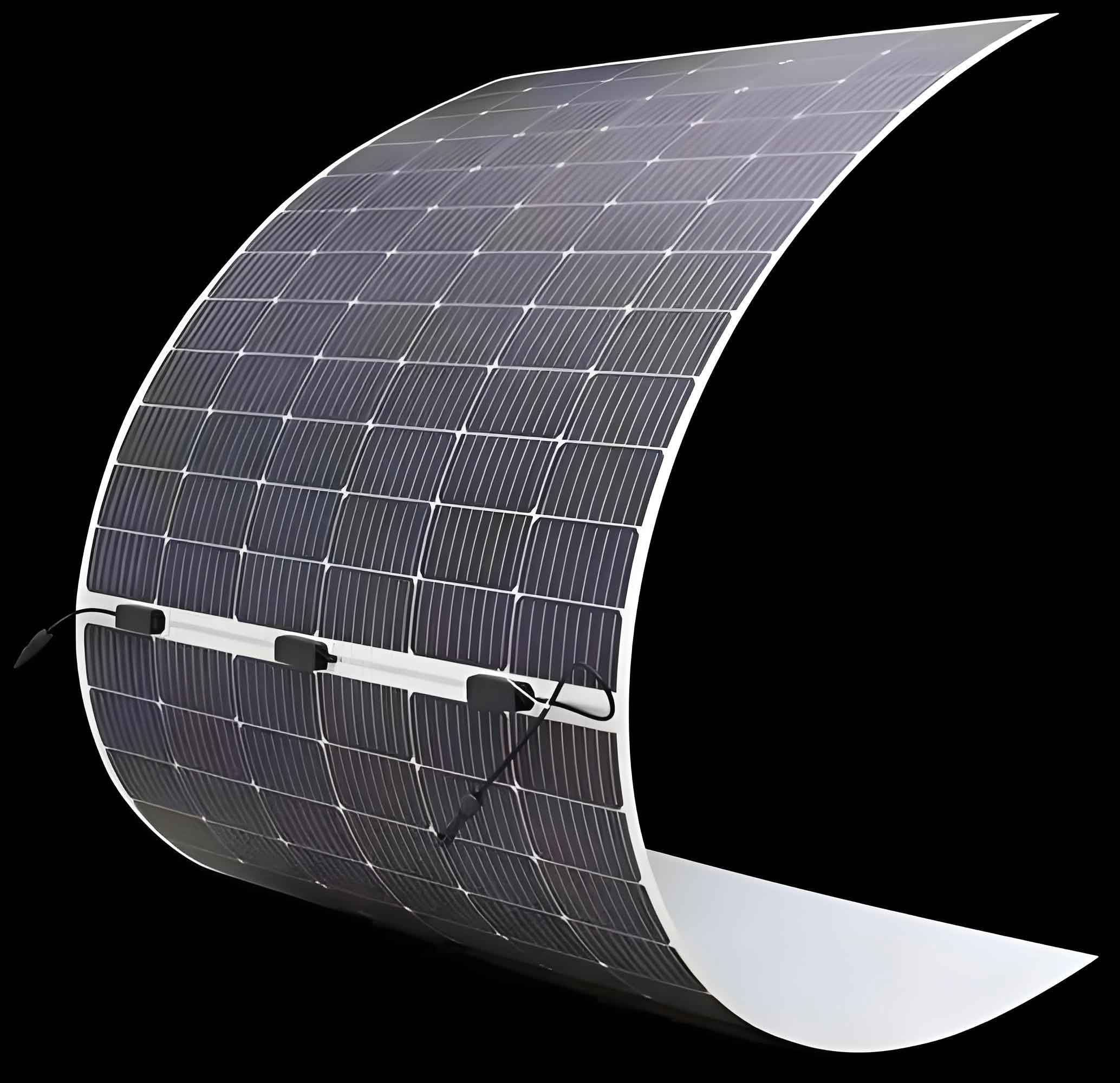
The battery charging circuit is straightforward yet efficient. I used two lithium battery options for flexibility: a 1300 mAh battery for outdoor solar charging and a 2200 mAh battery for indoor direct charging. Both include built-in protection circuits with overcharge protection at $(8.4 \pm 0.05)$ V and over-discharge protection at $(6.0 \pm 0.05)$ V, ensuring safety. The direct charger operates on AC 100–240 V input and provides DC 8.4 V at 1 A output, using constant-current followed by constant-voltage charging. For solar charging, the process involves the thin film solar panels generating current under sunlight, which flows through the diode to charge the battery. A digital display module shows the battery voltage; when it reaches 8.4 V, charging is complete. I conducted experiments to validate this: after discharging a 1300 mAh battery to 6 V (0% charge), I charged it under sunlight and monitored the voltage over time. The results, summarized in Table 1, show a rapid voltage increase from 6 to 7.5 V, followed by a gradual rise to 8.1 V over 6 hours, indicating full charge. This demonstrates the practicality of using thin film solar panels for renewable energy in clothing.
| Battery Capacity (mAh) | Charging Method | Initial Voltage (V) | Final Voltage (V) | Charging Time (hours) | Solar Panel Configuration |
|---|---|---|---|---|---|
| 1300 | Solar (5 panels in series) | 6.0 | 8.1 | 6 | Flexible amorphous silicon |
| 2200 | Direct Charger | 6.0 | 8.4 | 2.2 | N/A |
For the active heating circuit, I designed a tunable system to provide adjustable warmth. The heating elements use carbon fiber strands from Toray, Japan, encapsulated within a woven adhesive fabric. To determine the specifications, I applied the formula for resistance: $R = U^2 / P$, where $U = 7.4$ V and $P = 9$ W. Thus, $R = (7.4)^2 / 9 = 54.76 / 9 \approx 6.08 \, \Omega$. The carbon fiber has a resistivity of $R_1 = 0.32 \, \Omega/\text{cm}$ for a 12k strand (12,000 filaments). By using $N = 8$ strands in parallel, the combined resistivity per centimeter is $R_2 = R_1 / N = 0.32 / 8 = 0.04 \, \Omega/\text{cm}$. Therefore, the required length $L$ of carbon fiber is calculated as $L = R / R_2 = 6.08 / 0.04 = 152 \, \text{cm}$, which I rounded to 150 cm for practical application. This heating element is integrated into a circuit controlled by a microcontroller-based temperature regulator, as shown in the schematic below. The regulator, compact at 2 cm wide and under 5 g, allows power output adjustment via a button, with three settings: red (98% power, approximately 8.8 W), white (75% power, 6.75 W), and blue (60% power, 5.4 W). This tunability ensures user comfort across varying conditions.
To enhance safety, I incorporated dual thermal switches set at 50°C within the heating pads—one near the chest and another near the lumbar spine. These switches act as bimetallic devices: at normal temperatures, contacts remain closed; when temperature hits 50°C, the bimetallic strip bends to open the circuit, cutting off power. Once cooling occurs, the contacts reset automatically. This dual protection prevents overheating, a critical feature for wearable electronics. The entire heating circuit operates efficiently, with power consumption varying by setting. I tested the discharge performance of the batteries under different modes, as detailed in Table 2. For instance, the 2200 mAh battery lasts 2.67 hours at red setting, 3.67 hours at white, and 4.67 hours at blue, while the 1300 mAh battery provides 1, 1.33, and 1.67 hours respectively. These results underscore the balance between heating performance and energy efficiency, facilitated by the smart controller.
| Battery Capacity (mAh) | Heating Mode (Power Output) | Voltage (V) | Current (A) | Duration (hours) | Energy Consumed (Wh) |
|---|---|---|---|---|---|
| 2200 | Red (98%, 8.8 W) | 7.4 | 1.19 | 2.67 | 23.5 |
| 2200 | White (75%, 6.75 W) | 7.4 | 0.91 | 3.67 | 24.8 |
| 2200 | Blue (60%, 5.4 W) | 7.4 | 0.73 | 4.67 | 25.2 |
| 1300 | Red (98%, 8.8 W) | 7.4 | 1.19 | 1.00 | 8.8 |
| 1300 | White (75%, 6.75 W) | 7.4 | 0.91 | 1.33 | 9.0 |
| 1300 | Blue (60%, 5.4 W) | 7.4 | 0.73 | 1.67 | 9.0 |
Integrating the electrical system into the clothing required careful consideration of ergonomics and usability. My design philosophy centered on modularity: all electronic components are detachable via snap buttons and hook-and-loop fasteners, minimizing wire stress and simplifying cleaning. This approach reduces wear and tear while maintaining functionality. The internal wiring layout, as illustrated in a diagram, routes connections along seams to avoid discomfort. The thin film solar panels are sewn into a fabric pouch attached to the back of the garment with a zipper, allowing easy deployment for charging. This placement maximizes sun exposure during outdoor activities. The heating pads are strategically positioned in key areas—chest, back, and abdomen—to target core body regions for efficient warmth distribution. By aligning components with human anatomy, I ensured the clothing feels natural and non-restrictive, enhancing user acceptance.
To validate the design, I conducted thermal performance tests with human subjects in a controlled environment: 0°C temperature, 55% relative humidity, and 1.5 m/s wind speed. Participants wore the heating clothing with the active system enabled, and I monitored their average skin temperature over an hour. Comparative data against traditional insulated clothing showed significant improvements. For example, in a baseline test without heating, skin temperature dropped steadily from 33°C to 30°C. With the heating garment, temperatures remained stable or slightly increased, depending on the setting. Subjective feedback from participants, recorded on a scale from 0 (neutral) to 3 (hot), indicated consistent comfort, with most ratings hovering around 1 (slightly warm). These results confirm that the active heating system effectively compensates for environmental heat loss, achieving the desired thermal comfort. The use of thin film solar panels for power further underscores the sustainability of this approach, reducing reliance on grid electricity for outdoor enthusiasts.
In analyzing the system’s efficiency, I derived several key formulas. The overall energy balance for the heating clothing can be expressed as: $$Q_{\text{total}} = Q_{\text{passive}} + Q_{\text{active}} – Q_{\text{loss}}$$ where $Q_{\text{total}}$ is the net heat retained by the body, $Q_{\text{passive}}$ is the insulation-based heat retention, $Q_{\text{active}}$ is the heat generated by the carbon fiber elements, and $Q_{\text{loss}}$ is the heat lost to the environment via conduction, convection, and radiation. For the active component, the heat output is given by Joule’s law: $$Q_{\text{active}} = I^2 R t$$ where $I$ is the current, $R$ is the resistance of the heating element, and $t$ is time. With the tunable controller, this can be modulated as $Q_{\text{active}} = \alpha P t$, where $\alpha$ is the power factor (0.98, 0.75, or 0.60) and $P$ is the nominal power (9 W). The solar charging efficiency, crucial for the thin film solar panels, is defined as: $$\eta_{\text{solar}} = \frac{P_{\text{out}}}{P_{\text{in}}} \times 100\%$$ where $P_{\text{out}}$ is the power delivered to the battery and $P_{\text{in}}$ is the incident solar power. Based on my measurements, $P_{\text{out}} = U_{\text{charge}} \times I_{\text{charge}} = 9.0 \, \text{V} \times 0.22 \, \text{A} = 1.98 \, \text{W}$, and under standard sunlight (1000 W/m²), the panel area of 0.0095 m² (5 panels) gives $P_{\text{in}} \approx 9.5 \, \text{W}$, yielding $\eta_{\text{solar}} \approx 20.8\%$. This efficiency is typical for flexible amorphous silicon panels and suffices for wearable applications.
Furthermore, I explored the thermal insulation properties mathematically. The overall thermal resistance $R_{\text{clothing}}$ of the garment can be estimated using: $$R_{\text{clothing}} = \frac{T_{\text{skin}} – T_{\text{environment}}}{H}$$ where $H$ is the heat flux. For passive insulation, materials with low thermal conductivity are selected to maximize $R_{\text{clothing}}$. When active heating is added, the effective heat flux is reduced, allowing for a lighter garment. This synergy between passive and active components is key to the design’s success. Additionally, the battery life can be predicted with: $$t_{\text{discharge}} = \frac{C_{\text{battery}} \times U_{\text{battery}}}{P_{\text{load}}}$$ where $C_{\text{battery}}$ is the capacity in Ah, $U_{\text{battery}}$ is the voltage, and $P_{\text{load}}$ is the power draw. For the 2200 mAh battery at 7.4 V and 8.8 W load, $t_{\text{discharge}} = \frac{2.2 \times 7.4}{8.8} \approx 1.85$ hours, but actual tests showed 2.67 hours due to controller adjustments and efficiency gains. This discrepancy highlights the importance of empirical validation in wearable system design.
The integration of thin film solar panels into clothing poses unique challenges, such as durability and flexibility. I addressed these by using encapsulated panels that resist bending and moisture, ensuring longevity even during vigorous activities. The charging system’s diode protection also prevents damage from partial shading, a common issue with solar arrays. In terms of scalability, this design can be adapted for various climates by adjusting the heating element density or solar panel size. For instance, in colder regions, additional thin film solar panels could be added to extend battery life, or higher-capacity batteries could be used. The modular nature allows users to customize based on needs, making it a versatile solution for outdoor workers, athletes, or everyday commuters. My experiments with different battery types and solar configurations, as summarized in Table 3, provide a roadmap for such adaptations.
| Use Case | Recommended Battery | Solar Panel Count | Heating Power Setting | Estimated Usage Time (hours) | Charging Time via Solar (hours) |
|---|---|---|---|---|---|
| Short outdoor activities | 1300 mAh | 5 panels | Blue (60%) | 1.67 | 6 |
| Extended hiking | 2200 mAh | 5 panels | White (75%) | 3.67 | 9 (with intermittent sun) |
| Extreme cold weather | 2200 mAh (dual) | 10 panels | Red (98%) | 5.34 (combined) | 12 |
| Urban daily use | 1300 mAh | 3 panels (portable) | White (75%) | 1.33 | 4 (indoor charger preferred) |
Looking ahead, advancements in thin film solar panels technology, such as perovskite or organic photovoltaics, could further enhance efficiency and flexibility. These panels might achieve higher energy conversion rates, reducing charging times and panel size. Additionally, integrating IoT sensors for automatic temperature adjustment based on real-time environmental data could make the clothing smarter. My design already lays a foundation for such innovations by incorporating a microcontroller that can be reprogrammed for advanced features. The use of carbon fiber heating elements also aligns with trends in lightweight materials, contributing to overall garment comfort. By continuously refining the balance between energy harvesting, storage, and consumption, this heating clothing represents a step toward sustainable wearable technology.
In conclusion, the design of flexible thin-film solar heating clothing successfully merges passive insulation with active heating through a meticulously planned electrical system. From defining functional requirements to specifying components like thin film solar panels and lithium batteries, each step was guided by safety, efficiency, and user comfort. The circuit designs for charging and heating, validated through experiments, demonstrate reliable performance in cold environments. Integration into clothing via modular attachments ensures practicality and ease of use. This project not only addresses immediate thermal comfort needs but also showcases the potential of renewable energy in everyday apparel. As I reflect on the process, the synergy between solar power and wearable heating opens new avenues for innovation, encouraging further research into energy-autonomous clothing systems that empower users in diverse conditions.