
As I reflect on the evolution of solar energy, I am struck by the transformative role of thin film solar panels. In the early 21st century, the solar market was dominated by silicon-based photovoltaic cells, which accounted for over 89% of the global share. However, around 2003, the rapid price surge of polysilicon, the key raw material for crystalline silicon solar cells, prompted industry experts like myself to shift focus toward more cost-effective alternatives. This is where thin film solar panels emerged as a game-changer. These panels can be fabricated on inexpensive substrates such as glass, plastic, ceramics, graphite, and metal sheets, with a voltage-generating layer just a few micrometers thick. Their technological advancements have continuously improved conversion efficiencies, and due to their flexibility, thin film solar panels can be crafted into non-planar structures, broadening applications from building integration to portable devices. In my analysis, this adaptability makes thin film solar panels a cornerstone for future energy solutions.
From my perspective, the growth of thin film solar panels has been remarkable. In 2015, global production capacity reached approximately 9.3 GW, with an output of about 4.4 GW. To illustrate this distribution, I have compiled a table summarizing the market share by type that year:
| Type of Thin Film Solar Panels | Production (GW) | Market Share (%) |
|---|---|---|
| Cadmium Telluride (CdTe) | 2.5 | 56.8 |
| Copper Indium Gallium Selenide (CIGS) | 1.3 | 29.6 |
| Silicon-based Thin Film | 0.6 | 13.6 |
Looking ahead, projections indicated that by 2018, global production of thin film solar panels would surge to 7.5 GW, with CdTe at 4.9 GW and CIGS at 1.8 GW. I recall that in regions like China, production started later but showed steady growth from 260 MW in 2013 to 680 MW in 2017, highlighting the expanding role of thin film solar panels in emerging markets.
In my experience, among the various thin film solar panels, CIGS and CdTe have garnered significant market favor due to their balance of efficiency and cost. Another notable type is gallium arsenide (GaAs) thin film solar panels, which boast the highest conversion rates but are limited by high expenses and toxicity concerns, confining them to niche applications like aerospace. This underscores why thin film solar panels must prioritize affordability for widespread adoption. I often consider the efficiency formula for these panels, which is fundamental to their performance:
$$ \eta = \frac{P_{\text{out}}}{P_{\text{in}}} \times 100\% $$
Here, \( \eta \) represents the conversion efficiency, \( P_{\text{out}} \) is the electrical power output, and \( P_{\text{in}} \) is the solar irradiance input. For thin film solar panels, optimizing this efficiency while reducing material costs is key, as seen in the progression of CIGS technology.
I have closely followed the advancements in copper indium gallium selenide thin film solar panels. These panels are celebrated for low production costs, minimal pollution, stability, and excellent performance in low-light conditions. Their efficiency rivals crystalline silicon cells but at about one-third the cost, earning them the label of “next-generation thin film solar panels.” In my observations, their sleek black appearance makes them ideal for architectural integration, such as glass facades in skyscrapers. Moreover, thin film solar panels based on CIGS are finding roles in small-scale, modular applications like backpacks, vehicles, and wearable devices, showcasing their versatility.
Currently, global CIGS production stands at around 2 GW, with a projected compound annual growth rate of 16.15% from 2017 to 2021, potentially reaching 3.13 GW by 2021. I note that leading manufacturers include a Japanese firm with 1.1 GW capacity and a Chinese enterprise that has achieved conversion efficiencies of 18.7% for glass-based CIGS and 17.88% for flexible versions. In GaAs thin film solar panels, a company holds world records with 28.9% efficiency for single-junction cells and 31.6% for dual-junction cells, though commercialization remains limited. The strategic acquisition of overseas firms by a Chinese player has accelerated innovation, with production capacity now at 3 GW and agreements for 10 GW of photovoltaic plants globally.
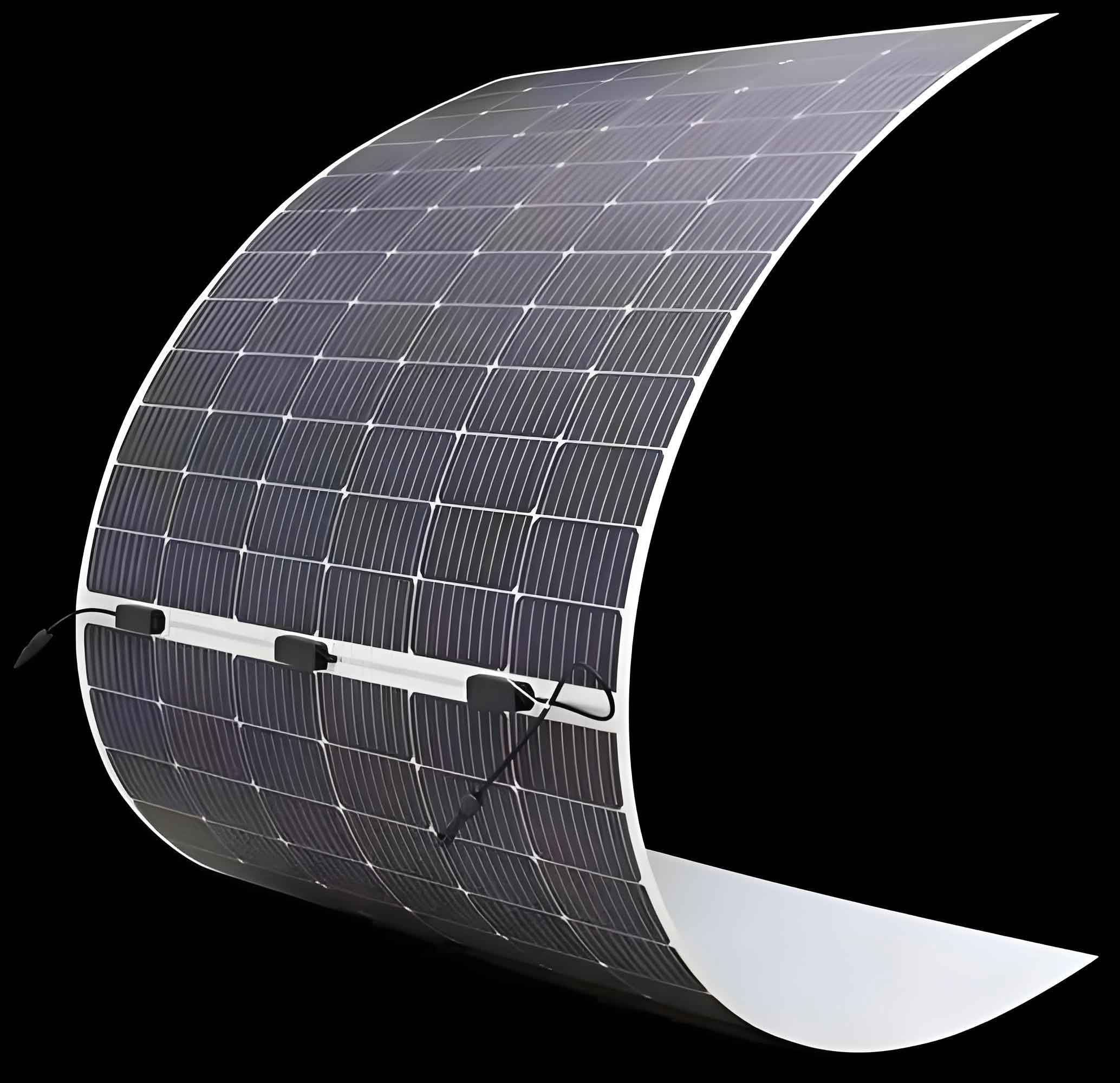
Turning to cadmium telluride thin film solar panels, I have seen them gain substantial traction over the past decade. These panels are proven for high efficiency and stability, with adoption in large-scale power plants and even civil power supply for institutions. A major U.S. company reported a profit margin of 22.1%, leading the industry, with commercial module efficiencies between 17.0% and 18.2%. Their Series 6 product line aims to cut costs to $0.25–0.28 per watt by reducing cadmium telluride usage, with capacity targets of 3.5 GW in 2018 and 4 GW in 2019. In China, a domestic producer operates a 100 MW line, achieving 17.8% lab efficiency and 14.5% for small modules, though it still lags behind international leaders. I believe that continuous innovation is vital for thin film solar panels to compete globally, as demonstrated by a Japanese firm’s record of 22.9% efficiency for cadmium-free CIGS cells in 2017.
To better understand the technical landscape, I have formulated a comparison of key parameters for thin film solar panels. This table summarizes efficiency ranges, cost factors, and primary applications:
| Type | Typical Efficiency Range (%) | Relative Cost | Key Applications |
|---|---|---|---|
| CIGS Thin Film Solar Panels | 15–22 | Low | Building integration, portable devices |
| CdTe Thin Film Solar Panels | 17–22 | Very Low | Large-scale plants, civil power |
| Silicon-based Thin Film Solar Panels | 10–13 | Medium | Niche markets |
| GaAs Thin Film Solar Panels | 25–32 | Very High | Space, military |
From my viewpoint, the cost-effectiveness of thin film solar panels can be modeled using a simple equation that relates efficiency, material usage, and production scale. For instance, the cost per watt \( C \) might be expressed as:
$$ C = \frac{M \cdot A + P}{\eta \cdot I} $$
Where \( M \) is material cost per area, \( A \) is area, \( P \) is processing cost, \( \eta \) is efficiency, and \( I \) is irradiance. This highlights why thin film solar panels, with their thin layers and scalable manufacturing, hold an edge. I have observed that as technologies mature, efficiencies improve, further driving down \( C \) for thin film solar panels.
In terms of market dynamics, I recall that thin film solar panels accounted for a growing segment of the photovoltaic industry. The following table outlines production forecasts for thin film solar panels from 2015 to 2021, based on historical data and trends I have analyzed:
| Year | Global Production (GW) | CdTe Share (GW) | CIGS Share (GW) |
|---|---|---|---|
| 2015 | 4.4 | 2.5 | 1.3 |
| 2018 | 7.5 | 4.9 | 1.8 |
| 2021 | ~10.0 | ~6.0 | ~3.1 |
These figures underscore the rapid expansion of thin film solar panels, with CdTe maintaining dominance but CIGS showing robust growth. I believe that thin film solar panels will continue to penetrate markets due to their flexibility and cost advantages, especially in urban environments where space constraints favor integrated solutions.
Another aspect I have explored is the environmental impact of thin film solar panels. While they generally use fewer raw materials than silicon cells, concerns about toxic elements like cadmium in CdTe panels necessitate careful recycling. However, advances in cadmium-free CIGS and improved manufacturing processes are mitigating these issues. In my assessment, the lifecycle efficiency \( L \) of thin film solar panels can be approximated as:
$$ L = \frac{E_{\text{generated}}}{E_{\text{manufacturing}} + E_{\text{disposal}}} $$
Where \( E_{\text{generated}} \) is energy produced over the panel’s lifetime, and the denominator accounts for embodied energy. Thin film solar panels often score well here due to low energy input during production, enhancing their sustainability profile.
As I look to the future, I am optimistic about the role of thin film solar panels in the global energy transition. Innovations in materials science, such as perovskite-based thin film solar panels, promise even higher efficiencies at lower costs. I predict that within the next decade, thin film solar panels could capture over 30% of the photovoltaic market, driven by advancements in flexible and transparent designs. The integration of thin film solar panels into everyday objects—from cars to clothing—will democratize solar energy access.
In conclusion, my journey through the development of thin film solar panels reveals a dynamic and promising technology. From their inception as a cost-saving alternative to silicon cells, thin film solar panels have evolved into versatile, efficient solutions for diverse applications. While challenges remain in efficiency parity and environmental safety, ongoing research and market forces are addressing these hurdles. I am confident that thin film solar panels will play a pivotal role in achieving a sustainable energy future, and I encourage continued investment and innovation in this field. The story of thin film solar panels is far from over; it is a narrative of resilience and transformation that I am proud to witness and analyze.