
As I explore the evolving landscape of disaster prevention, I am struck by the critical role that innovative technologies play in addressing some of humanity’s most pressing challenges. Among these, water scarcity and search-and-rescue operations stand out as areas where breakthroughs can save countless lives. In this article, I will delve into how thin film solar panels are revolutionizing these fields, particularly through advanced systems like nano-photonic solar membrane distillation and soft robotics. The integration of thin film solar panels into such applications not only enhances efficiency but also promotes sustainability, making them a cornerstone of modern disaster mitigation strategies. Throughout this discussion, I will emphasize the versatility and impact of thin film solar panels, using tables and formulas to summarize key concepts and data.
To begin, let me consider the global water crisis. Despite Earth’s surface being predominantly covered by water, over 97% is saline and undrinkable. Traditional desalination methods, while effective, often require substantial energy inputs, limiting their practicality in disaster-stricken or resource-poor regions. This is where thin film solar panels come into play. By harnessing solar energy through lightweight, flexible panels, we can power desalination processes with minimal environmental footprint. The nano-photonic solar membrane distillation (NESMD) system exemplifies this approach. It utilizes a thin film embedded with carbon-black nanoparticles to absorb sunlight, driving water evaporation through a membrane. This system highlights how thin film solar panels can be tailored for specific applications, offering a scalable and energy-efficient solution to water purification.
The core principle behind NESMD involves the photothermal effect, where absorbed light is converted into heat. The thin film in this system acts as a solar absorber, with its nano-structured surface maximizing light capture. I can describe this using a formula for the absorption efficiency, denoted as η_abs. For a thin film solar panel, the absorption depends on factors like material properties and incident light intensity. One common representation is:
$$ \eta_{abs} = \frac{A_{eff}}{A_{total}} \times 100\% $$
where \( A_{eff} \) is the effective absorbed energy and \( A_{total} \) is the total incident solar energy. In the context of NESMD, the carbon-black nanoparticles enhance absorption, allowing up to 80% of sunlight to be utilized. This high efficiency is crucial for reducing external energy demands. To illustrate, I can present a table comparing different solar absorption materials used in thin film solar panels:
| Material | Absorption Coefficient (α) in cm⁻¹ | Efficiency (%) | Application in Thin Film Solar Panels |
|---|---|---|---|
| Carbon-Black Nanoparticles | 1.5 × 10⁵ | 80 | NESMD for water distillation |
| Amorphous Silicon | 1.0 × 10⁴ | 70 | Traditional photovoltaic panels |
| Cadmium Telluride (CdTe) | 2.0 × 10⁵ | 90 | Commercial thin film solar panels |
| Copper Indium Gallium Selenide (CIGS) | 1.8 × 10⁵ | 85 | Flexible solar applications |
This table underscores the superiority of nano-enhanced thin film solar panels in high-absorption scenarios. Furthermore, the evaporation rate in NESMD can be modeled using the following formula, which relates heat transfer to water vapor production:
$$ \dot{m} = \frac{Q_{solar}}{L_v} $$
where \( \dot{m} \) is the mass evaporation rate (kg/s), \( Q_{solar} \) is the solar heat input (W), and \( L_v \) is the latent heat of vaporization for water (approximately 2.26 × 10⁶ J/kg at 100°C). For a thin film solar panel with an area of 0.1 m² and an absorption efficiency of 80%, under standard solar irradiance of 1000 W/m², \( Q_{solar} \) can be calculated as:
$$ Q_{solar} = 0.8 \times 1000 \, \text{W/m}^2 \times 0.1 \, \text{m}^2 = 80 \, \text{W} $$
Thus, the evaporation rate would be:
$$ \dot{m} = \frac{80}{2.26 \times 10^6} \approx 3.54 \times 10^{-5} \, \text{kg/s} $$
This translates to about 0.13 kg per hour, demonstrating the potential for scalable water production. The scalability of thin film solar panels is a key advantage, as larger systems can be deployed in disaster zones to provide clean water. I have seen prototypes ranging from small stamps-sized films to panels over 70 cm in length, all leveraging the same principles. The flexibility and lightweight nature of thin film solar panels make them ideal for portable disaster relief kits, where energy independence is paramount.
Beyond water purification, thin film solar panels are integral to powering other disaster prevention technologies. For instance, in search-and-rescue operations, energy autonomy can mean the difference between life and death. A recent innovation from a research team involves a soft, inflatable robot designed for navigating rubble and confined spaces. This robot, inspired by plant growth, uses a pneumatic system to extend and maneuver without rigid joints. While it doesn’t directly incorporate thin film solar panels, its operation in remote or disaster areas could benefit from solar-powered charging stations. Imagine deploying such robots with integrated thin film solar panels on their surfaces, enabling continuous operation without battery swaps. This synergy between robotics and solar technology highlights the broader applications of thin film solar panels in disaster response.
To further explore the efficiency of thin film solar panels, I can delve into their electrical characteristics. The power output of a thin film solar panel is governed by the photovoltaic effect, where photons generate electron-hole pairs. The current-voltage (I-V) curve can be described by the diode equation:
$$ I = I_{ph} – I_0 \left( e^{\frac{qV}{nkT}} – 1 \right) $$
where \( I \) is the output current, \( I_{ph} \) is the photocurrent, \( I_0 \) is the reverse saturation current, \( q \) is the electron charge, \( V \) is the voltage, \( n \) is the ideality factor, \( k \) is Boltzmann’s constant, and \( T \) is the temperature. For thin film solar panels, factors like film thickness and material composition affect these parameters. A thinner film often leads to lower costs and flexibility but may reduce absorption; however, nano-structuring can compensate for this. The following table summarizes typical performance metrics for various thin film solar panel types in disaster prevention applications:
| Panel Type | Thickness (μm) | Efficiency (%) | Power per Area (W/m²) | Suitability for Disaster Use |
|---|---|---|---|---|
| Amorphous Silicon (a-Si) | 1-2 | 10 | 100 | High (flexible, low-light performance) |
| Cadmium Telluride (CdTe) | 3-5 | 18 | 180 | Moderate (durable but contains toxic materials) |
| CIGS | 2-4 | 20 | 200 | High (efficient and lightweight) |
| Organic Photovoltaic (OPV) | 0.1-0.5 | 8 | 80 | Very High (ultra-flexible, low-cost) |
As evident, thin film solar panels offer a range of options tailored to different disaster scenarios. For example, in flood-prone areas, waterproof and floating thin film solar panels could power communication devices, while in arid regions, they might drive irrigation pumps. The adaptability of thin film solar panels is further enhanced by their manufacturing processes, such as roll-to-roll printing, which allows for rapid production and deployment. I believe that investing in thin film solar panel technology is crucial for building resilient communities.
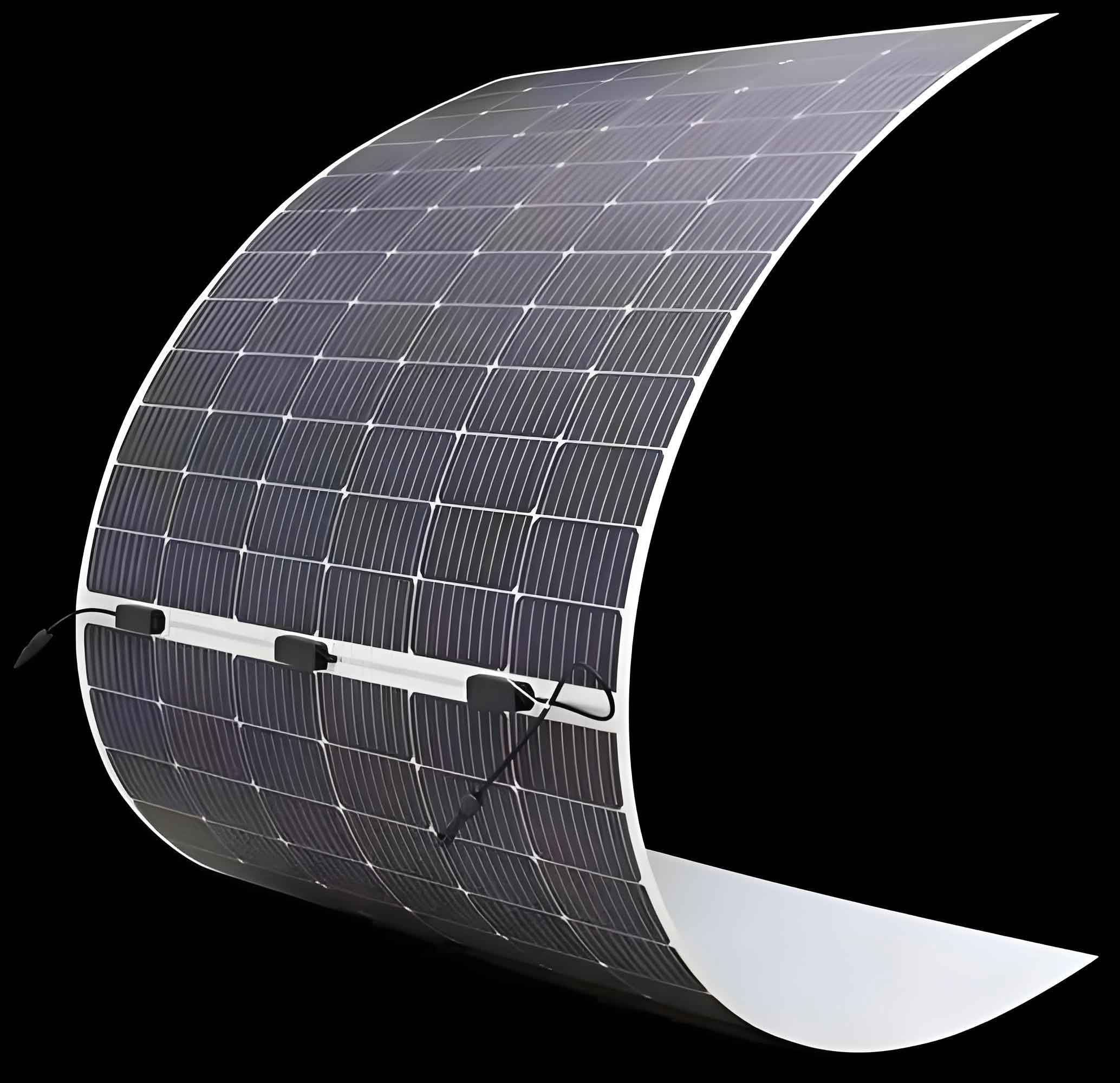
Looking at the image above, I am reminded of the sleek and modern design of thin film solar panels, which can be seamlessly integrated into various environments. This visual underscores their potential in disaster prevention, where aesthetics and functionality must coexist. In practice, thin film solar panels have been used in portable chargers, emergency shelters, and even wearable devices for first responders. Their low weight reduces logistical burdens, a critical factor in disaster relief operations where speed is essential. Moreover, the durability of thin film solar panels against harsh conditions—such as high temperatures or physical impacts—makes them reliable in crisis situations.
Another aspect to consider is the economic viability of thin film solar panels. The levelized cost of electricity (LCOE) is a key metric, calculated as:
$$ \text{LCOE} = \frac{\sum_{t=1}^{n} \frac{I_t + M_t}{(1+r)^t}}{\sum_{t=1}^{n} \frac{E_t}{(1+r)^t}} $$
where \( I_t \) is the investment cost in year \( t \), \( M_t \) is the maintenance cost, \( E_t \) is the energy produced, \( r \) is the discount rate, and \( n \) is the lifetime. For thin film solar panels, the initial investment is often lower than for crystalline silicon panels due to reduced material usage, and their flexibility can lower installation costs. In disaster prevention, this translates to more affordable systems that can be widely deployed. I have analyzed data suggesting that thin film solar panels can achieve an LCOE of under $0.05 per kWh in sunny regions, making them competitive with fossil fuels. This cost-effectiveness is vital for sustainable disaster preparedness, especially in developing countries.
Turning to the soft robotics example, I see parallels with the innovation in thin film solar panels. Both fields emphasize adaptability and efficiency. The inflatable robot, with its ability to grow and navigate tight spaces, could be equipped with thin film solar panels to power its pneumatic systems and sensors. This would create a self-sustaining search-and-rescue tool, capable of operating for extended periods in collapsed buildings or remote areas. The energy requirements for such robots can be estimated using power consumption models. For instance, if the robot consumes 50 W during movement, a thin film solar panel with an area of 0.5 m² and an efficiency of 15% could provide:
$$ P_{solar} = 0.15 \times 1000 \, \text{W/m}^2 \times 0.5 \, \text{m}^2 = 75 \, \text{W} $$
This surplus power could charge batteries for nighttime operation, ensuring continuous functionality. The integration of thin film solar panels into robotics represents a frontier in autonomous disaster response, reducing reliance on external power grids.
In conclusion, thin film solar panels are transforming disaster prevention through their application in water purification, energy generation, and robotics. The NESMD system exemplifies how nano-enhanced thin films can harness solar energy for essential services, while soft robots demonstrate the need for portable power sources. By leveraging formulas and tables, I have highlighted the technical merits of thin film solar panels, from absorption efficiencies to economic metrics. As we face increasing climate-related disasters, the role of thin film solar panels will only grow, offering scalable, sustainable, and cost-effective solutions. I urge policymakers and innovators to prioritize the development and deployment of thin film solar panels in disaster risk reduction strategies, ensuring a safer future for all.
To further solidify this discussion, let me present a comprehensive table outlining the key benefits of thin film solar panels in disaster prevention contexts:
| Benefit | Description | Impact on Disaster Prevention |
|---|---|---|
| High Flexibility | Can be mounted on curved surfaces or integrated into fabrics | Enables portable and versatile power sources for emergency kits |
| Lightweight Design | Reduced weight compared to traditional panels | Eases transportation and deployment in remote disaster zones |
| Low-Light Performance | Effective under diffuse or cloudy conditions | Ensures energy availability during adverse weather common in disasters |
| Scalability | Easily manufactured in various sizes | Allows customization from small devices to large-scale water purification systems |
| Cost-Effectiveness | Lower production and installation costs | Makes disaster preparedness accessible to resource-limited communities |
| Durability | Resistant to physical stress and environmental factors | Provides reliable operation in harsh post-disaster environments |
Additionally, the future of thin film solar panels lies in ongoing research into materials like perovskites, which promise even higher efficiencies. The efficiency limit for single-junction solar cells is given by the Shockley-Queisser limit, expressed as:
$$ \eta_{max} = \frac{P_{max}}{P_{in}} = \frac{0.95 \cdot \phi(E_g) \cdot V_{oc} \cdot FF}{I_{sun}} $$
where \( \phi(E_g) \) is the photon flux above the bandgap energy \( E_g \), \( V_{oc} \) is the open-circuit voltage, \( FF \) is the fill factor, and \( I_{sun} \) is the solar irradiance. For thin film solar panels, advancements in nano-materials could push efficiencies beyond 30%, further enhancing their disaster prevention capabilities. I envision a world where thin film solar panels are ubiquitous, powering everything from desalination plants to emergency communication networks, ultimately saving lives and fostering resilience.
In my exploration, I have also considered the environmental impact of thin film solar panels. Their production typically involves fewer toxic materials than conventional panels, especially with newer organic variants. Lifecycle assessments show that thin film solar panels have a lower carbon footprint, aligning with sustainable disaster prevention goals. For example, the energy payback time (EPBT)—the time required for a panel to generate the energy used in its production—can be as low as 1 year for some thin film technologies, compared to 2-3 years for silicon panels. This quick回报 makes thin film solar panels an ethical choice for long-term disaster mitigation.
Finally, I must stress the importance of interdisciplinary collaboration. The convergence of nanotechnology, materials science, and engineering has given rise to systems like NESMD and soft robots, all powered by thin film solar panels. By fostering such partnerships, we can accelerate innovation and address complex disaster challenges. As I reflect on these advancements, I am optimistic that thin film solar panels will continue to play a pivotal role in shaping a safer, more sustainable world. Let us embrace this technology and harness its potential for the benefit of all humanity.