
In the era of smart manufacturing, driven by initiatives like Industry 4.0 and the Industrial Internet, Manufacturing Execution Systems (MES) have become essential for enhancing production efficiency, quality control, and operational transparency. As a researcher and practitioner in the field of thin film solar panels, I have observed that the unique characteristics of this industry demand specialized MES solutions. Thin film solar panels, known for their lightweight, flexible applications, and cost-effective production, require precise process control and data management to optimize performance and yield. This article explores the application of MES in the thin film solar panels industry, comparing it with other sectors, detailing functional specifics, addressing implementation challenges, and proposing solutions through formulas and tables to foster maturity in this domain.
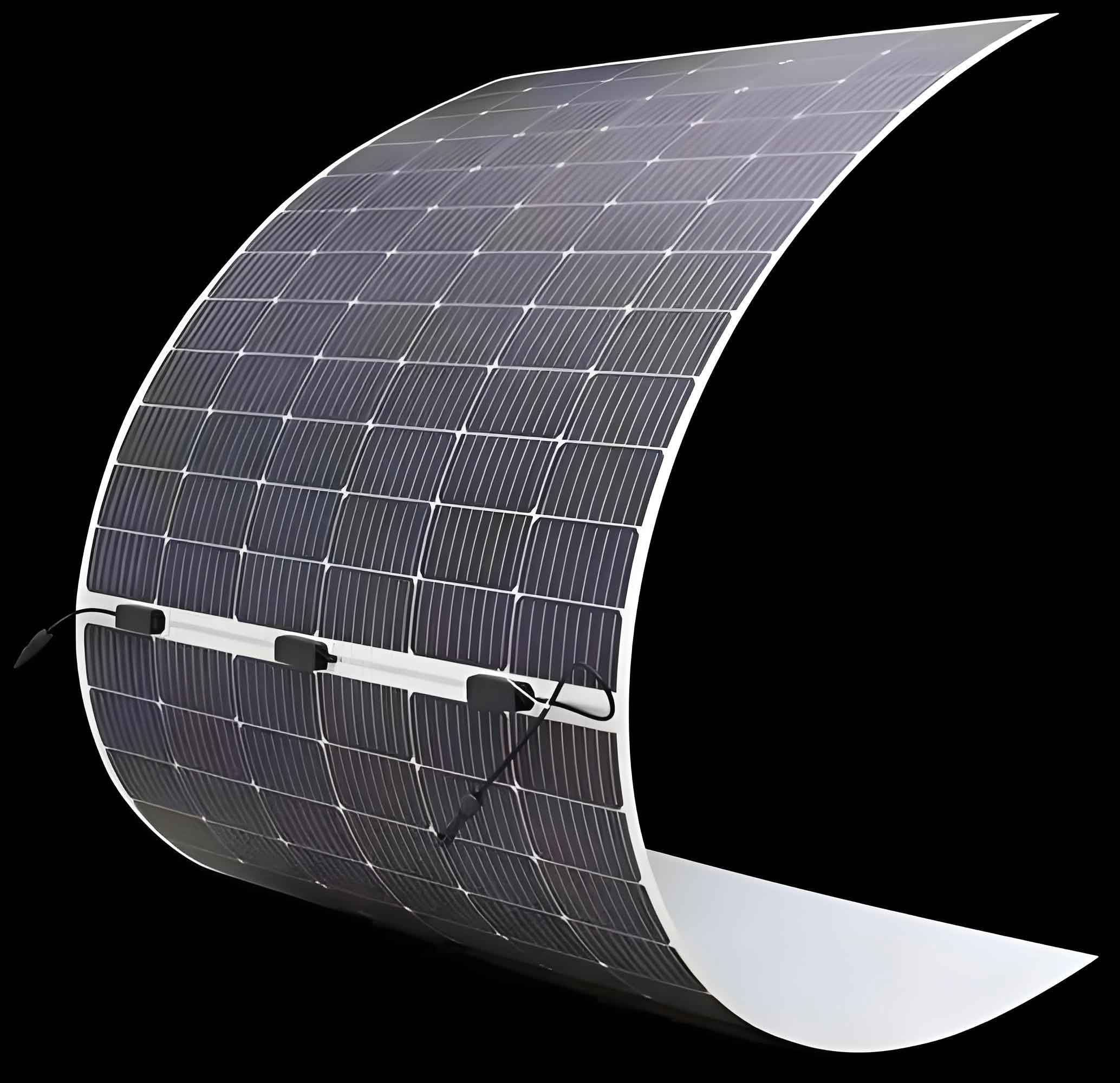
The adoption of MES in thin film solar panels manufacturing is crucial due to the complex, continuous production processes involved. Unlike traditional industries, thin film solar panels production involves sequential deposition of layers on substrates, requiring strict environmental controls and real-time monitoring. MES systems here must integrate with automated equipment, manage recipes, and ensure data accuracy for process improvement. Through my experience, I have found that effective MES implementation can reduce costs by 15-20% and improve yield by up to 10%, but this hinges on minimizing human intervention and enhancing system robustness. The core of MES lies in its ability to bridge enterprise resource planning (ERP) and shop-floor operations, enabling real-time data acquisition, analysis, and decision-making. For thin film solar panels, this translates to better tracking of material usage, equipment performance, and quality metrics, ultimately driving innovation in renewable energy technologies.
To understand the nuances of MES in thin film solar panels, it is essential to contrast it with other manufacturing types. Generally, industries are categorized into discrete and process manufacturing, each with distinct MES requirements. Discrete manufacturing, such as automotive or electronics, focuses on assembly of individual parts, while process manufacturing, like chemicals or pharmaceuticals, involves continuous transformations. Thin film solar panels fall under process manufacturing due to their flow-based production, but with added complexities like semiconductor-grade precision. The table below summarizes key differences, highlighting how thin film solar panels align with process traits but demand enhanced data integrity and equipment integration.
| Aspect | Discrete Manufacturing (e.g., Automotive) | Process Manufacturing (e.g., Chemicals) | Thin Film Solar Panels Industry |
|---|---|---|---|
| Production Model | Bill of Materials (BOM)-centric | Recipe-centric | Recipe-centric with layer deposition sequences |
| Planning Method | Work order-based from ERP | Instruction plan-based from ERP | Instruction plan-based, but with dynamic adjustments for environmental factors |
| Data Collection | Manual or semi-automatic (e.g., barcodes) | Automated via sensors and PLCs | Highly automated, but requires validation for thin film quality parameters |
| Backflushing | Per operation or at key points | At process end for materials and costs | At critical stages like coating completion, with real-time yield calculations |
| Equipment Management | Focus on critical/bottleneck machines | All equipment are critical; predictive maintenance vital | Extreme criticality; any failure halts line, necessitating advanced monitoring |
| Quality Management | Per-part inspection or sampling | Batch sampling and SPC analysis | Continuous in-line inspection with statistical process control for thin film uniformity |
From this comparison, thin film solar panels production exhibits hybrid characteristics: it requires the automation of process manufacturing but with the precision and traceability akin to discrete sectors. This duality makes MES design challenging, as systems must handle high-volume data streams while ensuring each panel meets stringent efficiency standards. For instance, in thin film solar panels, quality metrics like conversion efficiency and defect density are paramount, and MES must correlate process variables (e.g., temperature, pressure) with these outcomes. Formulas such as the following help quantify these relationships:
$$ \text{Conversion Efficiency} (\eta) = \frac{P_{\text{max}}}{A \times G} \times 100\% $$
where \( P_{\text{max}} \) is the maximum power output, \( A \) is the panel area, and \( G \) is the irradiance. MES systems track \( \eta \) across batches to identify process deviations. Similarly, defect density \( D \) can be modeled as:
$$ D = \frac{N_{\text{defects}}}{A_{\text{total}}} $$
with \( N_{\text{defects}} \) from automated vision systems. By integrating such formulas, MES enables predictive analytics for thin film solar panels, optimizing parameters like deposition rate or annealing time.
The functional architecture of MES for thin film solar panels is built on standards like ISA-95 and ISA-88, facilitating integration with ERP, warehouse management systems (WMS), and shop-floor devices. In my projects, I have leveraged protocols such as SECS/GEM for semiconductor equipment, ensuring seamless communication. The system typically includes modules for master data management, work order processing, production scheduling, quality control, buffer management, and real-time tracking. Below is a table outlining core MES functions tailored for thin film solar panels, emphasizing how each addresses industry-specific needs.
| Function Module | Description | Importance for Thin Film Solar Panels |
|---|---|---|
| Master Data Center | Manages recipes, materials, and equipment parameters | Ensures consistency in thin film deposition processes across batches |
| Work Order Management | Receives orders from ERP and allocates resources | Coordinates substrate handling and coating sequences for multiple thin film solar panels lines |
| Production Scheduling | Optimizes timelines based on equipment availability | Minimizes downtime in continuous lines, crucial for thin film solar panels yield |
| Quality Management | Collects inspection data and performs SPC analysis | Monitors thin film uniformity and efficiency, triggering alerts for deviations |
| Buffer Management | Controls in-process inventory between stations | Prevents congestion in automated lines handling fragile thin film solar panels substrates |
| Equipment Management | Tracks performance, maintenance, and consumables | Reduces breakdowns in vacuum chambers used for thin film deposition |
| Factory Visualization | Real-time dashboards for operational oversight | Provides insights into thin film solar panels production status, aiding remote management |
| Data Acquisition | Integrates with sensors and PLCs for live data | Captures critical parameters like thickness and resistivity for thin film layers |
| Reporting and Analytics | Generates performance and quality reports | Supports decision-making for process improvement in thin film solar panels manufacturing |
These functions collectively enhance operational control. For example, in thin film solar panels production, recipe management is vital because each layer—such as cadmium telluride (CdTe) or copper indium gallium selenide (CIGS)—requires precise settings. MES stores these recipes and automatically applies them, reducing human error. Additionally, real-time tracking via RFID or barcodes allows each panel to be traced from substrate loading to final testing, ensuring accountability. The integration with ERP enables material backflushing, where components like glass substrates or sputtering targets are deducted upon completion, improving inventory accuracy for thin film solar panels.
However, implementing MES in thin film solar panels facilities often encounters hurdles. Based on my involvement in multiple projects, I have identified common issues that undermine system effectiveness. These primarily stem from excessive human intervention, incomplete equipment integration, and inadequate maintenance protocols. The table below summarizes these challenges with their impacts on thin film solar panels production, followed by a formula-based analysis of data quality degradation.
| Challenge Category | Specific Issues | Impact on Thin Film Solar Panels |
|---|---|---|
| Human Intervention | Manual overrides in automated processes; incorrect data entry during shifts | Leads to inconsistent thin film quality and erroneous yield calculations |
| Equipment Integration | Non-compliance with MES protocols; unstable sensor signals | Causes data gaps in coating parameters, affecting thin film solar panels performance analysis |
| Process Control Gaps | Lack of MES enforcement at loading/unloading points | Results in traceability losses for thin film solar panels, complicating defect root-cause analysis |
| Maintenance Shortfalls | Absence of dedicated MES engineers; unclear reporting needs | Hinders rapid troubleshooting and optimization of thin film solar panels processes |
To quantify the effect of these issues, consider data accuracy \( A_d \), which influences process capability indices. Let \( D_{\text{actual}} \) be the true defect density and \( D_{\text{measured}} \) be the value recorded by MES. The error \( E \) due to human intervention or integration faults can be expressed as:
$$ E = | D_{\text{actual}} – D_{\text{measured}} | $$
If \( E \) exceeds a threshold \( \theta \), typically 5% for thin film solar panels, it skews statistical process control charts, leading to misguided adjustments. Moreover, overall equipment effectiveness (OEE) for thin film solar panels lines can be degraded. OEE is calculated as:
$$ \text{OEE} = \text{Availability} \times \text{Performance} \times \text{Quality} $$
where Availability \( A_v = \frac{\text{Runtime}}{\text{Planned Time}} \), Performance \( P = \frac{\text{Actual Output}}{\text{Theoretical Output}} \), and Quality \( Q = \frac{\text{Good Units}}{\text{Total Units}} \). Poor MES data inflates \( A_v \) by ignoring micro-stoppages or underreports \( Q \) due to missed defects, thus misrepresenting thin film solar panels line efficiency. For instance, if human operators bypass MES checks during substrate loading, \( Q \) may appear artificially high, masking thin film adhesion issues.
Another critical aspect is recipe optimization for thin film solar panels. Deposition processes often involve multiple variables, such as temperature \( T \), pressure \( P \), and gas flow rate \( F \). MES systems use historical data to model relationships like:
$$ \eta = f(T, P, F) + \epsilon $$
where \( \epsilon \) is random error. With inaccurate data from integration gaps, regression analyses become unreliable, hindering the derivation of optimal settings. To mitigate this, I advocate for robust validation mechanisms, such as automated data audits using checksums or cross-referencing with secondary sensors. For thin film solar panels, this ensures that parameters like layer thickness \( t \) adhere to specifications, where thickness uniformity \( U_t \) is given by:
$$ U_t = 1 – \frac{\sigma_t}{\bar{t}} $$
with \( \sigma_t \) as standard deviation and \( \bar{t} \) as mean thickness. MES should monitor \( U_t \) in real-time, alerting engineers if it falls below 0.95, a common benchmark for high-efficiency thin film solar panels.
Looking forward, the maturation of MES in the thin film solar panels industry requires concerted efforts in standardization and training. From my perspective, key recommendations include: first, enforcing strict process controls through MES to minimize human intervention, perhaps by implementing automated guided vehicles (AGVs) for material handling; second, enhancing equipment integration via pre-delivery testing and adherence to SECS/GEM standards; and third, cultivating in-house MES expertise to drive continuous improvement. The role of MES engineers is pivotal—they should collaborate with process specialists to design intuitive dashboards that highlight key performance indicators (KPIs) for thin film solar panels, such as throughput per hour or energy consumption per panel.
In conclusion, MES systems are transformative for thin film solar panels manufacturing, but their success depends on tailored design and meticulous execution. By leveraging tables and formulas for analysis, as demonstrated in this article, stakeholders can better understand the interdependencies between data quality, process control, and yield. The thin film solar panels industry, with its growth driven by renewable energy demands, must embrace MES not as a mere tool but as a strategic asset. Through iterative refinement and cross-industry learning, we can achieve the precision and efficiency needed to advance thin film solar panels technology, contributing to a sustainable future. This journey, while challenging, underscores the importance of innovation in manufacturing execution—a lesson that extends beyond thin film solar panels to the broader realm of smart production.