
In today’s world, the depletion of conventional fossil fuels and growing environmental concerns have driven me to explore renewable energy solutions. Among these, solar energy stands out as a clean, abundant, and sustainable resource. My focus is on the application of solar photovoltaic (PV) power supply systems in highway monitoring, a critical aspect of modern transportation infrastructure. This article delves into the advantages, design, and implementation of such solar systems, emphasizing their role in ensuring reliable and efficient monitoring. Throughout this discussion, I will frequently refer to the solar system as a key component, highlighting its integration into highway networks.
Highway monitoring systems are essential for maintaining traffic flow, preventing accidents, and managing road conditions. These systems rely on continuous power to operate cameras, sensors, and communication devices. Traditionally, grid power or diesel generators have been used, but they come with challenges such as high costs, environmental impact, and reliability issues in remote areas. In my experience, adopting a solar system for power supply offers a transformative solution. A solar system harnesses sunlight through photovoltaic panels, converting it into electricity with minimal maintenance and operational expenses. This approach aligns with global sustainability goals and enhances the resilience of transportation networks.
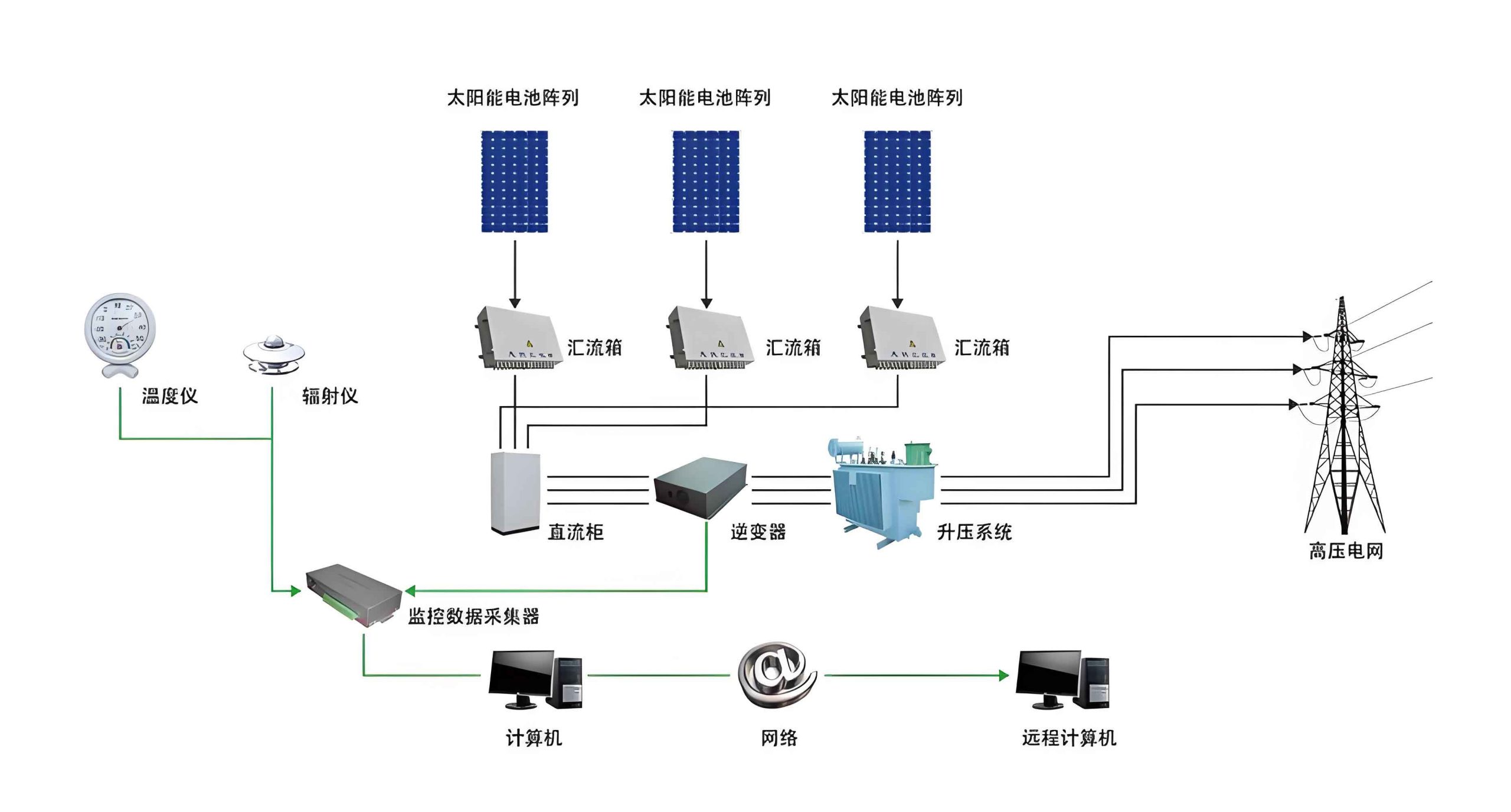
To illustrate the benefits of a solar system in highway monitoring, I have compiled a table summarizing its key advantages compared to conventional power sources. This solar system not only reduces carbon emissions but also provides long-term cost savings and operational flexibility.
| Advantage | Description | Impact on Highway Monitoring |
|---|---|---|
| Environmental Sustainability | The solar system produces zero emissions during operation, leveraging renewable solar energy. | Reduces the carbon footprint of transportation infrastructure and supports green initiatives. |
| Cost-Effectiveness | After initial installation, the solar system has low operational and maintenance costs, with no fuel expenses. | Lowers overall lifecycle costs for monitoring systems, especially in remote locations. |
| Reliability and Independence | A well-designed solar system can operate autonomously, with battery storage ensuring power during cloudy days or nights. | Enhances the reliability of monitoring equipment, reducing downtime and improving safety. |
| Scalability and Flexibility | The solar system can be easily scaled to match power demands, and components are modular for simple installation. | Allows for tailored solutions across different highway sections, from cameras to variable message signs. |
| Low Maintenance | Solar panels and associated components require minimal upkeep, primarily cleaning and occasional battery replacement. | Decreases the need for frequent site visits, saving labor and resources. |
From my perspective, the core of a solar system for highway monitoring lies in its components and their functions. A typical solar system includes photovoltaic panels, charge controllers, batteries, inverters (if AC power is needed), and monitoring software. Each element plays a vital role in ensuring efficient energy conversion and storage. For instance, the photovoltaic panels capture sunlight and generate direct current (DC) electricity. The efficiency of this process can be expressed using the formula for photovoltaic conversion efficiency:
$$ \eta = \frac{P_{\text{out}}}{A \times G} \times 100\% $$
where $\eta$ is the efficiency, $P_{\text{out}}$ is the electrical power output in watts, $A$ is the area of the solar panel in square meters, and $G$ is the solar irradiance in watts per square meter. In my designs, I prioritize high-efficiency panels, such as those made from monocrystalline silicon, to maximize energy harvest in limited spaces. This solar system component is crucial for meeting the power demands of highway cameras, which typically consume between 20 to 50 watts each, depending on the model and features.
The battery storage system is another critical part of the solar system. It stores excess energy generated during sunny periods for use at night or during inclement weather. To size the battery bank appropriately, I use a formula that accounts for load requirements, autonomy days, and environmental factors. The battery capacity $C_{\text{batt}}$ in ampere-hours (Ah) can be calculated as:
$$ C_{\text{batt}} = \frac{E_{\text{load}} \times N_{\text{days}}}{DOD \times V_{\text{system}} \times \eta_{\text{batt}}} $$
where $E_{\text{load}}$ is the daily energy consumption in watt-hours, $N_{\text{days}}$ is the number of autonomy days (e.g., consecutive cloudy days), $DOD$ is the depth of discharge (typically 0.5 to 0.8 for lead-acid batteries), $V_{\text{system}}$ is the system voltage (e.g., 12V or 24V), and $\eta_{\text{batt}}$ is the battery efficiency (often around 0.85). This calculation ensures that the solar system can sustain monitoring operations without interruption. I often incorporate lithium-ion batteries for their longer lifespan and higher efficiency, though lead-acid options are cost-effective for smaller installations.
In a practical project I oversaw, a highway monitoring solar system was deployed along a 35-kilometer stretch with multiple cameras and sensors. The table below details the specifications of the solar system components used in this implementation. This solar system was designed to operate independently, eliminating the need for grid connections and reducing infrastructure costs.
| Component | Specification | Function in Solar System |
|---|---|---|
| Photovoltaic Panels | Monocrystalline silicon, 300W each, 20 panels total | Convert sunlight to DC electricity, with an overall efficiency of 18-20%. |
| Charge Controller | MPPT type, 40A capacity, with overcharge and discharge protection | Regulates the charging of batteries to extend their lifespan and optimize energy harvest. |
| Battery Bank | Lead-acid deep-cycle, 200Ah at 24V, 4 batteries in series | Stores energy for use during low-sunlight periods, providing up to 3 days of autonomy. |
| Inverter | Pure sine wave, 1000W, for AC loads like communication devices | Converts DC power from the solar system to AC power for compatible equipment. |
| Monitoring Software | Customized for real-time data acquisition and fault detection | Tracks the performance of the solar system, alerting operators to issues like low battery or panel shading. |
Installing such a solar system requires careful planning. I begin by assessing the site’s solar potential, considering factors like latitude, shading, and local weather patterns. The tilt angle of the panels is optimized using the formula for optimal tilt $\theta$ based on latitude $\phi$:
$$ \theta = \phi \pm 15^\circ $$
where the adjustment depends on the season (e.g., +15° for winter, -15° for summer). In highway applications, panels are often mounted on poles or structures near monitoring equipment. The solar system’s wiring is designed to minimize losses, with cable sizes calculated using Ohm’s law to ensure voltage drop remains below 3%. For example, the voltage drop $V_{\text{drop}}$ over a distance $L$ with current $I$ and cable resistance per unit length $R$ is:
$$ V_{\text{drop}} = I \times R \times L $$
This attention to detail ensures that the solar system delivers reliable power to cameras, which are spaced approximately 2 kilometers apart in typical highway deployments. The modular nature of the solar system allows for easy expansion if additional loads are added, such as weather stations or traffic counters.
Maintenance of the solar system is straightforward but essential for long-term performance. I recommend regular inspections, including cleaning the panels to remove dust and debris, which can reduce efficiency by up to 10%. Battery health should be monitored through the charge controller’s data logs, and replacements scheduled based on cycle life. The solar system’s software plays a key role here, providing alerts for anomalies like reduced output or battery voltage dips. In my experience, a well-maintained solar system can operate for 20-25 years with minimal downtime, making it a worthwhile investment for highway authorities.
Beyond technical aspects, the economic benefits of a solar system are significant. I often conduct lifecycle cost analyses to compare solar versus grid power. The net present value (NPV) of a solar system can be calculated as:
$$ NPV = \sum_{t=0}^{n} \frac{C_t}{(1 + r)^t} $$
where $C_t$ represents cash flows (initial investment, maintenance savings, etc.) at time $t$, $r$ is the discount rate, and $n$ is the system lifespan. For a typical highway monitoring solar system, the NPV is positive over 10 years due to reduced electricity bills and maintenance costs. Additionally, government incentives for renewable energy can further improve the financial outlook, encouraging wider adoption of solar systems in transportation projects.
The integration of a solar system with smart monitoring technologies enhances its value. For instance, I have worked on systems where the solar power data is combined with traffic flow information to optimize energy usage. Machine learning algorithms can predict solar generation based on weather forecasts, allowing for dynamic load management. This intelligent solar system not only powers cameras but also contributes to a broader smart highway ecosystem. The table below outlines potential future enhancements for solar systems in highway monitoring, driven by advancements in technology.
| Enhancement | Description | Benefit to Solar System |
|---|---|---|
| Hybrid Systems | Combining solar with wind or small-scale generators for added reliability. | Increases the robustness of the power supply in diverse weather conditions. |
| Energy Storage Innovations | Using advanced batteries like lithium-ion or flow batteries for higher density and longer life. | Reduces the physical footprint and maintenance needs of the solar system. |
| IoT Integration | Connecting solar system components to the Internet of Things for remote monitoring and control. | Enables real-time adjustments and predictive maintenance, improving efficiency. |
| Solar Tracking | Implementing dual-axis trackers to follow the sun’s path for maximum energy capture. | Boosts the output of the solar system by up to 30%, ideal for high-demand applications. |
| Grid Interaction | Designing solar systems to feed excess power back to the grid, creating revenue streams. | Transforms the solar system from a cost center to a potential income source. |
In conclusion, my exploration of solar photovoltaic power for highway monitoring reaffirms its viability and advantages. A well-designed solar system offers a sustainable, cost-effective, and reliable solution for powering critical infrastructure. By leveraging formulas for efficiency and capacity, along with robust components, I can tailor solar systems to meet the unique demands of highways. The future holds even greater promise as technology evolves, making solar systems more intelligent and integrated. As I continue to advocate for renewable energy in transportation, I am confident that solar power will play an increasingly central role in building resilient and eco-friendly highway networks. The solar system is not just a power source; it is a cornerstone of modern infrastructure development.
Reflecting on my experiences, I emphasize the importance of holistic design when implementing a solar system. From site assessment to maintenance planning, every step influences the system’s success. I encourage engineers and planners to consider solar solutions early in project phases, as this can lead to significant long-term benefits. The solar system’s adaptability makes it suitable for various applications, from remote cameras to entire toll plazas. As we move toward a greener future, I believe that solar energy will become the standard for highway monitoring, driven by innovation and a commitment to sustainability. This solar system approach not only meets today’s needs but also paves the way for smarter, more connected transportation systems worldwide.