
The escalating global energy crisis, coupled with severe environmental pollution, presents a formidable challenge to sustainable economic development. In response, the strategic development and utilization of renewable energy sources have become paramount. Among these, solar energy stands out due to its abundance and clean, pollution-free characteristics. Consequently, the deployment of solar photovoltaic (PV) power stations has seen exponential growth worldwide. This expansion, however, brings forth the critical challenge of ensuring the long-term reliability, efficiency, and safety of these installations. The effective operation, maintenance, and management (O&M) of the solar system infrastructure are not merely supportive functions but are central to the financial viability and environmental promise of solar energy. Many solar system installations are situated in remote or harsh environments, face technical skill shortages, and suffer from inadequate management frameworks, leading to underperformance and reduced asset life. This article, drawn from practical field experience, delves into the comprehensive strategies required to optimize the performance of a solar system throughout its lifecycle.
The core objective of O&M for a solar system is to maximize energy yield while minimizing operational costs and risks. This involves a shift from reactive, corrective maintenance to a proactive, data-driven management philosophy. A modern solar system is not a “set-and-forget” asset; it is a dynamic collection of electro-mechanical components subject to environmental stresses, electrical degradation, and occasional failures. The financial model of a PV plant is acutely sensitive to its performance ratio (PR) and availability. Therefore, establishing a robust O&M regime is the cornerstone of protecting the investment and ensuring the solar system delivers on its promised return.
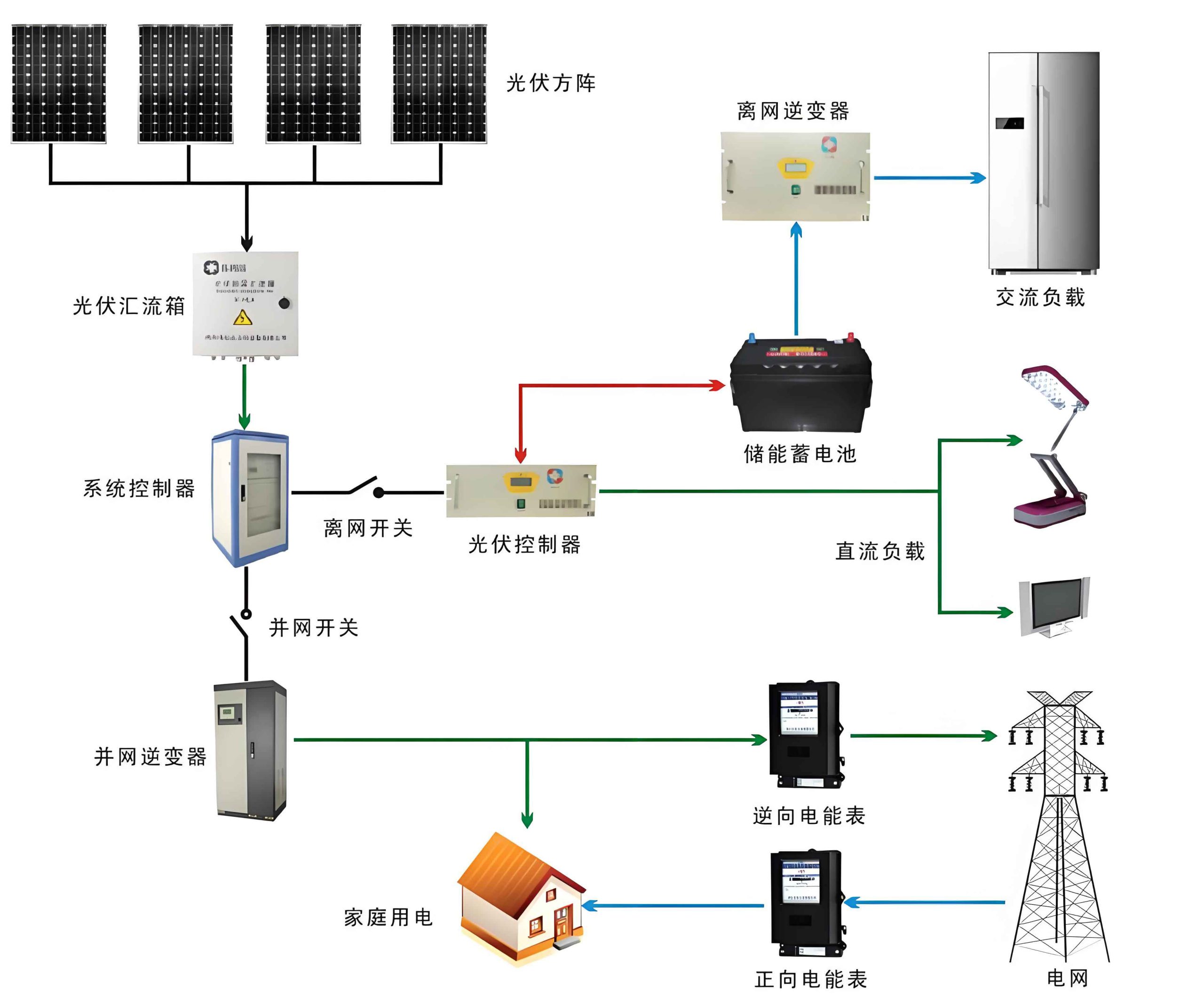
1. Foundational Components of a Solar PV System and Their O&M Focus
Understanding the O&M requirements begins with a clear view of the solar system‘s key components. Each has unique failure modes and maintenance needs.
| System Component | Primary Function | Key O&M Concerns |
|---|---|---|
| PV Modules (Panels) | Convert sunlight into direct current (DC) electricity. | Soiling (dirt, dust, snow), potential induced degradation (PID), micro-cracks, hot spots, delamination, discoloration. |
| Mounting Structures & Trackers | Support and optimally orient PV modules. | Structural integrity (corrosion, loose bolts), mechanical wear in tracking systems, foundation stability. |
| DC Wiring & Combiner Boxes | Collect and channel DC power from strings of modules. | Loose connections, insulation damage, corrosion, overheating, rodent damage. |
| Inverters | Convert DC electricity to grid-compliant alternating current (AC). | Capacitor aging, cooling fan failure, PCB faults, software issues, thermal management. |
| Transformers & Switchgear | Step-up voltage and manage grid connection. | Oil leaks (in oil-filled transformers), insulation breakdown, contact wear in breakers. |
| Monitoring & SCADA System | Provide real-time data on system performance and status. | Sensor failure, communication link outages, data accuracy, cybersecurity. |
2. Establishing a Comprehensive Management System for the Solar System
The bedrock of effective O&M is a formalized, documented management system. This system transforms ad-hoc repairs into a strategic, repeatable process.
2.1 Technical Documentation and Asset Registry
A central repository for all technical documentation is non-negotiable. This “living” archive must include:
- As-built drawings and site layouts: Electrical single-line diagrams, wiring schematics, civil foundation plans.
- Equipment datasheets and manuals: For every major component (modules, inverters, transformers, trackers).
- Commissioning reports and test certificates: Baseline performance data and compliance records.
- Warranty certificates and supplier contracts: Critical for managing claims and service-level agreements (SLAs).
- A comprehensive asset register: A database listing every significant component with details like serial number, installation date, warranty period, and location within the solar system.
This database enables traceability, efficient spare parts management, and informed decision-making for repairs and upgrades.
2.2 Integrated Information and Monitoring Management System
Modern solar system O&M is data-centric. A sophisticated Supervisory Control and Data Acquisition (SCADA) system is the nerve center. Its functions include:
- Real-time Performance Monitoring: Tracking key performance indicators (KPIs) like AC/DC power, energy yield, inverter efficiency, and string currents/voltages.
- Automated Alarms and Notifications: Instant alerts for grid disconnections, inverter faults, string failures, or communication losses.
- Performance Analytics: Calculating daily, monthly, and annual Performance Ratios (PR), comparing actual yield to predicted yield (P50/P90).
The performance of a solar system can be fundamentally expressed by its Performance Ratio (PR):
$$ PR = \frac{Y_f}{Y_r} = \frac{\text{(Final Yield)}}{\text{(Reference Yield)}} $$
Where:
- $Y_f$ (Final Yield) = $\frac{\text{Annual AC Energy Output (kWh)}}{\text{System Installed DC Power (kWp)}}$
- $Y_r$ (Reference Yield) = $\frac{\text{Annual In-plane Solar Irradiation (kWh/m}^2\text{)}}{\text{Standard Irradiance (1 kW/m}^2\text{)}}$
A PR close to 1 (or 100%) indicates minimal system losses. Continuous monitoring helps diagnose deviations from expected PR. Furthermore, statistical models can predict component failure rates, guiding preventive maintenance. A simple reliability model for a component population can be:
$$ \lambda(t) = \frac{\text{Number of Failures in interval } \Delta t}{\text{(Number of Components at risk)} \times \Delta t} $$
Where $\lambda(t)$ is the failure rate. Tracking this over time for inverters or combiner boxes helps optimize spare parts inventory.
2.3 Operational and Maintenance Logs (The Run-Time Archive)
Every action taken on the solar system must be meticulously recorded. This includes:
- Preventive Maintenance (PM) Checklists and Reports: Signed records confirming completion of scheduled tasks.
- Corrective Maintenance Work Orders: Detailed accounts of fault diagnosis, repair actions, parts used, and downtime.
- Inspections and Safety Audits: Findings from routine visual inspections, thermal imaging surveys, and I-V curve tracing.
This historical data is invaluable for identifying recurring issues, assessing contractor performance, and performing root cause analysis (RCA) for major failures. It forms the empirical basis for refining the O&M strategy.
3. Proactive Maintenance Strategies
Waiting for a component to fail is the most costly approach. Proactive maintenance aims to prevent failures and performance degradation.
3.1 Scheduled Preventive Maintenance (PM)
PM is calendar or runtime-based. A typical PM schedule for a utility-scale solar system includes:
| Frequency | Key Activities |
|---|---|
| Daily/Weekly (Remote) | SCADA health check, alarm review, energy yield verification against forecast. |
| Monthly | Detailed analysis of performance metrics, review of inverter error logs, planning site visits. |
| Quarterly/Bi-Annually | On-site visual inspection of modules for soiling and damage; inspection of mounting structures; check of inverter cooling systems and cleanliness; verification of cable connections in combiner boxes. |
| Annually | Comprehensive thermographic (IR) inspection of all PV modules and DC connections under load; torque check of critical electrical connections; detailed inspection of transformers and switchgear; cleaning of modules (if not automated). |
| 5+ Years | In-depth electrical tests (I-V curve tracing on sample strings), inverter capacitor health check, structural integrity assessment. |
3.2 Condition-Based Maintenance (CBM)
CBM uses sensor data to trigger maintenance only when needed. For a solar system, this is highly effective:
- Thermal Imaging: Detects hot spots in modules (indicating cell cracks, bad solder bonds) and overheated connections.
- String Current/Voltage Monitoring: Identifies underperforming or failed strings. A significant deviation in a string’s current from the array median signals a problem:
$$ I_{\text{string, dev}} = \frac{|I_{\text{string}} – \text{median}(I_{\text{array}})|}{\text{median}(I_{\text{array}})} $$
A threshold (e.g., >10%) can trigger an inspection. - Insulation Resistance Monitoring: Detects degradation of wiring insulation before it leads to a ground fault.
The economic benefit of CBM over time-based PM can be modeled by comparing total cost. The objective is to minimize the total cost of maintenance $C_{total}$ over a period T:
$$ C_{total}(T) = C_{PM} + C_{CM} + C_{Downtime} $$
Where $C_{PM}$ is the cost of preventive actions, $C_{CM}$ is the cost of corrective repairs, and $C_{Downtime}$ is the cost of lost energy production. An optimized CBM strategy seeks the minimum of this function.
4. Corrective Maintenance and Failure Mode Analysis
Despite best efforts, failures occur. A swift, systematic response is crucial. Common failure modes in a solar system include:
| Component | Common Failure Modes | Typical Resolution |
|---|---|---|
| PV Module | Glass breakage, hot spots, junction box failure, snail trails, PID. | Replacement of affected module(s). PID may be reversible using a PID recovery box overnight. |
| Inverter | DC/AC capacitor failure, fan failure, IGBT failure, communication fault. | Module replacement by technician; firmware update; complete unit swap if internal fault is severe. |
| DC Connector | Melting due to poor contact or high resistance. | Replacement of connector pair, ensuring proper crimping and mating. |
| Tracking System | Motor failure, controller fault, misalignment. | Motor/controller replacement, mechanical adjustment, recalibration. |
A structured troubleshooting workflow is essential:
- Alarm Acknowledgment & Remote Diagnosis: Use SCADA data to pinpoint the subsystem (e.g., “Inverter #05 – Grid Overvoltage Trip”).
- Dispatch & Site Safety: Mobilize a qualified technician following strict lock-out/tag-out (LOTO) procedures for the solar system.
- On-site Diagnosis & Repair: Use appropriate tools (multimeter, IR camera, I-V tracer) to confirm fault and execute repair.
- Documentation & Closure: Log all details in the work order, update the asset register if a component is replaced, and clear the alarm in SCADA.
5. Holistic Asset and Site Management
Managing the solar system extends beyond the hardware to the entire site and commercial framework.
- Security and External Threats: Fencing, surveillance, and community engagement to prevent theft and vandalism.
- Vegetation Management: Regular mowing/trimming to prevent shading and fire risk.
- Weather Preparedness: Protocols for storms, hail, flooding, and extreme heat.
- Contract and Warranty Management: Proactively tracking warranty expiries and managing relationships with EPC contractors, component suppliers, and O&M service providers.
- Financial and Performance Reporting: Generating reports for asset owners and investors, linking technical KPIs (PR, Availability) directly to financial metrics (Revenue, IRR).
6. The Human Factor: Training and Competency
Technology is futile without skilled personnel. A continuous training program is vital for:
- Safety: High-voltage DC systems pose unique risks (arc flash). Rigorous training on NFPA 70E (or equivalent) and site-specific hazards is mandatory.
- Technical Skills: Training on specific inverter models, IV curve tracing interpretation, thermal imaging analysis, and SCADA software.
- Process Adherence: Ensuring all technicians follow documented procedures for work permits, LOTO, and reporting.
The competency of the O&M team directly impacts the mean time to repair (MTTR) and overall system availability $A$:
$$ A = \frac{\text{Uptime}}{\text{Uptime + Downtime}} = \frac{MTBF}{MTBF + MTTR} $$
Where MTBF is Mean Time Between Failures. A well-trained team minimizes MTTR, thereby maximizing availability and the energy yield of the solar system.
7. The Future: AI, Robotics, and Advanced Analytics
The future of solar system O&M lies in greater automation and intelligence:
- Artificial Intelligence (AI) & Machine Learning (ML): Algorithms can analyze historical performance and weather data to predict failures before they happen (predictive maintenance) and to pinpoint the root cause of underperformance with greater accuracy.
- Robotics and Drones: Autonomous drones equipped with high-resolution cameras and IR sensors can perform site inspections faster and more consistently than humans. Robotic cleaners are being deployed for large-scale plants in arid regions.
- Digital Twins: Creating a virtual, dynamic model of the physical solar system. This model simulates performance under different conditions, allowing for “what-if” analysis and optimized maintenance scheduling without disrupting the actual plant.
The integration of these technologies will further drive down the Levelized Cost of Energy (LCOE) for solar, making the solar system an even more compelling energy solution. The LCOE formula itself highlights the importance of O&M:
$$ LCOE = \frac{\sum_{t=1}^{n} \frac{I_t + M_t + F_t}{(1+r)^t}}{\sum_{t=1}^{n} \frac{E_t}{(1+r)^t}} $$
Where $I_t$ is investment expenditure in year t, $M_t$ is operation and maintenance costs in year t, $F_t$ is fuel cost (zero for solar), $E_t$ is electricity generated, $r$ is the discount rate, and $n$ is the lifetime of the system. Superior O&M reduces $M_t$ and increases $E_t$, directly lowering LCOE.
In conclusion, the journey from installing a solar system to realizing its full potential over a 25-30 year lifespan is governed by the quality of its operation, maintenance, and management. It requires a systematic, technology-enabled, and professionally executed approach that integrates rigorous documentation, proactive and predictive maintenance strategies, comprehensive site management, and continuous personnel development. By embracing these principles, operators can ensure their solar assets remain safe, reliable, and highly productive, thereby securing the financial returns and making a substantial contribution to a sustainable energy future. The solar system, when managed with diligence and foresight, truly becomes a cornerstone of the global clean energy transition.