
The urgent need to transition from finite and polluting fossil fuels to sustainable energy sources is a global imperative. Combustion of hydrogen produces only water vapor, making it a clean energy carrier with a high calorific value of approximately 140 MJ/kg. Among the various renewable sources for hydrogen production, solar energy stands out due to its abundance and widespread availability. This article details the design and simulation of a domestic-scale, grid-assisted solar system for electrolytic hydrogen production and storage. The performance of this integrated solar system is dynamically analyzed and compared across three distinct geographical locations in China—Beijing, Yinchuan, and Hami—each representing different climatic conditions. The core of this analysis involves using simulation tools to optimize the photovoltaic (PV) component and evaluate the annual hydrogen yield and the solar contribution to the process.
The proposed solar system integrates three primary modules to form a complete energy conversion and storage chain. The first module is the photovoltaic generation unit, where solar irradiance is converted into direct current electricity. This solar system is designed to interface with the power grid; if the instantaneous solar power is insufficient to meet the electrolyzer’s demand, the deficit is drawn from the grid. Conversely, any excess solar power generated beyond the local storage capacity can be fed back into the grid, enhancing the overall utility of the solar system. The second module is the electrolysis unit. Here, electrical energy from either the PV array or the grid powers an alkaline electrolyzer, splitting water into hydrogen and oxygen. The produced hydrogen is then purified and directed to the third module: the storage system. A high-pressure storage tank acts as a buffer, ensuring a steady supply of hydrogen for later use, such as in a fuel cell or for industrial applications. A dedicated control module forms the operational brain of this solar system, managing the power flow between the PV array, the grid, and the electrolyzer based on real-time solar availability and the storage tank’s status.
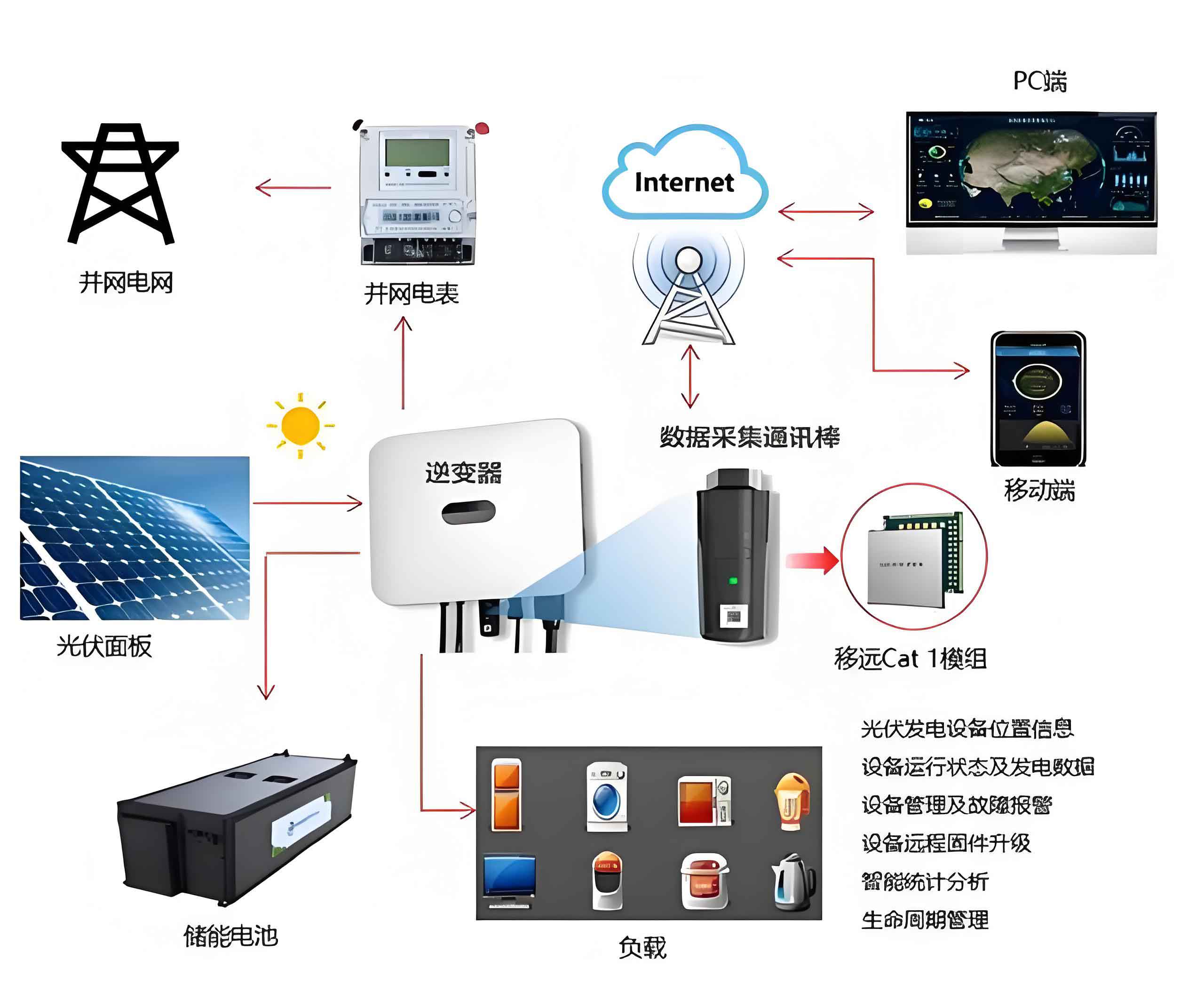
To model the transient behavior of this complex solar system, the TRNSYS (TRaNsient SYstem Simulation) software was employed. TRNSYS is a modular, component-based simulation environment ideal for analyzing the dynamic performance of thermal and electrical energy systems. The system model, built within TRNSYS, integrates key components such as a weather data reader, a PV array model, an electrolyzer, a hydrogen storage tank, power conditioning units, and controllers. The simulation model effectively captures the hourly interactions between solar resource variability, electricity generation, hydrogen production, and storage dynamics over an entire year.
The climatic data for Beijing, Yinchuan, and Hami, including hourly ambient temperature, solar irradiance on the horizontal plane, and wind speed, were obtained from the Meteonorm database. These cities, while at similar latitudes, exhibit significant longitudinal and climatic differences, affecting the solar system’s performance. A critical design parameter for any stationary PV-based solar system is the tilt angle of the modules. To maximize the annual solar energy harvest, the optimal tilt angle for the PV array in each location was determined using GenOpt, an optimization program coupled with TRNSYS. The objective was to maximize the annual electricity output from the PV array. The optimization was performed with the tilt angle constrained between 20° and 70°. The results are summarized in Table 1.
| City | Optimal PV Tilt Angle (°) | Maximum Annual PV Electricity Generation (kWh) |
|---|---|---|
| Beijing | 36.56 | 38,329.2 |
| Yinchuan | 37.81 | 47,169.8 |
| Hami | 41.87 | 50,701.2 |
The photovoltaic conversion in this solar system is governed by fundamental energy balance equations. The incident solar energy on the PV array is partially converted into electricity, with the remainder dissipated as heat. The energy balance can be expressed as:
$$E_{\text{rad}} = E_{\text{el}} + E_{\text{loss}}$$
Where \(E_{\text{rad}}\) is the absorbed solar radiation, \(E_{\text{el}}\) is the electrical energy output, and \(E_{\text{loss}}\) represents thermal losses. These terms can be further defined:
$$E_{\text{rad}} = A \cdot (\tau\alpha) \cdot G_T$$
$$E_{\text{el}} = A \cdot \eta_c \cdot G_T$$
$$E_{\text{loss}} = A \cdot U_L (T_C – T_A)$$
Here, \(A\) is the PV array area, \(\tau\alpha\) is the effective transmittance-absorptance product, \(G_T\) is the total solar irradiance on the tilted surface, \(\eta_c\) is the PV module’s electrical conversion efficiency, \(U_L\) is an overall heat loss coefficient, \(T_C\) is the PV module temperature, and \(T_A\) is the ambient air temperature.
Combining these equations allows for the calculation of the PV module’s operating temperature, a key factor affecting efficiency:
$$T_C = T_A + \left(1 – \frac{\eta_c}{\tau\alpha}\right) \frac{G_T}{U_L/(\tau\alpha)}$$
The ratio \( \frac{U_L}{\tau\alpha} \) is often determined from the Nominal Operating Cell Temperature (NOCT) conditions. The technical parameters for the PV modules used in this solar system simulation are listed in Table 2.
| Parameter | Value |
|---|---|
| NOCT Module Temperature | 313 K |
| NOCT Ambient Temperature | 293 K |
| NOCT Irradiance | 800 W/m² | Number of Modules in Series | 2 |
| Number of Modules in Parallel | 12 |
| Area per Module | 10.8 m² |
| Effective \(\tau\alpha\) | 0.9 |
The heart of the hydrogen production in this solar system is the alkaline electrolyzer. Its performance is characterized by its voltage efficiency. The electrolyzer efficiency \(\eta_e\) is defined as the ratio of the thermoneutral voltage \(U_{tn}\) (the voltage at which the reaction is thermally balanced, approximately 1.478 V) to the actual operating cell voltage \(U_{cell}\):
$$\eta_e = \frac{U_{tn}}{U_{cell}}$$
A key operational feature of this modeled solar system is its control logic. The electrolyzer can operate in two states: normal production mode and a minimum idle power mode. The decision is based on two real-time conditions: the available solar power from the PV array (\(P_{PV}\)) and the state of charge (SOC) of the hydrogen storage tank. The control parameters are defined in Table 3.
| Control Parameter | Symbol | Value |
|---|---|---|
| Storage Tank Lower SOC Limit | \(S_{LOW}\) | 0.7 |
| Storage Tank Upper SOC Limit | \(S_{UP}\) | 0.9 |
| Electrolyzer Idle Power | \(P_{IDLE}\) | 5000 W |
The control logic operates as follows: If \(P_{PV} < P_{IDLE}\), the electrolyzer runs at its idle power, drawing the deficit from the grid. If \(P_{PV} \geq P_{IDLE}\), the electrolyzer’s state depends on the tank SOC. If \(SOC < S_{UP}\), the electrolyzer runs in normal mode using all available solar power (\(P_e = P_{PV}\)). If \(SOC \geq S_{UP}\), the electrolyzer switches to idle mode to prevent over-pressurization, only resuming normal operation when the SOC drops back to \(S_{LOW}\) due to a constant hydrogen consumption (simulated at 1.5 m³/h). This logic ensures the solar system operates safely while maximizing the use of solar energy.
The storage tank is modeled as a pressure vessel with a physical volume of 5.0 m³. The tank’s SOC, ranging from 0% to 100%, is a crucial variable for system control. The initial SOC for the annual simulation was set at 0.85.
The annual simulation results reveal significant insights into the performance of this solar system across different climates. The total annual solar irradiation received on the optimally tilted PV surfaces was 5690 MJ/m² for Beijing, 7054 MJ/m² for Yinchuan, and 7692 MJ/m² for Hami. This directly correlates with the annual PV electricity generation presented in Table 1, confirming Hami as the location with the richest solar resource for this solar system.
Despite the large differences in annual solar electricity generation, the total annual hydrogen production of the solar system was remarkably similar across all three locations, as dictated by the constant hydrogen consumption rate and the finite storage tank capacity which triggers the idle mode. The results are shown in Table 4. However, the source of the electrical energy for electrolysis varied greatly.
| City | Annual Hydrogen Production (m³) | Annual Grid Electricity Consumption (kWh) |
|---|---|---|
| Beijing | 13,151.5 | 19,236.1 |
| Yinchuan | 13,124.1 | 10,659.2 |
| Hami | 13,144.7 | 7,090.1 |
To quantify the effectiveness of the solar component within the integrated solar system, we define a “Solar Contribution to Hydrogen Production” metric \(B\). This is the ratio of the total electrical energy produced by the PV array (\(E_{PV}\)) to the total electrical energy consumed by the electrolyzer (\(E_{e}\)) over the year:
$$B = \frac{E_{PV}}{E_{e}} \times 100\%$$
Applying this formula to the simulation outputs yields the following performance indicators for the solar system:
| City | Solar Contribution \(B\) (%) |
|---|---|
| Beijing | 66.58 |
| Yinchuan | 81.57 |
| Hami | 87.73 |
These results clearly demonstrate that the solar system’s autonomy and renewable contribution are highest in Hami, followed by Yinchuan, with Beijing requiring the largest grid supplement due to its comparatively lower solar insolation. The monthly analysis shows that hydrogen production is relatively stable, fluctuating around 1100 m³ per month. The dips in monthly production correspond to periods where the storage tank SOC is above its upper limit (\(S_{UP}\)), forcing the electrolyzer into idle mode for several consecutive days. This highlights the direct impact of storage capacity on the operational profile of the solar system.
A detailed analysis of a typical day provides further operational insights. The electrolyzer efficiency \(\eta_e\) and the instantaneous hydrogen production rate are inversely related to the operating cell voltage \(U_{cell}\). When the solar system has abundant power and the storage tank is not full, the electrolyzer operates at high current, leading to a higher \(U_{cell}\), a lower \(\eta_e\) (around 82-84%), but a high hydrogen output. When forced into idle mode (e.g., during night or when the tank is full), it operates at \(P_{IDLE}\) with a corresponding \(U_{cell}\) of about 1.656 V, resulting in a higher efficiency of approximately 89.26% but a minimal hydrogen production rate. Furthermore, the PV module temperature \(T_C\) closely tracks the ambient temperature \(T_A\) at night but rises significantly above it during peak sunlight hours due to the absorbed solar energy that is not converted to electricity, as predicted by the thermal model.
In conclusion, this simulation study successfully models and evaluates a grid-assisted domestic solar system for hydrogen production and storage. The optimization of the PV tilt angle is a crucial first step in designing an efficient solar system, with optimal angles varying between 36° and 42° for the studied latitudes. The annual hydrogen output of such a solar system is primarily constrained by the designed hydrogen demand and storage capacity, rather than the solar resource itself, when grid backup is available. However, the solar contribution or renewable fraction of the process is highly location-dependent. The designed solar system achieves a solar contribution of 87.73% in Hami, 81.57% in Yinchuan, and 66.58% in Beijing. This underscores the importance of geographical site selection for achieving high renewable penetration in solar-powered hydrogen economy scenarios. The integration of storage tank state-of-charge management with real-time solar power availability is essential for the safe and efficient operation of the overall solar system. Future work on this solar system could explore larger storage capacities, the inclusion of battery buffers, or direct coupling with a fuel cell for complete off-grid energy independence.