
In the face of resource depletion and environmental degradation, the promotion of solar photovoltaic technology stands out as a highly effective solution. Solar energy, as a renewable and clean new energy source, is characterized by its inexhaustible nature and widespread recognition for being clean, pollution-free, and low-cost. Globally, solar photovoltaic systems have been vigorously developed and applied. In recent years, various policies have been introduced to guide the development and utilization of solar energy, with the solar photovoltaic industry being identified as a strategic emerging sector and incorporated into national energy plans, receiving substantial support and government subsidies. As a burgeoning industry, the solar photovoltaic sector boasts vast market potential both domestically and internationally, creating an urgent demand for professionals with relevant expertise and skills. In my institution, the undergraduate program “Light Source and Lighting” was established, and the course “Principles and Applications of Solar Photovoltaics” was designated as a core professional course, aiming to cultivate applied and research-oriented specialists capable of excelling in product development and engineering applications within solar photovoltaic enterprises.
The course “Principles and Applications of Solar Photovoltaics” is a compulsory undergraduate course that comprehensively covers the basic principles, manufacturing processes, and system design of solar photovoltaic cells. Through this course, students can gain a thorough understanding of the fundamental principles, processes, system composition, and applications of solar power generation. The course aims to enhance students’ awareness of solar energy as a new energy source, its potential in addressing environmental and climate issues, and to equip them with foundational knowledge in optics, semiconductor principles, and thermodynamics related to photovoltaic technology. Students are expected to master the basic structure and working principles of solar photovoltaic cells, and to comprehend the factors limiting the efficiency of solar photovoltaic cells and methods for improvement. However, during my years of teaching, I have observed a common issue in higher education: low student participation in class and teachers lecturing alone at the podium. This traditional teaching method fails to fully engage students’ interest, and many students struggle to deeply understand the course’s relevance to their major, future work, or graduate studies, leading to lax attitudes in class. Such traditional instruction does not sufficiently involve students, and communication between teachers and students is inadequate, resulting in suboptimal teaching outcomes.
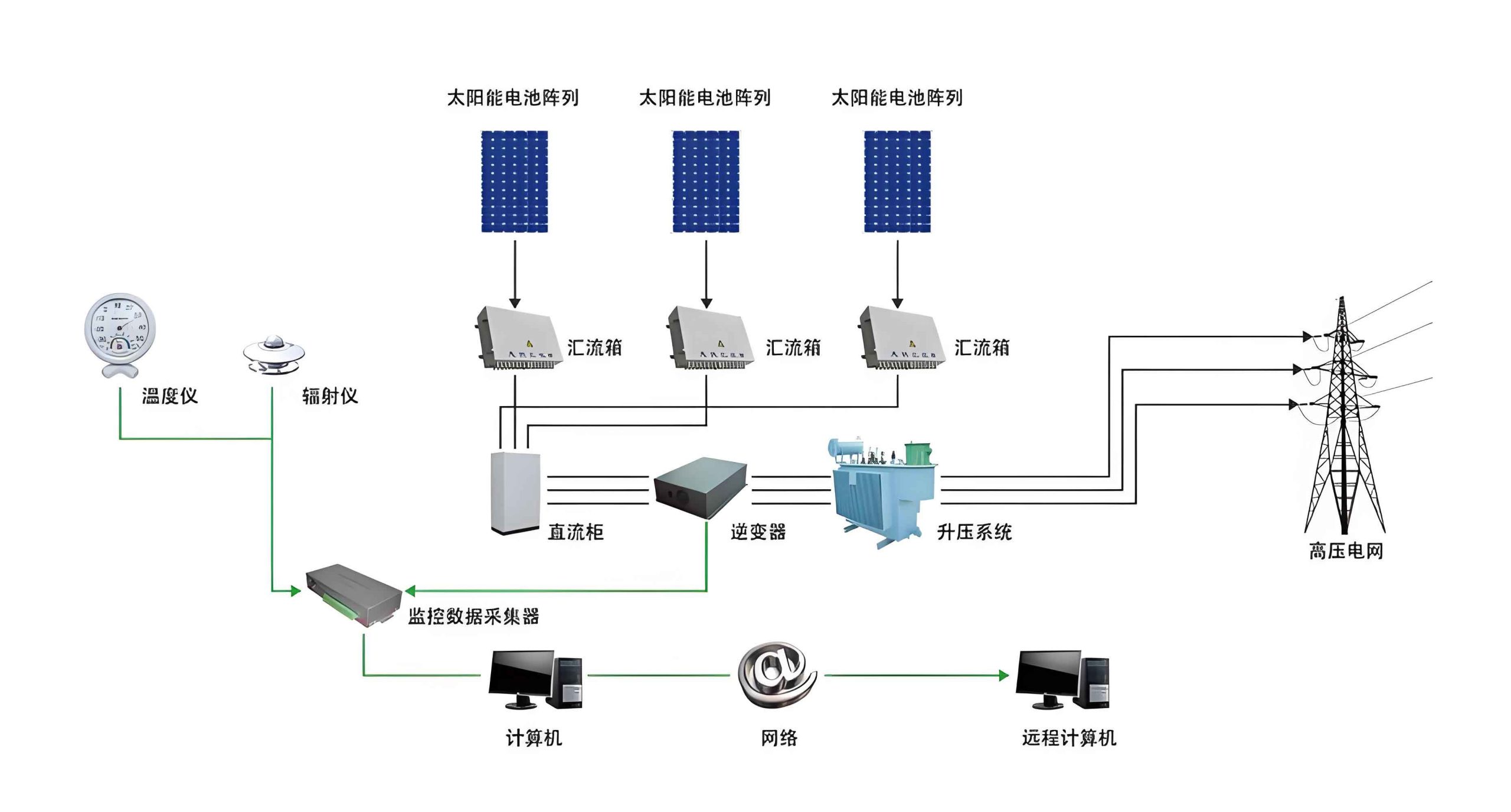
Bilingual teaching, as a bridge for higher education to absorb and learn from advanced foreign cultures, has become an inevitable choice for cultivating localized “composite and applied” international talents. Improving existing teaching methods is an effective way to transform the current learning situation. To enhance students’ professional knowledge levels, I propose using bilingual teaching to broaden students’ knowledge horizons while increasing their class participation and teacher-student interaction. This approach was applied in the “Principles and Applications of Solar Photovoltaics” course for students in the Light Source and Lighting program. Based on class performance and final grades, this method has shown significant effectiveness and is worth promoting.
In bilingual teaching, the selection of teaching materials plays a crucial role in teaching effectiveness. Good textbooks not only provide students with a clear knowledge framework during pre-class preparation but also serve as a primary reference for post-class review. For the course on solar photovoltaic principles and applications, there are many classic foreign textbooks. After careful comparison, I selected “Physics of Solar Cells: From Basic Principles to Advanced Concepts” by Peter Würfel as the main textbook. This textbook is written in accessible language, comprehensive in content, introduces concepts in a straightforward manner, and is enriched with diagrams and exercises to facilitate student understanding and learning. Additionally, Chinese reference books such as “Principles and Applications of Solar Photovoltaics” (Second Edition) by Professor Deng Changsheng, “Fundamentals and Applications of Solar Cells” by Xiong Shaozhen, and “Solar Photovoltaic Device Technology” by Yu Junsheng were chosen to aid students in deeper study and understanding.
In past years, the teaching method for the “Principles and Applications of Solar Photovoltaics” course relied on Chinese textbooks and Mandarin instruction, leaving room for improvement in teaching forms, effectiveness, and talent cultivation. With the continuous development and reform of higher education in China and the globalization of the world economy, bilingual teaching has become an inevitable trend for integrating Chinese higher education with international standards. “Bilingual teaching” refers to using two languages in classroom instruction, with particular emphasis on the second language or foreign language as the teaching medium, meaning that non-native language is used for part or all of non-language subject teaching. The goal is to cultivate composite talents who possess both professional knowledge and the ability to read and communicate in professional foreign languages.
Currently, three main classroom teaching methods are adopted for bilingual teaching in universities: first, full foreign language courseware with full foreign language explanation; second, full foreign language courseware with full Chinese expression; third, full foreign language courseware with mixed Chinese and English expression. To more authentically reflect the characteristics of bilingual teaching while considering students’ comprehension abilities, I chose the third method—mixed Chinese and English expression. In teaching, I avoid purely English or purely Chinese instruction, instead skillfully combining both. It is worth noting that compared to general bilingual courses, the “Principles and Applications of Solar Photovoltaics” course has unique advantages when taught bilingually. Since this course is offered in the 7th semester, students already have a good foundation in professional knowledge from other courses such as “Semiconductor Physics,” which helps them adapt to the new bilingual teaching style during the initial chapters covering basic concepts. During class, I flexibly adjust the explanation methods based on students’ English proficiency, using English as much as possible while ensuring knowledge acquisition, and adjusting the ratio of Chinese to English teaching time according to the difficulty of different parts of the course to optimize the blend and improve the quality of bilingual teaching. Key or difficult content is typically explained first in English, then emphasized in Chinese, with Chinese used for blackboard writing. From classroom reactions, most students are attentive; those with better English skills can keep up with the pace and engage in thinking during class, while those with weaker English skills may struggle but can rely on Chinese notes for review. This bilingual teaching method allows students to benefit from knowledge acquisition while improving their language skills.
The course includes eight chapters: Chapter 1: Energy Economy Issues, Chapter 2: Photons, Chapter 3: Semiconductors, Chapter 4: Conversion of Thermal Radiation into Chemical Energy, Chapter 5: Conversion of Chemical Energy into Electrical Energy, Chapter 6: Basic Structure of Solar Cells, Chapter 7: Limitations of Energy Conversion in Solar Cells, and Chapter 8: Concepts for Improving Solar Cell Efficiency. Through this course, students learn about the utilization methods of solar energy and the advantages and disadvantages of solar photovoltaic power generation; they master the processes of light absorption and recombination in devices and understand the basic equations of semiconductor physics; through the photovoltaic effect, they comprehend the working principles of solar cells, the electrical characteristics of solar cells, and become familiar with the testing of current-voltage characteristics and spectral response of solar cells; through the preparation of silicon solar cells, they understand the application of the photovoltaic effect in actual devices; through the working principles of organic solar cells, they understand the differences between organic and inorganic materials, learn about the optical properties of organic solar cells, and master measures to improve their optical performance.
Bilingual teaching places greater emphasis on student development and ability cultivation during the teaching process, combining principles with flexibility to truly realize the educational philosophy of “people-oriented.” One reason many students cannot focus in class is that teachers habitually灌输 knowledge to students, neglecting their classroom state and lacking points to attract student participation; students also lack enthusiasm and initiative. By planning each knowledge point and using flexible teaching methods, I aim to stimulate students’ learning热情 and fully engage them in class. In subsequent teaching, I guide students in pre-class preparation and explain relevant key points in class. To encourage active participation in course learning and enhance students’ enthusiasm and autonomy, I pose questions in class and require students to answer in English as much as possible. After class, I assign relevant coursework to锻炼 students’ ability to analyze and solve problems in English. Correctly positioning the relationship between “teaching” and “learning,” I gradually transition from a “teacher-led” approach to an interactive teaching mode centered on students. This involves students self-studying after class, with classroom time dedicated to interactive discussions between teachers and students, where teachers检查自学效果 and resolve疑难问题, ultimately striving toward the goal of introducing cutting-edge knowledge.
In course teaching, to enhance student interest, I adopt the method of “implementing优质科研资源 in the classroom to support basic teaching.” From existing科研资源, I select content that aligns with “Principles and Applications of Solar Photovoltaics” to share with students. Based on this project, I arrange suitable times to open the laboratory to enrolled students, providing on-site explanations of experimental instruments and principles, including the preparation process and principles of solar photovoltaics, introduction to the preparation of two-dimensional perovskite photodetectors, demonstration and explanation of perovskite lasers, and explanation of surface plasmon polaritons. Additionally, I design a complete demonstration experiment for the preparation and testing of organic photovoltaic cells. I compile the latest research成果 on light trapping in solar cells, updating textbook knowledge to align with前沿. Outside class, I actively participate in the university’s course design and graduation project courses, providing a科研平台 for students interested in the photovoltaic field, allowing them to gain a deeper understanding of research and laying a foundation for their future科研发展.
The final grade for the “Principles and Applications of Solar Photovoltaics” course is determined by a综合 of class performance (attendance, answering questions) and the final exam. Compared to traditional teaching methods, this bilingual teaching approach is more conducive to enhancing students’ professional素养,更能激发学生的学习主动性 and积极性, while being more practical for students. The国际化上课方式 offers a new option for cultivating composite talents who possess both professional knowledge and the ability to read and communicate in professional foreign languages. Ensuring that what teachers teach truly meets students’ needs is an effective途径 for cultivating high-quality talents.
In the context of solar photovoltaic systems, it is essential to understand the fundamental物理 principles involved. For instance, the energy of a photon is given by: $$E = h\nu$$ where \(h\) is Planck’s constant and \(\nu\) is the frequency of the photon. This is crucial in explaining how light interacts with semiconductor materials in a solar system.
The efficiency of a solar cell in a solar system is defined as: $$\eta = \frac{P_{\text{out}}}{P_{\text{in}}}$$ where \(P_{\text{out}}\) is the electrical power output and \(P_{\text{in}}\) is the incident solar power. This formula helps in evaluating the performance of various solar photovoltaic systems.
Another key concept is the band gap energy of semiconductors, which determines the absorption of photons. The relationship is: $$E_g = h\nu_g$$ where \(E_g\) is the band gap energy and \(\nu_g\) is the threshold frequency. This is vital for designing efficient solar cells in a solar system.
To summarize the advantages of bilingual teaching in solar photovoltaic systems, I present the following table comparing traditional and bilingual methods:
| Aspect | Traditional Teaching | Bilingual Teaching |
|---|---|---|
| Language Use | Primarily native language | Mix of native and foreign language |
| Student Engagement | Low participation | High participation through互动 |
| Knowledge Access | Limited to local resources | Access to international resources |
| Skill Development | Professional knowledge only | Professional + language skills |
| Applicability to Solar System | Basic understanding | Comprehensive understanding with global perspective |
Furthermore, the design of a solar photovoltaic system involves multiple parameters. For example, the output power of a solar cell can be expressed as: $$P = V \times I$$ where \(V\) is the voltage and \(I\) is the current. In a complete solar system, the total power output depends on the configuration of cells, such as in series or parallel. The total voltage for cells in series is: $$V_{\text{total}} = \sum_{i=1}^{n} V_i$$ and for cells in parallel, the total current is: $$I_{\text{total}} = \sum_{j=1}^{m} I_j$$ These formulas are essential for optimizing solar system performance.
In bilingual teaching, I emphasize the integration of such equations with practical examples from solar systems worldwide. For instance, when discussing the limitations of solar cell efficiency, I introduce the Shockley-Queisser limit, which gives the maximum theoretical efficiency for a single-junction solar cell under standard test conditions. The efficiency limit can be approximated as: $$\eta_{\text{max}} \approx 34\%$$ for a band gap of around 1.4 eV. This concept is crucial for understanding why current solar systems have efficiency constraints and how advanced concepts like multi-junction cells can overcome them.
Another important aspect is the economic analysis of solar systems. The levelized cost of electricity (LCOE) is a key metric, calculated as: $$\text{LCOE} = \frac{\sum_{t=1}^{n} \frac{I_t + M_t}{(1+r)^t}}{\sum_{t=1}^{n} \frac{E_t}{(1+r)^t}}$$ where \(I_t\) is the investment cost in year \(t\), \(M_t\) is the maintenance cost, \(E_t\) is the energy output, \(r\) is the discount rate, and \(n\) is the lifetime of the system. This formula helps students evaluate the feasibility of solar systems in different contexts.
To enhance learning, I incorporate case studies of real-world solar systems. For example, I discuss large-scale solar farms and their impact on energy grids, emphasizing how bilingual skills enable students to access international case studies and research papers. This broadens their perspective on solar system applications.
In terms of实践学习, the laboratory sessions are designed to reinforce theoretical knowledge. Students perform experiments on solar cell characterization, measuring parameters like open-circuit voltage (\(V_{oc}\)), short-circuit current (\(I_{sc}\)), and fill factor (FF). The fill factor is defined as: $$\text{FF} = \frac{V_{\text{mp}} \times I_{\text{mp}}}{V_{oc} \times I_{sc}}$$ where \(V_{\text{mp}}\) and \(I_{\text{mp}}\) are the voltage and current at maximum power point. This hands-on experience is vital for understanding solar system components.
Moreover, I introduce emerging technologies in solar systems, such as perovskite solar cells. Their efficiency has rapidly increased, with recent records exceeding 25%. The device structure can be modeled using equations like the diode equation: $$I = I_0 \left( e^{\frac{qV}{nkT}} – 1 \right) – I_{\text{ph}}$$ where \(I_0\) is the reverse saturation current, \(q\) is the electron charge, \(n\) is the ideality factor, \(k\) is Boltzmann’s constant, \(T\) is the temperature, and \(I_{\text{ph}}\) is the photocurrent. This deep dive into advanced topics prepares students for前沿 research in solar systems.
To further illustrate the course content, below is a table summarizing key chapters and their learning outcomes related to solar systems:
| Chapter | Key Topics | Learning Outcomes |
|---|---|---|
| 1: Energy Economy | Global energy trends, role of solar systems | Understand the economic context of solar photovoltaic systems |
| 2: Photons | Photon properties, interaction with matter | Describe how photons contribute to energy conversion in solar systems |
| 3: Semiconductors | Band structure, carrier dynamics | Explain semiconductor behavior in solar cells |
| 4: Thermal to Chemical Energy | Radiation, energy conversion processes | Analyze energy转换路径 in solar systems |
| 5: Chemical to Electrical Energy | Photovoltaic effect, cell operation | Master the working principles of solar systems |
| 6: Solar Cell Structure | Device architectures, materials | Design basic solar cell structures for efficient solar systems |
| 7: Efficiency Limitations | Loss mechanisms, theoretical limits | Identify and mitigate efficiency barriers in solar systems |
| 8: Efficiency Improvement | Advanced concepts, novel technologies | Propose innovations for enhancing solar system performance |
In conclusion, bilingual teaching in solar photovoltaic systems has proven to be a transformative approach. By integrating foreign language instruction with专业 content, students not only grasp the technical aspects of solar systems but also develop the skills needed for global collaboration. The use of formulas, such as those for efficiency and cost analysis, coupled with practical experiments, ensures a comprehensive learning experience. As solar systems continue to evolve, educating the next generation of professionals through methods like bilingual teaching is paramount for sustaining innovation and addressing global energy challenges. The positive feedback from students, reflected in their engagement and academic performance, underscores the value of this methodology. Moving forward, I plan to further refine the bilingual curriculum, incorporate more interactive elements, and expand实验室 resources to keep pace with advancements in solar system technologies. Ultimately, the goal is to foster a deep understanding of solar photovoltaic principles while nurturing the linguistic and critical thinking abilities essential for success in the international arena of renewable energy.