
As a participant in the recent international standardization efforts, I had the privilege of attending key meetings that shape the future of solar photovoltaic energy systems. The advancements in this field are critical for global energy sustainability, and standardization plays a pivotal role in ensuring interoperability, safety, and performance. In this article, I will share insights from recent developments, focusing on the standardization dynamics that impact solar system design, testing, and deployment. Through detailed tables, formulas, and analysis, I aim to provide a comprehensive overview of how these standards evolve to meet the growing demands of the solar industry.
The solar system, as a complex energy generation platform, relies on rigorous standards to guarantee efficiency and reliability. From component-level specifications to system-wide performance metrics, every aspect of the solar system must be harmonized through international collaboration. The recent meetings of IEC/TC82, the technical committee for solar photovoltaic energy systems, highlighted both challenges and progress in this arena. By delving into the resolutions and outcomes, we can better understand the trajectory of solar system standardization and its implications for technology adoption.
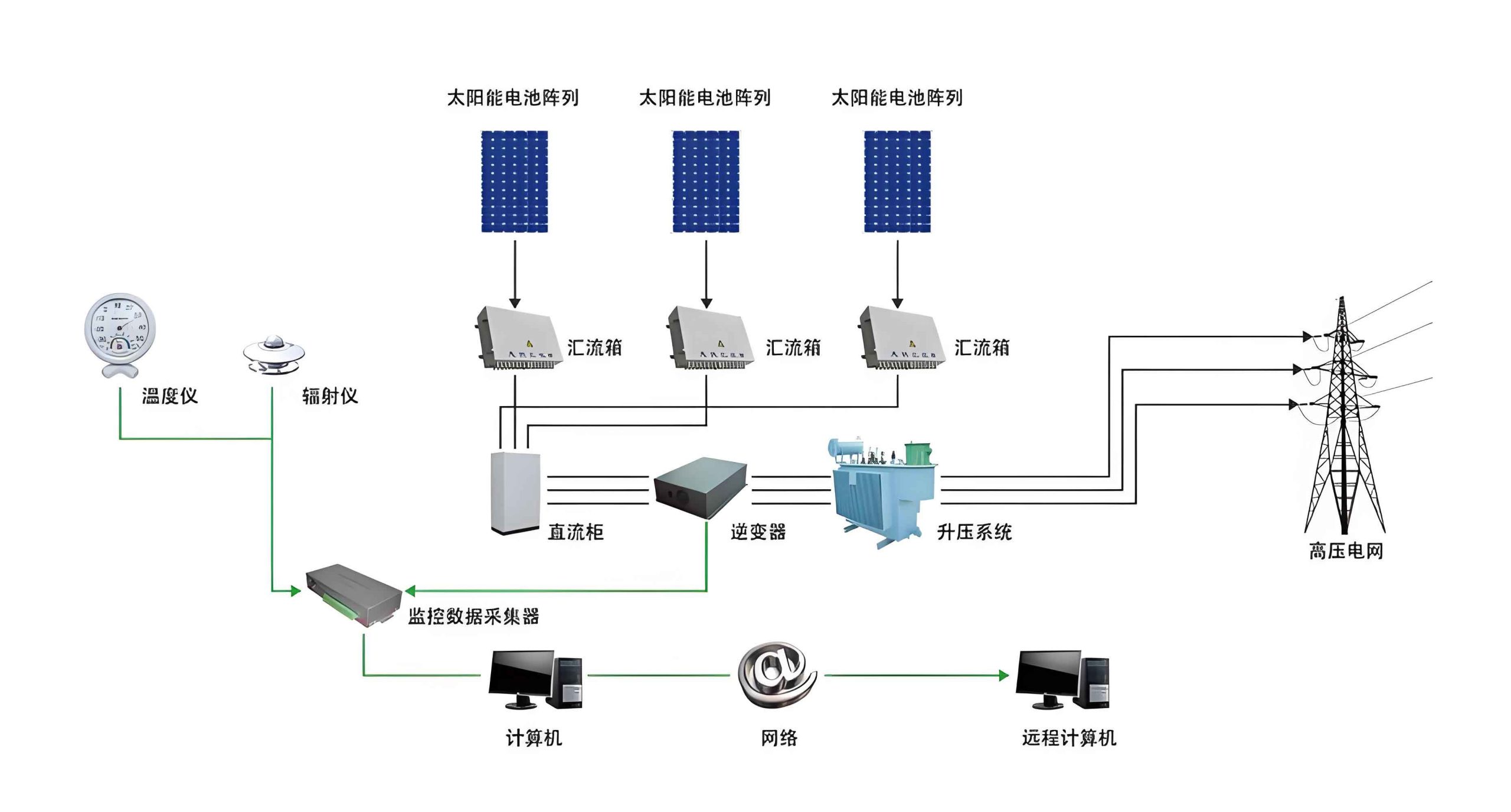
One of the core aspects of solar system standardization is the continuous refinement of testing methodologies. For instance, the performance of a solar system can be modeled using various parameters, such as efficiency and degradation rates. Consider the formula for photovoltaic efficiency, which is fundamental to evaluating any solar system component: $$ \eta = \frac{P_{\text{out}}}{P_{\text{in}}} $$ where \( \eta \) represents efficiency, \( P_{\text{out}} \) is the output power, and \( P_{\text{in}} \) is the input solar irradiance. This formula underpins many standards that define how to measure and report the performance of solar systems.
In the meetings, several key resolutions were made that directly affect solar system standards. Below is a table summarizing the major decisions regarding standard cancellations and new projects:
| Resolution Type | Standard Reference | Reason | Impact on Solar System |
|---|---|---|---|
| Cancellation | IEC 61215-1-5 | Content integrated into IEC 61215 series amendments | Streamlines testing for flexible PV modules in solar systems |
| Cancellation | IEC 62892-1 | Scope deemed unachievable based on feedback | Halts redundant performance testing for diverse solar system conditions |
| New Project | BIPV Standards (IEC TS 63092-1 & -2) | Alignment with EN 50583 series for building-integrated solar systems | Enhances safety and performance of solar systems in construction |
| Cancellation | IEC 61724-4 | Premature standardization due to insufficient understanding | Delays degradation rate assessment methods for solar systems |
The cancellation of IEC 61215-1-5 and IEC 62892-1 reflects the ongoing optimization of standards to avoid duplication and focus on essential requirements for solar systems. For example, the integration of flexible photovoltaic component testing into the broader IEC 61215 series ensures that solar system designers have a unified reference, reducing complexity in compliance. Similarly, the discontinuation of IEC 62892-1 underscores the challenges in standardizing multi-climate testing for solar systems, where variables like temperature and irradiance can significantly affect outcomes. This decision prompts further research into robust modeling approaches, such as using degradation formulas: $$ LID(t) = LID_0 \cdot e^{-k t} $$ where \( LID(t) \) is the light-induced degradation at time \( t \), \( LID_0 \) is the initial degradation, and \( k \) is a rate constant. Such models are vital for predicting long-term performance in solar systems.
The establishment of new BIPV (Building Integrated Photovoltaic) standards marks a significant step forward for integrating solar systems into urban infrastructure. BIPV standards, now redefined as IEC TS 63092-1 and IEC TS 63092-2, aim to address both component and system-level requirements for solar systems embedded in buildings. This alignment with European norms (EN 50583) facilitates global adoption, ensuring that solar systems meet architectural and safety criteria. To illustrate the technical scope, consider the following table outlining key parameters for BIPV components in a solar system:
| Parameter | Description | Standard Reference | Typical Value Range |
|---|---|---|---|
| Electrical Efficiency | Power conversion efficiency under standard conditions | IEC TS 63092-1 | 15-22% for crystalline silicon |
| Mechanical Strength | Resistance to wind and snow loads | IEC TS 63092-1 | ≥ 2400 Pa for roof systems |
| Thermal Conductivity | Heat dissipation properties | IEC TS 63092-2 | 0.5-1.5 W/m·K |
| Fire Resistance | Compliance with building safety codes | IEC TS 63092-2 | Class A or B per ISO standards |
These parameters are crucial for ensuring that a solar system not only generates energy but also harmonizes with building envelopes. For instance, the electrical efficiency directly impacts the overall energy yield of a solar system, which can be calculated using the formula: $$ E_{\text{annual}} = \eta \cdot G \cdot A \cdot \text{PR} $$ where \( E_{\text{annual}} \) is the annual energy output, \( \eta \) is efficiency, \( G \) is solar irradiance, \( A \) is area, and \( PR \) is the performance ratio of the solar system.
Another pivotal area discussed was the progress of standards led by various national delegations. The contributions from the Chinese delegation, for example, have accelerated the development of key standards that enhance solar system reliability. Below is a summary of the standards advanced during the meetings, highlighting their status and impact on solar systems:
| Standard Project | Title | Current Status | Relevance to Solar System |
|---|---|---|---|
| IEC 62805-1 | Test methods for photovoltaic glass – Part 1: Total haze and spectral haze distribution | FDIS stage, expected publication in 2017 | Improves light transmission analysis for solar system glazing |
| IEC 62805-2 | Test methods for photovoltaic glass – Part 2: Transmittance and reflectance | FDIS stage, expected publication in 2017 | Enhances optical characterization in solar system components |
| IEC 60904-11 | Photovoltaic devices – Part 11: Test method for initial light-induced degradation of crystalline silicon photovoltaic cells | Entering CD stage | Addresses performance degradation in solar system cells |
| IEC 63104 | Safety requirements for solar trackers | To enter CD stage in early 2018 | Ensures safe operation of tracking mechanisms in solar systems |
The advancement of these standards underscores the holistic approach needed for solar system optimization. For instance, IEC 60904-11 focuses on light-induced degradation (LID), a critical factor that affects the longevity of a solar system. The test method prescribed can be linked to a mathematical model for degradation over time: $$ \Delta P(t) = P_0 \cdot (1 – \alpha \cdot \ln(t+1)) $$ where \( \Delta P(t) \) is the power loss, \( P_0 \) is initial power, \( \alpha \) is a degradation coefficient, and \( t \) is time in years. This model helps in predicting maintenance needs for solar systems, ensuring sustained performance.
Furthermore, the establishment of WG8 (Photovoltaic Cells Working Group) marks a significant expansion in standardization efforts. This group, led by experts from various countries, aims to cover photovoltaic cells and related materials, broadening the scope to include aspects like electrical performance, environmental testing, and material characteristics. For a solar system, the quality of cells is paramount, and standards developed here will directly influence efficiency metrics. Consider the formula for cell efficiency under standard test conditions (STC): $$ \eta_{\text{cell}} = \frac{V_{\text{oc}} \cdot I_{\text{sc}} \cdot FF}{P_{\text{in}}} $$ where \( V_{\text{oc}} \) is open-circuit voltage, \( I_{\text{sc}} \) is short-circuit current, \( FF \) is fill factor, and \( P_{\text{in}} \) is input power. This formula is foundational for evaluating cell performance in any solar system.
The discussions within WG8 also highlighted potential new standards, such as those for silicon wafer specifications and UV degradation testing. These proposals aim to address gaps in current solar system standards, particularly in material science and durability. For example, UV degradation can be modeled using an exponential decay function: $$ \text{UV}_{\text{deg}}(t) = \beta \cdot (1 – e^{-\gamma t}) $$ where \( \text{UV}_{\text{deg}}(t) \) is the degradation due to UV exposure, \( \beta \) is the maximum degradation, and \( \gamma \) is a rate constant. Incorporating such models into standards will enhance the resilience of solar systems against environmental stressors.
In addition to technical standards, the meetings emphasized the importance of collaboration with other organizations, such as ISO/TC160 and CENELEC, to harmonize requirements for solar systems. This cross-disciplinary approach ensures that solar system integration into buildings and other structures meets both electrical and architectural standards. The following table summarizes key collaborative efforts and their focus areas for solar systems:
| Collaborating Organization | Focus Area | Impact on Solar System Standards |
|---|---|---|
| ISO/TC160 (Glass in Buildings) | Building glass requirements | Aligns BIPV components with construction safety and aesthetics |
| CENELEC (European Committee) | European norms for PV systems | Facilitates international adoption of EN 50583 for solar systems |
| IEA PVPS Task 15 | Research on BIPV applications | Provides data-driven insights for solar system performance in buildings |
Such collaborations are essential for developing a cohesive framework that supports the widespread deployment of solar systems. For instance, by aligning with ISO/TC160, standards for BIPV can address structural integrity, which is critical for large-scale solar system installations on rooftops or facades. The mechanical load requirements can be expressed through formulas like: $$ F_{\text{wind}} = C_p \cdot \rho \cdot v^2 \cdot A / 2 $$ where \( F_{\text{wind}} \) is wind force, \( C_p \) is pressure coefficient, \( \rho \) is air density, \( v \) is wind speed, and \( A \) is area. This ensures that solar systems can withstand environmental forces.
Looking ahead, the future of solar system standardization will likely involve more advanced topics, such as smart grid integration and energy storage compatibility. As solar systems evolve to include battery storage and grid interaction, standards must adapt to cover these aspects. For example, the efficiency of a solar system with storage can be modeled as: $$ \eta_{\text{total}} = \eta_{\text{PV}} \cdot \eta_{\text{battery}} \cdot \eta_{\text{inverter}} $$ where each component’s efficiency contributes to the overall solar system performance. Standardizing these parameters will enable better system design and optimization.
Moreover, the role of digital tools in standardizing solar systems cannot be overlooked. Simulation software often relies on standardized inputs to predict performance, and formulas like the following for energy yield are commonly used: $$ Y_{\text{daily}} = \frac{H_{\text{global}} \cdot \eta_{\text{system}} \cdot A}{G_{\text{std}}} $$ where \( Y_{\text{daily}} \) is daily energy yield, \( H_{\text{global}} \) is global horizontal irradiance, \( \eta_{\text{system}} \) is system efficiency, \( A \) is area, and \( G_{\text{std}} \) is standard irradiance. By incorporating such formulas into standards, consistency in solar system evaluation is achieved across different regions and technologies.
In conclusion, the recent developments in IEC/TC82 underscore the dynamic nature of solar photovoltaic energy system standardization. From canceling redundant standards to launching new projects for BIPV, each decision shapes the future of solar systems. As a participant, I have witnessed how collaboration and technical rigor drive progress, ensuring that solar systems become more reliable, efficient, and integrated into our daily lives. The use of tables and formulas in this article highlights the quantitative aspects that underpin these standards, providing a clearer understanding of their impact. As we move forward, continued emphasis on keywords like “solar system” will remain vital in aligning global efforts toward sustainable energy solutions.
The journey toward robust solar system standards is ongoing, with challenges such as degradation modeling and material specifications requiring further research. However, the foundational work laid in these meetings sets a strong precedent. By embracing mathematical models and international cooperation, we can ensure that solar systems not only meet current needs but also adapt to future innovations. Ultimately, the goal is to create a standardized framework that accelerates the adoption of solar energy, contributing to a cleaner and more resilient energy landscape for all.