
In recent years, the global push for renewable energy has intensified, with solar energy emerging as a key component in mitigating climate change. In China, the construction sector accounts for approximately 51% of total carbon emissions, with residential buildings being a major contributor. To address this, China has set ambitious goals to achieve carbon peak by 2030 and carbon neutrality by 2060. Among various renewable energy sources, solar photovoltaic (PV) technology offers significant advantages for urban areas, such as integration into building structures, reduced land use, and decentralized power generation. However, despite these benefits, the adoption rate of solar systems in Chinese cities remains low. This study aims to explore the factors influencing the adoption intention of solar systems in urban China, using Wuhan as a case study. By employing a structural equation model (SEM), I investigate how demographic variables, cognitive levels, and policy incentives affect residents’ willingness to adopt solar systems. The findings provide insights for effectively promoting solar system deployment in urban settings.
The adoption of solar systems is influenced by a multitude of factors, as evidenced by prior research globally. Studies in countries like India and the United States have highlighted the roles of entrepreneurship, household characteristics, policy barriers, and financial incentives. For instance, Mohd et al. found that entrepreneurial spirit, family size, occupation, age, and income significantly impact solar adoption in India. Similarly, Heng et al. identified that financial incentives, government subsidies, attitudes toward climate change, and motivations are crucial in the U.S. context. However, these studies may not directly apply to China due to differences in socio-economic and environmental conditions. Therefore, this research focuses on the Chinese urban context, particularly Wuhan, to fill this gap. By examining local factors, I aim to provide tailored recommendations for promoting solar system adoption.
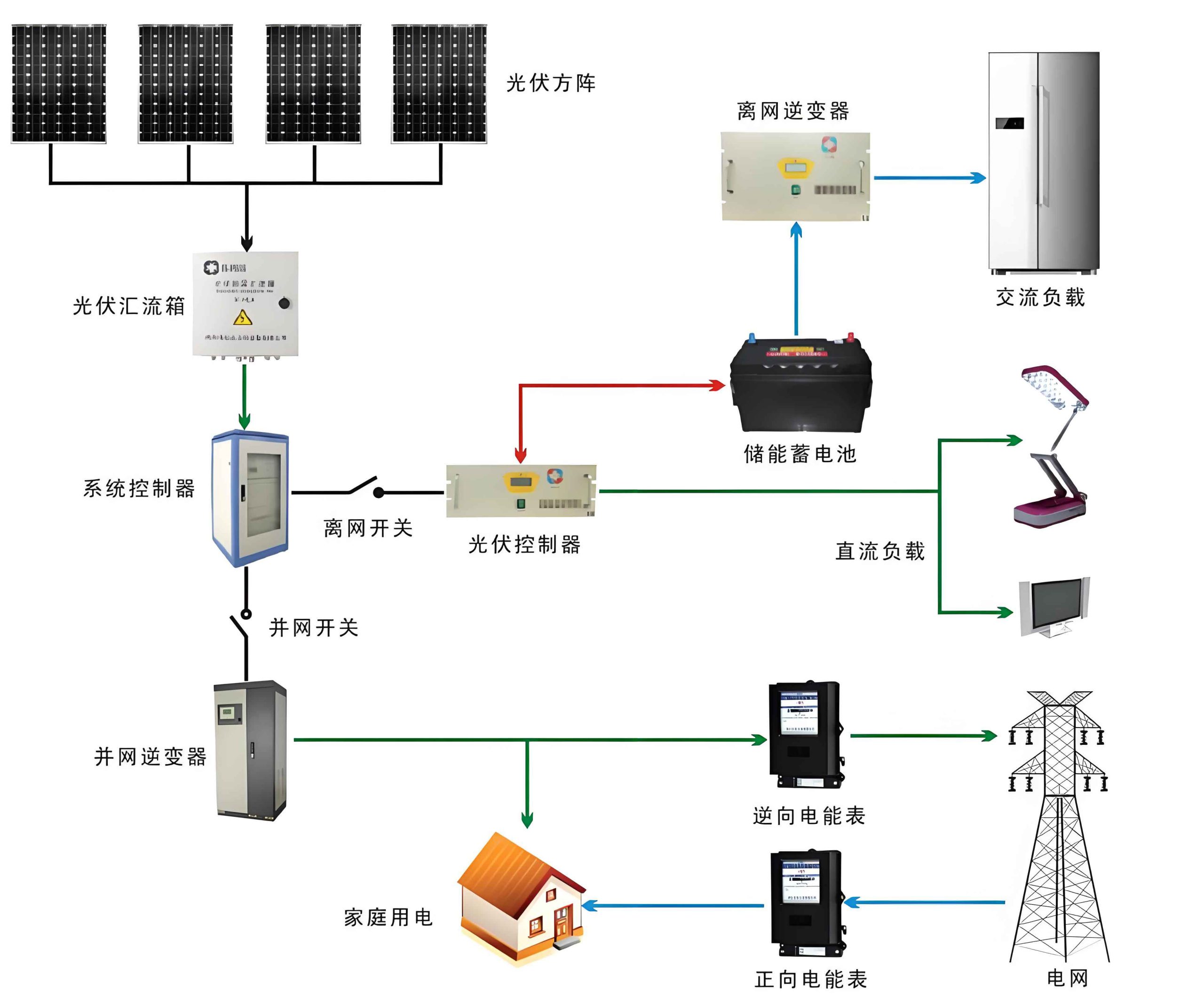
Wuhan, the capital of Hubei Province, serves as an ideal case study due to its economic vitality and climatic suitability. As a major city in central China, Wuhan has a GDP of approximately 1,561.606 billion yuan (2020) and experiences a subtropical humid monsoon climate with ample sunshine (1,810–2,100 hours annually). These conditions make it conducive for deploying solar systems. The research framework involves a mixed-methods approach, combining questionnaire surveys and structural equation modeling. First, I conducted both online and offline surveys to collect data on residents’ demographics, cognitive levels, policy attitudes, and adoption intentions. The questionnaire was structured into five sections: demographic characteristics, awareness and acceptance, usage intention and evaluation, social influencing factors, and product considerations. A total of 1,093 questionnaires were distributed, with 800 valid responses obtained, yielding an effective recovery rate of 80%. The data were then analyzed using SEM to establish relationships between influencing factors and adoption intention.
Structural equation modeling is a robust statistical technique that integrates factor analysis and regression models, allowing for the examination of complex causal relationships. The measurement and structural models can be expressed using matrix equations. For the measurement model:
$$X = \Lambda_x \xi + \delta$$
$$Y = \Lambda_y \eta + \epsilon$$
And for the structural model:
$$\eta = \beta \eta + \Gamma \xi + \zeta$$
In these equations, \(X\) and \(Y\) represent observable variables, \(\xi\) and \(\eta\) are latent exogenous and endogenous variables, \(\Lambda_x\) and \(\Lambda_y\) are loading coefficients, \(\delta\) and \(\epsilon\) are measurement errors, \(\beta\) and \(\Gamma\) are path coefficients, and \(\zeta\) is the residual vector. This approach has been widely used in behavioral and social sciences to analyze influencing factors, making it suitable for this study on solar system adoption.
The survey sample comprised residents from various districts in Wuhan, with a balanced gender distribution (46% male, 54% female) and age groups reflecting the general population. Most respondents were from core urban areas (87%), with professions including technicians, students, enterprise employees, industrial workers, and businesspersons. Education levels were predominantly university graduates or higher, and household incomes mostly ranged from 80,000 to 300,000 yuan annually. The housing types were primarily commercial high-rise or multi-story buildings. To ensure data quality, I performed common method bias testing using Harman’s single-factor test. The results showed that the maximum factor variance explanation rate was 35.497%, below the 40% threshold, indicating acceptable common method bias.
Reliability and validity tests were conducted to assess the questionnaire’s consistency and accuracy. Cronbach’s alpha coefficients were calculated for key constructs, as summarized in Table 1. All values exceeded 0.7, demonstrating high reliability. Additionally, composite reliability (CR) and average variance extracted (AVE) were computed for latent variables, with CR > 0.6 and AVE > 0.4, confirming internal consistency. For validity, the Kaiser-Meyer-Olkin (KMO) measure was 0.932, and Bartlett’s test of sphericity was significant (p < 0.001), indicating excellent suitability for factor analysis.
| Variable Dimension | Number of Items | Cronbach’s Alpha Coefficient | |||
|---|---|---|---|---|---|
| Adoption Intention | 4 | 0.846 | |||
| Cognitive Level | 4 | 0.751 | |||
| Policy Subsidy | 4 | 0.763 | |||
| Age | 1 | 0.863 | |||
| Gender | 1 | 0.863 | |||
| District | 1 | 0.864 | |||
| Household Size | 1 | 0.870 | |||
| Household Income | 1 | 0.863 | Education Level | 1 | 0.868 |
| Overall | 18 | 0.852 |
Convergent validity was further assessed through factor loadings and AVE values. As shown in Table 2, all standardized factor loadings were significant (p < 0.001), with AVE values above 0.4, supporting convergent validity. These results confirm that the measurement model is robust and reliable for subsequent analysis.
| Variable Dimension | Item | Standardized Estimate | SMC | CR | AVE |
|---|---|---|---|---|---|
| Adoption Intention | W4 | 0.667 | 0.445 | 0.851 | 0.590 |
| W3 | 0.845 | 0.714 | |||
| W2 | 0.796 | 0.634 | |||
| W1 | 0.753 | 0.567 | |||
| Cognitive Level | K1 | 0.567 | 0.321 | 0.753 | 0.433 |
| K2 | 0.673 | 0.453 | |||
| K3 | 0.684 | 0.468 | |||
| K4 | 0.701 | 0.491 | |||
| Policy Subsidy | P1 | 0.659 | 0.434 | 0.800 | 0.500 |
| P2 | 0.751 | 0.564 | |||
| P3 | 0.730 | 0.533 | |||
| P4 | 0.686 | 0.471 |
The structural equation model was developed to examine the relationships between influencing factors and adoption intention. The model fit indices, presented in Table 3, indicate a good fit: CMID/DF = 3.609 (< 5), RMSEA = 0.057 (< 0.08), GFI = 0.947, AGFI = 0.913, CFI = 0.944, and TLI = 0.918, all exceeding the 0.9 threshold. The model’s explanatory power (R²) was 0.87, demonstrating strong predictive capability. The path coefficients from the SEM analysis reveal that age, cognitive level, and policy subsidy have significant positive effects on solar system adoption intention, with standardized estimates of 0.088, 0.340, and 0.601, respectively. In contrast, gender, district, household size, household income, and education level showed no significant influence. These findings underscore the importance of policy incentives and awareness in driving solar system adoption.
| Index | Model Value | Standard | Conclusion |
|---|---|---|---|
| CMID/DF | 3.609 | < 5 (acceptable) | Acceptable |
| GFI | 0.947 | > 0.9 (good fit) | Good Fit |
| AGFI | 0.913 | > 0.9 (good fit) | Good Fit |
| CFI | 0.944 | > 0.9 (good fit) | Good Fit |
| TLI | 0.918 | > 0.9 (good fit) | Good Fit |
| RMSEA | 0.057 | < 0.08 (good fit) | Good Fit |
The results highlight that policy subsidy is the most critical factor, with a substantial impact on adoption intention. This aligns with the survey findings, where respondents identified cost savings as a primary motivation for adopting solar systems. Conversely, barriers included lack of installation conditions, high product costs, limited knowledge of community regulations, and insufficient government incentives. Specifically, 57% of respondents considered purchase subsidies the most effective policy measure, followed by generation subsidies (16%) and installation subsidies (12%). These insights emphasize the need for targeted financial support to enhance the affordability and attractiveness of solar systems.
From a broader perspective, the adoption of solar systems can be modeled using utility theory, where an individual’s decision is based on perceived benefits and costs. Let \(U_i\) represent the utility of adopting a solar system for individual \(i\), which can be expressed as:
$$U_i = \beta_0 + \beta_1 \text{Age}_i + \beta_2 \text{Cognitive Level}_i + \beta_3 \text{Policy Subsidy}_i + \epsilon_i$$
Here, \(\beta\) coefficients denote the marginal effects of each factor, and \(\epsilon_i\) is the error term. The significant positive coefficients for age, cognitive level, and policy subsidy from the SEM correspond to \(\beta_1, \beta_2, \beta_3 > 0\), reinforcing their importance. Additionally, the cognitive level can be enhanced through education and outreach, which in turn boosts adoption intention. This relationship can be depicted as:
$$\text{Cognitive Level} = f(\text{Education}, \text{ Awareness Campaigns})$$
Where \(f\) is a function representing the cumulative effect of educational efforts. By integrating such models into policy design, stakeholders can optimize strategies for promoting solar systems.
Based on the findings, I propose several policy recommendations to accelerate solar system adoption in urban China. First, solar enterprises should target potential customer segments more precisely, focusing on middle-aged and older adults who exhibit higher adoption intentions. Marketing efforts can leverage both online platforms (e.g., social media, news apps) and offline channels (e.g., community workshops, posters in public spaces) to disseminate information about solar systems. Second, the government should increase financial support through subsidies, tax reductions, and favorable policies for solar companies. Specifically, purchase subsidies should be prioritized, as they directly lower upfront costs for residents. Collaboration with banks to offer low-interest loans for solar system installation can further alleviate financial barriers. Moreover, the government should clarify and promote community installation regulations to reduce uncertainties. Third, households should actively improve their cognitive levels by seeking knowledge about solar technology and embracing environmental responsibilities. Educational programs can highlight the dual benefits of solar systems: reducing household expenses and contributing to carbon neutrality goals.
To quantify the potential impact of these policies, consider a cost-benefit analysis for a typical household adopting a solar system. The net present value (NPV) of the investment can be calculated as:
$$NPV = \sum_{t=1}^{T} \frac{(S_t + B_t) – C_t}{(1 + r)^t}$$
Where \(S_t\) represents subsidy savings in year \(t\), \(B_t\) is the benefit from reduced electricity bills, \(C_t\) is the maintenance cost, \(r\) is the discount rate, and \(T\) is the system lifespan. By increasing subsidies (i.e., raising \(S_t\)), the NPV becomes more positive, encouraging adoption. For instance, if a policy raises the subsidy by 20%, adoption rates could increase proportionally, as suggested by the SEM path coefficient of 0.601 for policy subsidy. This underscores the effectiveness of financial incentives in scaling up solar system deployment.
In conclusion, this study demonstrates that age, cognitive level, and policy subsidy are key determinants of solar system adoption intention in urban China. The structural equation model provides a robust framework for analyzing these factors, with policy subsidy emerging as the most influential driver. To foster widespread adoption, a multi-stakeholder approach is essential: enterprises should enhance marketing targeting, governments should amplify financial and regulatory support, and households should elevate their awareness and engagement. By implementing these strategies, cities like Wuhan can serve as models for integrating solar systems into urban energy landscapes, contributing to national carbon reduction targets. Future research could expand to other regions or incorporate longitudinal data to track adoption trends over time. Ultimately, promoting solar systems is not only an economic imperative but also a vital step toward sustainable urban development.