
As a researcher focused on renewable energy materials, I have dedicated significant effort to understanding the durability of coated glass used in solar photovoltaic modules. The global shift toward sustainable energy sources has made solar power a cornerstone of modern energy strategies, and the reliability of components within a solar system is paramount. In this article, I will explore the durability testing methods for coated glass, which is essential for protecting solar cells and enhancing energy conversion efficiency in any solar system. The increasing deployment of solar systems worldwide demands materials that can withstand harsh environmental conditions, and coated glass, with its anti-reflective properties, is a key element in optimizing performance. Through extensive experimentation and analysis, I aim to provide a comprehensive overview of durability tests that simulate real-world scenarios, ensuring that coated glass maintains its optical and mechanical integrity over time. This work not only contributes to industry standards but also supports the long-term viability of solar systems as a clean energy solution.
The importance of solar energy in addressing global energy shortages and climate change cannot be overstated. Solar systems harness abundant sunlight to generate electricity, but their components must endure diverse environmental stresses. Coated glass, specifically designed for photovoltaic modules, serves multiple functions: it protects solar cells from moisture and oxidation, enhances impact resistance, and increases light transmittance to boost power output. Traditional solar glass has an effective transmittance of around 92%, with approximately 8% loss due to reflection and absorption. Anti-reflective coatings can improve this by 2.5% to 3%, leading to significant power gains in a solar system. For instance, in a 1000 W solar system, using coated glass can increase power by 25–30 W, highlighting its economic and operational benefits. However, the durability of these coatings is critical, as solar systems are exposed to factors like UV radiation, temperature cycles, salt spray, and mechanical abrasion. Without robust testing, coating degradation can reduce transmittance and compromise the entire solar system’s efficiency. Therefore, developing and standardizing durability tests is essential for advancing solar technology and ensuring the reliability of solar systems in various climates.
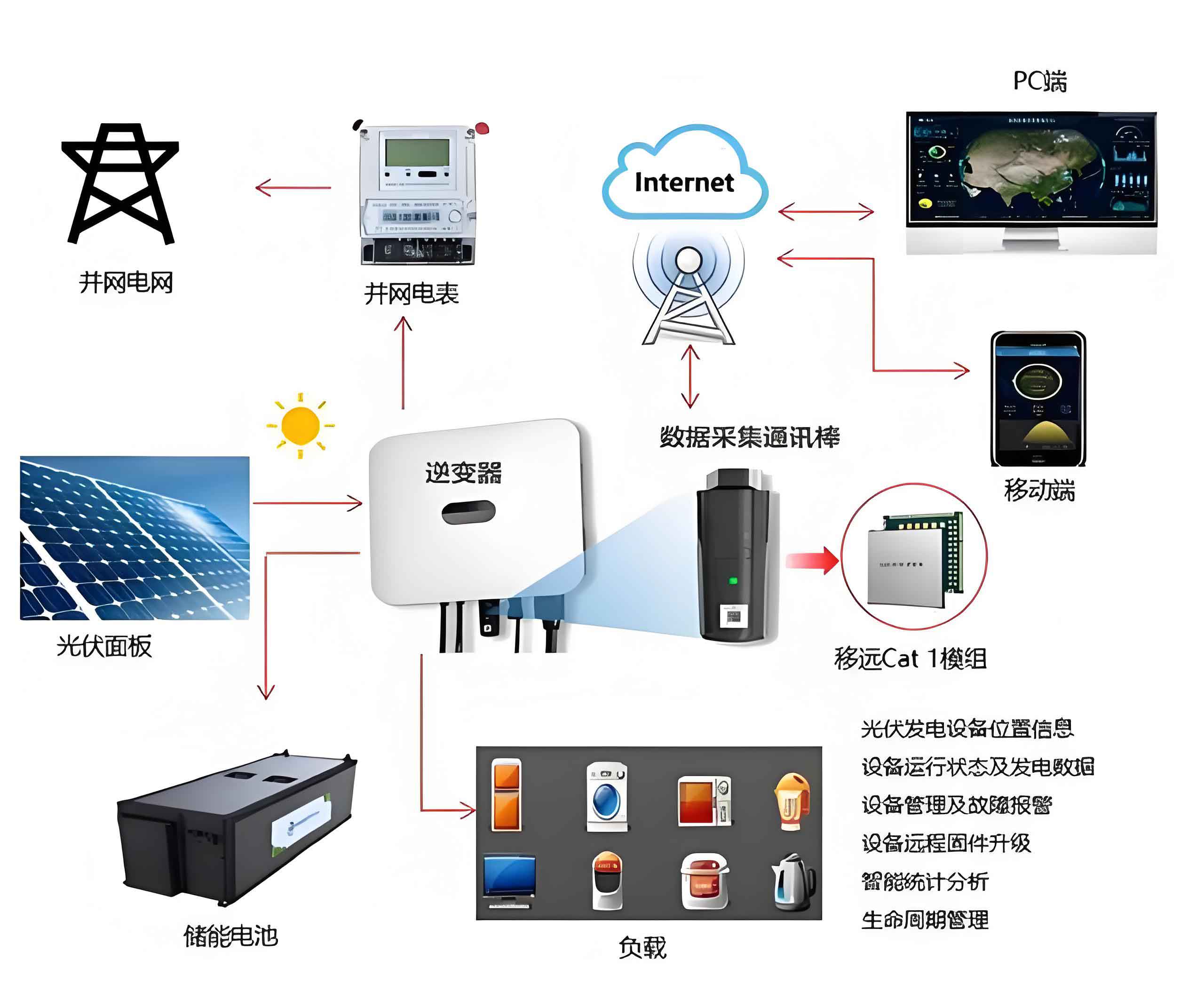
Globally, standards have been established to guide the durability assessment of materials in solar systems. The International Electrotechnical Commission (IEC) released IEC 61215 for crystalline silicon photovoltaic modules, which outlines performance tests but does not specifically address coated glass durability. In China, standards such as GB/T 9535 and JC/T 2170 provide guidelines for solar glass, including some durability requirements. JC/T 2170-2013, for example, specifies tests for abrasion resistance, acid resistance, salt spray resistance, thermal cycling, damp heat, UV exposure, and sand erosion. However, these tests are often conducted in isolation, whereas real-world solar systems experience combined stresses, such as simultaneous heat and humidity followed by salt spray or UV exposure. This gap in standards motivates my research into composite durability tests that better simulate actual conditions in solar systems. By integrating multiple environmental factors, we can more accurately predict the lifespan of coated glass and enhance the resilience of solar systems against degradation.
Current durability requirements for coated glass in solar systems, as per JC/T 2170-2013, include several key tests. These tests are designed to evaluate how well the coating maintains its properties under stress. Below is a summary table of these requirements:
| Test | Condition | Requirement |
|---|---|---|
| Abrasion Resistance | 400 cycles of brushing | Transmittance decay ≤1%, no coating peeling |
| Acid Resistance | 24 h in 1 mol/L HCl at 23°C | Transmittance decay ≤1%, no coating damage |
| Neutral Salt Spray | 96 h at 35°C with 5% NaCl | Transmittance decay ≤1%, no coating damage |
| Thermal Cycling | 200 cycles between -40°C and 85°C | Transmittance decay ≤1%, no coating damage |
| Damp Heat | 1000 h at 85°C and 85% RH | Transmittance decay ≤1%, no coating damage |
| UV Exposure | 15 kWh/m² UV radiation at 60°C | Transmittance decay ≤1%, no coating damage |
| Sand Erosion | 90 min with specified dust and sand | Transmittance decay ≤1%, no coating damage |
While these tests provide a foundation, they do not account for sequential or combined stresses common in solar systems. For instance, a solar system in coastal areas may face damp heat followed by salt spray, or in desert regions, thermal cycles combined with UV exposure. My research extends these tests to include composite scenarios, ensuring coated glass can withstand the synergistic effects encountered in real-world solar systems. This approach is crucial for predicting long-term performance and preventing failures that could compromise the entire solar system.
To investigate durability comprehensively, I designed a series of experiments focusing on combined environmental stresses. Four types of coated glass samples were selected from domestic and international manufacturers, labeled as Domestic A, Domestic B, Imported A, and Imported B. Each sample was cut into 300 mm × 300 mm pieces, with three replicates per type. The tests included damp heat-salt spray, damp heat-UV, wet freeze-salt spray, wet freeze-UV, and abrasion resistance. These tests simulate conditions where solar systems operate in humid, coastal, or cold climates, and during maintenance activities. The effective solar transmittance was measured before and after each test using a spectrophotometer, following JC/T 2170-2013. The transmittance decay, ΔT, is calculated as:
$$ \Delta T = T_{\text{initial}} – T_{\text{final}} $$
where \( T_{\text{initial}} \) and \( T_{\text{final}} \) are the average effective transmittance values before and after testing. A decay of more than 1% is considered significant for a solar system, as it directly impacts power output. Additionally, visual inspection was conducted to check for coating damage like peeling, wrinkling, or脱落. The results from these tests provide insights into how coated glass performs under multifaceted stresses in solar systems.
The damp heat-salt spray test combines high temperature and humidity with corrosive salt exposure, mimicking coastal solar systems. Samples were first subjected to 1000 hours at 85°C and 85% relative humidity, followed by 96 hours of salt spray at 35°C with 5% NaCl. After cleaning and drying, transmittance was measured. The data below show the transmittance changes:
| Sample | Initial Transmittance (%) | Final Transmittance (%) | Transmittance Decay (%) |
|---|---|---|---|
| Domestic A | 93.71 | 92.03 | -1.68 |
| Domestic B | 93.69 | 92.80 | -0.89 |
| Imported A | 93.73 | 92.84 | -0.98 |
| Imported B | 93.59 | 92.62 | -0.97 |
Domestic A showed the highest decay, exceeding the 1% threshold, and visual inspection revealed coating脱落 and wrinkling. This indicates that some coated glass may not withstand combined damp heat and salt spray in solar systems, leading to reduced efficiency. The decay can be modeled using an exponential degradation formula:
$$ T(t) = T_0 \cdot e^{-kt} $$
where \( T_0 \) is the initial transmittance, \( k \) is a degradation constant dependent on environmental factors, and \( t \) is time. For solar systems, such models help predict lifespan under specific conditions.
The damp heat-UV test simulates solar systems in hot, humid regions with intense sunlight. Samples underwent 1000 hours of damp heat followed by UV exposure of 15 kWh/m² at 60°C. The results are summarized below:
| Sample | Initial Transmittance (%) | Final Transmittance (%) | Transmittance Decay (%) |
|---|---|---|---|
| Domestic A | 93.73 | 92.82 | -0.91 |
| Domestic B | 93.69 | 92.93 | -0.74 |
| Imported A | 93.77 | 92.92 | -0.85 |
| Imported B | 93.59 | 92.84 | -0.75 |
All samples showed decay below 1%, but Domestic A and Imported A exhibited minor coating damage. This suggests that UV radiation after damp heat can accelerate degradation in some coatings, affecting the solar system’s long-term performance. The combined effect can be expressed as:
$$ \Delta T_{\text{combined}} = \Delta T_{\text{damp heat}} + \Delta T_{\text{UV}} + \alpha \cdot (\Delta T_{\text{damp heat}} \cdot \Delta T_{\text{UV}}) $$
where \( \alpha \) is an interaction coefficient. For robust solar systems, coatings must resist such synergistic effects.
The wet freeze-salt spray test addresses solar systems in cold coastal areas, where freezing and thawing cycles occur with salt exposure. Samples were first subjected to 10 wet freeze cycles (-40°C to 85°C with humidity) and then to salt spray for 96 hours. The transmittance data are:
| Sample | Initial Transmittance (%) | Final Transmittance (%) | Transmittance Decay (%) |
|---|---|---|---|
| Domestic A | 93.71 | 92.32 | -1.39 |
| Domestic B | 93.64 | 92.71 | -0.93 |
| Imported A | 93.73 | 92.82 | -0.91 |
| Imported B | 93.61 | 92.58 | -1.03 |
Domestic A and Imported B exceeded the 1% decay limit, with visible coating脱落. This highlights the vulnerability of certain coatings to thermal shock and corrosion, which can be critical for solar systems in variable climates. The decay rate might follow a power law:
$$ \Delta T = a \cdot N^b $$
where \( N \) is the number of cycles, and \( a \) and \( b \) are material constants. Understanding this helps in designing coatings for durable solar systems.
The wet freeze-UV test combines cold-wet cycles with UV radiation, relevant to solar systems in high-altitude or polar regions. After 10 wet freeze cycles, samples were exposed to 15 kWh/m² UV at 60°C. Results are shown below:
| Sample | Initial Transmittance (%) | Final Transmittance (%) | Transmittance Decay (%) |
|---|---|---|---|
| Domestic A | 93.72 | 92.25 | -1.47 |
| Domestic B | 93.75 | 92.99 | -0.76 |
| Imported A | 93.78 | 93.01 | -0.77 |
| Imported B | 93.68 | 92.72 | -0.96 |
Domestic A again showed significant decay, indicating poor resistance to combined thermal and UV stresses. For a reliable solar system, coatings must maintain integrity under such conditions to ensure consistent energy harvest.
Abrasion resistance is crucial for solar systems during maintenance, such as cleaning or hail impact. I conducted abrasion tests using a custom abrasion仪 with a rubber eraser head (5 mm × 5 mm) under a 500 g load for 25 cycles. Transmittance was measured on abraded areas. The data are:
| Sample | Initial Transmittance (%) | Final Transmittance (%) | Transmittance Decay (%) |
|---|---|---|---|
| Domestic A | 93.79 | 92.03 | -1.76 |
| Domestic B | 93.75 | 92.81 | -0.94 |
| Imported A | 93.77 | 93.01 | -0.76 |
| Imported B | 93.75 | 93.06 | -0.69 |
Domestic A exhibited severe coating wear, with transmittance decay over 1%, while others performed better. Abrasion can be modeled using a wear rate equation:
$$ W = k \cdot P \cdot L $$
where \( W \) is wear volume, \( k \) is a wear coefficient, \( P \) is pressure, and \( L \) is sliding distance. For solar systems, abrasion resistance ensures longevity during routine operations.
The implications of these tests for solar systems are profound. Durability directly affects the energy output and economic回报 of a solar system. For example, a transmittance decay of 1% can reduce power generation by approximately 1% in a solar system, accumulating over time to significant losses. From my experiments, coatings like Domestic A may fail in harsh environments, necessitating improved formulations or protective layers. The performance variation among samples underscores the need for standardized composite tests in solar system certifications. I propose that future standards for solar systems include damp heat-salt spray, damp heat-UV, wet freeze-salt spray, wet freeze-UV, and abrasion tests, with requirements of ≤1% transmittance decay and no visible coating damage. These tests should be integrated into quality control processes for coated glass manufacturers, ensuring that every solar system benefits from reliable components.
Moreover, the role of coated glass in a solar system extends beyond protection; it enhances light trapping and reduces reflection losses. The effective transmittance, \( T_{\text{eff}} \), can be expressed as:
$$ T_{\text{eff}} = T_0 \cdot (1 – R) \cdot e^{-\alpha d} $$
where \( T_0 \) is incident light intensity, \( R \) is reflectance, \( \alpha \) is absorption coefficient, and \( d \) is glass thickness. Coatings reduce \( R \), but degradation increases it over time. For a solar system, maintaining low \( R \) is crucial for maximizing energy yield. My research shows that combined stresses accelerate degradation, so solar system designers should consider environmental factors when selecting coated glass.
In conclusion, durability testing for coated glass in solar systems is essential for ensuring long-term performance and sustainability. My study demonstrates that composite tests, such as damp heat-salt spray and wet freeze-UV, reveal vulnerabilities not apparent in single-factor tests. By adopting these methods, industry standards can better predict coating lifespan and improve product quality. For solar systems to thrive globally, components must withstand diverse climates, and coated glass is no exception. I recommend further research into advanced coating materials and accelerated testing protocols to support the growth of solar energy. As solar systems become more prevalent, robust durability assessments will play a key role in maintaining efficiency and reducing maintenance costs, ultimately contributing to a cleaner energy future.