
This article presents a detailed analysis and experimental evaluation of a hybrid-driven solar photovoltaic direct current (DC) air conditioning system. The increasing global demand for cooling, coupled with rising electricity consumption and environmental concerns, necessitates innovative solutions that leverage renewable energy. A solar system integrated directly into appliance operation presents a promising path toward sustainable climate control. This work focuses on a specific configuration where photovoltaic (PV) generation and grid power are combined in a quasi-grid topology to drive a DC inverter compressor, maximizing the direct use of solar energy while ensuring reliability.
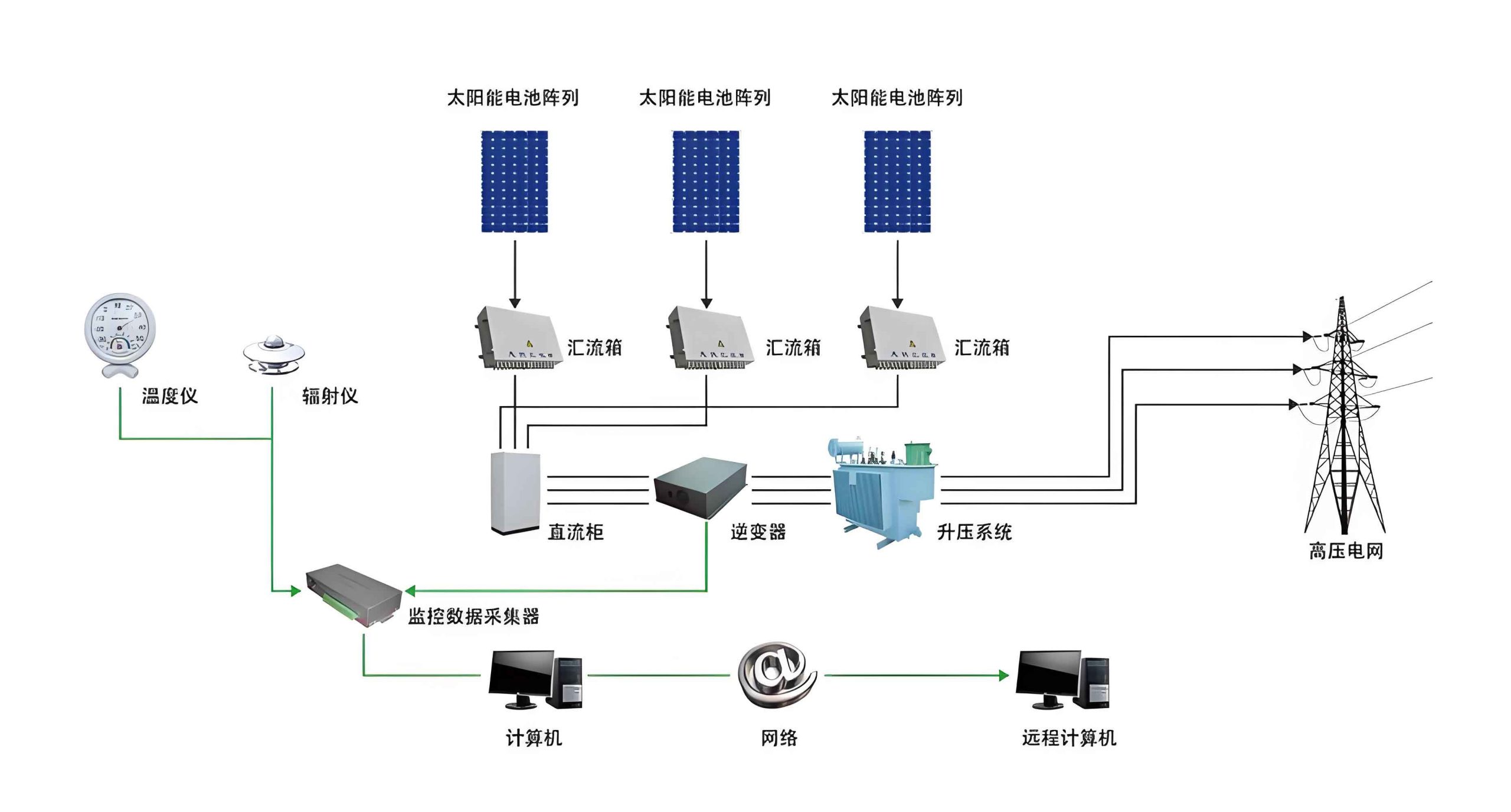
The core principle of this solar system lies in its ability to prioritize photovoltaic power. When solar irradiation is sufficient, the energy generated directly powers the air conditioner’s compressor. Any excess energy can be stored, and any deficit is seamlessly supplemented by the conventional AC grid. This approach, often termed a “quasi-grid” or “direct DC coupling” system, eliminates the need for a full grid-tied inverter that feeds power back to the grid, simplifying the design and reducing conversion losses. The entire solar system architecture is designed for efficiency and practicality in residential or commercial settings.
System Configuration and Operational Principle
The hybrid solar photovoltaic DC air conditioning system comprises several key components that work in concert. The primary elements include the PV array, a charge controller with Maximum Power Point Tracking (MPPT), a battery storage bank, a DC-DC boost converter, a power factor correction (PFC) circuit, and the DC inverter air conditioner unit itself. The interconnection and power flow within this solar system are critical to its function.
The operational logic is as follows: Solar irradiance is converted into DC electricity by the PV panels. This DC power is then conditioned by an MPPT charge controller, which optimizes the power extraction from the panels under varying weather conditions. The controller manages two primary pathways. First, it directs power through a DC-DC boost converter to raise the voltage to a level compatible with the DC bus that supplies the compressor. Second, it channels power to charge the battery bank when the solar generation exceeds the immediate load requirement or when controlled charging is needed.
The AC grid power is also incorporated into this solar system via a rectifier and PFC circuit, which converts it into a stable, high-voltage DC source. This grid-derived DC source is paralleled with the DC output from the solar boost converter on a common DC bus. A critical feature of this quasi-grid topology is the use of unidirectional components (like diodes or controlled switches) from the grid side, which prevent the solar-generated DC from feeding back into the AC grid while allowing both sources to supply the load. The DC inverter compressor, driven by this common bus, adjusts its speed (and thus cooling capacity) based on the system’s control signals. The control system continuously monitors available solar power, battery state of charge, and load demand. It dynamically switches between power sources: using 100% solar power when adequate, blending solar and grid power during deficits, using stored battery power at night or during low irradiation, and relying solely on grid power for startup surges or when other sources are depleted. This intelligent management is the cornerstone of an effective hybrid solar system.
Theoretical Analysis of System Components
Photovoltaic Array Characteristics
The heart of any solar system is the photovoltaic array. Its current-voltage (I-V) characteristic is non-linear and heavily dependent on irradiance and cell temperature. For engineering analysis and simulation, the I-V curve can be modeled effectively. The output current \(I\) as a function of voltage \(U\) for a PV module can be described by a simplified empirical equation derived from the single-diode model:
$$I = I_{sc} \left(1 – C_1 \left\{ \exp\left[\frac{U}{C_2 U_{oc}}\right] – 1 \right\} \right)$$
where the coefficients \(C_1\) and \(C_2\) are determined by the maximum power point (MPP) and open-circuit conditions:
$$C_1 = \left(1 – \frac{I_m}{I_{sc}}\right) \exp\left(-\frac{U_m}{C_2 U_{oc}}\right)$$
$$C_2 = \left(\frac{U_m}{U_{oc}} – 1\right) \left[ \ln\left(1 – \frac{I_m}{I_{sc}}\right) \right]^{-1}$$
Here, \(I_{sc}\) is the short-circuit current, \(U_{oc}\) is the open-circuit voltage, \(I_m\) is the current at the maximum power point, and \(U_m\) is the voltage at the maximum power point. The power output \(P_{pv}\) is simply \(P_{pv} = U \times I\). The MPPT controller’s role is to constantly adjust the operating point on this curve to maintain the product \(U \times I\) at its maximum value, \(P_m\), maximizing the energy harvested by the solar system.
Battery Storage Dynamics
Energy storage is a vital buffer in a standalone or hybrid solar system, smoothing out intermittency and enabling power delivery during non-sunny periods. The fundamental parameter is battery capacity \(Q\), typically measured in ampere-hours (Ah). The relationship between capacity, discharge current \(I_{out}\), and discharge time \(t\) is given by Peukert’s law in its general form, but for simplified sizing, the nominal capacity relation is often used:
$$Q = I \cdot t = I_1 t_1 + I_2 t_2 + … + I_n t_n$$
For charging, to preserve battery health, the optimal charging current \(I_{in}\) is typically set at 0.1C, where C is the capacity in Ah (e.g., 0.1 * 200Ah = 20A). The approximate charging power \(P_{charge}\) is:
$$P_{charge} = U_{float} \cdot I_{in}$$
where \(U_{float}\) is the float charging voltage. Discharge characteristics are more complex. The usable capacity decreases with higher discharge currents, and the terminal voltage drops throughout the process. The end-of-discharge voltage is a function of the discharge rate, as illustrated in the following summary table based on typical lead-acid battery behavior.
| Discharge Rate (C) | Discharge Time (hours) | Approximate End Voltage (V per 12V cell) |
|---|---|---|
| 0.1C | 10 | 1.92 (23.0V for 24V system) |
| 0.2C | 5 | 1.88 (22.5V for 24V system) |
| 0.5C | 2 | 1.80 (21.6V for 24V system) |
| 1.0C | 1 | 1.75 (21.0V for 24V system) |
This relationship is crucial for sizing the battery bank in a solar system to ensure it can support the air conditioner load for the desired duration during solar outages.
Advantages of the DC Inverter Compressor
The use of a DC inverter compressor is a synergistic choice for a photovoltaic-powered solar system. First, it operates natively on DC power, which aligns perfectly with the DC output from the PV panels and battery. This eliminates the need for a DC-AC inverter dedicated to the compressor, thereby reducing system cost, complexity, and energy conversion losses (which can be 5-10% in a high-efficiency inverter). Second, the compressor itself is more efficient. Driven by a permanent magnet synchronous motor (PMSM), its speed is controlled by varying the frequency and amplitude of the DC bus voltage via an electronic drive. This allows for continuous, variable capacity modulation, avoiding the inefficient on-off cycling of fixed-speed compressors. The coefficient of performance (COP) of a DC inverter compressor is typically higher across a wide range of operating conditions compared to its fixed-speed counterpart. Third, the soft-start capability of the inverter drive significantly reduces the high inrush current required during startup. This is particularly beneficial for the solar system as it minimizes the moments where the grid must intervene to supply a large transient load, further enhancing solar energy utilization.
Experimental Investigation and Performance Evaluation
To validate the theoretical analysis and quantify the performance of the hybrid solar system, an experimental setup was established. The system was configured with a 1.44 kWp PV array, a 24V/200Ah lead-acid battery bank, and a DC inverter air conditioner with a compressor rated at approximately 920W input power. Key parameters such as solar irradiance, PV output power, grid current/voltage/power, battery voltage, and indoor temperature were measured and recorded using precision data acquisition equipment.
Summer Daytime Cooling Operation
Experiments were conducted on a clear summer day with high solar availability. The average irradiance during the 11-hour test period (07:30 to 18:30) was approximately 595 W/m², with peaks above 800 W/m². The air conditioner was set to maintain a room temperature of 24°C.
Results: The room temperature profile achieved with the hybrid solar system was nearly identical to that achieved with grid-only power, confirming that solar power delivery does not compromise cooling performance. The key finding was in energy consumption. The average grid power drawn during hybrid operation was only 238.22 W, compared to 731.74 W when the unit ran solely on grid power. This represents a reduction of approximately 67.5% in grid electricity consumption during the daytime period. The total grid energy saved over 12 hours was about 5.92 kWh. The table below summarizes the comparative data.
| Operation Mode | Avg. Grid Power (W) | Total Grid Energy (12h, kWh) | Room Temp. Stability | Grid Power Saving |
|---|---|---|---|---|
| Hybrid (Solar+Grid) | 238.22 | 2.86 | Excellent (25.09°C avg.) | 67.5% |
| Grid-Only | 731.74 | 8.78 | Excellent (25.31°C avg.) | Baseline |
Summer Nighttime Cooling Operation
A separate test was conducted from 20:00 to 24:00, where the solar system operated solely on battery storage. The cooling setpoint remained 24°C.
Results: The battery bank successfully powered the compressor, maintaining room temperature at an average of 24.48°C, again matching the performance of grid-only operation (24.54°C). The grid power drawn during this 4-hour hybrid/battery operation was merely 157.69 W on average, compared to 711.16 W for grid-only. This corresponds to a dramatic 77.8% reduction in grid power use at night. The total energy saved in this 4-hour window was 2.21 kWh. Combining day and night savings, the total daily grid energy saving for 16 hours of operation was 8.13 kWh. This demonstrates the effective time-shifting capability of the integrated battery storage within the solar system.
Comprehensive Energy Efficiency Analysis
The true performance metric of this solar system from a grid perspective is its effective Energy Efficiency Ratio (EER). The conventional EER is defined as the cooling capacity \(P_{cooling}\) divided by the electrical input power \(P_{electrical}\): \(EER = P_{cooling} / P_{electrical}\). For the hybrid system, the electrical input power considered is only the power drawn from the grid, \(P_{grid}\). The cooling capacity is assumed equivalent to that of the baseline grid-only unit.
Let the baseline grid-only unit have an EER of \(EER_{base} = 3.94\) and an input power \(P_{base} = 731.74 \, W\). Its cooling capacity is therefore:
$$P_{cooling} = EER_{base} \times P_{base} = 3.94 \times 731.74 \, W \approx 2883 \, W$$
For the hybrid solar system, the effective EER (\(EER_{eff}\)) is calculated using this cooling capacity and the measured average grid power (\(P_{grid,hybrid}\)) for different modes:
$$EER_{eff} = \frac{P_{cooling}}{P_{grid,hybrid}} = \frac{2883 \, W}{P_{grid,hybrid}}$$
Calculating for the observed operational modes:
1. Daytime (Solar-rich): \(P_{grid,hybrid} = 238.22 \, W\), \(EER_{eff,day} \approx 12.10\)
2. Daytime (Solar-weak): Estimated \(P_{grid,hybrid} = 480.70 \, W\), \(EER_{eff,weak} \approx 6.00\)
3. Night (Battery-only): \(P_{grid,hybrid} = 157.69 \, W\), \(EER_{eff,night} \approx 18.28\)
The system’s comprehensive effective EER, representing an average across these typical states, is:
$$EER_{eff,comprehensive} \approx \frac{12.10 + 6.00 + 18.28}{3} = 12.13$$
This result indicates that, from the viewpoint of grid energy consumption, the hybrid solar system operates at an effective efficiency approximately 3.08 times higher than that of a conventional grid-powered air conditioner. This multiplier vividly illustrates the profound grid-saving impact of the integrated photovoltaic solar system.
Economic Viability and System Sizing Considerations
The economic assessment of a residential hybrid solar system for air conditioning involves evaluating the incremental cost against the savings in electricity bills. The key components contributing to the added cost are the PV panels, the battery bank, and the specialized DC power management and control unit.
Based on the experimental system (1.44 kW PV, 200Ah battery) and typical performance, a daily energy saving of 6-8 kWh during peak cooling seasons is achievable. Assuming an electricity tariff of \$0.50 per kWh, this translates to a daily saving of \$3.00 to \$4.00. If the incremental system cost over a standard high-efficiency AC unit is approximately \$5700, the simple payback period would be in the range of 4 to 5 years in a residential setting with a standard tariff.
The economics improve significantly in scenarios with higher electricity prices, such as commercial time-of-use rates or regions with expensive power. For instance, with a tariff of \$1.00 per kWh, the payback period could be reduced to 2-3 years. Furthermore, as the costs of PV modules and batteries continue their historical downward trend, the economic proposition for such a solar system becomes increasingly attractive. The table below provides a simplified economic sensitivity analysis.
| Scenario | Daily Energy Saved (kWh) | Electricity Tariff (\$/kWh) | Daily Saving (\$) | Incremental System Cost (\$) | Simple Payback Period (Years)* |
|---|---|---|---|---|---|
| Residential (Standard) | 6.1 | 0.50 | 3.05 | 5700 | ~5.1 |
| Commercial (High Rate) | 6.1 | 1.00 | 6.10 | 5700 | ~2.6 |
| Future (Lower Component Cost) | 6.1 | 0.50 | 3.05 | 4000 | ~3.6 |
*Assumes 120 full-load cooling days per year.
Regarding system sizing for optimal performance, the experiments suggest guidelines. To maintain high solar self-sufficiency and avoid excessive battery depletion, the recommended maximum continuous operating times under different sources are: 4 hours during the day primarily on solar power, and 2 hours at night primarily on battery power. For longer required runtimes, the PV array and battery capacity should be scaled up proportionally within the solar system design. Continuous operation beyond these thresholds will lead to an increasing reliance on grid power, reducing the instantaneous grid-saving factor but still maintaining significant overall savings compared to a non-solar system.
Conclusion
The hybrid solar photovoltaic DC air conditioning system represents a technically viable and economically promising solution for reducing dependence on conventional grid power for cooling. The system’s quasi-grid topology efficiently merges PV generation, battery storage, and grid power to ensure reliability while maximizing the direct use of solar energy. Experimental results confirm that the system can reduce grid electricity consumption by 67.5% to 77.8% during daytime and nighttime operation, respectively, without compromising cooling comfort. The comprehensive effective Energy Efficiency Ratio from the grid’s perspective reaches approximately 12.13, which is about three times higher than that of a standard efficient air conditioner. This highlights the transformative impact of integrating a well-designed solar system directly into a major household load. With continued declines in component costs and potential policy support for distributed solar applications, such hybrid solar cooling solar systems are poised to play a meaningful role in promoting energy sustainability and resilience in the building sector.