
As I reflect on the evolving energy landscape, it becomes increasingly clear that our reliance on traditional fossil fuels is untenable. The transition to renewable sources is not merely an option but a necessity. Among these, solar energy stands out due to its abundance and cleanliness. In this analysis, I will delve into the circular economy of materials used in solar photovoltaic systems, emphasizing how the integration of recycling technologies can enhance sustainability. The concept of a solar system here extends beyond astronomical contexts to encompass the entire ecosystem of photovoltaic generation, from material extraction to end-of-life management. By focusing on the solar system as a holistic framework, we can better understand the interdependencies and optimize resource flows.
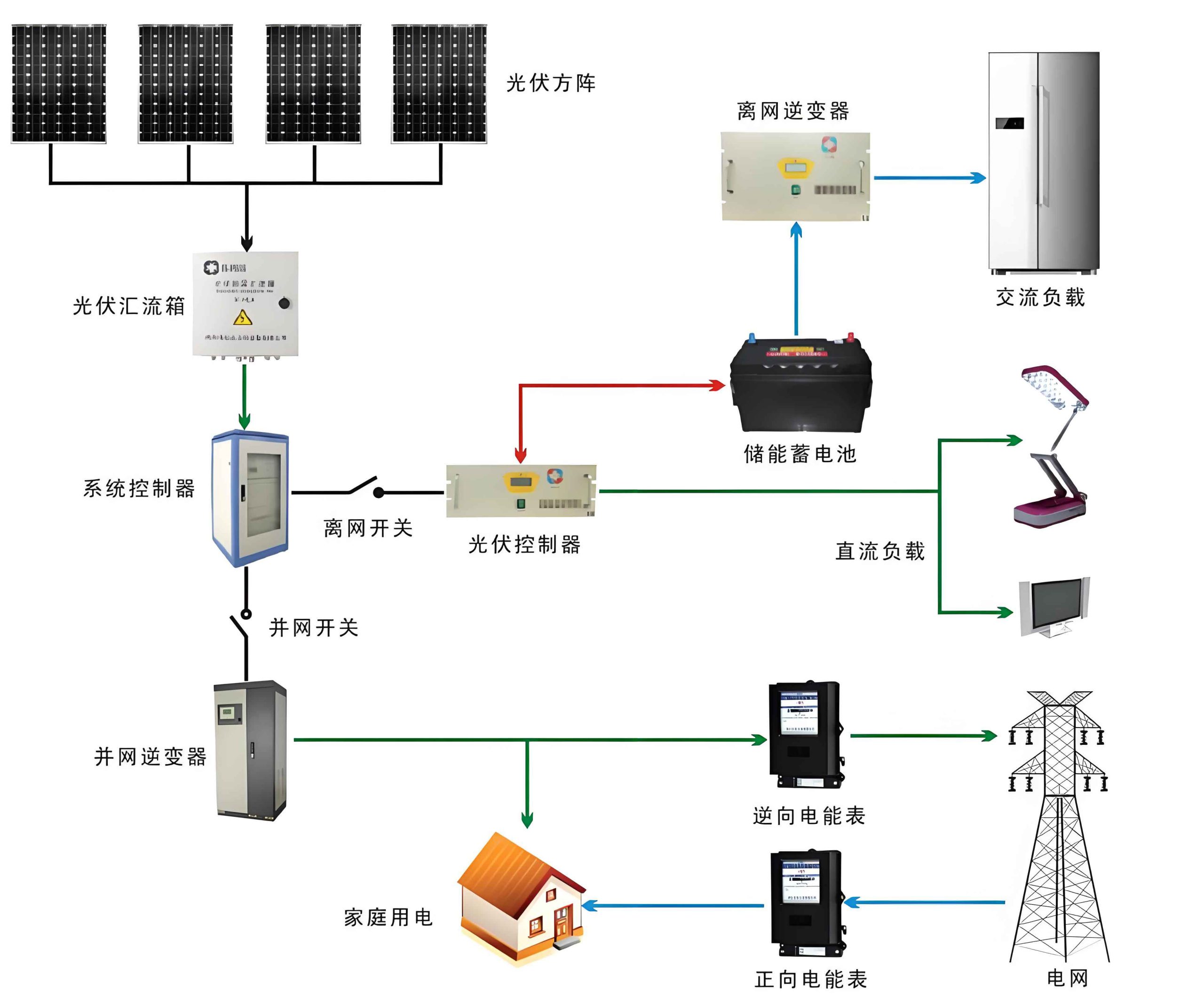
The image above symbolizes the interconnected nature of a solar system, where energy and materials circulate in a balanced manner. In practical terms, a photovoltaic solar system involves multiple components—panels, inverters, and storage—each dependent on critical materials. As demand for such systems grows, so does the pressure on raw material supply. I believe that by implementing circular principles, we can mitigate these pressures and ensure the long-term viability of solar power. This discussion will explore the importance of energy resources, the application of recycling technologies, and future directions for photovoltaic materials, all within the context of a sustainable solar system.
The Critical Role of Energy and Solar Systems
Energy is the lifeblood of modern society, driving economic growth and improving living standards. With global population expansion and industrialization, energy consumption has surged, leading to environmental degradation and resource depletion. Renewable energy sources, particularly solar power, offer a promising alternative. A photovoltaic solar system harnesses sunlight directly, converting it into electricity without emissions. The efficiency of such a system can be expressed using the photovoltaic conversion formula:
$$ \eta = \frac{P_{\text{out}}}{P_{\text{in}}} $$
where $\eta$ is the efficiency, $P_{\text{out}}$ is the electrical power output, and $P_{\text{in}}$ is the solar irradiance input. For instance, if a panel receives 1000 W/m² of sunlight and produces 200 W/m², its efficiency is 20%. However, material constraints often limit this value. The International Energy Agency projects that by 2050, solar photovoltaic systems could supply over 30% of global electricity, underscoring their strategic importance. Yet, this expansion hinges on the availability of key materials like silicon, silver, and indium, which are finite. In a circular solar system, these materials must be recovered and reused to prevent shortages.
To illustrate the material intensity, consider the composition of typical photovoltaic modules. The table below summarizes the weight percentages of critical materials in various solar cell technologies:
| Solar Cell Type | Silicon Content (%) | Rare Metals (e.g., Silver) (%) | Other Materials (Glass, Polymer) (%) |
|---|---|---|---|
| Monocrystalline Silicon | 85-90 | 0.5-1 | 9-14.5 |
| Polycrystalline Silicon | 80-85 | 0.3-0.8 | 14.2-19.7 |
| Thin-Film (CIGS) | 0 | 5-10 (Indium/Gallium) | 85-95 |
| Perovskite | 0 | <1 (Lead/Tin) | 99+ |
As shown, rare metals constitute a small fraction by weight but are crucial for performance. In a linear economy, these materials are often lost after the panel’s 30-year lifespan. However, in a circular solar system, recycling can recover up to 95% of silicon and 80% of metals, reducing the need for virgin resources. The economic and environmental benefits are substantial, especially when scaled across global installations. I argue that prioritizing material cycles within the solar system is essential for energy security and ecological balance.
Advancing Circular Utilization Technologies
The application of recycling technologies in photovoltaic systems is a multifaceted challenge. From my perspective, it involves technical innovation, economic incentives, and policy support. Currently, most end-of-life panels are disposed of in landfills, where valuable materials are wasted. To transition to a circular model, we must develop efficient recovery processes. One approach is mechanical separation, where panels are shredded, and materials are sorted using techniques like eddy current separation. The recovery rate $R$ for a given material can be modeled as:
$$ R = \frac{M_{\text{recovered}}}{M_{\text{initial}}} \times 100\% $$
where $M_{\text{recovered}}$ is the mass of recycled material, and $M_{\text{initial}}$ is the mass in the original panel. For silicon-based panels, $R$ often ranges from 70-90%, but for thin-film technologies, it can be lower due to complex material blends. Another promising method is hydrometallurgical processing, which uses chemical solutions to dissolve and extract metals. The efficiency of this process depends on factors like temperature and concentration, described by the Arrhenius equation:
$$ k = A e^{-\frac{E_a}{RT}} $$
where $k$ is the rate constant, $A$ is the pre-exponential factor, $E_a$ is the activation energy, $R$ is the gas constant, and $T$ is the temperature. Optimizing these parameters can enhance recovery yields.
In practice, the integration of recycling into the solar system requires careful planning. Below is a table outlining the stages of a circular photovoltaic lifecycle:
| Lifecycle Stage | Activities | Key Challenges | Circular Metrics |
|---|---|---|---|
| Design & Manufacturing | Use of recyclable materials, modular design | Higher upfront costs, material compatibility | Recyclability index (0-100%) |
| Operation & Maintenance | Performance monitoring, repair | Degradation over time, contamination | Annual efficiency loss rate |
| End-of-Life Collection | Dismantling, transportation to facilities | Logistical complexity, low collection rates | Collection efficiency (%) |
| Material Recovery | Mechanical/chemical processing | Energy intensity, chemical waste | Recovery rate (%) |
| Reintegration | Refining materials for new panels | Purity requirements, market acceptance | Closed-loop utilization ratio |
Each stage impacts the overall sustainability of the solar system. For example, designing panels for disassembly can increase recyclability, while efficient collection networks reduce losses. I have observed that in regions with robust regulations, such as the EU’s WEEE Directive, recycling rates exceed 85%, demonstrating the feasibility of circular models. Moreover, emerging technologies like perovskite solar cells offer opportunities for easier recycling due to their simpler material profiles. By embedding circularity into the solar system, we can lower the environmental footprint and foster innovation.
Furthermore, economic models play a crucial role. The net present value (NPV) of recycling investments can be calculated to assess viability:
$$ \text{NPV} = \sum_{t=0}^{n} \frac{C_t}{(1 + r)^t} $$
where $C_t$ is the net cash flow at time $t$, $r$ is the discount rate, and $n$ is the project lifetime. Positive NPV indicates profitability, encouraging private sector participation. In a well-functioning solar system, recycling can generate revenue from recovered materials, offsetting disposal costs. For instance, silver recovered from panels can be sold at market prices, providing an incentive. However, challenges remain, such as the dispersion of installation sites and variability in panel designs. I propose standardizing components across the solar system to streamline recycling and reduce costs.
Future Trajectories for Photovoltaic Materials
Looking ahead, the evolution of photovoltaic materials will shape the resilience of solar systems. Current reliance on silicon, while effective, poses supply chain risks due to geopolitical factors and energy-intensive production. Alternatives like cadmium telluride (CdTe) and copper indium gallium selenide (CIGS) offer lower material usage but involve toxic elements. In my analysis, the future lies in developing abundant, non-toxic materials with high efficiency. For example, organic photovoltaics (OPVs) use carbon-based compounds that are lightweight and flexible, ideal for integrated applications in buildings or vehicles. Their performance can be approximated by the Shockley-Queisser limit, which defines the maximum theoretical efficiency for a single-junction cell:
$$ \eta_{\text{max}} = \frac{0.34}{E_g} \times \frac{\int_{E_g}^{\infty} \frac{E^2}{e^{E/kT} – 1} dE}{\int_{0}^{\infty} \frac{E^2}{e^{E/kT} – 1} dE} $$
where $E_g$ is the bandgap energy, $k$ is Boltzmann’s constant, and $T$ is temperature. By tuning $E_g$, researchers aim to surpass 30% efficiency with novel materials.
Another promising direction is the use of nanotechnology to enhance material properties. Nanostructured silicon, for instance, can reduce reflectance and improve light absorption, boosting efficiency. The effective medium theory describes how composite materials behave:
$$ \epsilon_{\text{eff}} = \epsilon_m \frac{1 + 2f \frac{\epsilon_p – \epsilon_m}{\epsilon_p + 2\epsilon_m}}{1 – f \frac{\epsilon_p – \epsilon_m}{\epsilon_p + 2\epsilon_m}} $$
where $\epsilon_{\text{eff}}$ is the effective permittivity, $\epsilon_m$ and $\epsilon_p$ are the permittivities of the matrix and particles, and $f$ is the volume fraction. Such innovations can lead to thinner panels that use less material, aligning with circular principles in the solar system.
To compare the potential of emerging materials, consider the following table based on recent research:
| Material Class | Abundance Index (0-10) | Theoretical Efficiency (%) | Recyclability Ease (Scale 1-5) | Projected Cost ($/W) |
|---|---|---|---|---|
| Silicon (Improved) | 8 | 29 | 4 | 0.20 |
| Perovskite | 9 | 33 | 3 | 0.15 |
| Organic PV | 10 | 18 | 5 | 0.10 |
| Quantum Dot | 7 | 40 | 2 | 0.30 |
| Tandem Cells | 6 | 50+ | 3 | 0.40 |
Abundance index reflects natural availability, with 10 being highest. Recyclability ease considers separation complexity, where 5 is easiest. As shown, organic PV scores high on abundance and recyclability, making it attractive for a sustainable solar system. However, efficiency trade-offs exist. I envision a future solar system where diverse material streams are managed through closed-loop cycles, minimizing waste and maximizing resource efficiency.
Policy and collaboration are also critical. Governments can incentivize recycling through tariffs or subsidies, while industry alliances can standardize practices. In a globalized solar system, sharing best practices can accelerate adoption. For example, digital platforms could track material flows across the lifecycle, enabling real-time optimization. The concept of a circular solar system thus extends beyond technology to encompass governance and culture, requiring collective action.
Conclusion: Embracing Circularity in Solar Systems
In conclusion, the transition to a circular economy for photovoltaic materials is imperative for the long-term success of solar energy. By viewing the entire value chain as an integrated solar system, we can identify synergies and implement solutions that enhance sustainability. From my perspective, key steps include advancing recycling technologies, developing alternative materials, and fostering supportive policies. The repeated emphasis on a holistic solar system throughout this discussion underscores its centrality in achieving energy independence and environmental stewardship.
The journey toward circularity is complex but rewarding. As innovation progresses, I am optimistic that photovoltaic systems will become more efficient, affordable, and sustainable. By prioritizing material cycles, we can ensure that solar power remains a cornerstone of the global energy mix, powering a brighter future for generations to come. The solar system, in both its astronomical and technological manifestations, serves as a reminder of the interconnectedness that guides our pursuit of sustainability.