
The global imperative to address climate change and energy security has propelled the development of clean energy sources to the forefront of national strategies. Concurrently, the eradication of poverty remains a fundamental humanitarian and developmental goal. In this context, an innovative model has emerged that synergistically addresses both challenges: the integration of photovoltaic (PV) **solar system** deployment with targeted poverty alleviation initiatives. This model represents a strategic convergence of environmental sustainability and socio-economic development, leveraging the abundant solar resources available in many of the world’s underdeveloped regions to generate stable, long-term income for impoverished households. The core mechanism involves installing PV **solar system** infrastructure, with the resulting revenue from electricity generation being directed, either wholly or partially, to support low-income families and bolster local community finances. This approach transforms sunlight—a previously underutilized local asset—into a tangible economic resource, fostering a self-replenishing cycle of empowerment and development.
The theoretical and practical foundation of this model rests on the principle of creating a sustainable, asset-based income stream. Unlike traditional subsidy-based welfare or one-time grants, a well-implemented PV **solar system** for poverty alleviation constitutes a productive asset. Once installed, it requires minimal operational input while continuously generating value. The energy output, fed into the national grid or used for local consumption, is commoditized, providing a predictable financial return. This financial flow can be structured to directly augment household income, fund community projects, or support local cooperatives. The effectiveness of this model hinges on several factors, including solar irradiance levels, the initial investment and financing structure, the technical design and maintenance of the **solar system**, and the governance framework for revenue distribution. The general relationship defining the annual economic benefit ($B$) from a PV poverty alleviation project can be conceptualized as:
$$ B = \sum_{t=1}^{n} \left[ \left( P_{gen}(t) \times T_{solar} \times \eta_{sys} \times PR \right) \cdot (R_{feed-in} + S_{gov}) – C_{O\&M} \right] – \frac{C_{cap}}{n} $$
Where:
$P_{gen}(t)$ is the installed capacity (kWp) of the **solar system**,
$T_{solar}$ is the annual peak sun hours at the location,
$\eta_{sys}$ is the system efficiency factor,
$PR$ is the performance ratio (accounting for losses),
$R_{feed-in}$ is the feed-in tariff rate ($/kWh),
$S_{gov}$ is any applicable government subsidy ($/kWh),
$C_{O\&M}$ are annual operation and maintenance costs,
$C_{cap}$ is the total capital expenditure,
and $n$ is the project lifespan in years.
This formula underscores that the viability of a PV poverty alleviation project is not merely a function of technology but a multidimensional equation involving natural capital (solar resource), financial mechanisms (tariffs, subsidies, financing), and technical performance. Optimizing each variable is crucial for maximizing the net benefit ($B$) that ultimately reaches the intended beneficiaries.
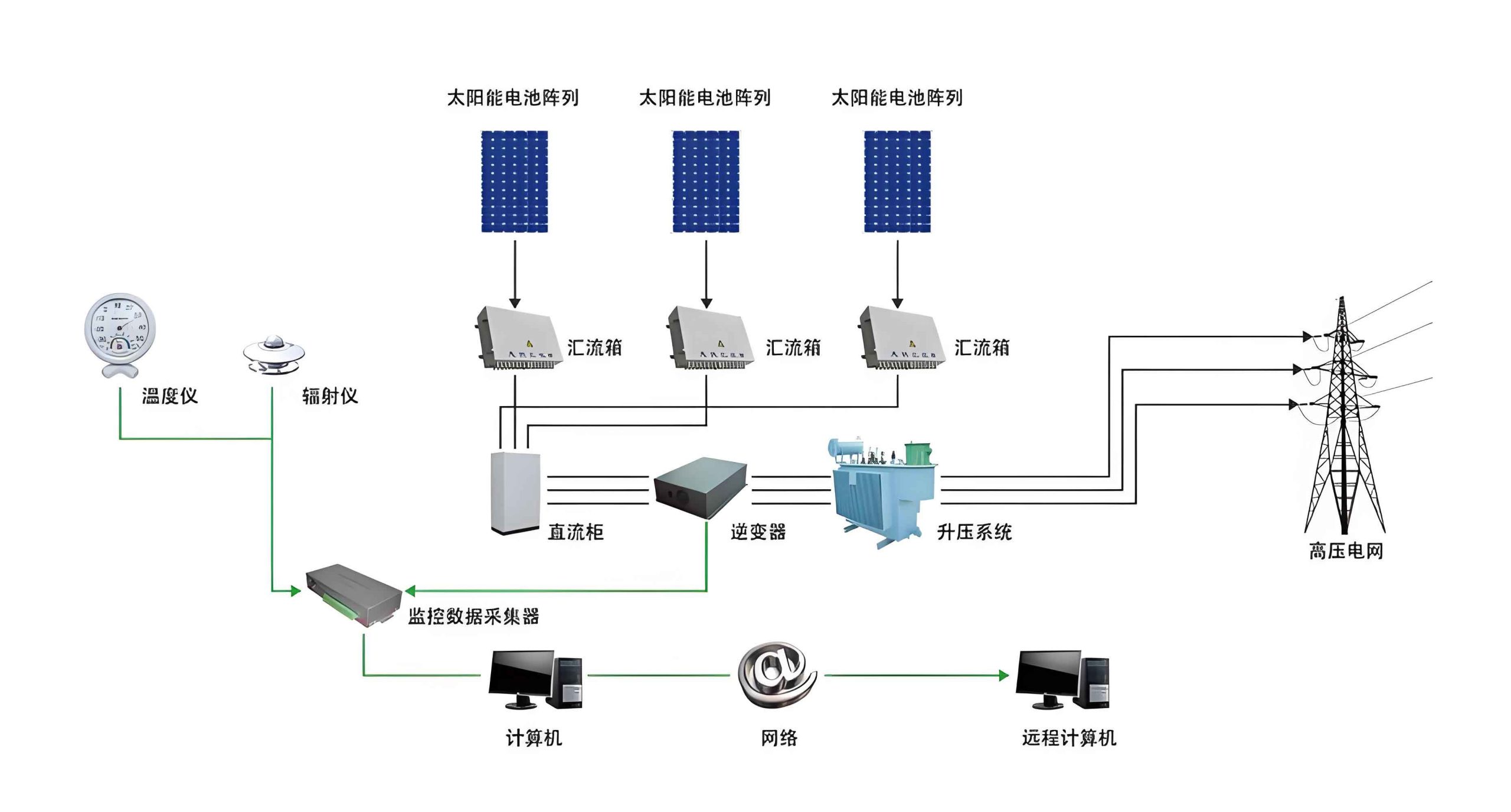
In practice, the implementation of PV-based poverty alleviation has crystallized around two dominant models, each with distinct characteristics, advantages, and logistical requirements. The choice between these models depends heavily on local geographical conditions, land availability, settlement patterns, and administrative capacity. The following table provides a comparative analysis of these two primary archetypes:
| Feature | Centralized Village-Level PV Power Station | Distributed Household PV System |
|---|---|---|
| Primary Location | Unused communal land, barren hills, wasteland. | Rooftops or yards of individual贫困户 households. |
| System Scale | Large-scale, typically ranging from hundreds of kW to several MW. | Small-scale, typically 3-10 kW per household. |
| Ownership & Management | Typically owned by the village collective or a cooperative; managed professionally. | Owned or effectively leased by the individual household; maintenance often contracted. |
| Grid Connection | Directly connected to the medium-voltage grid. | Connected to the low-voltage distribution grid near the household. |
| Key Advantage | Economies of scale, easier professional O&M, strengthens collective economy. | Utilizes existing private space (rooftops), direct household benefit, reduced grid loss. |
| Main Challenge | Requires suitable contiguous land; complex revenue distribution mechanism. | Dispersed sites complicate maintenance; requires household structural suitability. |
| Typical Financial Flow | Revenue to village collective, then distributed to贫困户 as dividends + supports public goods. | Revenue from feed-in tariff goes directly to the household or services its loan. |
| Financing Structure | Mix of government funds, enterprise investment, and bank loans with interest subsidies. | Heavy initial subsidy covering majority of cost, with low or no-interest loans for remainder. |
The operational dynamics of a centralized **solar system** differ significantly from a distributed one. A centralized plant’s output, $P_{central}(t)$, can be modeled as a function of a large, homogeneous array, while the aggregate output of a distributed **solar system** across a village, $P_{distributed}(t)$, is the sum of numerous small, potentially heterogeneous units. The variance in output due to localized shading or module issues is generally lower for a centralized plant but can be averaged out in a large distributed network.
$$ P_{central}(t) = A_{central} \cdot G(t) \cdot \eta_{central} $$
$$ P_{distributed}(t) = \sum_{i=1}^{k} (A_{i} \cdot G_i(t) \cdot \eta_{i}) $$
Where $A$ is the effective array area, $G(t)$ is the solar irradiance, $\eta$ is the system efficiency, and $k$ is the number of household systems.
Despite the promising potential, the rapid rollout of PV poverty alleviation programs has revealed several systemic challenges that must be addressed to ensure their long-term sustainability and effectiveness.
1. Policy and Regulatory Fragmentation: The transition from a centralized approval system to a more decentralized备案制 (filing system) for PV projects aimed to accelerate deployment. However, this shift has sometimes led to a misalignment of incentives. Enterprises, driven by profitability, may prioritize projects in areas with optimal grid access and financial returns, potentially neglecting the remote, impoverished regions where such projects are most needed for social impact. The allocation of installation quotas can become inefficient without robust, transparent regulations governing the entire project lifecycle—from application and siting to grid connection, revenue settlement, and asset transfer. The lack of a cohesive, legally binding national framework for the rights and responsibilities of all stakeholders (government, enterprise, grid company, village collective, household) creates uncertainty and can lead to disputes.
2. Critical Shortage of Technical and Managerial Capacity: The long-term success of any **solar system** hinges on proficient operation and maintenance (O&M). For centralized village plants, this requires trained local personnel for daily monitoring and basic upkeep, backed by professional service companies for major repairs. For distributed systems, the challenge is magnified by geographic dispersion. The lack of a localized, skilled technician network means that simple faults in a household **solar system** can lead to prolonged downtime, directly cutting off the family’s income stream. The cost and logistics of sending technicians from urban centers to remote villages are prohibitive. Furthermore, the management of collective revenues from large-scale plants demands administrative and financial literacy at the village level, which is often in short supply.
3. Social Acceptance and Behavioral Hurdles: The implementation of a novel technology within traditional communities is never purely technical. For distributed systems, securing homeowner consent for rooftop installation can be hampered by misunderstandings about radiation, concerns about roof integrity, or simply a reluctance to engage with unfamiliar technology. For both models, land-use negotiations for cable routing or station siting can encounter resistance driven by compensation disputes or superstition. Vandalism or theft of components, while not widespread, remains a risk in areas with limited community oversight or economic desperation. These “soft” factors are as critical as the “hard” technical specifications in determining a project’s ultimate success.
4. Financial Sustainability and Market Risks: The initial economic model for many PV poverty alleviation projects relies heavily on government subsidies and above-market feed-in tariffs. As the cost of PV technology continues to fall and subsidy policies phase out, the question of long-term economic viability arises. What happens to the poverty alleviation function of a **solar system** when its revenue stream is solely dependent on the wholesale market price of electricity? Furthermore, the financial burden on local governments to provide subsidies, offer loan guarantees, and manage complex multi-party financing can be significant. Ensuring that the asset continues to serve its social purpose over its entire 20-25 year lifespan, beyond the initial political and financial push, is a paramount challenge.
To navigate these challenges and solidify PV-based poverty alleviation as a sustainable development tool, a multi-faceted strategy is required. The following recommendations outline a pathway for healthier development:
1. Develop Robust, Adaptive Legal and Regulatory Frameworks: National and provincial governments must move beyond general policy directives to establish clear, detailed regulations. These should standardize processes for project approval, define quality and safety standards for PV **solar system** components and installation, establish transparent models for revenue sharing and management (e.g., through legally constituted cooperatives), and clarify the long-term ownership structure and decommissioning responsibilities. Legislation should also mandate power grid companies to prioritize the integration of poverty-alleviation PV systems and simplify the interconnection process. A stable, predictable legal environment reduces risk for all parties and protects the interests of the vulnerable beneficiaries.
2. Build Localized Capacity through Targeted Education and Training: Investing in human capital is as important as investing in physical capital. Vocational training programs should be established to create a cadre of local PV technicians capable of installing, monitoring, and maintaining both centralized and distributed **solar system** infrastructure. This creates skilled jobs within the community and ensures rapid response to technical issues. Parallel training for village administrators and cooperative leaders on financial management, contract law, and project oversight is essential for the accountable governance of collective assets. Integrating basic renewable energy concepts into local school curricula can foster broader social acceptance and nurture future talent.
3. Foster Community Engagement and Co-Design from the Outset: Project planners must treat beneficiary communities as partners, not passive recipients. Comprehensive awareness campaigns should demystify PV technology, clearly explain the benefits, risks, and responsibilities, and address cultural concerns through trusted local intermediaries. For distributed systems, a standardized yet flexible agreement should be co-developed, detailing installation procedures, insurance, maintenance protocols, and revenue flows. For centralized plants, the governance model for the village cooperative or management committee must be participatory and transparent, established through genuine community consultation. This inclusive approach builds trust, fosters a sense of ownership, and significantly reduces implementation friction.
4. Innovate Financing Models for Long-Term Resilience: To mitigate dependence on direct subsidies, financing models must evolve. Blended finance approaches that combine public development funds with private capital and impact investment should be explored. Mechanisms like green bonds specifically earmarked for rural renewable energy-poverty projects could be developed. Furthermore, financial products such as yield insurance for PV **solar system** output could protect against poor weather years. Exploring diversified revenue streams, such as coupling PV plants with agricultural activities (agrivoltaics) or using a portion of the revenue to create a community trust fund for reinvestment, can enhance overall project resilience. The financial model must be stress-tested against scenarios of reducing subsidies and fluctuating electricity prices.
In conclusion, the integration of photovoltaic **solar system** technology into poverty alleviation strategies represents a profound innovation at the nexus of energy policy and social equity. It transcends the limitations of conventional aid by creating a productive, renewable asset that generates environmental and economic dividends simultaneously. However, its promise can only be fully realized by acknowledging and proactively addressing the interconnected web of policy, technical, financial, and social challenges it faces. The future of this model lies not in standalone technological deployment, but in the careful, context-sensitive design of integrated socio-technical systems. By strengthening regulatory pillars, building local capacity, fostering genuine community partnership, and pioneering sustainable financing, the PV **solar system** can evolve from a novel poverty intervention into a cornerstone of resilient, low-carbon, and inclusive rural development. Its success will be measured not merely in megawatts installed, but in the durable elevation of human capabilities and community prosperity under the enduring power of the sun.