
In the face of escalating global energy shortages and resource constraints, the development of new and renewable energy sources has become an urgent strategic imperative. Among these, solar energy stands out due to its economic viability and technological maturity, offering a clean, inexhaustible source of power through photoelectric conversion without pollution. The exploitation and utilization of solar energy have emerged as a vibrant and promising interdisciplinary research field. However, the intermittent and geographically variable nature of solar radiation, coupled with the high costs of traditional photovoltaic (PV) power generation, poses significant challenges. Thus, enhancing the efficiency of solar energy utilization is paramount, primarily through improving the photoelectric conversion rate of existing devices. While advancements in PV cell manufacturing processes can incrementally boost efficiency, progress is often slow and difficult to scale. An alternative approach involves concentrating sunlight onto PV cells, which dramatically increases power output per unit area, mitigates the diffuseness of solar radiation (approximately 1 kW/m²), and reduces costs, making it highly valuable for widespread application. This article explores the integration of concentrated solar photovoltaic technology into building sunshade systems, examining its concepts, design considerations, and practical implications from a first-person perspective as a researcher in the field.
We begin by defining key concepts. Concentrated solar photovoltaic (CPV) technology refers to methods that focus sunlight onto PV components to achieve photoelectric conversion, offering a cost-effective option among solar thermal conversion technologies. When applied to building sunshades, it creates a concentrated solar photovoltaic sunshade system that not only provides traditional shading but also harnesses solar energy efficiently, addressing issues like high costs and low conversion rates associated with conventional PV systems. This integration aligns with the Building-Integrated Photovoltaics (BIPV) paradigm, promoting sustainable architecture.
The choice of concentration form is critical for the performance of a solar system. Different designs suit various architectural contexts, influenced by factors such as concentration ratio, optical efficiency, thermal management, and installation ease. Below, we compare common reflective and refractive concentration forms in a table, emphasizing their relevance to sunshade systems.
| Concentration Form | Schematic | Concentration Ratio | Transmittance | PV Position | Installation Ease | Component Protection | Weight | Cost |
|---|---|---|---|---|---|---|---|---|
| Reflective: Trough Plane Mirror | Linear focus | Low | Low | Rear | Easiest | None | Light | Low |
| Reflective: Parabolic Trough | Line focus | Medium | Low | Front | Complex | None | Light | Medium |
| Reflective: Compound Parabolic | Non-imaging | High | Low | Rear | Most Complex | Present | Heavy | High |
| Refractive: Convex Lens | Point focus | Medium | Moderate | Rear | Convenient | Present | Heaviest | Medium |
| Refractive: Fresnel Lens | Point focus | High | High | Rear | Convenient | Present | Lightest | Low |
From the analysis, Fresnel lens-based systems exhibit notable advantages: high concentration ratios, lightweight design, low cost, and ease of installation, making them ideal for building sunshades. Their external placement also protects PV components from environmental damage. Thus, we focus on Fresnel lens systems in subsequent discussions, though hybrid approaches may enhance performance.
Designing an effective concentrated solar photovoltaic sunshade system involves several key nodes. First, efficient capture and shading of sunlight are essential. CPV systems require precise alignment with incident solar rays, especially for high-concentration Fresnel lenses, where off-axis angles drastically reduce efficiency. The relationship between incidence angle and photoelectric conversion efficiency can be modeled mathematically. For a Fresnel lens with a concentration factor C, the relative efficiency η relative to normal incidence is given by:
$$ \eta(\theta) = \eta_0 \cdot \exp\left(-\frac{\theta^2}{2\sigma^2}\right) $$
where η₀ is the efficiency at normal incidence (θ = 0), θ is the deviation angle in degrees, and σ is a system-specific parameter. For instance, with a 500× Fresnel lens, a deviation of ±0.5° reduces efficiency to 90%, while ±1.6° renders it nearly zero. To mitigate this, solar tracking systems are indispensable. In building applications, single-axis trackers are often preferred for their simplicity and suitability for lightweight sunshades. These trackers, controlled by microprocessor-based algorithms, orient the solar system optimally, maximizing both shading and energy harvest. Additionally, combining Fresnel lenses with trough plane mirrors in a hybrid solar system can allow secondary reflection, broadening the acceptance angle and reducing tracking precision demands. This hybrid approach also enables seasonal adjustments; for example, in winter, the system can be tilted to permit more direct sunlight indoors while maintaining PV operation.
Second, high-intensity solar radiation impacts PV components and their thermal management. Semiconductor-based PV cells experience efficiency degradation with temperature rise. The current-voltage (I-V) characteristics of a typical multicrystalline silicon cell at varying temperatures illustrate this: output voltage decreases linearly with temperature, while current remains relatively stable. The efficiency-temperature relationship can be expressed as:
$$ \eta(T) = \eta_{\text{STC}} \cdot [1 – \beta (T – T_{\text{STC}})] $$
where η(STC) is efficiency at standard test conditions (25°C), T is cell temperature, and β is the temperature coefficient (typically 0.004–0.005 °C⁻¹ for silicon). For concentrated solar systems, this effect is exacerbated due to higher heat loads. Advanced multi-junction cells, such as GaInP/GaAs/Ge triple-junction cells, offer better temperature tolerance and higher efficiencies under concentration, with theoretical limits exceeding 40%. Their spectral response aligns well with concentrated sunlight, minimizing losses. To further manage heat, active cooling systems can be integrated. These systems absorb excess thermal energy from PV modules via heat exchangers with cooling media like water or air. The thermal energy can then be stored or utilized for building heating, hot water supply, or ventilation, enhancing the overall solar system efficiency. The heat transfer process can be described by:
$$ Q = m c_p \Delta T $$
where Q is heat absorbed, m is mass flow rate of coolant, c_p is specific heat capacity, and ΔT is temperature difference. For instance, water-based cooling can achieve significant heat recovery, while air-based systems can distribute warm air to interior spaces. This cogeneration approach transforms the solar system into a multifunctional unit, contributing to building energy needs.
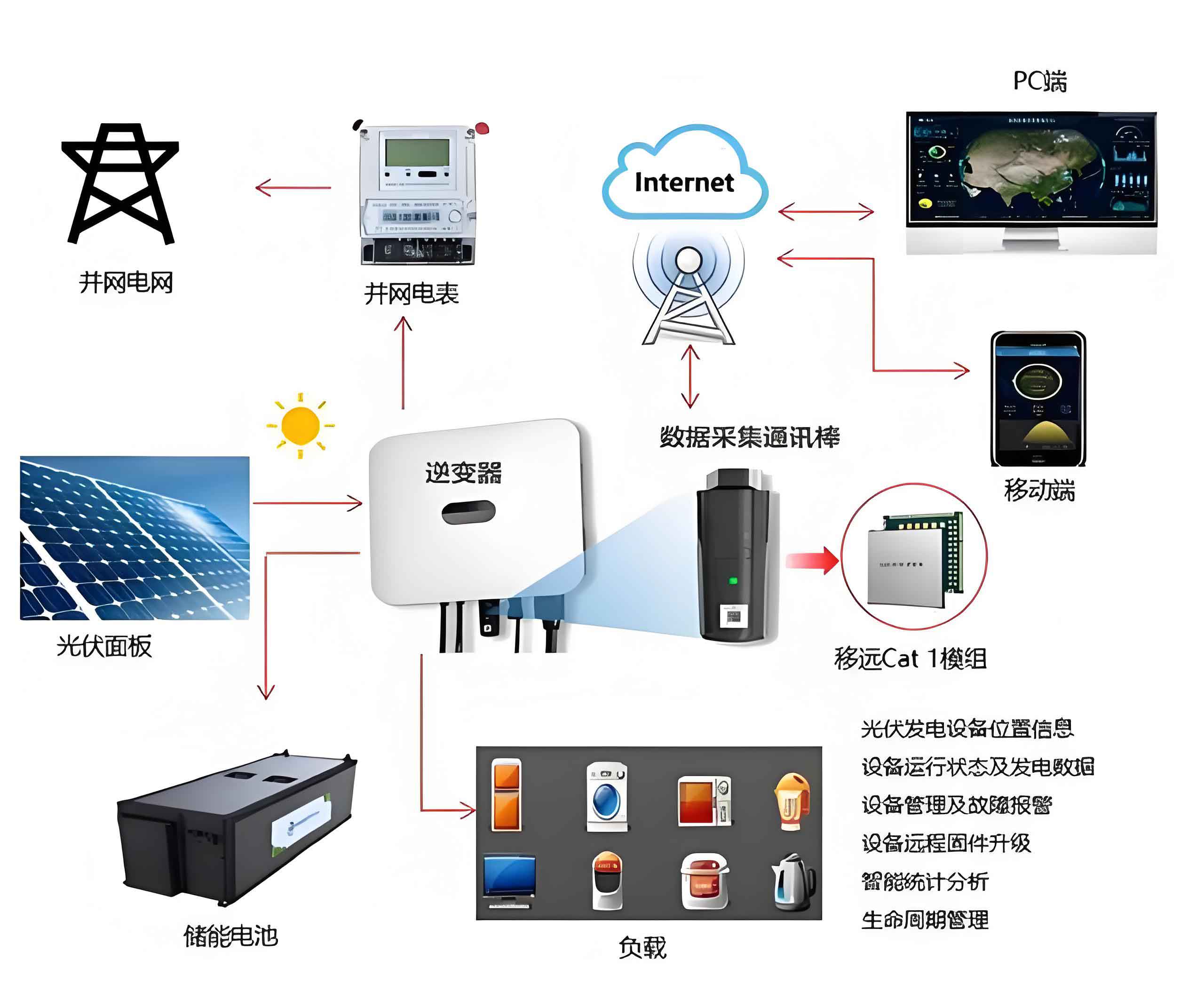
Third, the applicability of concentrated solar photovoltaic sunshade systems is region-specific, influenced by local solar resources and climatic conditions. Geographic factors such as latitude, cloud cover, and ambient temperature dictate system design and performance. We can model the solar irradiance available for concentration using the solar geometry equation:
$$ I_b = I_0 \cdot \cos(\theta_z) \cdot \tau $$
where I_b is beam irradiance, I_0 is solar constant (~1361 W/m²), θ_z is solar zenith angle, and τ is atmospheric transmittance. Regions with high direct normal irradiance (DNI), like arid zones, are ideal for CPV. Conversely, areas with diffuse-dominated radiation, such as humid climates, may not benefit from concentration. For example, Chengdu, with its cloudy basin climate, has poor DNI, making CPV less feasible. In contrast, Haikou, a tropical city with abundant direct sunlight, is well-suited for such solar systems, offering both shading and thermal energy. In temperate regions like Beijing, seasonal variations allow for summer concentration and winter heat storage, while cold regions like Lhasa can leverage large diurnal temperature swings for thermal management. Thus, a tailored approach is essential, considering local energy demands and solar profiles. The solar system design must integrate climate-responsive features, such as adjustable shading angles or hybrid concentration, to optimize year-round performance.
To delve deeper into the technical aspects, let’s consider the optical efficiency of a Fresnel lens solar system. The overall efficiency η_total of a CPV sunshade system can be broken down as:
$$ \eta_{\text{total}} = \eta_{\text{optical}} \cdot \eta_{\text{PV}} \cdot \eta_{\text{thermal}} $$
where η_optical accounts for losses in the concentrator (e.g., Fresnel lens transmittance, reflection losses), η_PV is the PV cell conversion efficiency under concentration, and η_thermal is the efficiency of heat utilization if applicable. For a Fresnel lens, optical efficiency depends on factors like material purity and surface accuracy, often exceeding 85%. The PV efficiency under high concentration can be approximated using the empirical formula:
$$ \eta_{\text{PV}}(C) = \eta_{\text{PV,1}} \cdot \frac{\ln(C+1)}{\ln(2)} $$
where η_PV,1 is efficiency at 1 sun (no concentration), and C is concentration ratio. This logarithmic relationship reflects diminishing returns at very high C due to increased thermal and resistive losses. Therefore, an optimal concentration ratio exists for each solar system, balancing gains in power output against complexity and cost.
Moreover, the economic viability of these solar systems is crucial for adoption. The levelized cost of electricity (LCOE) for a concentrated solar photovoltaic sunshade system can be estimated as:
$$ \text{LCOE} = \frac{C_{\text{cap}} + \sum_{t=1}^{n} \frac{C_{\text{O&M}}}{(1+r)^t}}{\sum_{t=1}^{n} \frac{E_t}{(1+r)^t}} $$
where C_cap is capital cost, C_O&M is annual operation and maintenance cost, E_t is annual energy output, r is discount rate, and n is system lifetime. By reducing PV area through concentration, capital costs drop significantly, lowering LCOE. Studies suggest that CPV systems can achieve LCOE reductions of 20–30% compared to non-concentrated PV, especially in high-DNI regions. Additionally, the dual function of shading and energy generation adds value to buildings, potentially offsetting construction costs. Lifecycle assessment (LCA) further shows that such solar systems have lower carbon footprints due to material savings and energy payback times under two years.
In terms of system integration, the architectural design must accommodate the solar system’s mechanical and electrical components. This includes mounting structures, wiring for PV output, and thermal pipes for cooling. Modular designs facilitate installation and maintenance. For instance, prefabricated sunshade panels with embedded Fresnel lenses and PV cells can be attached to building façades or roofs. The structural load must be calculated using:
$$ F = \rho A g + \text{wind load} $$
where ρ is density of components, A is area, g is gravity, and wind load depends on local codes. Lightweight materials like aluminum alloys and polymers are preferred. Furthermore, the electrical configuration of PV modules in series or parallel affects voltage and current output, optimized through maximum power point tracking (MPPT) algorithms. The power output P of the solar system is given by:
$$ P = V_{\text{oc}} \cdot I_{\text{sc}} \cdot \text{FF} $$
where V_oc is open-circuit voltage, I_sc is short-circuit current, and FF is fill factor. Under concentration, I_sc increases proportionally with C, but V_oc may slightly decrease due to temperature rise, hence the need for cooling.
Looking ahead, innovations in materials and control systems promise to enhance concentrated solar photovoltaic sunshade systems. For example, adaptive optics could dynamically adjust lens curvature to track sun movement without mechanical trackers, reducing energy consumption. Phase-change materials (PCMs) integrated into the solar system can store thermal energy more efficiently, smoothing supply-demand mismatches. Nanotechnology might yield ultra-efficient PV cells with higher temperature coefficients, while digital twins could enable real-time monitoring and optimization via IoT sensors. Research into biodegradable or recyclable components also aligns with circular economy principles, making the solar system more sustainable.
In conclusion, concentrated solar photovoltaic technology offers a compelling pathway to enhance building energy efficiency and sustainability. When integrated into sunshade systems, it provides a multifunctional solution that addresses shading needs, reduces PV costs, and harnesses solar energy effectively. Key design considerations—such as precise sun-tracking, thermal management, and regional adaptation—are critical for performance. Through continued research and development, these solar systems can become mainstream in BIPV applications, contributing to global energy transitions. As we advance, interdisciplinary collaboration among architects, engineers, and material scientists will be vital to refine and deploy these innovative solar systems widely.
To further elaborate, let’s examine a case study of a hypothetical office building in a Mediterranean climate. Assume a south-facing façade with a total area of 100 m² equipped with Fresnel lens-based sunshades. The solar system parameters: concentration ratio of 300×, PV cell efficiency of 25% under concentration, optical efficiency of 88%, and thermal recovery efficiency of 60%. The annual solar irradiance is 1800 kWh/m². The electrical energy output E_elec can be calculated as:
$$ E_{\text{elec}} = A \cdot I \cdot \eta_{\text{optical}} \cdot \eta_{\text{PV}} \cdot C \cdot \text{CF} $$
where A is aperture area (100 m²), I is irradiance, CF is capacity factor (0.25 accounting for daylight hours). Plugging in values:
$$ E_{\text{elec}} = 100 \times 1800 \times 0.88 \times 0.25 \times 300 \times 0.25 = 2,970,000 \text{ kWh/year} $$
This substantial output highlights the potential of such a solar system. Additionally, thermal energy recovered could provide heating for 50% of building needs, reducing reliance on conventional fuels. Economic analysis shows a payback period of 5–7 years, making it attractive for investors.
Another aspect is the environmental impact. The solar system reduces greenhouse gas emissions by displacing grid electricity, often fossil-fuel-based. The emission savings ΔCO₂ can be estimated as:
$$ \Delta CO_2 = E_{\text{elec}} \cdot \text{EF} $$
where EF is emission factor of the local grid (e.g., 0.5 kg CO₂/kWh). For our case, ΔCO₂ ≈ 1,485,000 kg CO₂/year, contributing significantly to carbon neutrality goals.
In summary, concentrated solar photovoltaic sunshade systems represent a synergistic fusion of energy generation and architectural function. By leveraging advanced optics, smart controls, and thermal integration, they address multiple challenges in sustainable building design. As technology evolves and costs decline, we anticipate widespread adoption, reinforcing the role of solar systems in a resilient energy future. This journey from concept to application underscores the transformative power of innovation in renewable energy, and I am excited to contribute to this field through ongoing research and practical implementations.