
In recent years, the rapid growth of solar photovoltaic (PV) generation has captured global attention, with an average annual growth rate exceeding 40% from 2006 to 2015. As an engineer and researcher focused on lighting technologies, I have observed firsthand how solar systems are increasingly integrated into road lighting infrastructure. This integration offers a promising path toward sustainable urban and rural development, but it also presents unique challenges that require careful consideration. In this article, I will explore the various application modes of solar systems in road lighting, analyze their characteristics, and discuss key issues such as reliability, economic viability, and environmental impact. My goal is to provide a comprehensive overview that can guide future implementations and innovations in this field.
The evolution of solar system efficiency has been remarkable, with monocrystalline and polycrystalline silicon cells achieving conversion efficiencies of 19.5% and 18.3%, respectively. This, coupled with a 60% reduction in PV generation costs during the “12th Five-Year Plan” period, has made solar systems more accessible for lighting applications. However, despite these advancements, the adoption rate of solar-powered streetlights in urban areas remains relatively low, accounting for only 0.27% of total road lighting fixtures as of 2013. In contrast, rural and remote regions have seen larger-scale deployments, such as the installation of 156,000 stand-alone solar streetlights in Beijing’s suburban areas from 2006 to 2010. This disparity highlights the need for a nuanced understanding of how solar systems can be effectively applied in different contexts.
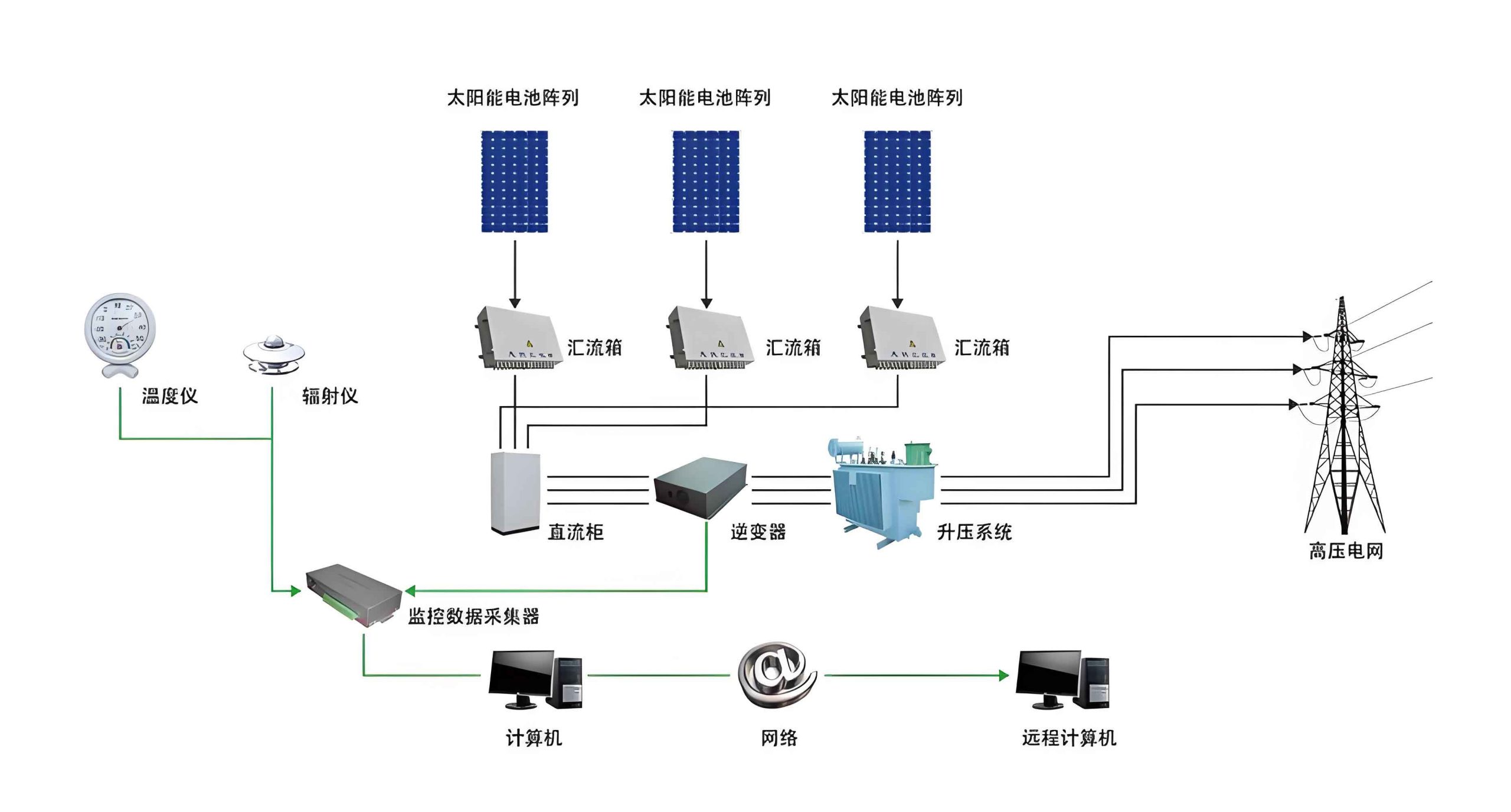
To begin, let me outline the four primary application modes of solar systems in road lighting. These include stand-alone solar streetlights, grid-complementary solar systems, wind-PV hybrid systems, and centralized solar PV power stations for lighting supply. Each mode has distinct features, advantages, and drawbacks, which I will detail in the following sections. Throughout this discussion, I will emphasize the importance of designing robust solar systems that can withstand variable environmental conditions while meeting lighting demands.
Modes of Solar System Application in Road Lighting
In my experience, the choice of solar system configuration depends heavily on local resources, infrastructure, and economic factors. Below, I describe each mode in depth, supported by tables and formulas to summarize key aspects.
Stand-Alone Solar Streetlights
Stand-alone solar systems are the most widely deployed mode in road lighting, particularly in areas where grid extension is challenging or costly. These systems operate independently, without connection to the utility grid, and consist of PV panels, a charge controller, batteries, and LED luminaires. The primary advantage of this solar system is its simplicity and lower installation costs, as it eliminates the need for extensive cable laying. However, reliability can be a concern due to dependence on solar irradiance and battery capacity.
The power generation of a stand-alone solar system can be expressed using the following formula:
$$ P_{gen} = \eta_{pv} \cdot A_{pv} \cdot G_{t} $$
where \( P_{gen} \) is the generated power (W), \( \eta_{pv} \) is the PV panel efficiency, \( A_{pv} \) is the panel area (m²), and \( G_{t} \) is the total solar irradiance (W/m²). For a typical road lighting application, the daily energy requirement \( E_{load} \) for an LED lamp can be calculated as:
$$ E_{load} = P_{lamp} \cdot t_{op} $$
where \( P_{lamp} \) is the lamp power (W) and \( t_{op} \) is the daily operation time (hours). To ensure reliable operation, the solar system must be sized to meet \( E_{load} \) even during periods of low irradiance. The battery capacity \( C_{bat} \) is critical and can be determined by:
$$ C_{bat} = \frac{E_{load} \cdot n_{days}}{DOD \cdot \eta_{bat}} $$
where \( n_{days} \) is the number of autonomy days (e.g., consecutive cloudy days), \( DOD \) is the depth of discharge (typically 0.5-0.8 for lead-acid batteries), and \( \eta_{bat} \) is the battery efficiency (often around 0.85).
Table 1 summarizes the key components and considerations for a stand-alone solar system in road lighting.
| Component | Role in Solar System | Typical Specifications | Design Challenges |
|---|---|---|---|
| PV Panels | Convert sunlight to electricity | Efficiency: 18-20%, Power: 100-300 W per panel | Sizing for worst-case irradiance, dust accumulation |
| Battery Bank | Store energy for nighttime use | Capacity: 50-200 Ah, Voltage: 12V or 24V | Cycle life, temperature sensitivity, disposal |
| Charge Controller | Regulate charging and prevent overcharge | MPPT or PWM type, Efficiency: >95% | Compatibility with PV and battery types |
| LED Luminaire | Provide illumination | Power: 20-100 W, Luminous Efficacy: >100 lm/W | Thermal management, driver efficiency |
In practice, I have seen many stand-alone solar systems fail due to undersizing of PV panels or batteries. For instance, in regions with seasonal variations, a solar system designed based on annual average irradiance may not suffice in winter months. Therefore, it is essential to conduct a detailed solar resource assessment before deployment.
Grid-Complementary Solar Systems
Grid-complementary solar systems, also known as hybrid solar systems, combine PV generation with grid power to enhance reliability. In this configuration, the solar system primarily supplies the streetlights, but the grid acts as a backup during periods of insufficient solar generation. This mode is particularly useful in urban areas where grid access is available but renewable energy integration is desired.
The energy flow in a grid-complementary solar system can be modeled as:
$$ E_{total} = E_{pv} + E_{grid} $$
where \( E_{pv} \) is the energy from the PV panels and \( E_{grid} \) is the energy drawn from the grid. The solar system’s contribution ratio \( R_{pv} \) can be defined as:
$$ R_{pv} = \frac{E_{pv}}{E_{total}} \times 100\% $$
Ideally, \( R_{pv} \) should be maximized to reduce grid dependence, but economic factors often limit the size of the PV array. A key advantage of this solar system is the ability to implement centralized control through the grid connection, allowing for smart lighting management. However, the initial investment is higher due to the need for both PV components and grid infrastructure.
Table 2 compares stand-alone and grid-complementary solar systems based on several criteria.
| Criterion | Stand-Alone Solar System | Grid-Complementary Solar System |
|---|---|---|
| Reliability | Moderate (depends on weather) | High (grid backup ensures continuity) |
| Initial Cost | Lower (no grid connection) | Higher (PV + grid infrastructure) |
| Operational Control | Decentralized (individual control) | Centralized (via grid network) |
| Energy Independence | Complete | Partial (reduces grid consumption) |
| Suitable Locations | Remote, rural areas | Urban, suburban areas with grid access |
From my perspective, grid-complementary solar systems represent a balanced approach for cities aiming to integrate renewables without compromising reliability. However, issues such as grid synchronization and safety protocols must be addressed, which I will discuss later.
Wind-PV Hybrid Systems
Wind-PV hybrid systems leverage both solar and wind resources to power streetlights, offering enhanced generation capacity in regions with complementary renewable profiles. This solar-wind combination can mitigate the intermittency of individual sources, providing a more stable energy supply. Typically, these systems are off-grid, incorporating wind turbines, PV panels, batteries, and controllers.
The total energy generation \( E_{hybrid} \) of a wind-PV hybrid solar system over a period can be expressed as:
$$ E_{hybrid} = E_{pv} + E_{wind} = \sum_{t} (P_{pv}(t) + P_{wind}(t)) \Delta t $$
where \( P_{pv}(t) \) and \( P_{wind}(t) \) are the power outputs from PV and wind at time \( t \), respectively. The sizing of components requires careful analysis of local wind and solar data. For example, in areas with strong winter winds but reduced sunlight, the wind component can compensate for lower PV output.
Despite the benefits, wind-PV hybrid solar systems face challenges such as higher costs and maintenance requirements. Wind turbines involve moving parts subject to wear, increasing long-term operational expenses. Moreover, the design complexity rises as both resources must be harmonized. Table 3 outlines the pros and cons of this solar system mode.
| Aspect | Advantages of Wind-PV Hybrid Solar System | Disadvantages of Wind-PV Hybrid Solar System |
|---|---|---|
| Energy Yield | Higher and more consistent due to resource complementarity | Over-generation in favorable seasons may lead to waste |
| Reliability | Improved compared to stand-alone solar systems | Dependent on both wind and solar availability |
| Cost | Potentially lower levelized cost in resource-rich areas | High upfront cost for turbines and dual infrastructure |
| Maintenance | Diversified risk across two generation sources | Increased maintenance due to mechanical turbine parts |
| Environmental Impact | Reduced carbon footprint via renewable synergy | Noise and visual impact from turbines |
In my work, I have found that wind-PV hybrid solar systems are best suited for coastal or mountainous regions where wind patterns align with solar gaps. However, economic viability remains a hurdle, and detailed feasibility studies are crucial before deployment.
Centralized Solar PV Power Stations for Lighting Supply
Centralized solar PV power stations involve a large-scale PV array that generates electricity for a network of streetlights via dedicated distribution lines. This solar system is essentially a mini-grid tailored for lighting loads, often operating off-grid with battery storage. It offers centralized management and potentially higher efficiency due to economies of scale in PV installation.
The power output of a centralized solar system can be modeled similarly to stand-alone systems, but at a larger scale. The total installed capacity \( P_{total} \) is given by:
$$ P_{total} = N_{pv} \cdot P_{panel} $$
where \( N_{pv} \) is the number of PV panels and \( P_{panel} \) is the rated power per panel. The energy supplied to streetlights \( E_{lighting} \) must satisfy:
$$ E_{lighting} = \sum_{i=1}^{M} P_{lamp,i} \cdot t_{op,i} $$
where \( M \) is the number of streetlights, and \( P_{lamp,i} \) and \( t_{op,i} \) are the power and operation time for each light. The solar system must include sufficient storage to bridge nighttime hours, with battery capacity scaled accordingly.
Despite the advantages of centralized control, this solar system mode requires significant investment in both PV infrastructure and distribution lines, making it less economical than other options in many cases. Additionally, the mismatch between daytime generation and nighttime consumption can lead to inefficiencies unless advanced energy management is implemented. Table 4 provides a comparison of all four solar system modes discussed.
| Solar System Mode | Key Features | Typical Applications | Economic Viability | Reliability Level |
|---|---|---|---|---|
| Stand-Alone | Off-grid, independent units, low installation cost | Remote villages, rural roads, parks | High in off-grid areas | Moderate to low |
| Grid-Complementary | Grid-connected with PV backup, hybrid operation | Urban streets, highways with grid access | Moderate, depends on tariffs | High |
| Wind-PV Hybrid | Combines solar and wind, off-grid or grid-tied | Coastal areas, islands, windy regions | Low to moderate | Moderate to high |
| Centralized PV Station | Large-scale PV plant supplies lighting network | New towns, industrial zones, large campuses | Low due to high capital cost | High with proper design |
This comparative analysis underscores the importance of selecting the appropriate solar system based on local conditions and project goals. In the following sections, I will delve into the practical challenges and recommendations for implementing these solar systems in road lighting.
Promotion Status and Real-World Adoption
From my observations, stand-alone solar systems dominate the market, especially in developing regions where grid extension is not feasible. For example, millions of stand-alone solar streetlights have been installed across Asia and Africa, providing basic lighting services. Grid-complementary solar systems, while technically appealing, have seen limited adoption due to higher costs and regulatory hurdles. Wind-PV hybrid solar systems remain niche, often deployed in pilot projects or areas with exceptional renewable resources. Centralized solar PV stations are rare, as they compete with conventional grid-powered lighting without clear cost advantages.
The promotion of solar systems in road lighting is influenced by factors such as government policies, subsidies, and technological advancements. In many countries, incentives for renewable energy have spurred initial deployments, but long-term sustainability depends on overcoming the issues I discuss next.
Key Issues and Recommendations for Solar Systems in Road Lighting
Based on my experience, several critical issues must be addressed to ensure the successful deployment and operation of solar systems in road lighting. I will explore each issue in detail, offering recommendations backed by technical insights.
Solar Resource Assessment
Accurate assessment of solar resources is fundamental to designing an effective solar system. Many failures occur due to overestimation of available irradiance, leading to underperforming installations. The solar irradiance \( G_{t} \) varies geographically and temporally, and it can be modeled using data from meteorological stations or satellite estimates. For a given location, the average daily irradiance \( \bar{G}_{t} \) (in kWh/m²/day) is a key parameter.
To size a solar system properly, I recommend using the worst-month irradiance rather than annual averages. For instance, in Beijing, December irradiance is only 48% of the annual average, which can drastically affect energy yield. The required PV area \( A_{pv} \) can be calculated as:
$$ A_{pv} = \frac{E_{load}}{\eta_{pv} \cdot \bar{G}_{t,min} \cdot PR} $$
where \( \bar{G}_{t,min} \) is the minimum monthly average irradiance, and \( PR \) is the performance ratio (typically 0.75-0.85) accounting for losses. Incorporating this conservative approach ensures that the solar system meets load demands even during unfavorable conditions.
Moreover, tools like PVGIS or NASA SSE can provide detailed solar data for specific sites. I advise conducting on-site measurements when possible to validate models and account for local shading or pollution effects.
Reliability of Solar-Powered Lighting
Reliability is a major concern for solar systems in road lighting, as public lighting requires high availability—often above 98% for main roads. Stand-alone solar systems are particularly vulnerable to prolonged cloudy periods or extreme weather. The reliability \( R \) of a solar system can be expressed probabilistically:
$$ R = 1 – P_{failure} $$
where \( P_{failure} \) is the probability of system outage due to energy shortfall. To improve reliability, oversizing PV and battery components is common, but this increases costs. Alternatively, implementing adaptive control strategies, such as dimming LED lights during low-energy periods, can extend autonomy without significant hardware changes.
For grid-complementary solar systems, reliability is enhanced by grid backup, but this introduces dependency on grid stability. In all cases, regular maintenance of the solar system components—especially batteries—is crucial to prevent unexpected failures.
Centralized Control and Smart Management
Centralized control allows for efficient operation of solar-powered streetlights, enabling features like remote monitoring, fault detection, and adaptive lighting schedules. However, stand-alone solar systems often lack this capability, relying on simple photocells or timers that can drift or malfunction. Integrating communication modules (e.g., Zigbee, LoRaWAN) into each solar system unit can facilitate connectivity to a central management platform.
The energy savings from smart control can be quantified. For example, dimming lights by 30% during low-traffic hours reduces energy consumption \( E_{load} \) proportionally, easing the burden on the solar system. The adjusted energy demand \( E_{load,adj} \) is:
$$ E_{load,adj} = E_{load} \cdot (1 – f_{dim}) $$
where \( f_{dim} \) is the dimming factor. This approach not only improves reliability but also extends battery life, making the solar system more sustainable.
I recommend that new solar system deployments incorporate IoT-based control systems, even for off-grid applications, to enhance operational efficiency and enable predictive maintenance.
Economic Viability and Cost Analysis
The economic viability of solar systems in road lighting depends on initial investment, operational costs, and potential savings. The levelized cost of energy (LCOE) for a solar system can be calculated as:
$$ LCOE = \frac{C_{capex} + \sum_{t=1}^{T} \frac{C_{opex,t}}{(1+r)^t}}{\sum_{t=1}^{T} \frac{E_{gen,t}}{(1+r)^t}} $$
where \( C_{capex} \) is the capital expenditure, \( C_{opex,t} \) is the operational expenditure in year \( t \), \( E_{gen,t} \) is the energy generated, \( r \) is the discount rate, and \( T \) is the system lifetime. For stand-alone solar systems, \( C_{capex} \) includes PV panels, batteries, and installation, while \( C_{opex} \) covers maintenance and battery replacement.
Table 5 provides a simplified cost comparison for different solar system modes over a 10-year period, assuming typical values.
| Solar System Mode | Initial Cost (USD per light) | Annual O&M Cost (USD) | Battery Replacement Cost (every 5 years) | Estimated LCOE (USD/kWh) |
|---|---|---|---|---|
| Stand-Alone | 500-800 | 20-50 | 100-200 | 0.25-0.40 |
| Grid-Complementary | 800-1200 | 30-60 | 50-100 (if used) | 0.20-0.35 |
| Wind-PV Hybrid | 1200-2000 | 50-100 | 100-300 | 0.30-0.50 |
| Centralized PV Station | 1500-3000 (per light equivalent) | 100-200 (system-wide) | 200-500 (central battery) | 0.35-0.60 |
As seen, stand-alone solar systems often have lower LCOE in off-grid areas compared to diesel generators, but grid-complementary systems may struggle to compete with grid electricity without subsidies. To improve economics, I suggest exploring innovative financing models, such as public-private partnerships, and leveraging declining PV costs. Additionally, for grid-connected solar systems, net metering or feed-in tariffs can enhance profitability by allowing excess generation to be sold back to the grid.
Grid Integration and Safety
For grid-complementary solar systems, integration with the utility grid raises safety and regulatory issues. Anti-islanding protection is essential to prevent the solar system from energizing the grid during outages, which could endanger maintenance personnel. Compliance with standards like IEEE 1547 or IEC 61727 is necessary to ensure safe operation.
The power quality of the solar system output must also meet grid requirements, including limits on harmonic distortion and voltage fluctuations. The total harmonic distortion (THD) for current should be below 5%, as per many grid codes. Advanced inverters with power electronics can help achieve this.
From a regulatory perspective, I recommend that solar system developers engage with local utilities early in the planning process to obtain necessary approvals and ensure compliance with interconnection rules.
Battery Maintenance and Environmental Handling
Batteries are a critical yet vulnerable component of many solar systems, especially in off-grid configurations. Lead-acid batteries, commonly used due to low cost, have limited cycle life and require regular maintenance, such as checking electrolyte levels. Lithium-ion batteries offer higher efficiency and longer life but at a higher upfront cost.
The environmental impact of battery disposal is a growing concern. Lead-acid batteries contain toxic materials, while lithium-ion batteries pose fire risks if not handled properly. The end-of-life management should be incorporated into the solar system design phase. I advocate for regulations that mandate battery recycling and for manufacturers to take back used batteries.
A circular economy approach can be applied to solar systems, where batteries are designed for easy disassembly and recycling. Additionally, emerging technologies like second-life batteries from electric vehicles could reduce costs and environmental footprint for solar-powered lighting.
Future Directions and Conclusion
Looking ahead, the future of solar systems in road lighting is promising, driven by continuous improvements in PV efficiency, battery technology, and smart controls. The integration of artificial intelligence for predictive maintenance and energy optimization could further enhance the performance of solar systems. Moreover, as costs decline, solar-powered lighting may become the default choice for new road projects in sunny regions.
In conclusion, solar systems offer a versatile and sustainable solution for road lighting, but their success hinges on careful design, robust resource assessment, and attention to economic and environmental factors. By addressing the issues outlined here—through better sizing, smart controls, and responsible battery management—we can unlock the full potential of solar systems to illuminate our roads while reducing carbon emissions. As I continue to work in this field, I am optimistic that innovation and collaboration will lead to more reliable and affordable solar-powered lighting for communities worldwide.
To summarize, the key takeaways are: solar systems must be tailored to local conditions; reliability can be improved with hybrid designs or oversizing; economic viability requires holistic cost analysis; and environmental stewardship is essential for battery handling. By embracing these principles, stakeholders can ensure that solar systems play a pivotal role in the future of road lighting.