
As a primary agronomist with a focus on energy and soil-fertilizer technology extension, I have witnessed firsthand the transformative potential of integrating solar photovoltaic systems into agricultural practices. The global reliance on fossil fuels has led to severe energy shortages and environmental degradation, making the shift to renewable sources imperative. Solar energy, abundant and clean, offers a sustainable solution. In this article, I explore the applications of solar photovoltaic technology in agriculture, emphasizing the role of integrated solar systems—often referred to as solar systems—in enhancing productivity, reducing carbon footprints, and promoting ecological balance. My discussion is based on years of field experience and research, aiming to provide a comprehensive overview that spans various models, challenges, and future directions.
The concept of photovoltaic agriculture involves harnessing solar radiation through photovoltaic cells to generate electricity for use in farming activities such as planting, breeding, irrigation, pest control, and powering agricultural machinery. This synergy not only opens new avenues for agricultural development but also expands the application domains of the photovoltaic industry. In modern agriculture, solar systems are proving to be invaluable, with applications ranging from small-scale farms to large commercial operations. The adoption of solar systems in agriculture is not just a trend; it is a necessity for achieving food security and environmental sustainability in the face of climate change.
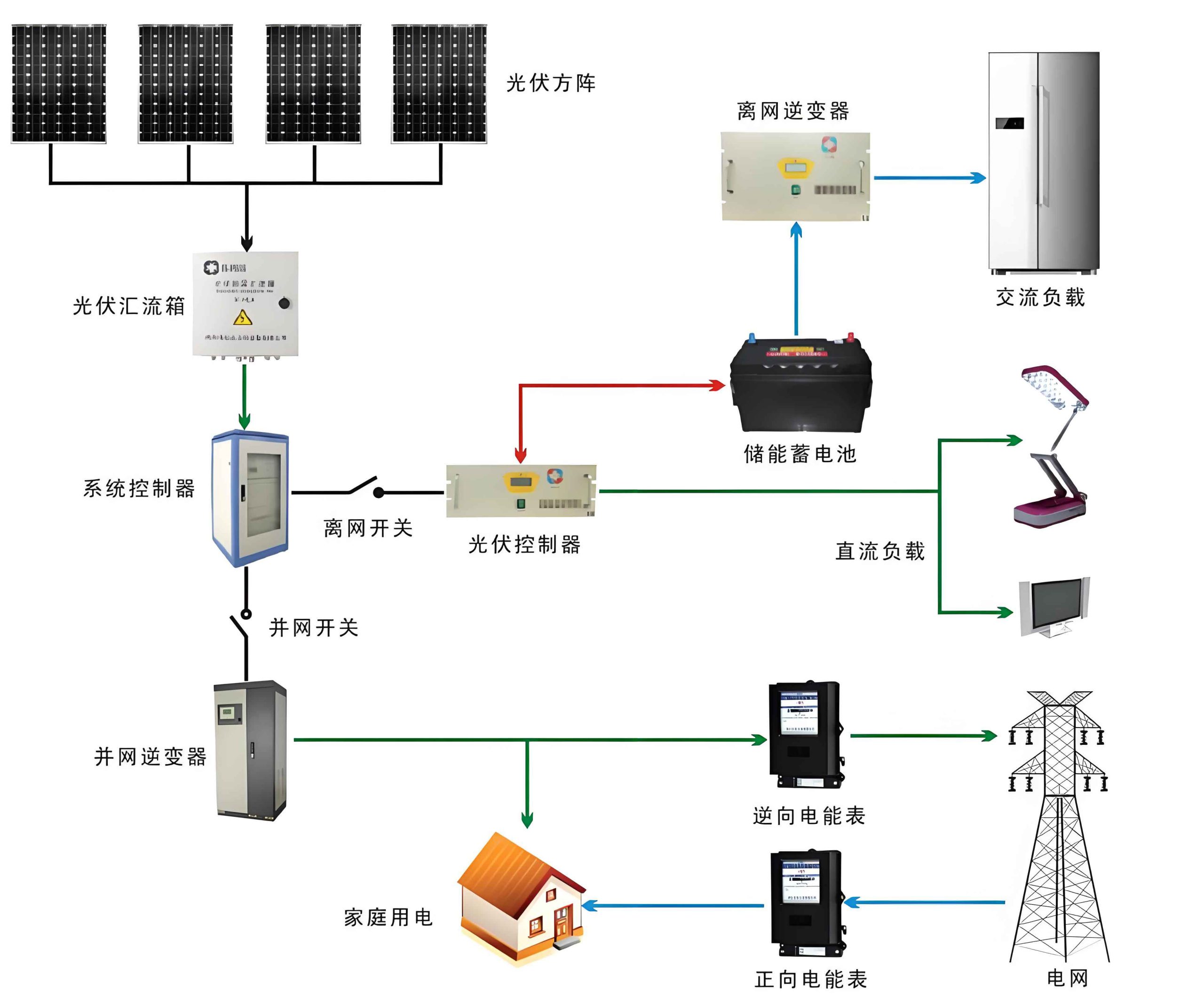
To understand the impact of solar systems in agriculture, it is essential to delve into the key development models that have emerged globally. In many developed countries, photovoltaic agriculture has advanced rapidly, while in regions like China, it is still in its nascent stages, with pilot projects in provinces such as Shandong, Jiangxi, and Inner Mongolia. The integration of solar systems into farming practices offers numerous benefits, including land conservation, energy independence, and reduced operational costs. For instance, by installing solar panels on agricultural structures, we can utilize space efficiently while generating clean electricity. This dual-use approach is at the heart of photovoltaic agriculture, and it aligns with the broader goal of creating resilient solar systems that support both energy and food production.
One of the most prominent applications is the photovoltaic greenhouse or solar greenhouse. This model involves mounting solar panels on the roofs of agricultural greenhouses, thereby making use of otherwise unused space. The electricity generated can power lighting, heating, ventilation, and irrigation systems within the greenhouse, creating a self-sustaining environment. A well-designed solar system for greenhouses not only reduces reliance on grid electricity but also enhances crop yields by providing controlled growing conditions. In my work, I have observed that photovoltaic greenhouses are particularly effective for high-value crops like tea, edible fungi, ornamental flowers, and organic vegetables. The table below summarizes the key advantages and challenges of photovoltaic greenhouses compared to traditional greenhouses.
| Aspect | Photovoltaic Greenhouse | Traditional Greenhouse |
|---|---|---|
| Energy Source | Solar system integrated with panels | Grid electricity or fossil fuels |
| Land Use Efficiency | High (dual-use of space) | Moderate (single-use) |
| Operational Costs | Lower in long term due to solar power | Higher due to energy bills |
| Crop Yield Impact | Slight reduction due to shading, but manageable | No shading effect |
| Environmental Impact | Low carbon emissions | Higher carbon footprint |
| Initial Investment | High (for solar system installation) | Relatively low |
The shading effect mentioned in the table is a critical consideration in photovoltaic greenhouse design. While solar panels can block some sunlight, advanced configurations, such as semi-transparent panels or adjustable mounts, can mitigate this issue. The power output of a solar system in a greenhouse can be estimated using the formula for photovoltaic power generation:
$$ P = \eta \cdot A \cdot G $$
where \( P \) is the power output in watts, \( \eta \) is the photovoltaic conversion efficiency (typically between 15% and 22% for modern panels), \( A \) is the area of the panels in square meters, and \( G \) is the solar irradiance in watts per square meter. For example, if a greenhouse has 100 m² of panels with an efficiency of 18% and an average irradiance of 800 W/m², the power output would be:
$$ P = 0.18 \times 100 \times 800 = 14,400 \, \text{W} = 14.4 \, \text{kW} $$
This electricity can significantly offset energy demands, making the solar system a cost-effective solution over time. In regions like Shandong and Jiangxi, projects have demonstrated that photovoltaic greenhouses can integrate with tourism, creating agro-tourism zones that combine agricultural production with ecological education. This holistic approach underscores the versatility of solar systems in fostering sustainable development.
Another vital model is photovoltaic power generation for agricultural operations. Unlike traditional fossil fuel-based power, solar systems provide clean electricity that can be deployed in remote areas without grid access. Applications include water pumping for irrigation, aeration for aquaculture, desertification control, and pasture management. In my research, I have focused on solar-powered irrigation systems, which are crucial for arid regions. The efficiency of such a solar system can be analyzed through the relationship between water output and energy input. For a solar-powered pump, the hydraulic power required to lift water is given by:
$$ P_h = \rho \cdot g \cdot Q \cdot H $$
where \( P_h \) is the hydraulic power in watts, \( \rho \) is the density of water (1000 kg/m³), \( g \) is the acceleration due to gravity (9.8 m/s²), \( Q \) is the flow rate in cubic meters per second, and \( H \) is the total dynamic head in meters. The electrical power from the solar system must meet or exceed \( P_h \) divided by the pump efficiency \( \eta_p \):
$$ P_e = \frac{P_h}{\eta_p} $$
For instance, to lift 10 m³ of water per hour (0.00278 m³/s) through a head of 20 meters with a pump efficiency of 60%, the electrical power required is:
$$ P_h = 1000 \times 9.8 \times 0.00278 \times 20 = 544.88 \, \text{W} $$
$$ P_e = \frac{544.88}{0.6} = 908.13 \, \text{W} \approx 0.91 \, \text{kW} $$
Thus, a solar system with a capacity of at least 1 kW could efficiently power this irrigation setup. Field trials in Qinghai and Inner Mongolia have shown that solar-powered irrigation can restore degraded grasslands by improving soil structure and increasing vegetation cover. The table below presents data from a study comparing solar-powered and diesel-powered irrigation systems in terms of cost and environmental impact.
| Parameter | Solar-Powered System | Diesel-Powered System |
|---|---|---|
| Initial Cost (USD) | 5,000 – 10,000 | 2,000 – 4,000 |
| Operational Cost (USD/year) | 50 – 100 (maintenance) | 500 – 1,000 (fuel) |
| Lifespan (years) | 20 – 25 | 10 – 15 |
| Carbon Emissions (kg CO₂/year) | 0 | 1,000 – 2,000 |
| Noise Pollution | Low | High |
| Suitability for Remote Areas | High (no fuel supply needed) | Low (fuel logistics required) |
The data clearly indicates that while solar systems have higher upfront costs, they offer substantial long-term savings and environmental benefits. This makes them an attractive option for farmers in off-grid locations, aligning with global efforts to promote clean energy. Moreover, the integration of solar systems into agriculture can enhance energy security by decentralizing power generation. In regions like Henan, photovoltaic power stations have been combined with mushroom cultivation, demonstrating how solar energy can boost agricultural productivity while generating additional income through electricity sales to the grid.
Photovoltaic breeding farms represent another innovative application. Livestock and poultry farms are often situated in remote areas with limited grid connectivity. By installing solar panels on the roofs of barns and sheds, farmers can create a self-sufficient solar system that meets their energy needs for lighting, ventilation, heating, and feeding equipment. The structural design typically involves steel frames with roofing materials like color steel保温 composite boards, to which photovoltaic modules are attached using clamps. This setup not only provides electricity but also reduces the heat load on buildings by shading the roof. In Jiangxi, a modern dairy farm operates entirely on a solar system, with excess electricity fed into the grid for profit. The economic viability of such a solar system can be assessed through the net present value (NPV) formula:
$$ \text{NPV} = \sum_{t=0}^{T} \frac{C_t}{(1 + r)^t} $$
where \( C_t \) is the net cash flow in year \( t \), \( r \) is the discount rate, and \( T \) is the system lifespan. For a photovoltaic breeding farm with an initial investment of $20,000, annual savings of $3,000 on electricity bills, and a maintenance cost of $200 per year over 20 years at a discount rate of 5%, the NPV can be calculated to determine financial attractiveness. Such analyses help farmers decide on adopting solar systems, ensuring that investments are sound and sustainable.
Beyond these primary models, numerous photovoltaic products are enhancing agricultural practices. Solar-powered insecticidal lamps, for example, use stored solar energy to attract and eliminate pests at night, offering an eco-friendly alternative to chemical pesticides. The effectiveness of these lamps depends on factors like light wavelength and placement, which can be optimized through research. Similarly, solar-powered污水 purification systems treat agricultural wastewater using energy from photovoltaic panels, reducing pollution and conserving water resources. These applications highlight the versatility of solar systems in addressing diverse agricultural challenges. To summarize the key technologies, the following table provides an overview of various photovoltaic applications in agriculture, along with their benefits and limitations.
| Application | Description | Benefits | Challenges |
|---|---|---|---|
| Photovoltaic Greenhouses | Solar panels on greenhouse roofs for energy and crop production | Land efficiency, energy savings, controlled environment | Shading effects, high initial cost |
| Solar-Powered Irrigation | PV systems powering water pumps for crops and pastures | Off-grid capability, low operational cost, environmental friendly | Dependent on sunlight, storage needs for cloudy days |
| Photovoltaic Breeding Farms | Roof-top solar installations on livestock buildings | Energy independence, reduced heat stress, income from excess power | Structural modifications required, upfront investment |
| Solar Insecticidal Lamps | Lamps using solar energy to trap and kill pests | Chemical-free pest control, low maintenance | Limited range, weather dependence |
| Solar Water Purification | PV-driven systems for treating agricultural wastewater | Clean water reuse, reduced pollution, energy efficient | High technology cost, need for technical expertise |
| Photovoltaic Forestry | Solar systems powering monitoring and irrigation in forests | Enhanced forest management, carbon sequestration support | Installation in rugged terrain, wildlife interference |
The widespread adoption of solar systems in agriculture, however, faces several hurdles. Cost remains a significant barrier, as photovoltaic technology often requires substantial initial investment, making it less competitive without subsidies. In my experience, governments play a crucial role in providing financial incentives to encourage farmers to adopt solar systems. Technological advancements are also needed to improve efficiency and reduce costs. For instance, the development of perovskite solar cells promises higher conversion efficiencies at lower prices, which could revolutionize photovoltaic agriculture. Additionally, the intermittent nature of solar energy necessitates energy storage solutions, such as batteries, to ensure reliability. The integration of storage into a solar system can be modeled using the following equation for energy balance:
$$ E_{\text{storage}}(t) = E_{\text{storage}}(t-1) + \eta_c \cdot P_{\text{PV}}(t) – \frac{P_{\text{load}}(t)}{\eta_d} $$
where \( E_{\text{storage}}(t) \) is the energy stored at time \( t \), \( \eta_c \) is the charging efficiency, \( P_{\text{PV}}(t) \) is the power generated by the photovoltaic system, \( P_{\text{load}}(t) \) is the power demand, and \( \eta_d \) is the discharging efficiency. This model helps design solar systems that can meet agricultural energy needs round-the-clock, even during periods of low sunlight.
Another challenge is the potential negative impact of photovoltaic installations on agricultural ecosystems. For example, large-scale solar farms on farmland might compete with food production for land. To address this, agrivoltaics—a practice that combines crop cultivation with solar panels—has emerged. By elevating panels or using spaced arrays, light penetration can be optimized to support both energy generation and crop growth. Research shows that certain shade-tolerant crops, like lettuce or spinach, thrive under solar panels, demonstrating the compatibility of solar systems with agriculture. Moreover, the microclimate created by panels can reduce water evaporation, benefiting crops in arid regions. These synergies underscore the importance of thoughtful design in photovoltaic agriculture.
Looking ahead, the future of solar systems in agriculture is bright, with opportunities for expansion into new domains. For instance, photovoltaic technology can be applied to agricultural machinery, such as solar-powered tractors or drones, reducing fossil fuel consumption. In forestry, solar systems can power sensors for monitoring tree health and soil moisture, enhancing sustainable management. Additionally, the concept of solar-sharing—where farmers lease land for solar installations while continuing to farm—can create additional revenue streams. To quantify the potential, we can use the formula for land-use efficiency in agrivoltaic systems:
$$ \text{Land Use Efficiency} = \frac{E_{\text{energy}} + E_{\text{food}}}{A_{\text{total}}} $$
where \( E_{\text{energy}} \) is the energy output from the solar system (in kWh/year), \( E_{\text{food}} \) is the food production (in kg/year), and \( A_{\text{total}} \) is the total land area in hectares. Maximizing this efficiency requires careful planning and innovation, which I believe will drive the next wave of agricultural transformation.
In conclusion, as an agronomist dedicated to advancing sustainable practices, I am convinced that solar photovoltaic systems are pivotal to the future of agriculture. By integrating solar technology into farming, we can address energy shortages, mitigate environmental impacts, and enhance productivity. The models discussed—photovoltaic greenhouses, solar-powered irrigation, photovoltaic breeding farms, and others—illustrate the versatility of solar systems in diverse agricultural contexts. Despite challenges like cost and technical limitations, ongoing research and policy support are paving the way for broader adoption. I urge stakeholders, including farmers, researchers, and policymakers, to collaborate in optimizing solar systems for agricultural use, ensuring that we harness the sun’s power to feed the world sustainably. The journey toward a solar-powered agricultural revolution is just beginning, and with continued effort, solar systems will become an indispensable part of modern farming.
To further illustrate the economic aspects, let’s consider a case study on the return on investment (ROI) for a typical photovoltaic greenhouse solar system. The ROI can be calculated as:
$$ \text{ROI} = \frac{\text{Net Profit}}{\text{Total Investment}} \times 100\% $$
If a greenhouse solar system costs $50,000 to install and generates annual savings of $8,000 in electricity bills and $2,000 in increased crop revenue, with annual maintenance costs of $1,000, the net profit per year is $9,000. Over a 20-year lifespan, the total net profit is $180,000, giving an ROI of:
$$ \text{ROI} = \frac{180,000}{50,000} \times 100\% = 360\% $$
This demonstrates the long-term financial benefits of investing in a solar system for agriculture. Moreover, with technological advancements, the costs of photovoltaic components are expected to decline, making solar systems even more accessible. As we move forward, interdisciplinary approaches combining agronomy, engineering, and economics will be essential to unlock the full potential of solar systems in agriculture, ultimately contributing to a greener and more prosperous future for all.