
In recent years, the escalating issue of global warming has prompted international efforts to mitigate greenhouse gas emissions, with buildings accounting for a significant portion of carbon output. As high-rise residential buildings become the dominant form of urban housing due to land intensification, their lifecycle carbon emissions are critical to achieving carbon neutrality goals. From my perspective, integrating solar systems into architectural design is paramount for reducing carbon footprints. This study explores the trends in high-rise residential building design under future climate scenarios, focusing on solar system applications to achieve carbon neutrality by 2060. I analyze variables such as building typology, window-to-wall ratio, and solar system conversion efficiency, using future weather data for 2050 to simulate energy consumption and carbon emissions. The aim is to provide actionable insights for architects and policymakers in promoting sustainable urban development.
The urgency of addressing climate change is underscored by the Intergovernmental Panel on Climate Change (IPCC) reports, which project temperature rises of 1.0 to 3.7°C by the end of the century. China, as a major emitter, has committed to peaking carbon emissions by 2030 and achieving carbon neutrality by 2060. Buildings contribute 35% to 55% of China’s carbon emissions, with residential buildings showing an annual growth rate of 5.76% in carbon output over the past decade. Therefore, my research emphasizes the need for innovative design strategies, particularly through solar system integration, to curb emissions in high-rise residences. This paper delves into the lifecycle carbon assessment, considering operational emissions, embodied carbon in materials, and carbon reduction via solar systems.
To begin, I acquired future meteorological data for representative cities across China’s five climate zones: Harbin (severe cold), Beijing (cold), Changsha (hot summer and cold winter), Guangzhou (hot summer and warm winter), and Guiyang (mild). Using the compensation method based on the B1 scenario from the IPCC Special Report on Emission Scenarios (SRES), I generated Typical Meteorological Year (TMY) parameters for 2050. This data forms the basis for energy simulations, enabling the prediction of building performance under evolving climate conditions. The B1 scenario aligns with sustainable development, reflecting China’s low-emission pathway. The future weather files account for monthly variations, ensuring accurate projections for heating, cooling, and solar system energy generation.
The lifecycle carbon emissions of high-rise residential buildings are calculated using a comprehensive approach. I focus on three main components: embodied carbon from materials (Cm), operational carbon from energy use (Co), and carbon reduction from solar system electricity generation (Cp). The net carbon (C) is derived as follows:
$$C = C_m + C_o – C_p$$
When C equals zero, the building achieves carbon neutrality over its 50-year design lifespan. This equation guides my analysis, with each component quantified through simulations and standard factors. For the solar system, I consider photovoltaic (PV) panels installed on roofs and facades, with conversion efficiencies of 15% and 20%, representing polycrystalline and monocrystalline silicon technologies, respectively. The carbon reduction from solar systems is computed based on regional grid emission factors, as shown in Table 1.
| Regional Grid | Covered Cities | Carbon Emission Factor (tCO₂e/MWh) |
|---|---|---|
| North China | Beijing | 0.9419 |
| Northeast China | Harbin | 1.0826 |
| Central China | Changsha | 0.8587 |
| South China | Guangzhou, Guiyang | 0.8042 |
The embodied carbon for building components, such as walls, roofs, windows, and floors, is derived from material carbon factors and replacement cycles. Table 2 summarizes the carbon factors for high-performance enclosures used in near-zero energy buildings, as per the GB/T 51350-2019 standard. These factors include multiple replacements over the building’s life, ensuring a realistic assessment.
| Component | Construction Details | Insulation Thickness (mm) | U-Value (W/m²K) | Carbon Factor (kgCO₂e/m²) |
|---|---|---|---|---|
| External Wall | Paint + cement mortar + CL composite wall (varies by city) | 300 (Harbin) | 0.10 | 750.69 |
| Roof | Reinforced concrete + waterproofing + XPS board | 300 (Harbin, Beijing) | 0.10 | 688.43 |
| Window | Insulated aluminum or plastic steel frames with Low-E glass | — | 1.0-2.5 | 95.20-156.00 |
| Floor | Surface layer + concrete + XPS board | — | 0.25 | 346.00 |
| Solar System Panel | Polycrystalline or monocrystalline silicon | — | — | 35.68-30.00 |
Operational carbon is calculated from energy consumption for heating, cooling, and lighting. In severe cold and cold regions, centralized heating is used, with an emission factor of 0.11 tCO₂e/GJ. In other zones, air-source heat pumps are assumed, with cooling and heating coefficients of performance (COP) set at 4.5 and 2.3, respectively. Lighting power density is 5 W/m², controlled by occupancy sensors. The simulation software DesignBuilder is employed to model energy use under 2050 weather conditions, incorporating high-efficiency systems and passive design strategies.
In my analysis, I define key design variables: building typology, window-to-wall ratio (WWR), and solar system conversion efficiency. Building typology includes seven common high-rise residential types, ranging from 18 to 34 stories, with varying floor plans and shapes. For instance, Type 1 is an 18-story, one-core-two-unit design, while Type 7 is a 34-story, two-core-four-unit I-shaped layout. The WWR is varied from 0.25 to 0.4 for south-facing facades, affecting both energy performance and solar system installation area. The solar system efficiency is set at 15% or 20%, representing technological advancements. I simulate 210 combinations of these variables to assess their impact on lifecycle carbon.
The correlation analysis reveals significant insights. Solar system conversion efficiency is the most influential variable on net carbon (C), with a correlation coefficient of -0.468 (p < 0.01). This underscores the importance of advanced solar systems in achieving carbon neutrality. Building typology strongly affects embodied carbon (Cm) and operational carbon (Co), with coefficients of 0.854 and 0.360, respectively (p < 0.01). Climate zone also plays a crucial role, particularly for Co, with a coefficient of -0.657 (p < 0.01). Interestingly, WWR shows no significant correlation with any carbon metric, suggesting that other factors dominate in solar system-integrated designs. The equation for carbon reduction from solar systems is:
$$C_p = 50 \times EF_{e,j} \times (E_r + E_{we} + E_{ws} + E_{ww})$$
where \(EF_{e,j}\) is the regional grid factor, and \(E_r\), \(E_{we}\), \(E_{ws}\), \(E_{ww}\) are annual electricity generation from roof, east, south, and west facades, respectively. This highlights how solar system placement and efficiency drive carbon offsets.
Regarding climate zones, Beijing (cold region) exhibits the lowest net carbon, with an average of 55.34 ktCO₂e, making it the most feasible for carbon neutrality. In contrast, Changsha (hot summer and cold winter) has the highest net carbon at 362.49 ktCO₂e, indicating greater challenges. Guangzhou and Guiyang show intermediate levels. This disparity stems from differences in operational energy and solar system performance. For example, Beijing’s moderate winters and abundant solar radiation yield high solar system output, with Cp averaging 931.49 ktCO₂e, which offsets 148% of operational carbon. The formula for net carbon by city can be expressed as:
$$C_{\text{city}} = \sum (C_{m,i} + C_{o,i} – C_{p,i})$$
where i represents building types. The data suggests that cold regions should be prioritized for solar system deployment in high-rise residences.
Building typology analysis shows that 30-34 story buildings generally outperform 18-story ones in carbon metrics. For instance, Type 5 (33-story, two-core-three-unit) has the highest solar system carbon reduction at 1.84 tCO₂e/m², while Type 4 (31-story, two-core-two-unit) has the lowest at 1.28 tCO₂e/m². Type 7 (34-story, I-shaped) is recommended for southern regions due to its low net carbon, whereas Type 5 suits northern areas. The shape coefficient does not consistently correlate with carbon emissions, implying that design optimization should focus on solar system integration rather than mere form. Table 3 compares carbon metrics across typologies, emphasizing the role of solar systems.
| Building Type | Net Carbon (tCO₂e/m²) | Solar System Carbon Reduction (tCO₂e/m²) | Embodied Carbon (tCO₂e/m²) | Operational Carbon (tCO₂e/m²) |
|---|---|---|---|---|
| Type 1 (18-story) | 0.87 | 1.70 | 0.80 | 1.76 |
| Type 5 (33-story) | 0.48 | 1.84 | 0.77 | 1.31 |
| Type 7 (34-story) | 0.48 | 1.60 | 0.77 | 1.31 |
Solar system efficiency profoundly impacts carbon outcomes. Increasing conversion efficiency from 15% to 20% reduces net carbon in Beijing by 150.2 ktCO₂e, achieving negative net carbon (-47.43 ktCO₂e). This demonstrates that enhancing solar system technology is a key strategy for carbon neutrality. The relationship is quantified as:
$$\Delta C = -k \times \Delta \eta$$
where \(k\) is a constant derived from solar irradiance and area, and \(\eta\) is conversion efficiency. In cold regions, solar system gains are substantial due to favorable conditions, whereas in hot regions, cooling demands offset benefits. For example, Guangzhou’s high cooling loads necessitate solar system efficiencies beyond 20% for neutrality, coupled with improved HVAC COP.
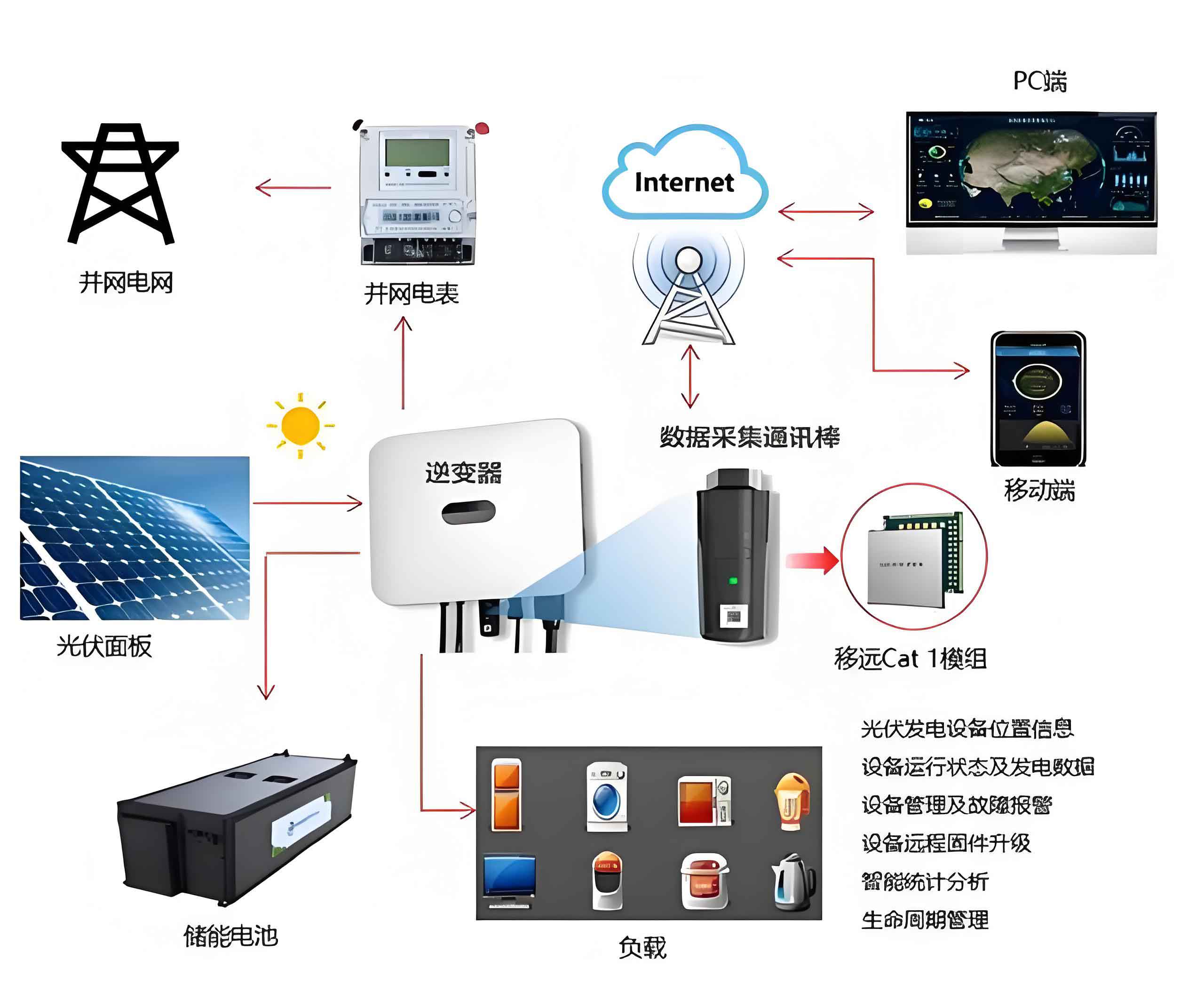
The integration of solar systems into building facades and roofs is visually represented, highlighting how architectural elements can harness solar energy. This image underscores the practical application of solar systems in high-rise designs, aligning with my research findings. In practice, solar system installation should maximize south-facing surfaces, with vertical panels on walls to complement rooftop arrays. The optimal configuration depends on local climate and building orientation, which I explore through parametric simulations.
Further discussion revolves around adaptation strategies. In hot summer and warm winter regions like Guangzhou, solar system alone may not suffice due to high cooling emissions. Here, improving HVAC efficiency is critical; for instance, achieving a COP of 6.6 could enable carbon neutrality with solar system support. The equation for operational carbon in such regions is:
$$C_o = E_c \times EF_{e,j} / \text{COP}_c + E_h \times EF_{e,j} / \text{COP}_h$$
where \(E_c\) and \(E_h\) are cooling and heating energies, and COP values are technology-dependent. My analysis suggests that policy incentives should promote both solar system adoption and advanced HVAC systems in these zones.
Moreover, the lifecycle perspective emphasizes the need for durable materials and maintenance. Solar system panels with longer lifespans reduce replacement emissions, contributing to lower embodied carbon. I recommend using monocrystalline silicon for its higher efficiency and lower carbon factor per unit output. The embodied carbon for solar systems is included in Cm, but its offset via Cp typically results in net gains. The balance is expressed as:
$$C_{\text{net, solar}} = C_{m, \text{solar}} – C_{p, \text{solar}}$$
which often yields negative values, reinforcing the benefits of solar system integration.
In conclusion, my research identifies clear trends for high-rise residential design under future climate scenarios. Solar system integration is paramount, with conversion efficiency being the most impactful variable. Cold regions, particularly Beijing, offer the best prospects for carbon neutrality, while hot summer and cold winter regions face greater hurdles. Building typologies of 30-34 stories, such as Type 5 and Type 7, are recommended for optimized performance. Future efforts should focus on advancing solar system technologies and coupling them with efficient HVAC systems. By prioritizing these strategies, China can move closer to its 2060 carbon neutrality goal, with high-rise residences serving as catalysts for sustainable urban growth. This study provides a framework for architects and planners to incorporate solar systems into holistic design approaches, ensuring resilience against climate change.
To elaborate, the mathematical models used in this research allow for scalability. The carbon calculation framework can be applied to other building types or regions, with adjustments for local factors. For instance, the solar system energy generation model incorporates irradiance data from future climate projections, which can be updated as new scenarios emerge. The key equations are:
$$C_m = \sum_{i=1}^{n} S_{ci} \times EF_{ci}$$
$$C_o = E_h \times EF_h + E_c \times EF_{e,j} + E_l \times EF_{e,j}$$
where \(S_{ci}\) is component area, \(EF_{ci}\) is carbon factor, and \(E_l\) is lighting energy. These formulas enable precise assessments, guiding design decisions. In practice, iterative simulations can optimize variables like WWR and solar system layout, though my findings show WWR has minimal impact when solar systems are extensively used.
Additionally, the role of policy cannot be overstated. Incentives for solar system installation, such as subsidies or green building certifications, could accelerate adoption. My analysis suggests that in cold regions, even basic solar systems with 15% efficiency can significantly reduce net carbon, making them cost-effective investments. In contrast, hotter regions may require hybrid approaches, combining solar systems with energy storage or passive cooling techniques.
Finally, this research underscores the interdisciplinary nature of sustainable design. Collaboration between architects, engineers, and climate scientists is essential to refine solar system applications and adapt to future weather patterns. As climate change progresses, continuous monitoring and model updates will ensure that high-rise residences remain aligned with carbon neutrality targets. The integration of solar systems is not just a technical solution but a design philosophy that embraces renewable energy as a core element of modern architecture.