
The global energy landscape is undergoing a profound transformation. For centuries, humanity has relied on fossil fuels—oil, natural gas, and coal. While historically abundant, these resources are demonstrably finite. The twin crises of environmental degradation and impending energy scarcity have propelled the search for sustainable alternatives to the forefront of global discourse. In this quest, renewable and clean energy sources like solar and wind power have emerged as pivotal solutions. Among them, solar energy stands out as a source of immense potential, being inexhaustible on a human timescale and producing zero operational emissions, garnering significant attention and investment worldwide.
Sustainable development, from my perspective, hinges on a fundamental shift. It requires continuous technological innovation and the large-scale adoption of new energy sources to drastically reduce unnecessary consumption and environmental pollution. This path fosters harmonious development between the economy, society, and the ecological environment—a concept often termed the low-carbon economy. Protecting our environment is a universal responsibility, making energy conservation and emission reduction imperative. The utilization of new energy, particularly the full development of a solar-powered economy, aligns perfectly with national and global objectives for energy efficiency and emission targets.
Photovoltaic (PV) power generation harnesses a quintessential renewable resource. Making full use of sunlight to generate electricity is inherently energy-saving, environmentally friendly, and non-destructive to ecosystems. In the 21st century, with its emphasis on environmental stewardship, PV systems have undoubtedly become one of the most prominent and rapidly growing power generation technologies. The foundational science dates back over a century to Einstein’s explanation of the photoelectric effect, which paved the way for solar electricity. The practical journey began in the mid-20th century with the development of the first single-crystal silicon solar cell, marking the official commencement of our ability to convert sunlight directly into usable power.
As energy crises have repeatedly surfaced, nations worldwide have embarked on intensive research into alternative energy sources. Solar energy is an indispensable component of this new energy mix, a renewable resource crucial for sustainable human development. The technology to convert solar energy into required electricity is a key indicator of the rapid advancement of the PV industry. A critical component of any PV installation is the mounting structure. The development and refinement of solar mounting structures, or solar racks, are pivotal to the industry’s success, and their importance is increasingly recognized.
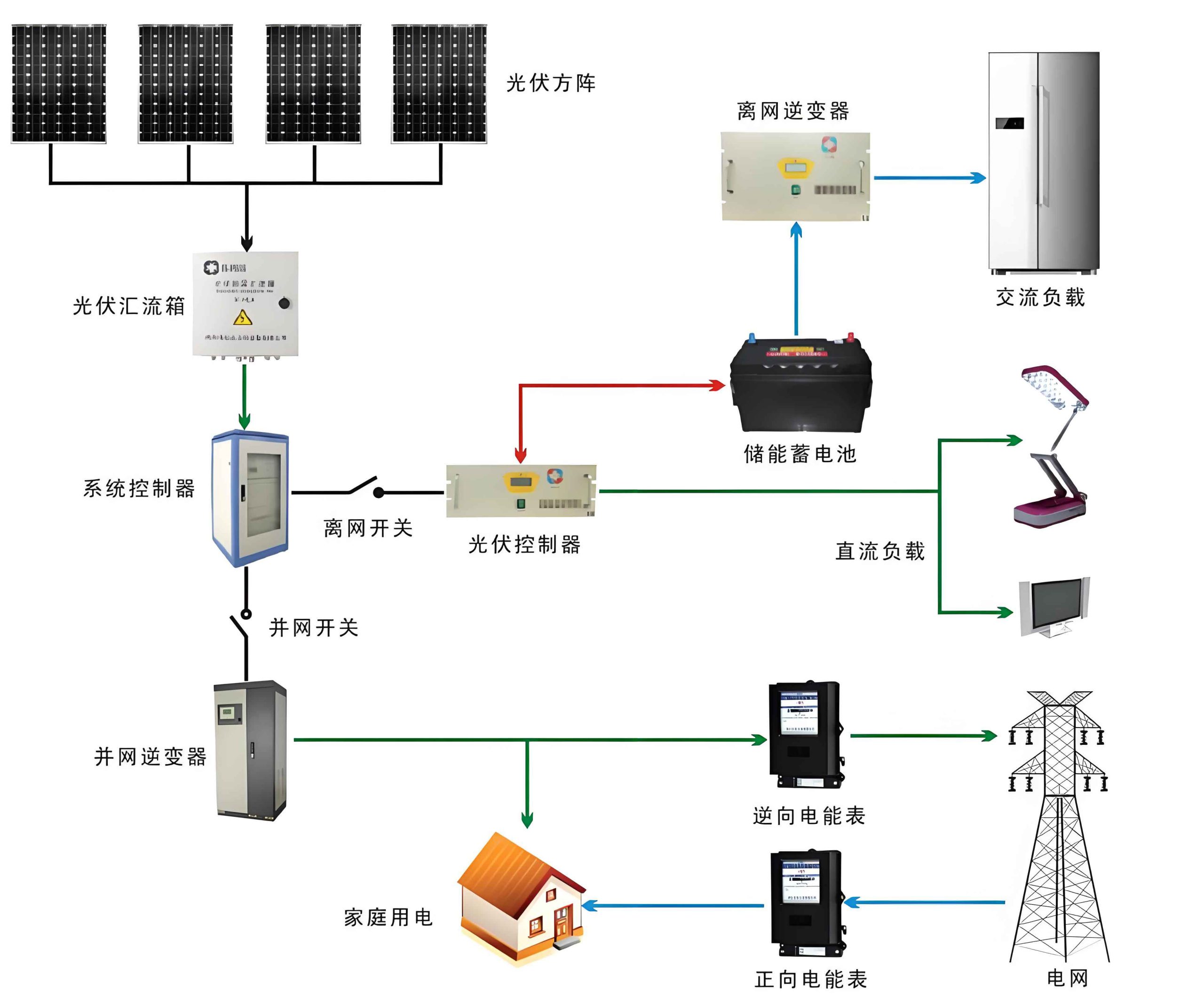
The design of an effective solar system is not just about the panels; the mounting structure is its backbone. From my experience in the field, I have observed that a well-engineered solar mounting system offers numerous advantages: reusability, flexibility for adjustment, corrosion resistance, and overall cost savings through durability and performance. Currently, mounting structures in the market are primarily categorized by material: concrete, steel, and aluminum.
| Material | Typical Application | Advantages | Disadvantages |
|---|---|---|---|
| Concrete | Large-scale ground-mounted utility solar systems | High stability, excellent load-bearing for large panels. | Very heavy, high environmental requirements for placement, inflexible. |
| Aluminum | Residential rooftop and light commercial solar systems | Lightweight, aesthetically pleasing, naturally corrosion-resistant, long lifespan. | Lower load capacity limits use in large plants; higher material cost. |
| Steel (Carbon/Low-Alloy) | Widely used in utility, commercial, and large residential solar systems | Excellent structural stability, high strength, good corrosion resistance (when treated), cost-effective, versatile. | Requires protective coating (e.g., galvanization); precision in manufacturing and installation is critical. |
In my analysis, steel structures often present the most compelling advantages for a robust solar system. They offer superior stability, impressive load-bearing capacity, and, with proper treatment like hot-dip galvanizing, excellent corrosion resistance. Their cost is relatively low compared to aluminum, and their installation, involving factory-produced components assembled on-site, can be fast and efficient. However, this efficiency is contingent upon high-quality manufacturing and skilled installation. Without these, issues can arise, and the initial processing requirements can elevate costs.
1. Material Selection and Performance Requirements for Solar Structures
The choice of steel for a mounting structure is paramount. In practice, two main types are prevalent:
- Light Gauge Steel: This includes lightweight angles and, more effectively, cold-formed thin-walled sections. These are produced by cold-rolling or bending thin steel sheets into specific shapes (C-sections, Z-sections). Their lightness is an asset, but they often cannot connect directly to solar panels, requiring intermediary aluminum clamps and high-strength bolts for secure, adjustable fixation. Their strength-to-weight ratio is favorable.
- Conventional Structural Steel: This encompasses cost-effective carbon structural steel and low-alloy steel, available in various standard sections (I-beams, channels, tubes) or as custom-welded sections. For a custom solar system support, welded “I” sections can be optimized by using varying flange and web thicknesses based on calculated stress points along the beam length, leading to significant material savings. The formula for bending stress is fundamental here:
$$ \sigma_b = \frac{M \cdot y}{I} $$
Where \(\sigma_b\) is the bending stress, \(M\) is the bending moment, \(y\) is the distance from the neutral axis, and \(I\) is the area moment of inertia. Optimizing the cross-section (maximizing \(I\) for a given area) is key to efficient design.
The performance requirements for steel in a solar system are stringent:
- High Strength & Yield Point: High tensile strength and a high yield point ensure structural safety and allow for smaller, material-saving cross-sections.
- Good Plasticity & Toughness: Plasticity allows for visible deformation prior to failure (a safety warning). Toughness enables the structure to absorb impact energy (e.g., from wind gusts or seismic events), which is crucial for reliability in harsh environments. The resilience against wind-induced vibration is particularly important.
- Excellent Fatigue Resistance: Mounting structures endure millions of stress cycles from wind loads. Fatigue strength, governed by S-N curves, is critical for long-term integrity.
- Superior Durability & Corrosion Resistance: The service life of the mounting structure often dictates the system’s operational life. Hot-dip galvanizing (HDG) is the standard, providing a robust sacrificial layer. The zinc coating thickness, adherence, and completeness are vital metrics. Corrosion, especially from chloride ions in coastal or de-icing salt environments, is a primary threat.
- Good Fabrication Properties & Cost-Effectiveness: The steel must be easily workable (cut, drilled, welded) into precise components without compromising its properties, all at a reasonable cost.
2. Installation Methodologies and Connection Challenges
The assembly of the solar system framework presents its own set of challenges. Connections are typically either welded or bolted (pre-fabricated).
| Connection Method | Process | Pros | Cons |
|---|---|---|---|
| Welded Connections | On-site welding of steel members (e.g., angle iron). | Strong, continuous connection; low material cost; simple design. | Heat-affected zone corrosion; requires annual maintenance (re-painting); high field labor cost; needs power source on-site; aesthetic limitations. |
| Bolted (Prefabricated) Connections | Assembly of factory-made, pre-drilled, pre-galvanized components using bolts. | Fast installation; clean aesthetics; easy adjustment/disassembly; consistent quality; no field corrosion damage. | Higher initial component cost; requires precise design and manufacturing. |
From an industry trend perspective, bolted systems, especially those using specialized cold-formed steel channels, are increasingly favored. They overcome the maintenance and quality-control issues inherent in field welding.
Foundation and Base Connections: The method of securing the structure to the ground or roof is critical. For rooftop solar systems, ballasted systems (using concrete blocks) or non-penetrating mounts protect the roof membrane. For ground-mounted utility-scale systems, two primary methods exist:
- Ground Screws (Helical Piles) / Driven Piles: These are essentially large screws or posts driven into the soil. They offer high pull-out resistance and are ideal for various soils. However, they are custom-designed for load and soil conditions and can be expensive.
- Direct Embedment (Concrete Foundations): Structural posts are set into concrete piers poured in the ground. This method is often simpler and more cost-effective but requires thorough geotechnical investigation to ensure soil bearing capacity and frost line depth are suitable. The spacing of these foundations is directly constrained by the module row and column layout.
The choice can be summarized by a cost-benefit analysis often modeled as:
$$ C_{total} = C_{material} + C_{install} + C_{maintenance} $$
Where for foundations, \(C_{install}\) and long-term reliability heavily influence the optimal choice for the specific solar system site.
Technical Nuances in Modern Systems: Advanced cold-formed steel systems require sophisticated connection details.
- Member-to-Member Connections: These are typically achieved with pre-designed, pre-galvanized brackets and high-strength bolts, allowing for both flexibility and rigidity as needed.
- Structure-to-Foundation Connection: This is usually a simple base plate bolted to a concrete pier or attached to a ground screw head.
- Purlin-to-Rafter Connection: Purlins (the horizontal beams holding the panels) connect to rafters. Connections can be idealized as pinned (hinged), fixed (rigid), or semi-rigid. Pinned connections are simplest and most common. Fixed connections provide greater stability in high-wind zones but are more complex. Semi-rigid connections offer a middle ground but are less common due to design complexity.
3. Key Technical Hurdles and Industry Status
The manufacturing of high-quality mounting structures presents significant technical hurdles. The galvanizing process is perhaps the most critical. The HDG coating must meet stringent standards (e.g., ISO 1461, ASTM A123) for thickness, uniformity, and adhesion. Any flaw, thin spot, or damage during handling exposes the steel to corrosive elements like chlorides (halogens), leading to rapid localized corrosion that can compromise the entire solar system‘s integrity.
Furthermore, the design of the connection systems for prefabricated channel-based structures requires continuous innovation. The goal is to create connectors and interlocks that are secure, allow for multi-directional adjustability, minimize material use, and enable rapid installation. For applications requiring high torsional stiffness, such as long unsupported purlins, built-up sections are used. These can be created by laser-welding two C-channels back-to-back, forming a closed, strong box-like section, which is superior in performance and aesthetics to simple field welding or using a square hollow section (SHS).
The broader context of the PV industry reveals both promise and challenge. The industry has experienced explosive growth. However, significant imbalances remain. For years, the production of high-purity polysilicon, the primary raw material, was dominated by a few countries, creating supply dependencies. While domestic production capacity has surged, some technological gaps in energy-efficient production processes persist.
| Industry Segment | Global Context | Observations |
|---|---|---|
| Polysilicon Production | High energy and technology-intensive. | Capacity has expanded rapidly; focus on reducing energy consumption and cost per kilogram. |
| Wafer/Cell/Module Manufacturing | Highly competitive global market. | Manufacturing scale is massive, driving down costs. Continuous innovation in cell efficiency (e.g., PERC, TOPCon, HJT) is crucial. |
| Balance of System (BOS) | Includes inverters, mounting structures, wiring. | Mounting structures are a critical BOS component where reliability and cost optimization are actively pursued. |
| System Installation & Grid Integration | Highly localized, project-based. | Costs are falling but soft costs (permitting, financing, grid connection) remain a significant portion of total solar system cost. |
Solar cell and module manufacturing capacity is enormous, but historically, a substantial portion was exported. The drive for technological self-sufficiency and innovation in cell architectures (beyond standard PERC) is ongoing. While the scale of PV application has grown immensely, the levelized cost of electricity (LCOE) from solar has plummeted, making it competitive with conventional sources in many regions. The LCOE can be expressed as:
$$ LCOE = \frac{\sum_{t=1}^{n} \frac{I_t + M_t + F_t}{(1+r)^t}}{\sum_{t=1}^{n} \frac{E_t}{(1+r)^t}} $$
Where \(I_t\) is investment expenditures in year \(t\), \(M_t\) is operations and maintenance expenditures, \(F_t\) is fuel expenditure (zero for solar), \(E_t\) is electricity generation, \(r\) is the discount rate, and \(n\) is the system lifetime. The continuous reduction in the numerator (via cheaper modules, better mounting systems, and lower financing costs) has been the key driver.
4. Future Outlook and Concluding Perspective
The trajectory for solar PV is overwhelmingly positive. We are transitioning from a niche alternative to a mainstream energy source. Supportive policies, technological learning curves, and economies of scale continue to drive this transition. The global market is poised for sustained growth as decarbonization goals become more urgent.
The natural resource foundation is solid. A vast majority of the planet’s land area receives substantial solar irradiation. The total solar energy incident on the Earth’s surface annually dwarfs global primary energy consumption by several orders of magnitude. Solar power’s inherent advantages—cleanliness, scalability, and decreasing cost—couple with rapid technological maturation to solidify its role in the future energy mix.
As a renewable resource with minimal environmental impact, solar energy is rightly a focal point of national energy strategies. For nations grappling with energy security and pollution, domestic solar resources offer a path to greater independence and sustainability. The PV industry, supported by policy frameworks and relentless innovation, is not just an energy sector; it is a cornerstone of the future low-carbon global economy. The ongoing refinement of every component, from high-efficiency cells to robust and intelligent mounting structures, will ensure that the solar system of tomorrow is even more efficient, reliable, and integral to our world than it is today.