
The pursuit of higher energy density and enhanced safety in energy storage has propelled lithium metal anodes to the forefront of battery research. With an exceptionally high theoretical specific capacity (3860 mAh g–1) and the lowest redox potential (–3.04 V vs. SHE), lithium metal is the quintessential negative electrode for next-generation batteries. However, its integration into conventional liquid electrolyte systems is plagued by fundamental challenges. The non-uniform deposition and stripping of lithium ions during cycling lead to the formation of lithium dendrites and “dead Li.” These dendrites can pierce separators, cause internal short circuits, and trigger exothermic reactions with the cathode and organic electrolyte, posing severe safety risks and leading to rapid capacity fade. These inherent limitations have hindered the practical deployment of lithium-metal batteries.
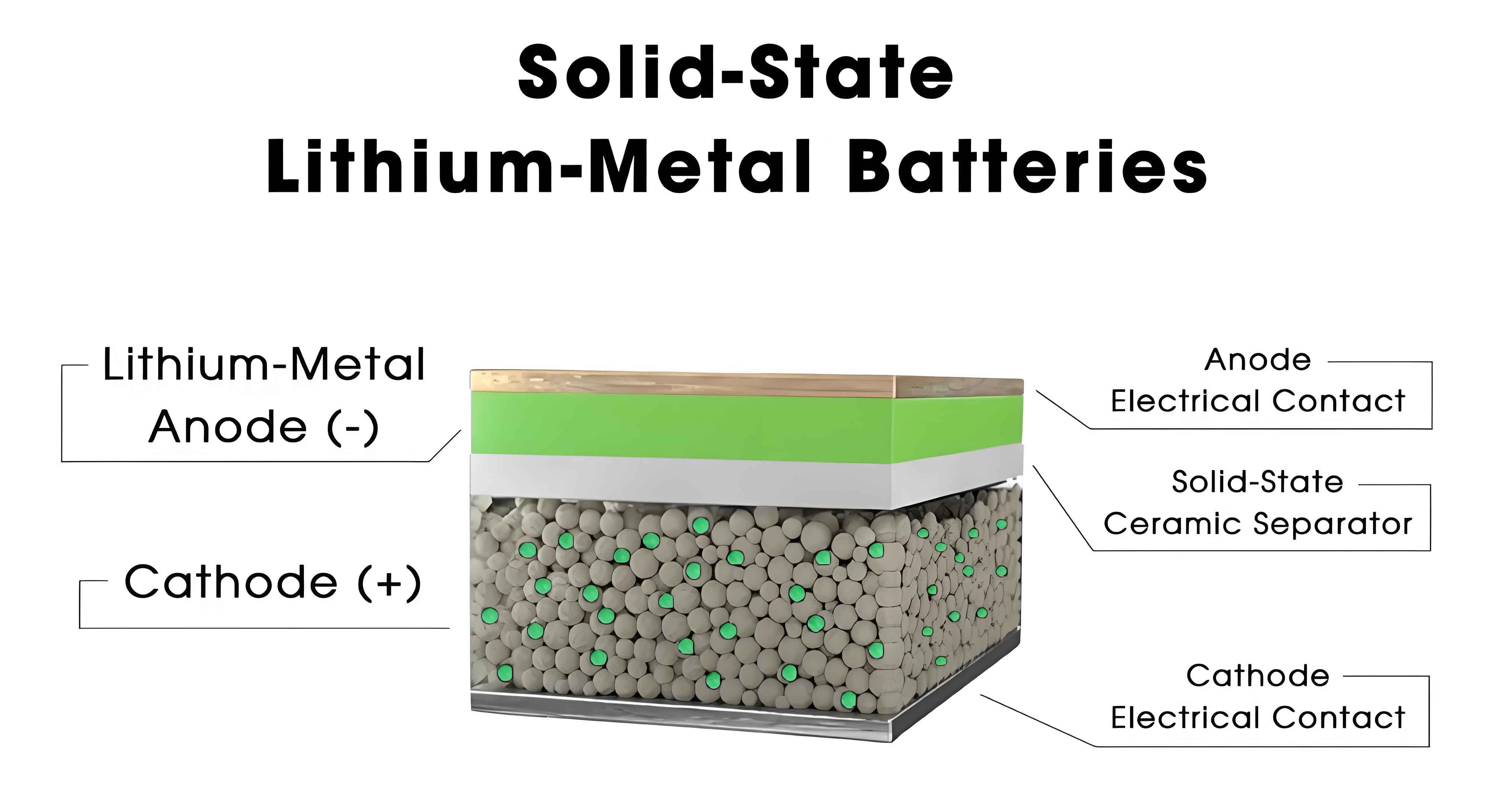
Solid-state electrolytes (SSEs) present a paradigm-shifting solution, forming the cornerstone of the ultimate solid-state battery. These materials replace both the flammable liquid electrolyte and the separator in a single, solid component. The advantages of all-solid-state lithium metal batteries (ASSLMBs) are multifaceted and compelling:
- Superior Safety: The absence of volatile and combustible organic solvents eliminates fire and explosion hazards. SSEs typically have higher thermal runaway onset temperatures.
- High Energy Density: The mechanical rigidity of many SSEs can physically suppress lithium dendrite growth. Furthermore, their wider electrochemical stability windows allow pairing with high-voltage cathode materials (e.g., >4V), inaccessible to liquid electrolytes.
- Improved Cycle Stability: The static nature of the solid electrolyte interphase (SEI) prevents its continuous reformation and dissolution, mitigates transition metal dissolution from the cathode, and enhances long-term interfacial stability.
Therefore, the development of a reliable solid-state battery is considered the most promising path toward safe, high-energy-density storage systems.
Despite their promise, SSEs face significant hurdles, with ionic conductivity being a primary concern. Many SSEs exhibit ionic conductivities one to two orders of magnitude lower than their liquid counterparts. Among various ceramic electrolytes, NASICON (Na Super Ionic CONductor)-type Li1.3Al0.3Ti1.7(PO4)3 (LATP) stands out due to its high room-temperature ionic conductivity (often >10–4 S cm–1), excellent chemical stability, and high shear modulus (40–60 GPa). These properties make LATP a leading candidate for ceramic-based solid-state battery applications.
However, a critical Achilles’ heel for LATP is its poor interfacial stability against lithium metal. The tetravalent titanium (Ti4+) in its structure is thermodynamically unstable when in contact with lithium (E0(Li/Li+) = 0 V vs. Li/Li+). This leads to a spontaneous reduction reaction:
$$ \text{Ti}^{4+} + \text{Li} \rightarrow \text{Ti}^{3+} + \text{Li}^+ $$
This reduction triggers a cascade of detrimental effects: (1) Formation of electronically conductive reduced phases (Ti3+ species) and other by-products (e.g., Li3PO4, Li3P, Li2O), which degrade the electrolyte structure and introduce electron leakage pathways. (2) The resulting interphase is often resistive and unstable, blocking Li+ transport and causing high interfacial impedance. (3) The continuous reaction consumes both lithium and the electrolyte, leading to rapid capacity decay and battery failure. Thus, stabilizing the Li/LATP interface is paramount for developing a practical NASICON-based solid-state battery.
The Critical Role of Interfacial Engineering in Solid-State Batteries
Interfacial engineering has emerged as the key strategy to overcome the instability between SSEs and lithium metal. An ideal interfacial layer should fulfill multiple functions: be chemically/electrochemically stable against both Li and the SSE, possess mixed ionic-electronic conductivity (MCI) to homogenize current distribution, exhibit good wettability and mechanical compliance to maintain contact, and block electron transfer to prevent SSE reduction. Various approaches have been explored for LATP, as summarized below:
| Strategy | Example Material | Proposed Function | Limitations |
|---|---|---|---|
| Polymer Buffer Layer | PVDF-HFP + TEGDME | Physical barrier, enhanced wettability, wider window. | Limited mechanical strength, potential decomposition, poor long-term stability. |
| In-situ Formed MCI | MoS2-derived Li2S-Mo | Blocks reduction, provides Li+ pathways. | Reaction products may be inhomogeneous; phase boundaries can interrupt charge flow. |
| Oxide Protective Layer | Al2O3, ZnO | Inert physical barrier. | Often purely ionic, leading to current constriction; poor adhesion. |
Many conventional buffer layers suffer from porosity, grain boundaries, phase separation, or poor integration of ionic and electronic conduction. These imperfections lead to inhomogeneous charge distribution, localized current hotspots, accelerated dendrite growth, and eventual interface failure. There is a compelling need for a novel interlayer material that provides integrated and stable ionic/electronic transport pathways within a cohesive framework.
Prussian Blue: A Framework Material for Interfacial Potential Regulation
Prussian Blue (PB) and its analogues (Fe4[Fe(CN)6]3·xH2O) are classic metal-organic frameworks (MOFs) with an open, cubic framework structure. This structure offers unique advantages for interfacial engineering in solid-state battery applications:
- Open Ion Diffusion Channels: The framework contains vacancies and interstitial sites that facilitate rapid alkali-ion (Li+, Na+) transport.
- Intrinsic Mixed Conductivity: The presence of redox-active Fe centers and the conjugated C≡N– ligands (sp hybridization) provide electronic conduction pathways.
- Structural Stability: The robust, three-dimensional coordination framework remains intact during ion insertion/extraction, preventing collapse and maintaining mechanical integrity.
- Tunable Redox Potential: PB exhibits well-defined redox potentials associated with the FeIII/FeII couples in its framework.
The most distinctive and crucial feature of PB in the context of Li/LATP interfaces is its electrochemical potential positioning. As illustrated in the mechanism diagram, the redox potentials of PB lie between but higher than the reduction potential of LATP and the Fermi level of Li metal. This creates an intrinsic electron-blocking barrier.
| Component | Key Redox Potential (vs. Li/Li+) | Role at Interface |
|---|---|---|
| Lithium Metal (Anode) | ~0 V (Fermi level) | Source of electrons and Li+. |
| Lithiated Prussian Blue (Interlayer) | ~3.07 V (Oxidation potential, Vox) | Accepts electrons from Li; cannot donate them to LATP. |
| LATP (Electrolyte) | ~2.34 V (Reduction potential of Ti4+/Ti3+, Vre) | Prone to reduction by electrons. |
The working principle can be described as follows: Upon contact, Li metal reduces PB (FeIII to FeII), lithiating it and enhancing its mixed conductivity. This lithiated PB layer now has a high oxidation potential (Vox ~ 3.07 V). For an electron to travel from the PB layer to reduce Ti4+ in LATP (Vre ~ 2.34 V), it would need to be “uphill” in potential, which is thermodynamically unfavorable. This potential barrier effectively blocks electron transfer from the anode to the LATP bulk, preventing its reduction. Simultaneously, Li+ ions can freely flow through the open channels of the PB framework. This dual functionality—ion-permeable but electron-blocking—makes PB an exceptional interfacial regulator for NASICON-based solid-state battery systems.
Experimental Validation: Performance of PB-Modified Solid-State Batteries
The effectiveness of the PB interlayer was systematically evaluated in symmetric Li|Li and full Li|LiFePO4 (LFP) / Li|FeF3 cell configurations. A thin layer of PB nanoparticles was applied to the surface of sintered LATP pellets via a simple doctor-blade coating. An ionic liquid (IL) wetting agent (1M LiTFSI in [EMIM]TFSI) was used to improve initial contact.
1. Ionic Conductivity and Activation Energy of LATP
The synthesized LATP pellet showed a dense microstructure (92% relative density) and pure NASICON phase. Electrochemical impedance spectroscopy (EIS) from 30 to 60 °C was used to determine its ionic transport properties. The total ionic conductivity (σ) is given by:
$$ \sigma = \frac{d}{R \cdot A} $$
where \(d\) is the pellet thickness, \(R\) is the bulk resistance obtained from the high-frequency intercept of the Nyquist plot, and \(A\) is the electrode area. The temperature dependence follows the Arrhenius equation:
$$ \ln(\sigma T) = \ln(A_0) – \frac{E_a}{k_B T} $$
where \(E_a\) is the activation energy for ion conduction, \(k_B\) is Boltzmann’s constant, and \(T\) is the absolute temperature. The LATP pellet exhibited an ionic conductivity of \(7.34 \times 10^{-4}\) S cm–1 at 60 °C with an activation energy \(E_a\) of 0.411 eV, confirming its good intrinsic Li+ conductivity.
2. Symmetric Cell Cycling and Interfacial Evolution
The stability of the Li/SSE interface was tested in symmetric Li|Li cells under various current densities.
| Cell Configuration | Current Density | Cycling Stability & Overpotential | Failure Mode |
|---|---|---|---|
| Li | LATP | Li | 0.05 mA cm–2 | ~150 h, rapidly increasing overpotential | Severe reduction of LATP, high interfacial resistance. |
| Li | IL@LATP | Li | 0.05 mA cm–2 | ~350 h, overpotential grows to ~3V | Consumption of IL, eventual direct Li/LATP contact and degradation. |
| Li | IL@PB@LATP | Li | 0.05 mA cm–2 | >800 h, stable with low overpotential (~0.1 V) | Stable interface maintained by PB layer. |
| Li | IL@PB@LATP | Li | 0.1 mA cm–2 | >300 h, stable with moderate overpotential (~0.15 V) | Good rate capability of the modified interface. |
The dramatic improvement with the PB interlayer is evident. The voltage profiles remain flat and symmetric, indicating stable Li plating/stripping. The evolution of the interfacial resistance activation energy (\(E_{a, int}\)) with cycling provides deeper insight. For the bare Li/LATP cell, \(E_{a, int}\) decreased over time, suggesting an increase in electronic contribution from reduction products. For the IL-wetted cell, \(E_{a, int}\) initially decreased due to better contact but later increased as passivating by-products formed. In contrast, the PB-modified cell maintained a relatively stable \(E_{a, int}\), indicating that ion transport remained dominant and consistent throughout cycling, thanks to the protective PB layer.
3. Full Cell Performance with LFP and FeF3 Cathodes
The PB interlayer’s benefit extends to complete solid-state battery operation with practical cathodes.
Li | IL@PB@LATP | LiFePO4 Cell:
At a current density of 0.025 mA cm–2 and 60 °C, the cell delivered a high initial discharge capacity near the theoretical value of LFP (~200 mAh g–1). Remarkably, after 160 cycles, the capacity remained close to 200 mAh g–1 with a Coulombic efficiency (CE) averaging 99%. In contrast, the cell without PB modification suffered rapid capacity decay. Even at a higher current density of 0.1 mA cm–2, the PB-modified cell retained 145 mAh g–1 after 200 cycles.
Li | IL@PB@LATP | FeF3 Cell:
Conversion-type FeF3 cathodes offer high theoretical energy density but undergo large volume changes during cycling, which is challenging for rigid solid-state battery configurations. The PB-modified cell, tested at 0.025 mA cm–2, maintained a discharge capacity above 300 mAh g–1 for over 60 cycles. This demonstrates that the compliant yet stable PB/LATP interface, combined with the mechanical confinement of the rigid LATP electrolyte, can accommodate the significant stresses from conversion reactions, enabling stable cycling of high-energy-density cathodes in a solid-state format.
| Cell Type | Current Density (mA cm–2) | Key Performance Metric |
|---|---|---|
| Li | IL@PB@LATP | Li (Symmetric) | 0.05 | >800 h stable cycling, overpotential ~0.1 V |
| 0.1 | >300 h stable cycling, overpotential ~0.15 V | |
| Li | IL@PB@LATP | LFP (Full) | 0.025 | >160 cycles, capacity retention ~200 mAh g–1, CE ~99% |
| 0.1 | 200 cycles, retained 145 mAh g–1 | |
| Li | IL@PB@LATP | FeF3 (Full) | 0.025 | >60 cycles, capacity >300 mAh g–1 |
4. Post-Cycling Interface Characterization
Analysis of the LATP surface after cycling confirms the proposed mechanism. SEM images of the PB-modified LATP surface after 50 cycles show a relatively flat and dense morphology with the PB layer intact (~1 μm thick). This indicates uniform Li flux and stable interfacial structure. In stark contrast, the surface of cycled LATP without the PB layer shows severe micro-cracking, porosity, and degradation, evidence of the destructive reduction reaction.
X-ray photoelectron spectroscopy (XPS) of the cycled PB-modified interface reveals the presence of LiF (from IL decomposition), C–F, C–O, and N-containing species. The formation of LiF, a wide-bandgap insulator, can further help suppress Li dendrite growth. Crucially, no Ti signal was detected from the LATP substrate, confirming that the PB/SEI composite layer is sufficiently thick and effective in preventing direct chemical interaction between Li and LATP, thereby halting Ti4+ reduction.
Mechanistic Summary and Advantages of the PB Interlayer
The success of the PB interlayer stems from a synergistic combination of properties that address the core challenges at the Li/NASICON interface in a solid-state battery:
- Electrochemical Potential Barrier: The high oxidation potential of lithiated PB (Vox > Vre, LATP) creates a thermodynamic electron-blocking barrier, preventing the reduction of Ti4+ in LATP.
- Integrated Mixed Conductivity: The MOF framework provides intrinsic pathways for both Li+ (through channels) and electrons (through redox centers and ligands), enabling homogeneous current distribution at the interface and preventing current hotspots.
- Structural Cohesion and Compliance: The framework remains intact during lithiation/delithiation (solid-solution behavior), avoiding phase separation, grain boundary formation, and collapse. This ensures continuous, seamless charge transport and accommodates volume changes.
- Interfacial Wettability and “Electrochemical Fusion”: The initial lithiation of PB enhances its lithiophilicity and mixed conductivity, promoting intimate contact with Li metal. The IL wetting agent aids initial contact but is stabilized by the underlying PB framework.
- Mechanical Confinement: The rigid LATP electrolyte and the stable PB layer work together to mechanically constrain Li deposition and buffer cathode volume expansion (as seen with FeF3).
The interfacial Li+ transport kinetics can be conceptually linked to the stabilized interface. The effective current density (\(i\)) for Li deposition is related to the overpotential (\(\eta\)) and the interfacial charge-transfer resistance (\(R_{ct}\)) which is minimized by the PB layer:
$$ \eta = i \cdot R_{ct} $$
A low and stable \(R_{ct}\), as observed in PB-modified cells, leads to low overpotential and uniform deposition, described qualitatively by a more homogeneous Li+ flux (\(J_{Li^+}\)) across the interface.
Conclusion and Perspective
This work demonstrates that a simple yet strategically chosen Prussian Blue interlayer can fundamentally transform the stability and performance of NASICON-type ceramic-based solid-state battery. By leveraging its unique electrochemical potential profile, mixed conductivity, and robust framework structure, PB serves as a multifunctional interfacial regulator. It successfully blocks the parasitic electron transfer that causes LATP reduction while facilitating uniform and fast Li+ transport. This results in dramatically extended cycle life for both symmetric Li|Li cells and full cells employing LiFePO4 and high-volume-change FeF3 cathodes.
The principles established here—using framework materials with tailored redox potentials to engineer interfacial potential gradients—offer a general design strategy beyond PB and LATP. It opens avenues for developing similar “potential-regulating interlayers” for other reactive solid electrolytes (e.g., garnet-type LLZO with lithium carbonate/hydroxide surfaces) or for stabilizing other metal anodes (e.g., sodium, potassium) in solid-state battery systems. Future work may focus on optimizing the thickness and morphology of the PB layer, exploring other PB analogues with different redox potentials or higher ionic conductivities, and integrating this approach into scalable manufacturing processes for high-energy-density, safe all-solid-state lithium metal batteries.