
In the pursuit of next-generation energy storage systems, the development of high-performance solid-state batteries has emerged as a critical frontier. These batteries, which utilize inorganic ceramic solid electrolytes (SEs) in conjunction with lithium metal anodes, promise significantly enhanced energy density, improved safety, and reduced manufacturing costs compared to conventional lithium-ion batteries. However, the widespread adoption of solid-state batteries hinges on the discovery of solid electrolytes that exhibit superionic conductivity at room temperature, wide electrochemical stability windows (ESW), and compatibility with electrodes. Traditional experimental and computational approaches for material discovery are often time-consuming and resource-intensive, limiting the pace of innovation. In this context, we present a comprehensive strategy leveraging active learning and high-throughput machine learning to accelerate the identification of promising lithium-based solid-state electrolyte candidates. Our work integrates large-scale data screening, advanced regression models, ab initio molecular dynamics (AIMD) simulations, and experimental validation to establish a robust framework for the development of superior solid-state battery components.
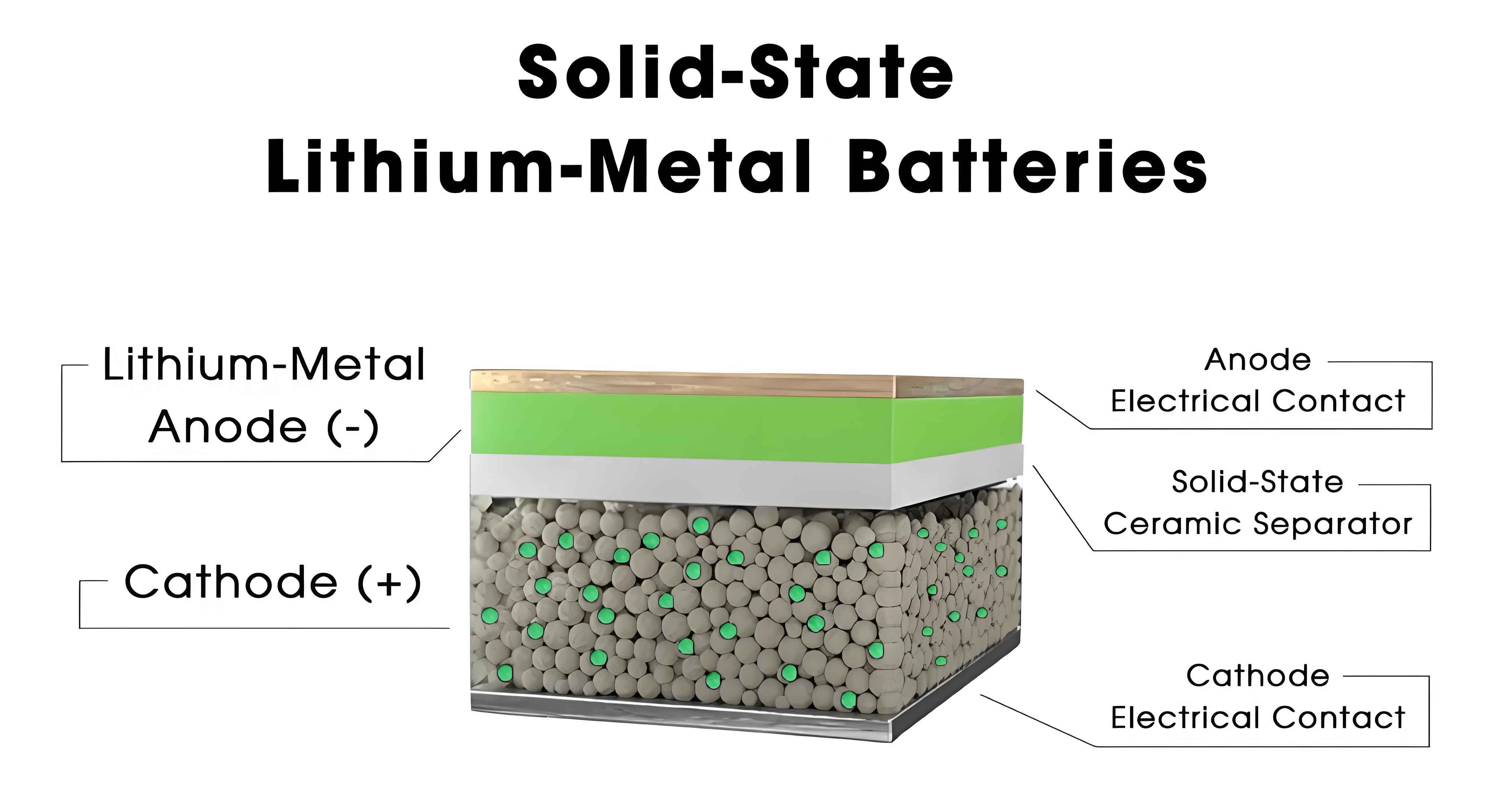
The core challenge in advancing solid-state batteries lies in optimizing the ionic conductivity of solid electrolytes. Superionic conductors, such as Li10GeP2S12 and Li7La3Zr2O12, have demonstrated conductivities rivaling liquid electrolytes, but they often suffer from interfacial instability, dendrite formation, or limited electrochemical windows. To systematically address these issues, we initiated a high-throughput screening pipeline focused on lithium-containing inorganic compounds. Starting from a pool of 153,235 materials in the Materials Project database, we applied stringent filters to isolate 21,686 candidates based on key attributes: phase stability (energy above hull < 0.03 eV/atom), electrochemical stability window, and band gap (>1.5 eV to minimize electronic conductivity). This preprocessing step ensures that only thermodynamically stable and electronically insulating materials are considered for solid-state battery applications. The electrochemical stability window, which defines the voltage range where the solid electrolyte remains inert against lithium metal, was evaluated using grand potential phase diagrams derived from density functional theory (DFT) energies. For instance, a compound like RbLi2Be2F7 exhibits an ESW from 0.722 to 5.92 V, indicating robust stability against decomposition—a crucial property for durable solid-state batteries.
To predict ionic conductivity—a paramount metric for solid-state battery performance—we employed multiple machine learning regression models, including Random Forest (RF), Decision Tree (DT), Gradient Boosting (GB), XGBoost, CatBoost, and K-Nearest Neighbors (KNN). These models were trained on a curated dataset of known lithium solid electrolytes, with features generated using the Materials Agnostic Platform for Informatics and Exploration (Magpie) package. The target properties included ionic conductivity (σ), activation energy (Ea), oxidation potential, and reduction potential. After rigorous evaluation, the CatBoost regressor emerged as the most accurate model, achieving a coefficient of determination (R2) of 0.994 on the test set for ionic conductivity prediction. The model’s performance can be attributed to its ability to handle complex feature interactions and nonlinear relationships, which are inherent in material properties. For feature engineering, we incorporated descriptors such as elemental electronegativity, maximum oxidation states, and structural parameters. Specifically, we defined two new features, Engmax and Engmin, to capture the interplay between electronegativity and oxidation states:
$$ \text{Eng}_{\text{max}} = \text{electronegativity} \times \text{maximum oxidation} $$
$$ \text{Eng}_{\text{min}} = \text{electronegativity} \times \text{minimum oxidation} $$
These features, along with others like space group number and atomic radii, were analyzed using SHAP (SHapley Additive exPlanations) values to interpret their impact on predictions. For ionic conductivity, temperature was identified as a dominant feature, underscoring its role in enhancing ion mobility. The correlation heatmap and density distributions confirmed the consistency between training and test datasets, validating the model’s generalizability for solid-state battery material discovery.
The machine learning screening yielded a shortlist of approximately 150 promising solid electrolyte candidates for solid-state batteries. Among these, several compounds predicted to exhibit superionic conductivity (σ > 10 mS/cm at room temperature) were selected for further validation via ab initio molecular dynamics (AIMD) simulations. AIMD simulations were conducted using the Vienna Ab initio Simulation Package (VASP) with the Perdew-Burke-Ernzerhof generalized gradient approximation for exchange-correlation. Supercells containing 60–160 atoms were simulated at high temperatures (600 K, 900 K, 1200 K, and 1500 K) for up to 20 ps each, employing a Nosé–Hoover thermostat. The lithium-ion diffusivity (D) was calculated from the mean square displacement (MSD) over time, and the ionic conductivity was extrapolated to room temperature (300 K) using the Arrhenius equation:
$$ \sigma = \frac{n q^2 D}{k_B T} $$
where n is the carrier concentration, q is the charge, kB is Boltzmann’s constant, and T is temperature. Alternatively, the temperature dependence of diffusivity is given by:
$$ D = D_0 \exp\left(-\frac{E_a}{k_B T}\right) $$
leading to the conductivity expression:
$$ \sigma = \sigma_0 \exp\left(-\frac{E_a}{k_B T}\right) $$
Here, Ea represents the activation energy for lithium-ion migration—a key descriptor for superionic behavior in solid-state batteries. Compounds with Ea < 0.4 eV are generally considered promising for room-temperature operation. Our AIMD results aligned closely with machine learning predictions, confirming the efficacy of the active learning approach. For instance, Li2VCl5 and LiGaI4 were predicted to have high ionic conductivities of 78.43 mS/cm and 29.46 mS/cm, respectively, and subsequent AIMD simulations validated these values with minor deviations. The table below summarizes the predicted and AIMD-derived properties for select compounds, highlighting their potential for solid-state battery applications.
| Compound | Crystal System (Space Group) | Band Gap (eV) | Electrochemical Stability Window (V) | Predicted σ at 300 K (mS/cm) | AIMD σ at 300 K (mS/cm) | Activation Energy Ea (eV) |
|---|---|---|---|---|---|---|
| Li2VCl5 | Monoclinic (C2/m) | 2.03 | 1.87 | 78.43 | ~70.00 | 0.169 |
| LiGaI4 | Monoclinic (P21/a) | 2.48 | 1.37 | 29.46 | ~25.00 | 0.182 |
| Li4.5TiO3.25 | Orthorhombic (63) | 4.55 | 2.39 | 43.99 | ~40.00 | 0.187 |
| Li6V3Fe(PO4)6 | Triclinic (1) | 1.61 | 1.44 | 11.82 | ~10.00 | 0.208 |
| Li2ZnBr4 | Orthorhombic (62) | 3.77 | 3.04 | 30.00 | ~28.00 | 0.201 |
| Cs3Li2Cl5 | Monoclinic (8) | 5.08 | 4.28 | 7.51 | ~7.00 | 0.188 |
Beyond ionic conductivity, understanding lithium-ion diffusion pathways is essential for optimizing solid-state battery electrolytes. We analyzed the Van Hove correlation functions and 3D trajectory plots from AIMD simulations to elucidate migration mechanisms. In compounds like Li2CdCl4 and Li2ZnBr4, lithium ions exhibit concerted diffusion, where multiple ions hop simultaneously between octahedral sites, reducing energy barriers and enhancing conductivity. The self part of the Van Hove function, Gs(r,t), which describes the probability density of finding a lithium ion at distance r after time t, showed broad peaks beyond 5 Å, indicating long-range migration without trapping. This behavior is characteristic of superionic conductors and is pivotal for achieving high performance in solid-state batteries. The distinct part of the Van Hove function further revealed correlated ion motion, suggesting that lithium-ion migration often involves cooperative jumps—a phenomenon observed in established solid electrolytes like Li10GeP2S12.
To enhance ionic conductivity at ambient temperatures, we explored defect engineering strategies, specifically lithium excess and lithium vacancies. Using AIMD simulations, we modified stoichiometries to create Li-rich (e.g., Li4.5TiO3.25 from Li4TiO4) and Li-deficient (e.g., Li7CeO6 from Li8CeO6) variants. The introduction of these defects significantly improved lithium-ion mobility, as evidenced by increased mean square displacements and reduced activation energies. For example, Li4.5TiO3.25 exhibited an ionic conductivity of 43.99 mS/cm, nearly two orders of magnitude higher than its pristine counterpart. This enhancement can be modeled using defect chemistry principles, where lithium excess provides additional carriers, and vacancies lower migration barriers. The effect of defect concentration on conductivity can be approximated by:
$$ \sigma \propto c \cdot \mu \cdot \exp\left(-\frac{\Delta G}{k_B T}\right) $$
where c is the carrier concentration, μ is mobility, and ΔG is the Gibbs free energy for migration. Our findings align with prior studies on doped garnets and sulfides, reaffirming that strategic defect manipulation is a potent tool for tailoring solid-state battery electrolytes.
Experimental validation was conducted on two promising candidates: Li2VCl5 and LiGaI4. These materials were synthesized via mechanochemical ball milling of precursor salts (e.g., VCl3 + LiCl for Li2VCl5) under inert conditions. X-ray diffraction (XRD) patterns confirmed phase purity and crystal structures, with Rietveld refinement revealing monoclinic symmetries. Scanning electron microscopy images showed irregular microparticles, typical of ball-milled solids. Ionic conductivities were measured using electrochemical impedance spectroscopy (EIS) on cold-pressed pellets with stainless steel blocking electrodes. The Arrhenius plots derived from temperature-dependent EIS yielded room-temperature conductivities of 9.79 × 10⁻⁵ S/cm for Li2VCl5 and 1.67 × 10⁻⁵ S/cm for LiGaI4, with activation energies of 0.39 eV and 0.48 eV, respectively. While these experimental values are lower than AIMD predictions—likely due to grain boundaries, impurities, or interfacial resistance—they still signify promising solid-state battery electrolytes, especially when compared to conventional materials like Li3PS4. Direct current polarization measurements confirmed low electronic conductivities (~10−8 S/cm), minimizing dendrite risk in solid-state batteries.
The integration of machine learning, AIMD, and experiment forms a virtuous cycle for active learning in solid-state battery development. Our workflow demonstrates how predictive models can guide targeted simulations and synthesis, reducing trial-and-error. For broader applicability, we extended the screening to electrochemical stability windows, using machine learning to predict oxidation and reduction potentials. The CatBoost model achieved R2 values of 0.92 and 0.90 for these properties, respectively, with features like Engmax and space group number being critical. The table below summarizes the machine learning performance metrics across key properties, emphasizing the versatility of our approach for solid-state battery optimization.
| Property | Best Model | R2 (Test Set) | Mean Absolute Error (MAE) | Key Features (SHAP Analysis) |
|---|---|---|---|---|
| Ionic Conductivity (σ) | CatBoost | 0.994 | 0.05 mS/cm | Temperature, electronegativity, space group |
| Activation Energy (Ea) | XGBoost | 0.734 | 0.02 eV | XRD-derived structural parameters, atomic radius |
| Oxidation Potential | CatBoost | 0.92 | 0.15 V | Engmax, space group, electronegativity |
| Reduction Potential | CatBoost | 0.90 | 0.18 V | Electronegativity, Engmax, minimum oxidation |
Looking forward, the active learning paradigm holds immense potential for accelerating the discovery of solid-state battery materials. By continuously updating training datasets with new experimental and simulation results, machine learning models can become increasingly accurate, enabling the identification of novel compounds with tailored properties. For instance, future work could focus on multi-objective optimization, balancing ionic conductivity, electrochemical stability, and mechanical properties for all-solid-state batteries. Additionally, the exploration of non-lithium systems (e.g., sodium or magnesium solid electrolytes) could benefit from similar methodologies, broadening the impact on energy storage technology.
In conclusion, our study underscores the transformative role of active learning in advancing solid-state batteries. Through large-scale machine learning screening, we identified numerous lithium-based solid electrolytes with predicted superionic conductivity, validated select candidates via AIMD simulations and experiments, and elucidated design principles involving defect engineering and diffusion pathways. The synergy between computational prediction and empirical validation offers a accelerated path toward high-performance solid-state batteries, promising safer, more energy-dense, and cost-effective energy storage solutions. As the demand for efficient renewable energy integration grows, such data-driven approaches will be indispensable for realizing the full potential of solid-state battery technology.