
The pursuit of higher energy density, enhanced safety, and longer cycle life has positioned the solid-state battery as the unequivocal successor to conventional lithium-ion technology. By replacing the flammable liquid electrolyte with a solid ion conductor, solid-state batteries promise to overcome fundamental limitations related to dendrite growth, thermal runaway, and volumetric energy density. However, the transition from laboratory-scale prototypes to mass-manufactured, high-performance cells is fraught with challenges, primarily centered on interfacial engineering and scalable fabrication of complex architectures. This is where additive manufacturing, commonly known as 3D printing, emerges as a transformative force. From my perspective, the inherent precision and design freedom of 3D printing offer a compelling pathway to not only fabricate but also fundamentally re-engineer solid-state batteries, addressing their core bottlenecks in ways traditional manufacturing cannot.
The primary challenge in solid-state battery manufacturing lies in creating and maintaining intimate, low-resistance interfaces between solid components. In a conventional “stacked” cell, the solid-solid contact between a rigid ceramic electrolyte and a particulate electrode is inherently poor, leading to high interfacial impedance. Furthermore, the volume changes during cycling can cause delamination, severely degrading performance. Traditional fabrication techniques, such as tape-casting and blade-coating, struggle to create the intricate, interdigitated, or porous structures necessary to maximize interfacial area and shorten ion-diffusion paths while maintaining mechanical integrity. 3D printing circumvents these limitations by enabling the layer-by-layer construction of bespoke geometries with precise spatial control over composition and porosity.
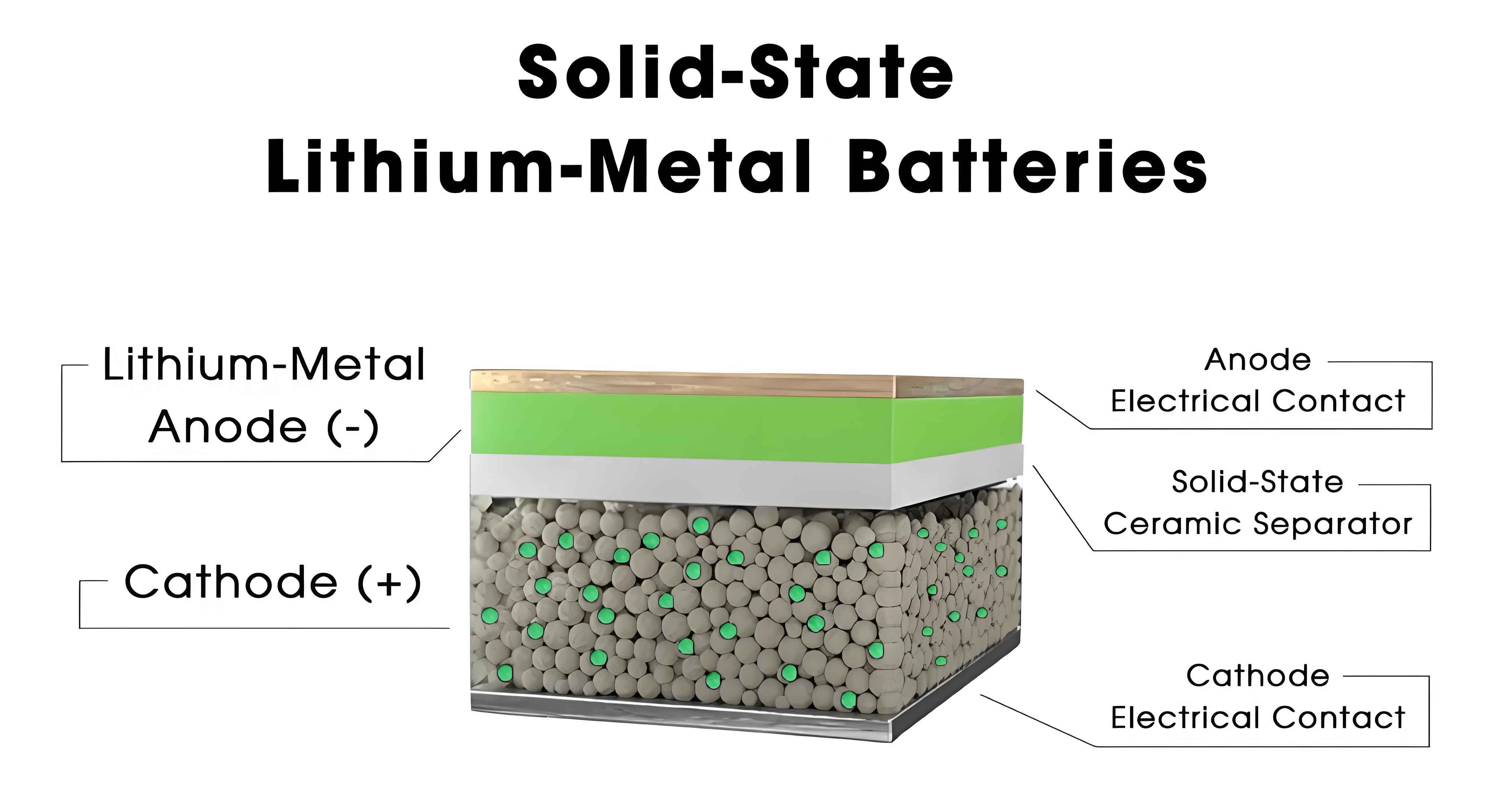
The advantages of employing 3D printing for solid-state batteries are multifaceted. Firstly, it allows for the fabrication of complex, three-dimensional electrode scaffolds. These structures can support high active material loadings (essential for high energy density) while maintaining a network of interconnected pores for rapid ion transport (critical for high power density). This decouples the traditionally inverse relationship between areal capacity and rate capability. Secondly, it enables the seamless integration and gradation of materials. One can envision printing a functionally graded cathode where the composition gradually shifts from a pure active material to a composite with the solid electrolyte, thereby creating an ideal ionic percolation network and minimizing interfacial stress. Thirdly, it offers unparalleled freedom in form factor design, allowing batteries to be printed directly onto or into devices, enabling truly customizable energy storage solutions.
Core 3D Printing Technologies for Solid-State Battery Fabrication
Not all 3D printing techniques are equally suited for the demanding requirements of solid-state battery components. The choice of technology depends on the material system (sulfide, oxide, polymer, or composite electrolytes), required resolution, and post-processing needs. The most prominent methods are Direct Ink Writing (DIW), Fused Deposition Modeling (FDM), and Selective Laser Sintering (SLS).
1. Direct Ink Writing (DIW)
DIW, or extrusion-based printing, is arguably the most versatile and widely adopted technique for printing functional battery materials. It involves the computer-controlled extrusion of a viscous “ink” through a fine nozzle to create free-standing 3D structures. The success of DIW hinges entirely on the ink’s rheology; it must exhibit shear-thinning behavior (viscosity decreases under shear stress during extrusion) and rapid recovery to a gel-like state upon deposition to hold its shape.
The formulation of inks for solid-state battery components is a sophisticated science. A typical ink for printing a solid composite electrode might contain:
- Active Material Particles: e.g., LiNixMnyCozO2 (NMC), LiFePO4 (LFP).
- Solid Electrolyte Particles: e.g., Li7La3Zr2O12 (LLZO), Argyrodite (Li6PS5Cl).
- Conductive Additive: Carbon black, graphene, or carbon nanotubes.
- Polymeric Binder: Often a sacrificial binder (like cellulose) or a functional ion-conducting polymer (like PEO).
- Solvent/Dispersant: To achieve the desired rheology, which is later removed during drying and sintering.
The volumetric ratios and particle sizes are critical. A high solid loading is desirable for final battery performance but makes the ink difficult to print. The ionic conductivity (σi) of a printed composite electrode can be modeled as a function of the volume fraction (φ) of the solid electrolyte, its intrinsic conductivity (σ0), and a tortuosity factor (τ) representing the convoluted ion path:
$$ \sigma_i = \frac{\phi \cdot \sigma_0}{\tau} $$
3D printing aims to minimize τ by designing aligned or low-tortuosity pore channels, directly enhancing σi. DIW has been successfully used to print interdigitated micro-battery architectures, thick sulfur cathodes with graded porosity, and intricate solid electrolyte scaffolds. Its main limitations are resolution (typically >50 µm) and the need for careful post-processing (drying, debinding, sintering) which can induce cracks or shrinkage.
2. Fused Deposition Modeling (FDM)
FDM is the most accessible and low-cost 3D printing technology. It uses a thermoplastic filament that is heated, extruded through a nozzle, and solidifies upon cooling. For battery applications, the filament must be a composite, embedding active material particles within a thermoplastic matrix (e.g., PLA, ABS). After printing, the polymer binder must be removed via thermal pyrolysis, leaving behind a porous carbonaceous matrix that can act as both a structural scaffold and a conductive additive.
The critical parameter here is the filler loading within the filament. Achieving a loading high enough for good electrochemical performance (often >60 wt.%) while maintaining the filament’s mechanical flexibility for reliable feeding is challenging. The pyrolysis step is also crucial; it must be carefully controlled to avoid oxidation of the active material and to ensure complete binder removal without structural collapse. FDM typically offers lower resolution (~150-200 µm) than DIW, but its strength lies in rapid prototyping and the ability to create complex macroscopic shapes for custom solid-state battery packs. The final electronic conductivity (σe) of the pyrolyzed structure is key and depends on the carbon yield and continuity.
3. Selective Laser Sintering (SLS)
SLS represents a binder-free approach. A laser selectively scans a thin layer of powder, sintering (fusing) the particles together at their points of contact. This process is repeated layer-by-layer. For solid-state batteries, SLS is particularly interesting for printing metallic current collectors or certain solid electrolyte materials that can undergo sintering without decomposition.
The energy density of the laser (E) must be precisely calibrated according to the material’s absorptivity, melting point, and thermal diffusivity to achieve optimal sintering without causing cracks or unwanted phase changes. The process can be described by a simplified energy balance model:
$$ E = \int P(t) \, dt \approx \rho \cdot C_p \cdot \Delta T \cdot V + L_v \cdot \rho \cdot V_{melt} $$
where \(P(t)\) is laser power over time, \(ρ\) is density, \(C_p\) is heat capacity, \(ΔT\) is the temperature rise, \(V\) is the affected volume, and \(L_v\) is the latent heat of fusion. SLS can produce parts with good mechanical strength and controlled porosity directly, eliminating the need for separate binders and solvents. However, it is less straightforward for multi-material printing and requires careful atmosphere control (e.g., inert gas for sulfide solid electrolytes).
| Technique | Key Materials | Resolution | Advantages | Challenges for Solid-State Battery |
|---|---|---|---|---|
| Direct Ink Writing (DIW) | Ceramic/polymer composite inks, colloidal gels | ~10 – 200 µm | Multi-material capability, complex 3D structures, wide material library | Ink formulation complexity, post-processing (drying/sintering), shrinkage |
| Fused Deposition Modeling (FDM) | Thermoplastic composites (e.g., PLA+Active Material) | ~100 – 300 µm | Low cost, fast prototyping, good mechanical parts | Low filler loading, requires pyrolysis, low resolution, limited material choices |
| Selective Laser Sintering (SLS) | Polymer, metal, or ceramic powders | ~50 – 150 µm | Binder-free, good mechanical properties, internal porosity control | High equipment cost, limited multi-material, thermal stress management |
Architectural Innovation in Solid-State Battery Components via 3D Printing
1. Revolutionizing Electrode Design
3D printing transcends the conventional two-dimensional electrode by enabling the fabrication of three-dimensional porous scaffolds. For cathodes in a solid-state battery, this means one can print a structure with designed macro-pores that are subsequently infiltrated with solid electrolyte, or co-print a composite of cathode and electrolyte material in a single, interpenetrating network. This drastically increases the contact area between the electrode and the solid electrolyte, reducing interfacial impedance (\(R_{interface}\)).
The areal capacity (\(C_A\)) of a thick electrode is proportional to its thickness (\(L\)) and the loading of active material. However, the power capability is limited by ionic diffusion. In a 3D-printed electrode with aligned vertical pores or channels, the effective ionic diffusion length (\(L_{eff}\)) is decoupled from \(L\), being approximately equal to the distance between channels. This relationship can be conceptually framed as:
$$ \text{Max Power Density} \propto \frac{1}{R_{total}} \approx \frac{1}{R_{electronic} + R_{ionic} + R_{interface}} $$
where \(R_{ionic} \propto \frac{L_{eff}^2}{D_{eff}}\) and \(D_{eff}\) is the effective ionic diffusivity in the composite. By designing \(L_{eff}\) to be small (e.g., 10-50 µm) even in a thick electrode (e.g., 500 µm), 3D printing minimizes \(R_{ionic}\) and unlocks high areal capacity without sacrificing rate performance. This architectural control is paramount for developing a high-energy-density solid-state battery.
2. Engineering the Lithium Metal Anode
The lithium metal anode is the holy grail for energy density but is plagued by dendrite growth and infinite relative volume change. 3D printing offers a strategic solution: the fabrication of structured, “host” scaffolds. These scaffolds can be printed from materials that are lithiophilic (e.g., certain metals, doped carbon) and possess a designed porous structure.
When molten lithium is infused into such a scaffold, it creates a composite anode. The scaffold’s function is threefold: (i) it provides a large surface area to lower the effective current density (\(j_{eff} = I / A_{true}\)), suppressing dendrite initiation; (ii) it confines lithium deposition within its pores, mechanically suppressing dendrite propagation and accommodating volume change; and (iii) it can provide a continuous electron pathway. The critical parameter is the pore size and geometry. A scaffold with uniform, sub-micron to micron-sized interconnected pores is ideal. The capillary pressure (\(P_c\)) driving lithium infusion is given by the Young-Laplace equation:
$$ P_c = \frac{2\gamma \cos\theta}{r} $$
where \(\gamma\) is the surface tension of lithium, \(\theta\) is the contact angle (should be <90° for lithiophilic surfaces), and \(r\) is the pore radius. 3D printing allows for the precise engineering of \(r\) and the overall pore network topology, enabling the creation of an optimized, stable host for the lithium metal anode in a solid-state battery.
3. Printing the Solid Electrolyte Itself
Perhaps the most significant contribution of 3D printing is in the fabrication of the solid electrolyte layer. The ability to print thin, dense, yet robust solid electrolyte membranes is crucial. More innovatively, 3D printing can create electrolyte structures that are impossible with other methods.
- Graded Electrolytes: Printing an electrolyte layer whose composition gradually changes from one side to the other—for instance, from a sulfide-rich side (facing the cathode for good interfacial contact) to a polymer-rich side (facing the anode for mechanical flexibility)—can optimize interfacial stability simultaneously.
- 3D Electrolyte Scaffolds: Instead of a dense separator, one can print a porous, monolithic solid electrolyte scaffold. The pores are then filled with cathode and anode materials sequentially, creating a bicontinuous, interdigitated structure where both electrodes are intimately and continuously in contact with the solid electrolyte across a vast, engineered interface. This represents a fundamental architectural shift from a 2D planar interface to a 3D intertwined one, dramatically reducing \(R_{interface}\) and improving mechanical adhesion.
The conductivity of such a printed solid electrolyte is paramount. For a composite or polycrystalline electrolyte, the total resistance (\(R_{total}\)) includes grain interior (\(R_{gi}\)) and grain boundary (\(R_{gb}\)) contributions. Printing parameters (layer height, sintering profile) directly affect grain size and boundary density, influencing the final property:
$$ \sigma_{total} = \frac{L}{A \cdot R_{total}} = \frac{L}{A \cdot (R_{gi} + R_{gb})} $$
Optimizing the print path and thermal history to promote grain growth and reduce high-resistance grain boundaries is an active area of research for printed solid electrolytes.
Material Considerations and Challenges for Printable Solid-State Batteries
The promise of 3D printing for solid-state battery manufacturing is contingent on the development of advanced, printable materials. The requirements are stringent and often conflicting.
| Component | Material Options | Printability Challenges | Post-Processing Needs |
|---|---|---|---|
| Cathode Composite Ink/Filament | NMC, LFP, LCO + Solid Electrolyte (LLZO, LATP, LPS) + Conductive Carbon + Binder | High solid loading vs. rheology; particle agglomeration; solvent choice for air-sensitive sulfides. | Controlled thermal debinding and sintering; atmosphere control (Argon for sulfides); crystallization annealing. |
| Solid Electrolyte Ink/Filament | Polymer (PEO, PVDF-HFP), Oxide (LLZO ink), Sulfide (LPS in solvent), Composite | Achieving dense layers via printing; preventing cracking during solvent drying/sintering; maintaining ionic purity. | For ceramics: High-temperature sintering >1000°C, leading to shrinkage and potential reaction with substrate. For polymers: UV/thermal curing. |
| Anode Scaffold | Lithiophilic metals (Zn, Mg), Carbon structures (Graphene, CNT), Stable ceramics (Li22Sn5) | Printing fine, controlled porosity; ensuring electrical percolation; achieving lithiophilic surface chemistry. | Reduction/annealing to create active lithiophilic sites; carbonization of polymer precursors. |
| Current Collectors | Metal pastes (Ag, Cu), Conductive polymer composites, Direct metal printing (SLS) | Adhesion to solid electrolyte; chemical stability (Cu with sulfides); minimizing interface resistance. | Low-temperature sintering for pastes; polishing/coating for SLS parts. |
The most significant holistic challenge is process integration and compatibility. A fully 3D-printed solid-state battery would require sequential printing of cathode composite, solid electrolyte, and anode scaffold—each with different material requirements, drying/sintering temperatures, and atmospheric needs. Developing a unified process flow that avoids damaging previously printed layers is a monumental task. Often, a hybrid approach is more feasible, where 3D printing creates a key enabling structure (e.g., the electrolyte scaffold or graded electrode), which is then assembled with other components made via conventional methods.
Future Perspectives and Concluding Synthesis
The integration of 3D printing into solid-state battery manufacturing is not merely an incremental improvement; it is a disruptive paradigm that merges design, materials science, and electrochemistry. Looking forward, several key directions will determine the trajectory of this field:
- Multi-Material and Multi-Scale Printing: The development of printers capable of seamlessly switching between different inks or powders within a single build job is essential. This will enable the fabrication of monolithic, functionally graded solid-state battery structures with optimal properties at every point.
- In-Operando Process Monitoring: Integrating sensors for real-time monitoring of rheology, layer thickness, and defect formation during printing will ensure consistency and quality, which is critical for scaling up.
- Nanoscale Feature Integration: While current 3D printing operates at the microscale, combining it with self-assembly or electrospinning techniques could introduce nanoscale features (e.g., nanoscale coatings on printed scaffolds) to further enhance ion transport and interface properties.
- AI-Driven Design and Optimization: Generative design algorithms, fed with electrochemical and mechanical constraints, can propose optimal 3D architectures (topology, porosity gradients) that are non-intuitive to human designers. These blueprints can then be directly executed by 3D printers.
- Sustainable and Scalable Material Systems: Research must focus on developing printable materials that are not only high-performing but also cost-effective, environmentally benign, and derived from abundant sources to ensure the sustainable mass production of solid-state batteries.
In conclusion, 3D printing stands as a cornerstone technology for realizing the full potential of the solid-state battery. By providing unprecedented control over geometry, composition, and interface architecture, it directly attacks the most fundamental challenges facing solid-state batteries: interfacial impedance, rate limitations in thick electrodes, and lithium anode instability. While significant hurdles in material formulation, process integration, and scalability remain, the synergistic advancement of printing technologies and battery materials is progressing rapidly. The ultimate vision is a future where solid-state batteries are not just manufactured but are digitally architected—printed on demand into any shape with maximized performance, safety, and energy density, thereby powering a new generation of electric vehicles, portable electronics, and grid storage systems. The path forward is one of convergence, where the toolbox of additive manufacturing becomes indispensable for building the next great leap in energy storage.