
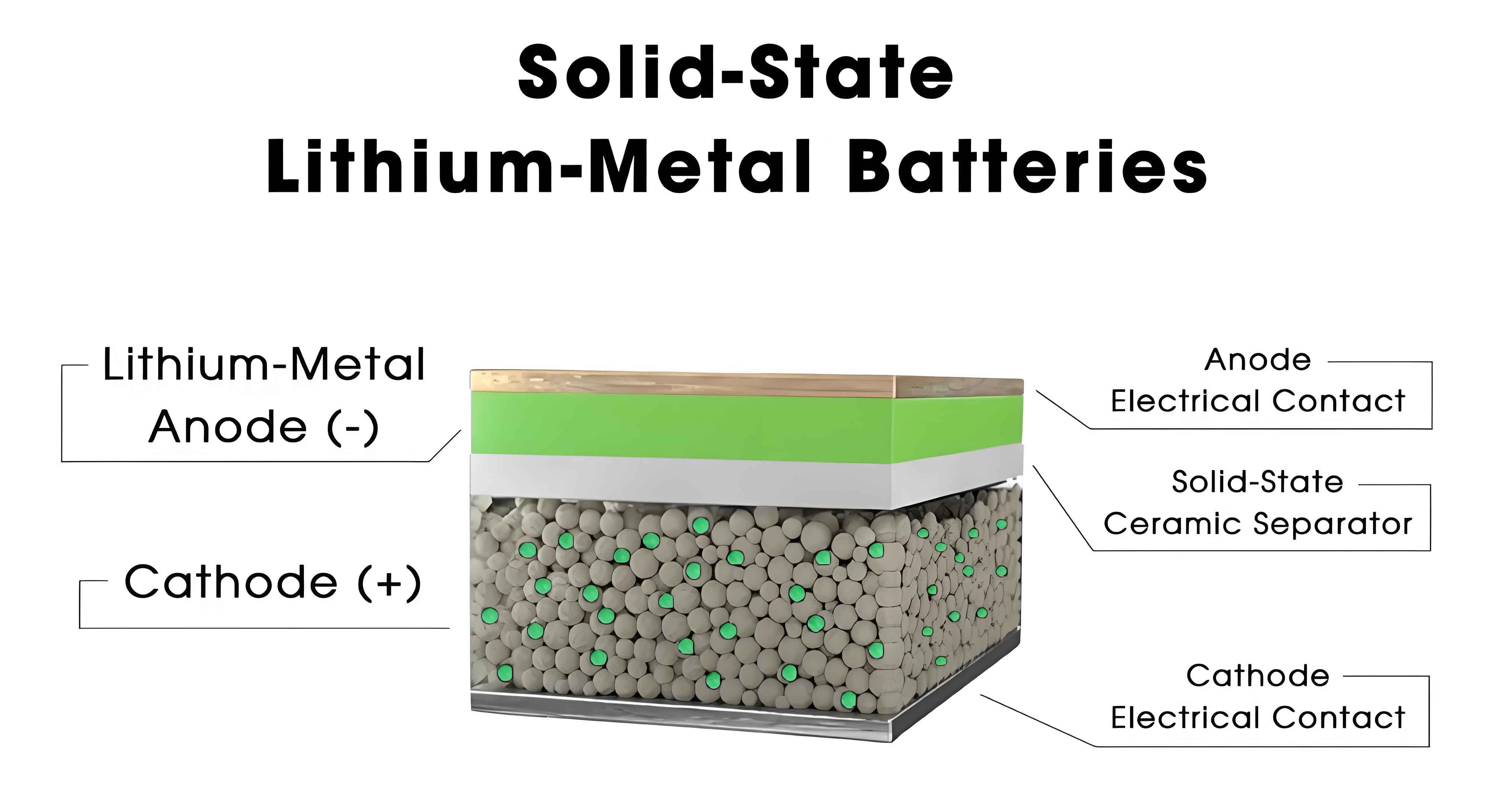
The pursuit of high-energy-density and safe energy storage systems has positioned solid-state batteries, particularly those employing lithium metal anodes, at the forefront of next-generation battery technology. Replacing flammable liquid electrolytes with solid counterparts offers a fundamental solution to safety concerns while enabling the use of high-capacity electrodes. The core component, the solid-state electrolyte (SSE), must simultaneously exhibit high ionic conductivity, excellent interfacial stability, and robust mechanical strength. Single-phase solid electrolytes, whether inorganic ceramics or solid polymers, often struggle to meet all these requirements simultaneously. Inorganic ceramics like garnet-type or perovskite-type oxides offer high bulk ionic conductivity but suffer from poor interfacial contact and brittleness. Solid polymer electrolytes provide good flexibility and processability but typically possess low room-temperature ionic conductivity and inadequate mechanical modulus to suppress lithium dendrite growth.
This inherent limitation has driven significant research into composite solid-state electrolytes (CSEs), which synergistically combine the advantageous properties of different phases. A typical strategy involves dispersing inorganic fast-ion conductors (e.g., Li7La3Zr2O12 (LLZO), Li0.35La0.55TiO3 (LLTO)) within a polymer matrix (e.g., PEO, PVDF-HFP). The inorganic fillers are intended to enhance the overall ionic conductivity, improve mechanical properties, and widen the electrochemical window. However, the practical ionic conductivity of many CSEs often falls short of theoretical predictions based on the rule of mixtures. A critical, yet frequently overlooked, bottleneck lies at the heterogeneous interfaces within the CSE and, more importantly, at the electrode-electrolyte interfaces. Among these, the cathode|CSE interface is particularly crucial for the performance of high-voltage solid-state batteries.
At the contact between two dissimilar ionic conductors (e.g., an oxide ceramic and a polymer electrolyte), a space charge layer (SCL) forms due to the difference in their chemical potentials for the mobile ion (Li+). This phenomenon is well-established in solid-state ionics. For a composite solid-state battery cathode interface, if the chemical potential of Li+ in the cathode active material (e.g., NCM) is lower than that in the CSE, a lithium-depleted (or Li+-depleted) SCL develops on the CSE side of the interface. This depletion region acts as a high-resistance barrier, severely impeding Li+ transfer across the interface. The effective ionic conductivity ($G_i$) across such an interface with an SCL can be described by a simplified model:
$$G_i \approx \left( \frac{4 \lambda R T}{A F^2 D_{Li^+} c_{bulk}^{Li^+}} \right) \left[ \frac{\theta_{Li^+}}{1 – \theta_{Li^+}} \right]$$
where $\lambda$ is the characteristic thickness of the SCL, $R$ is the gas constant, $T$ is temperature, $A$ is the interface area, $F$ is Faraday’s constant, $D_{Li^+}$ is the lithium ion diffusion coefficient, $c_{bulk}^{Li^+}$ is the bulk Li+ concentration in the electrolyte, and $\theta_{Li^+}$ is a dimensionless parameter representing the extent of Li+ enrichment ($\theta_{Li^+} > 0$) or depletion ($\theta_{Li^+} < 0$) at the interface. Clearly, when $\theta_{Li^+} < 0$ (lithium depletion), the term $\theta_{Li^+}/(1 – \theta_{Li^+})$ becomes negative, indicating a severely hindered or even blocked ionic transport, drastically reducing the effective $G_i$. Therefore, mitigating or compensating for this deleterious lithium-depleted SCL is paramount for unlocking the full potential of CSEs in high-performance solid-state batteries.
In this work, I propose and demonstrate a novel interfacial engineering strategy focused on actively modulating the SCL at the cathode|CSE interface. The central concept is to introduce a dielectric material, specifically bismuth ferrite (BiFeO3), into a model CSE system. Under the electric field present during battery operation, this dielectric component polarizes, generating a built-in electric field ($E_2$) oriented opposite to the intrinsic field ($E_1$) associated with the lithium-depleted SCL. The superposition of these fields weakens the net blocking field, effectively “releasing” the constrained Li+ flux and activating efficient ion transport channels across the interface. Furthermore, this built-in field can promote the dissociation of lithium salts within the polymer matrix, increasing the concentration of free Li+ carriers. This multi-faceted approach addresses both the interfacial and bulk transport limitations, leading to a significant enhancement in the performance of the resulting solid-state battery.
Design, Synthesis, and Characterization of the Dielectric-Modulated Composite Solid Electrolyte
The composite solid electrolyte was designed with a PVDF-HFP copolymer as the flexible matrix, providing mechanical integrity and processability. LiTFSI salt and EMIMTFSI ionic liquid were incorporated to provide Li+ sources and enhance ionic conductivity. The active ceramic filler chosen was Li0.35La0.55TiO3 (LLTO), a well-known perovskite-type fast Li+ conductor. The key innovation is the integration of BiFeO3 as a coupled filler. BiFeO3 is a room-temperature multiferroic material exhibiting both ferroelectric and antiferromagnetic properties. Its strong spontaneous polarization and high dielectric constant are the properties exploited here for SCL modulation.
To ensure intimate contact and uniform dispersion, a coupled LLTO-BiFeO3 filler was first synthesized via an electrospinning and calcination process. A precursor solution containing PAN polymer, LLTO, and BiFeO3 powders was electrospun into a nanofibrous mat. Subsequent calcination removed the polymer template, resulting in a self-supporting network of intertwined LLTO-BiFeO3 composite fibers. This network was then embedded into the PVDF-HFP/LiTFSI/EMIMTFSI solution, which was cast to form the final freestanding membrane, denoted as PHBFT (Polymer-Hybrid-BiFeO3-LLTO). A control sample without BiFeO3, containing only LLTO, was prepared similarly and denoted as PHT.
The structural and morphological characterizations confirm the successful fabrication. X-ray diffraction patterns of the calcined LLTO-BiFeO3 fibers show distinct peaks corresponding to both perovskite LLTO and rhombohedrally distorted perovskite BiFeO3, with no observable impurity phases, indicating the stability of both phases during processing. High-resolution transmission electron microscopy further reveals the clear lattice fringes of both materials in close proximity, confirming the formation of a coupled heterostructure. The surface of the PHBFT membrane appears uniform and porous under scanning electron microscopy, with energy-dispersive X-ray spectroscopy mapping showing a homogeneous distribution of Ti, La, Fe, and O elements, signifying the uniform integration of the coupled filler within the polymer matrix. The membrane is mechanically robust and flexible, essential for practical solid-state battery assembly.
The ferroelectric/dielectric nature of the incorporated BiFeO3 is crucial. Piezoelectric force microscopy analysis on the PHBFT membrane reveals a characteristic rectangular hysteresis loop in the amplitude signal and a phase switch of approximately 210° under a ±10 V bias. In stark contrast, the control PHT membrane shows no such hysteretic behavior and a much smaller phase change. This provides direct evidence of the strong polarization switching capability inherent to the PHBFT electrolyte, a prerequisite for generating the counteracting built-in field.
Electrochemical and Interfacial Properties Enhancement
The introduction of the dielectric BiFeO3 component leads to remarkable improvements in the fundamental electrochemical properties of the CSE. Electrochemical impedance spectroscopy measurements on symmetric Li|CSE|Li cells are used to determine the bulk ionic conductivity. The results are summarized in the table below:
| Electrolyte | Ionic Conductivity at 20°C (mS cm-1) | Activation Energy, Ea (eV) | Li+ Transference Number (tLi+) |
|---|---|---|---|
| PHT (Control) | 0.62 | 0.32 | 0.45 |
| PHBFT | 1.24 | 0.25 | 0.81 |
The PHBFT electrolyte exhibits an ionic conductivity of 1.24 mS cm-1, which is double that of the PHT control (0.62 mS cm-1). The activation energy for ion conduction is also lower for PHBFT (0.25 eV vs. 0.32 eV), indicating a more facile ion transport pathway. Even more strikingly, the lithium ion transference number ($t_{Li^+}$), measured by the combined DC polarization and AC impedance method, jumps from 0.45 for PHT to 0.81 for PHBFT. A high $t_{Li^+}$ is critical for mitigating concentration polarization and enabling high-rate operation in solid-state batteries.
To understand the origin of this enhanced $t_{Li^+}$, Raman spectroscopy was employed to probe the Li+ coordination environment. The characteristic peaks of the TFSI− anion around 740-756 cm-1 were deconvoluted into three components: free TFSI− (~740 cm-1), Li+-TFSI− contact ion pairs (CIP, ~750 cm-1), and Li+-(TFSI−)2 aggregates (AGGs, ~756 cm-1). The percentage of free TFSI− increased significantly in PHBFT compared to PHT, accompanied by a substantial decrease in the CIP population. This indicates that the built-in electric field generated by the polarized BiFeO3 actively promotes the dissociation of LiTFSI, liberating more free Li+ ions for conduction and directly contributing to the higher $t_{Li^+}$.
The most direct evidence for SCL modulation comes from Kelvin Probe Force Microscopy measurements. The contact potential difference (CPD) across a simulated interface between the electrolyte and an LiNi0.9Co0.05Mn0.05O2 (NCM9055) cathode particle was mapped. The line profile and histogram analysis of the CPD show that the potential drop at the PHT/NCM9055 interface is about -600 mV, reflecting a strong intrinsic SCL. In contrast, the potential drop at the PHBFT/NCM9055 interface is significantly reduced to approximately -340 mV. This quantitative measurement confirms that the dielectric component effectively weakens the lithium-depleted SCL, lowering the energy barrier for Li+ transfer. This is the central mechanism enabling the superior performance of the solid-state battery.
Performance of Solid-State Lithium Metal Batteries
The practical impact of this interface engineering was evaluated in two types of solid-state lithium metal batteries: with LiFePO4 (LFP) and with high-nickel NCM9055 cathodes. The galvanostatic charge-discharge cycling performance at 0.5C rate is presented below.
| Battery Configuration | Initial Discharge Capacity (mAh g-1) | Capacity after 200 cycles (mAh g-1) | Capacity Retention after 200 cycles | Average Coulombic Efficiency |
|---|---|---|---|---|
| Li | PHT | LFP | 130.1 | 88.6* | ~67.8%* (at 220 cycles) | < 99.0% |
| Li | PHBFT | LFP | 159.1 | 149.2 | ~93.8% | > 99.8% |
| Li | PHT | NCM9055 | 171.3 | N/A (Failed ~150 cycles) | N/A | Degrading |
| Li | PHBFT | NCM9055 | 181.9 | 167.9 | 92.3% | > 99.5% |
*The Li|PHT|LFP cell showed continuous decay and was at 88.6 mAh g-1 at cycle 220.
The Li|PHBFT|LFP solid-state battery delivers a high initial capacity of 159.1 mAh g-1 and maintains 149.2 mAh g-1 after 300 cycles, corresponding to an excellent capacity retention of 93.8% and an ultra-low decay rate of 0.02% per cycle. The control cell with PHT electrolyte shows lower initial capacity (130.1 mAh g-1) and rapid decay, retaining only 67.8% after 220 cycles.
More importantly, the advantage of the PHBFT electrolyte becomes even more pronounced when paired with a high-voltage, high-capacity NCM9055 cathode, which presents a more challenging interface due to its higher chemical potential difference with the electrolyte. The Li|PHBFT|NCM9055 solid-state battery achieves an impressive initial discharge capacity of 181.9 mAh g-1 at 0.5C. It exhibits outstanding cycling stability, retaining 167.9 mAh g-1 after 200 cycles, with a high capacity retention of 92.3% and a minimal decay rate of 0.038% per cycle. In contrast, the Li|PHT|NCM9055 battery fails prematurely after approximately 150 cycles due to severe interfacial degradation and likely lithium dendrite penetration, underscoring the critical role of a stable, low-resistance interface enabled by SCL modulation.
The rate capability of the PHBFT-based solid-state battery is also superior. The cell can deliver substantial capacity even at elevated rates (e.g., ~160 mAh g-1 at 1C and ~140 mAh g-1 at 2C for NCM9055), recovering its high capacity when the rate is returned to 0.5C. This demonstrates fast reaction kinetics at both the anode and cathode interfaces, consistent with the high ionic conductivity and low interfacial resistance provided by the PHBFT electrolyte.
Mechanistic Summary and Outlook
The enhanced performance of the dielectric-modulated composite solid-state electrolyte can be attributed to a synergistic mechanism that operates on multiple levels within the solid-state battery:
- Space Charge Layer Weakening: The polarized BiFeO3 generates a built-in electric field ($E_2$) that opposes the intrinsic field of the lithium-depleted SCL ($E_1$) at the cathode|CSE interface. The net field ($E_{net} = E_1 + E_2$) is reduced, thereby lowering the energy barrier for Li+ transfer. This directly “unlocks” the theoretical ionic conductivity of the composite and minimizes interfacial polarization.
- Enhanced Bulk Li+ Conduction: The same built-in field promotes the dissociation of the LiTFSI salt in the polymer matrix. This increases the concentration of free Li+ carriers, as confirmed by Raman spectroscopy, which contributes to the higher bulk ionic conductivity and, decisively, the significantly increased Li+ transference number.
- Stable Interfacial Passivation: The mitigated interfacial resistance and smooth Li+ flux help in forming a more uniform and stable cathode electrolyte interphase (CEI). A stable CEI prevents continuous parasitic reactions, which is reflected in the high and stable Coulombic efficiency during long-term cycling.
- Mechanical and Morphological Advantages: The intertwined network of the coupled LLTO-BiFeO3 filler enhances the mechanical strength of the membrane, contributing to physical suppression of lithium dendrite growth. The uniform porous morphology ensures good contact with electrode materials.
The relationship between the SCL parameter $\theta_{Li^+}$ and the effective conductivity can be revisited. In the PHBFT system, the action of the dielectric filler shifts $\theta_{Li^+}$ from a strongly negative value (severe depletion in PHT) towards zero or even a slightly positive value. According to the equation:
$$G_i \propto \left[ \frac{\theta_{Li^+}}{1 – \theta_{Li^+}} \right]$$
This shift results in a dramatic increase in $G_i$, transitioning from a regime of highly impeded transport to one of facilitated transport. This conceptual framework provides a powerful design principle for future solid-state electrolytes.
In conclusion, this work demonstrates that deliberate modulation of the space charge layer at critical interfaces is a transformative strategy for advancing composite solid-state electrolytes. By integrating a dielectric material like BiFeO3, we actively engineer the interfacial electrostatics to weaken depletion barriers and enhance bulk ion dissociation. This approach leads to a CSE with concurrently high ionic conductivity (1.24 mS cm-1), high Li+ transference number (0.81), and excellent interfacial stability. When deployed in solid-state lithium metal batteries with both LFP and high-nickel NCM9055 cathodes, it enables remarkable cycling stability and high capacity retention. This research underscores that beyond simply mixing materials for bulk properties, intelligent interface design—targeting fundamental phenomena like space charge effects—is key to realizing the full promise of high-energy, long-life, and safe solid-state batteries. Future work may explore other classes of dielectric or ferroelectric materials, optimize their concentration and distribution, and investigate their effect on the anode interface to further push the boundaries of solid-state battery performance.