
The relentless pursuit of sustainable transportation has placed electrochemical energy storage at the forefront of technological innovation. As the primary power source for electric vehicles (EVs), lithium-ion batteries (LIBs) have achieved remarkable success. However, their reliance on flammable organic liquid electrolytes imposes fundamental limitations on energy density and, more critically, safety. This has catalyzed a global research pivot towards a more promising paradigm: the solid-state battery. A solid-state battery fundamentally replaces the liquid electrolyte and separator with a solid ion-conducting medium. This singular change unlocks a transformative potential to address the core shortcomings of contemporary batteries, making the solid-state battery the subject of intense focus for national research initiatives and industrial R&D worldwide. This article will provide a detailed examination of the development trajectory, core material chemistries, intrinsic advantages and challenges, and the current global landscape of solid-state battery technology.
The evolution of solid-state batteries is rooted in the broader field of solid-state ionics. The foundational discovery of solid electrolytes like silver sulfide and lead fluoride dates back to the work of Michael Faraday in the 19th century. However, practical application in battery systems remained elusive for decades due to prohibitively high internal resistance and low energy density. Significant renewed interest emerged around the 2016 timeframe, with patent filings related to solid-state battery technology experiencing a dramatic surge, indicative of the accelerating industrial and academic efforts to overcome historical barriers. The development path is widely anticipated to be incremental, progressing from semi-solid batteries (containing a reduced amount of liquid electrolyte) as an intermediate step towards the ultimate goal of all-solid-state batteries.
To appreciate the promise of the solid-state battery, a clear comparison with conventional LIBs is essential. The defining component is the electrolyte. In a traditional LIB, lithium ions shuttle between the cathode and anode through a liquid organic solvent containing a lithium salt, with a porous polymer separator preventing electrical short circuits. In a solid-state battery, a monolithic solid electrolyte layer performs the dual functions of ionic conduction and physical separation.
| Feature | Conventional Liquid LIB | All-Solid-State Battery |
|---|---|---|
| Electrolyte | Liquid organic solvent + Li salt | Solid material (Sulfide, Oxide, Polymer, etc.) |
| Separator | Required (porous polymer film) | Not required (function integrated into solid electrolyte) |
| Theoretical Energy Density | Limited (~300 Wh/kg at cell level) | High (>500 Wh/kg) possible, especially with Li metal anode |
| Safety | Risk of leakage, fire, thermal runaway | Non-flammable, no leakage, superior thermal stability |
| Operating Temperature | Limited range (typically -20 to 60°C) | Wider potential range (up to 150°C+ for some ceramics) |
| Cycle Life Challenge | SEI growth, electrolyte decomposition | Solid-solid interface degradation, contact loss |
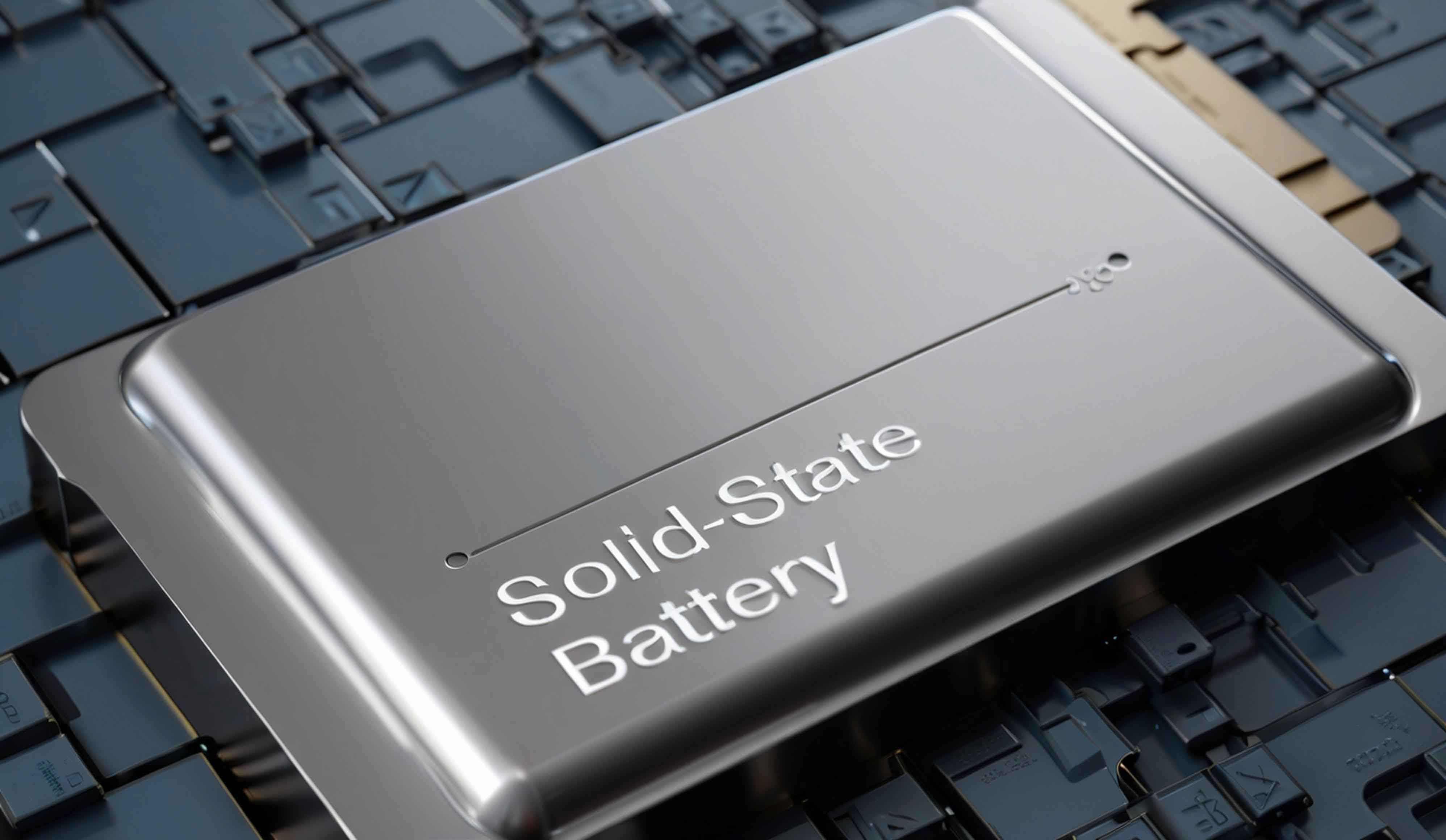
The performance and viability of a solid-state battery are almost entirely dictated by the properties of its solid electrolyte (SE). An ideal solid electrolyte must satisfy a stringent set of criteria: high ionic conductivity (ideally > 10-3 S/cm at room temperature), negligible electronic conductivity, excellent electrochemical stability against both cathode and anode materials, good mechanical properties (to suppress lithium dendrites), and low cost. Ionic conductivity often follows the Arrhenius equation, highlighting the temperature dependence that is a critical challenge for some classes:
$$ \sigma = A \exp\left(-\frac{E_a}{k_B T}\right) $$
where $\sigma$ is the ionic conductivity, $A$ is the pre-exponential factor, $E_a$ is the activation energy for ion migration, $k_B$ is the Boltzmann constant, and $T$ is the absolute temperature. The primary research efforts are concentrated on four major families of solid electrolytes: sulfides, oxides, polymers, and the emerging chlorides.
1. Sulfide-Based Solid Electrolytes
Sulfide solid electrolytes currently offer the highest room-temperature lithium-ion conductivity among inorganic materials, with some compositions rivaling or exceeding that of liquid electrolytes (10-2 S/cm). Their soft mechanical nature also allows for better interfacial contact through cold pressing. However, they suffer from extreme sensitivity to moisture, reacting to produce toxic H2S gas, which necessitates expensive dry-room manufacturing environments. Their stability against high-voltage cathodes and lithium metal can also be limited.
| Property | Details |
|---|---|
| Typical Compositions | Li10GeP2S12 (LGPS), Li9.54Si1.74P1.44S11.7Cl0.3 (LSPSC), argyrodites (Li6PS5X, X=Cl, Br, I) |
| Ionic Conductivity (RT) | 10-4 to 10-2 S/cm |
| Key Advantages | Highest ionic conductivity, good deformability |
| Major Challenges | Poor air/moisture stability, narrow electrochemical window, H2S generation |
| Prominent Developers | Toyota, Panasonic, Samsung SDI, CATL |
2. Oxide-Based Solid Electrolytes
Oxide solid electrolytes generally exhibit good ionic conductivity (10-6 to 10-3 S/cm), excellent electrochemical stability against high-voltage cathodes, and superb air stability. Their high mechanical strength is a double-edged sword: it can help block lithium dendrites but makes them brittle and leads to high interfacial resistance due to poor solid-solid contact. They often require high-temperature sintering (>1000°C) for densification.
| Property | Details |
|---|---|
| Primary Types | Garnet (e.g., Li7La3Zr2O12, LLZO), NASICON-type (e.g., Li1.3Al0.3Ti1.7(PO4)3, LATP), Perovskite |
| Ionic Conductivity (RT) | ~10-4 S/cm (LLZO), up to 10-3 S/cm (optimized) |
| Key Advantages | Air stable, wide electrochemical window, high hardness |
| Major Challenges | Brittleness, high grain-boundary resistance, high sintering temperature |
| Prominent Developers | QuantumScape (thin-film variant), WeLion, ProLogium, Volkswagen |
3. Polymer-Based Solid Electrolytes
Polymer electrolytes consist of a polymer host (e.g., Poly(ethylene oxide), PEO) complexed with a lithium salt. They are lightweight, flexible, and amenable to low-cost roll-to-roll manufacturing processes similar to conventional LIBs. Their fatal flaw is low room-temperature ionic conductivity (~10-8 to 10-6 S/cm), which requires operation at elevated temperatures (60-80°C). They also have limited anodic stability, making them unsuitable for high-voltage cathodes.
| Property | Details |
|---|---|
| Typical System | PEO + LiTFSI (or similar salt) |
| Ionic Conductivity | ~10-4 S/cm (at 60-80°C); <10-6 S/cm (at 25°C) |
| Key Advantages | Flexible, easy processing, good electrode contact |
| Major Challenges | Low RT conductivity, low oxidation stability, poor mechanical strength at high T |
| Prominent Developers | Blue Solutions (Bolloré), Solid Power |
4. Chloride-Based Solid Electrolytes
Chloride electrolytes represent a promising new class that aims to combine the advantages of sulfides and oxides. They exhibit relatively high ionic conductivity and good deformability while demonstrating superior stability against oxide cathode materials. Recent breakthroughs, such as the development of cost-effective Li2ZrCl6, show remarkable stability in humid air, potentially lowering production costs. However, stability against lithium metal remains a concern.
| Property | Details |
|---|---|
| Example Composition | Li2ZrCl6, Li3YCl6, Li3InCl6 |
| Ionic Conductivity (RT) | 10-4 to 10-3 S/cm |
| Key Advantages | Good cathode stability, moderate air stability, high conductivity |
| Major Challenges | Density/cost of raw materials (e.g., Y, In), instability vs. Li metal |
| Status | Early-stage R&D, subject of intense academic study |
Electrode Materials for Solid-State Batteries
The choice of electrode materials in a solid-state battery is closely linked to the electrolyte and the targeted performance. On the cathode side, high-capacity layered oxides (NMC, NCA), high-voltage spinels, or even sulfur can be used, often requiring coatings to stabilize the interface with the solid electrolyte. The anode side presents the most significant opportunity. While graphite or silicon can be used, the ultimate goal for maximizing energy density is the use of a lithium metal anode. Metallic lithium has an ultra-high theoretical specific capacity (3860 mAh/g) and the lowest electrochemical potential. In a liquid system, lithium dendrite growth leads to short circuits. A key hypothesis for the solid-state battery is that a mechanically robust solid electrolyte can suppress dendrite penetration, expressed by the modified Sand’s time model for critical current density:
$$ J_{crit} = \frac{2e D C_0}{\pi \eta L} \left( \frac{E \Omega}{k_B T} \right) $$
where parameters like the shear modulus $E$ of the solid electrolyte play a crucial role in determining the critical current density $J_{crit}$ before dendrite initiation. Enabling a stable lithium metal anode is arguably the single most important challenge for the high-energy-density solid-state battery.
Advantages and Challenges: A Detailed Analysis
The transition to a solid-state battery is driven by a compelling set of advantages, each addressing a key weakness of current technology.
| Advantage | Explanation & Impact |
|---|---|
| Enhanced Safety | Elimination of flammable, volatile liquid electrolyte removes the primary source of fire and thermal runaway risk. Solid electrolytes are intrinsically non-flammable and thermally stable. |
| Higher Energy Density | Enabled by: 1) Use of high-capacity Li metal anode. 2) Possible use of high-voltage cathodes. 3) Simplified packaging (no need for extensive liquid containment/safety systems). 4) Potential for bipolar stacking design. |
| Longer Cycle Life | Mitigates parasitic side reactions common in liquid systems (continuous SEI growth, electrolyte oxidation). A stable solid electrolyte interface (SEI) can potentially be formed once and remain stable. |
| Wider Operating Temperature | Many solid electrolytes, especially ceramics, maintain functionality at temperatures where liquid electrolytes would boil or freeze, enabling applications in extreme environments. |
Despite these transformative advantages, the path to a commercial solid-state battery is fraught with significant scientific and engineering challenges.
| Challenge | Description & Consequences |
|---|---|
| Solid-Solid Interface | This is the paramount challenge. Poor physical contact between rigid solid particles (electrode and electrolyte) leads to high interfacial resistance. Volume changes during cycling can break contact, causing rapid capacity fade. The interface kinetics are governed by complex charge transfer processes: $$ i = i_0 \left[ \exp\left(\frac{\alpha n F \eta}{RT}\right) – \exp\left(-\frac{(1-\alpha) n F \eta}{RT}\right) \right] $$ where the exchange current density $i_0$ is severely limited by poor contact area. |
| Ionic Conductivity | While sulfides are competitive, most other solid electrolytes have lower conductivity than liquids, especially at room temperature. This limits power density (fast charging/discharging). |
| Lithium Dendrite Propagation | Even with solid electrolytes, lithium dendrites can find paths through grain boundaries or micro-cracks, leading to cell failure. The mechanical suppression is not absolute. |
| Manufacturing Cost & Scalability | Fabrication of thin, dense, defect-free solid electrolyte layers (especially oxides) often requires high-energy processes. Sulfide production requires ultra-dry environments. Scalable, low-cost manufacturing is unproven. |
| Material Stability | Mutual chemical stability between the solid electrolyte and both electrodes over long-term cycling is difficult to achieve. Interdiffusion and formation of resistive interphases are common. |
Global Development Landscape
The race to commercialize the solid-state battery is a global endeavor, with distinct regional strategies and leaders. The development trajectory generally moves from semi-solid to all-solid-state batteries, reflecting a pragmatic approach to managing technical risk.
| Region/Country | Key Players & Focus | Notable Approaches & Timelines |
|---|---|---|
| Japan | Toyota, Panasonic, Honda, Nissan | Heavy investment in sulfide electrolytes. Toyota aims for commercialization in the mid-2020s. Focus on integrated supply chain from material to cell. |
| South Korea | Samsung SDI, LG Energy Solution, SK On | Strong R&D across sulfide and oxide platforms. Samsung has demonstrated promising prototype cells. Aggressive roadmap targeting 2025-2027 for early production. |
| Europe & USA | QuantumScape (VW Group), Solid Power (BMW, Ford), Blue Solutions | Diverse approaches: QuantumScape works on oxide-based flexible ceramic separator; Solid Power on sulfide-based cells; Blue Solutions has commercialized polymer-based systems for niche applications. |
| China | CATL, WeLion (Ganfeng), Qing Tao (Tao Energy), ProLogium (Taiwan) | Broad research across all electrolyte types. Focus on oxide and polymer-hybrid systems. Several companies have launched semi-solid battery products and aim for all-solid-state by 2030. |
In summary, the solid-state battery represents a fundamental and disruptive evolution in energy storage technology. Its potential to simultaneously address the critical issues of safety and energy density makes it a cornerstone of next-generation electrification strategies for transportation and beyond. While the core advantages are clear and compelling, the journey from laboratory prototype to mass-market commodity is complex, hinging on the resolution of profound interfacial, materials, and manufacturing challenges. The current global landscape is one of fierce competition and collaboration, with significant capital and intellectual resources being deployed. The successful realization of a cost-effective, high-performance solid-state battery will not only redefine the automotive industry but will also catalyze advancements in portable electronics, grid storage, and other fields where energy density and safety are paramount. The progress in this field will be a key determinant in the global transition to a sustainable energy future.