
The global imperative for clean energy and sustainable development has reached an unprecedented crescendo. The rapid expansion of electric vehicles and energy storage systems demands more from battery technology: higher energy density, superior safety, and longer cycle life. While traditional liquid lithium-ion batteries have achieved remarkable success over decades, their inherent safety risks and looming energy density limits are becoming increasingly apparent. In this context, the solid-state battery, with its unique solid electrolyte architecture and exceptional performance profile, has emerged as the leading contender for the next generation of lithium battery technology, often hailed as the “holy grail” of the field.
As an observer deeply embedded in this technological shift, I see a landscape buzzing with activity and fraught with complexity. What are the primary technological paths being explored for solid-state batteries? What formidable obstacles must be overcome for widespread commercial adoption? And perhaps most critically, what profound transformations will the successful mass production of solid-state batteries unleash upon the entire industry? These questions are not merely about engineering breakthroughs; they are pivotal to the future evolution of our energy infrastructure.
The year 2024 witnessed a dramatic surge in activity within the new energy sector centered on solid-state battery technology, a stark contrast to the cautious stance of many automakers and battery manufacturers just a year prior. The solid-state battery seemingly became the industry’s new darling overnight, with a multitude of enterprises joining what can only be described as a strategic “feast.”
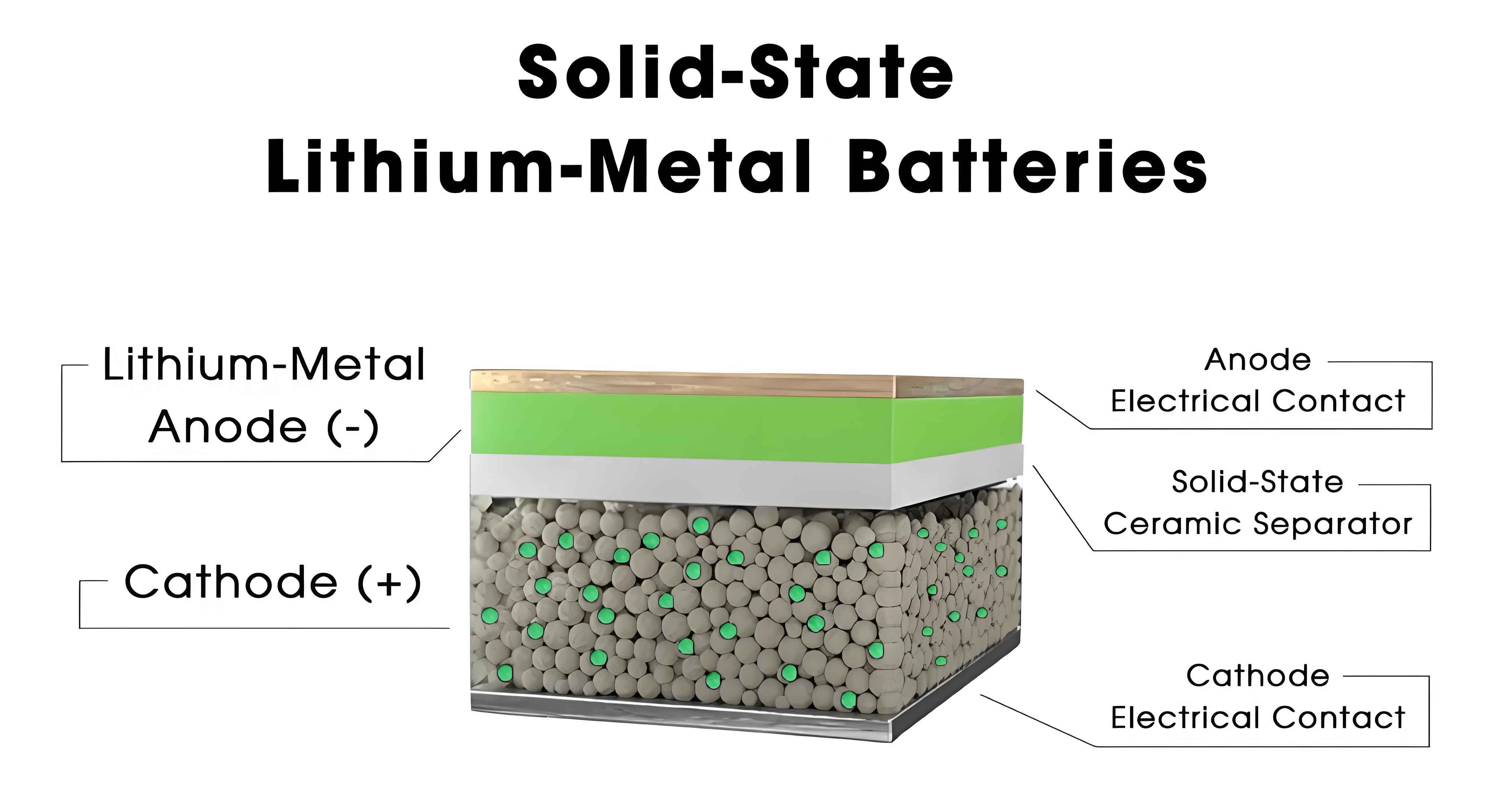
From my vantage point, this “collective frenzy” does not simply herald an imminent era of application. The reality is more nuanced. The solid-state battery is not a novel concept; research dates back decades. The fact that it has yet to become a mainstream solution is less about corporate reluctance and more about a series of persistent and intricate technical challenges. Compared to mainstream lithium-ion batteries, the advantages of solid-state batteries are clear. Liquid electrolytes in conventional batteries are often flammable and corrosive, posing safety risks under conditions like impact or thermal runaway. By replacing the liquid electrolyte partially or entirely with a solid-state electrolyte, the solid-state battery promises a dramatic leap in both safety and energy density.
However, this new architecture and material set introduce significantly more complex manufacturing processes and material systems. The prolonged development timelines of even the most dedicated players underscore the high degree of technical uncertainty. Progress remains constrained by core scientific and engineering hurdles, not merely by the scale of investment.
Diversified Technical Pathways for Solid-State Batteries
The quest for a viable solid-state battery has branched into several distinct technical pathways, primarily categorized by the type of solid electrolyte employed: polymer, sulfide, and oxide. These represent fundamentally different material philosophies with unique trade-offs.
| Electrolyte Type | Chemical Family | Key Advantages | Primary Challenges | Ionic Conductivity (Typical, RT) | Status & Key Players |
|---|---|---|---|---|---|
| Polymer | Organic (e.g., PEO-based) | Excellent flexibility, ease of processing, good compatibility with existing roll-to-roll manufacturing. | Low ionic conductivity at room temperature, limited electrochemical stability window, poor thermal stability. | ~10-5 to 10-4 S/cm | Early commercial attempts (semi-solid); Often used in hybrid systems. |
| Sulfide | Inorganic (e.g., Li2S-P2S5, argyrodites) | Very high ionic conductivity (rivaling liquids), good mechanical ductility. | Poor stability in air (H2S release), narrow electrochemical window, high interfacial resistance with oxide cathodes, expensive raw materials. | ~10-3 to 10-2 S/cm | Focus of many Japanese/Korean firms (Toyota, Panasonic, LG); Intensive R&D globally. |
| Oxide | Inorganic (e.g., Garnet-LLZO, NASICON-LATP/LLTO, Perovskite-LLTO) | Good chemical & electrochemical stability, wide stability window, moderate to high ionic conductivity. | High rigidity leading to poor interfacial contact, high grain boundary resistance, often require high-temperature sintering. | ~10-5 to 10-3 S/cm (bulk) | Dominant path for many Chinese firms (Weilan, Qingtao, Gotion); Some prototypes and semi-solid production. |
The ionic conductivity $\sigma$ of these solid electrolytes is a critical parameter, often described by the Arrhenius equation:
$$
\sigma T = A \exp\left(-\frac{E_a}{k_B T}\right)
$$
where $A$ is the pre-exponential factor, $E_a$ is the activation energy for ion migration, $k_B$ is Boltzmann’s constant, and $T$ is the absolute temperature. Achieving a low $E_a$ and high $\sigma$ at room temperature is a primary goal for solid-state electrolyte development.
From my analysis, the global landscape shows strategic divergence: Chinese companies have largely focused on the oxide pathway, leveraging its relative stability and integration potential. Japanese and Korean enterprises have heavily invested in the high-risk, high-reward sulfide route. Western firms and research institutions often maintain a more balanced portfolio across all three. This diversification is healthy for the ecosystem, as it is not yet clear which material system will ultimately prevail for different applications (e.g., EVs vs. consumer electronics).
The Daunting Hurdles to Commercialization
The transition of solid-state battery technology from the lab to the market is gated by a series of interconnected challenges spanning materials science, manufacturing, and economics. While the fundamental operating principle—shuttling lithium ions between anode and cathode—remains unchanged from liquid systems, the material revolution required is profound.
1. Material-Level Challenges
The performance of a solid-state battery hinges on its core materials. The evolution is expected to follow a stepwise pattern: Solid Electrolyte → Advanced Anode → Advanced Cathode.
- Anode Evolution: The ultimate goal is to utilize a metallic lithium anode, offering the highest theoretical capacity (3860 mAh/g). However, lithium metal is highly reactive, and its uneven deposition (dendrite growth) during cycling can pierce even a solid electrolyte, leading to short circuits. Intermediate steps involve silicon-based anodes or lithium-containing composite anodes. The stability of the anode-solid electrolyte interface is paramount and is governed by complex electrochemical and mechanical factors.
- Cathode Evolution: To fully exploit the high-voltage stability of solid electrolytes, cathodes are moving beyond high-nickel NMC towards materials like nickel-manganese spinel (LNMO) or lithium-rich layered oxides (LLO), which operate at higher voltages (e.g., >4.5V vs. Li/Li+). The interfacial instability between cathodes (often oxides) and sulfide solid electrolytes is a major research bottleneck.
- Interfacial Engineering: This is arguably the most critical challenge. Unlike liquid electrolytes that flow and maintain wet contact, the solid-solid contact between electrode particles and the solid electrolyte is prone to high impedance. This interface resistance $R_{int}$ can dominate the total cell resistance $R_{total}$:
$$
R_{total} = R_{bulk} + R_{gb} + R_{int}
$$
where $R_{bulk}$ is the bulk electrolyte resistance and $R_{gb}$ is the grain boundary resistance. Strategies like introducing ultrathin interfacial coating layers or designing composite cathodes (cathode active material mixed with solid electrolyte) are essential to minimize $R_{int}$.
2. Manufacturing and Cost Challenges
The production of solid-state batteries departs radically from the established, highly optimized manufacturing lines for liquid lithium-ion batteries.
| Challenge Area | Specific Issues | Impact on Cost |
|---|---|---|
| Raw Material Cost | High-purity sulfide precursors (e.g., Li2S, P2S5) are orders of magnitude more expensive than lithium carbonate. Garnet-type oxides require high-purity zirconium. Metallic lithium foil handling requires dry rooms. | Material cost for a solid-state battery cell is currently estimated at 4-10x that of a comparable liquid LIB. |
| Manufacturing Process | Need for dry room conditions (esp. for sulfides). New processes for solid electrolyte layer fabrication (e.g., tape casting, screen printing, physical vapor deposition). Challenges in achieving dense, thin electrolyte layers. High-pressure stacking may be required. | Capital expenditure (CAPEX) for a solid-state battery gigafactory is projected to be significantly higher than the ~$150 million per GWh for liquid LIB lines. |
| Yield and Scalability | Immature processes lead to lower production yields. Difficulty in maintaining consistent quality and performance across large cell formats and high-volume production. | Low yield directly increases effective cost per useable cell. Scalability remains unproven. |
| Supply Chain Immaturity | No established supply chain for key materials (solid electrolyte powders, lithium metal anodes). Lack of standardized equipment. | Increases cost and risk, limiting rapid scale-up. |
The energy density $E_d$ of a battery is given by:
$$
E_d = \frac{1}{m} \int_{V_{min}}^{V_{max}} Q \, dV \approx \frac{Q \cdot V_{avg}}{m}
$$
where $Q$ is the capacity, $V$ is the voltage, and $m$ is the mass. While the solid-state battery enables the use of high-capacity anodes (like Li-metal) and high-voltage cathodes to maximize $Q$ and $V_{avg}$, the current manufacturing costs nullify much of this theoretical advantage from a commercial standpoint.
The Transformative Impact and Market Potential
Once the technical and economic hurdles are cleared, the widespread adoption of solid-state batteries will trigger a cascade of transformative changes across multiple industries.
1. Revolutionizing Electric Vehicles
- Extended Range: The high energy density of solid-state batteries could reliably push EV ranges beyond 1000 km on a single charge, effectively eliminating range anxiety for most consumers.
- Ultra-Fast Charging: With potentially higher Li-ion transference numbers and better thermal stability, solid-state batteries may safely withstand extreme fast charging (XFC) rates, enabling a 5-minute charge for hundreds of kilometers of range.
- Enhanced Safety and Design Freedom: The removal of flammable liquid electrolytes drastically reduces fire risk. This could simplify battery pack thermal management systems and allow for more flexible pack integration (e.g., cell-to-pack, cell-to-chassis designs with non-standard cell shapes).
- Longer Lifespan: Reduced side reactions at the electrodes could lead to significantly longer cycle life, improving total cost of ownership.
2. Disrupting the Energy Storage Landscape
For grid storage, the superior safety profile of solid-state batteries could enable denser, more cost-effective installations in urban areas or within buildings with less stringent safety infrastructure. Longer calendar life also improves levelized cost of storage (LCOS).
3. Reshaping the Battery and Material Supply Chain
The rise of solid-state batteries will create winners and losers in the material supply chain. Demand will shift from liquid electrolytes and traditional separators to solid electrolyte powders (sulfides, oxides, polymers), lithium metal, and specialized interfacial coating materials. Elements like zirconium (for LLZO), phosphorus, and germanium (for certain sulfides) may see surging demand. Conversely, the market for solvents, salts like LiPF6, and conventional polyolefin separators could stagnate or decline.
The market potential is vast. While predictions vary, a consensus is forming around a timeline where semi-solid batteries (containing some liquid or gel) serve as a bridging technology, with true all-solid-state batteries targeting initial commercialization around 2027-2030. The growth trajectory for key materials is expected to be steep. For instance, the market for oxide solid electrolyte materials like LLZO could see a compound annual growth rate (CAGR) exceeding 100% in the coming years, starting from a low base.
The Road Ahead: A Cautiously Optimistic Outlook
The fervor of 2024, marked by numerous corporate announcements, patent filings, and strategic investments, is a strong indicator of serious commitment. However, as a first-person observer of this field, I maintain a stance of cautious optimism. The fundamental physics and chemistry challenges at the interfaces within a solid-state battery are non-trivial. The path from a single-layer lab cell to a robust, high-volume, multi-layer automotive-grade battery is long and arduous.
The industry’s strategy appears to be a multi-pronged approach:
- Incremental Innovation (Semi-Solid): Introducing solid electrolytes into conventional liquid systems (e.g., as coatings on separators or electrodes) to improve safety and energy density incrementally, buying time for the all-solid-state technology.
- Parallel Path Development: Continuing R&D across polymer, sulfide, and oxide pathways to hedge bets and explore application-specific optimizations.
- Vertical Collaboration: Deepening partnerships between automakers, battery cell producers, material suppliers, and equipment manufacturers to co-develop solutions and share the immense development risk and cost.
In conclusion, the solid-state battery represents one of the most significant technological frontiers in the energy sector. Its potential to redefine performance and safety benchmarks is undeniable. While the “holy grail” status may have attracted hype, it is underpinned by genuine scientific pursuit and substantial industrial investment. The journey from promising prototype to a ubiquitous, affordable product will be defined by sustained material innovation, manufacturing ingenuity, and strategic patience. The company or consortium that successfully navigates this complex landscape will not only reap enormous commercial rewards but will also play a pivotal role in accelerating the global transition to sustainable electrification.