
The global pursuit of “dual carbon” goals has accelerated the development of new energy sources such as wind, solar, and tidal power. However, their intermittent, geographically constrained, and discontinuous nature necessitates efficient energy storage systems for effective integration. Among various options, lithium-ion batteries stand out due to their high energy density, low cost, and absence of memory effect. Currently, they dominate portable electronics, electric vehicles, and grid storage. Nevertheless, commercial lithium-ion batteries employing organic carbonate electrolytes face significant challenges: their practical energy density often falls below 300 Wh/kg, and they carry inherent safety risks like leakage, combustion, and thermal runaway.
The adoption of solid electrolytes is widely regarded as the ultimate solution to these safety concerns. Furthermore, solid electrolytes enable the use of high-capacity electrode materials, potentially pushing energy densities beyond 450 Wh/kg, thus positioning solid-state batteries as the “next-generation” of energy storage.
The core of a solid-state battery is its solid electrolyte. Its properties—ionic transport kinetics, electrochemical stability, and interfacial dynamics with electrodes—directly dictate the battery’s energy density, cycle life, and safety. Solid electrolytes are primarily categorized into inorganic solid electrolytes and organic polymer-based electrolytes. Compared to their inorganic counterparts, polymer-based electrolytes offer distinct advantages in terms of cost, scalability, interfacial compatibility, and mechanical flexibility. Their plasticity allows them to be shaped for applications in flexible and wearable electronics, making them one of the most promising paths toward commercialization.
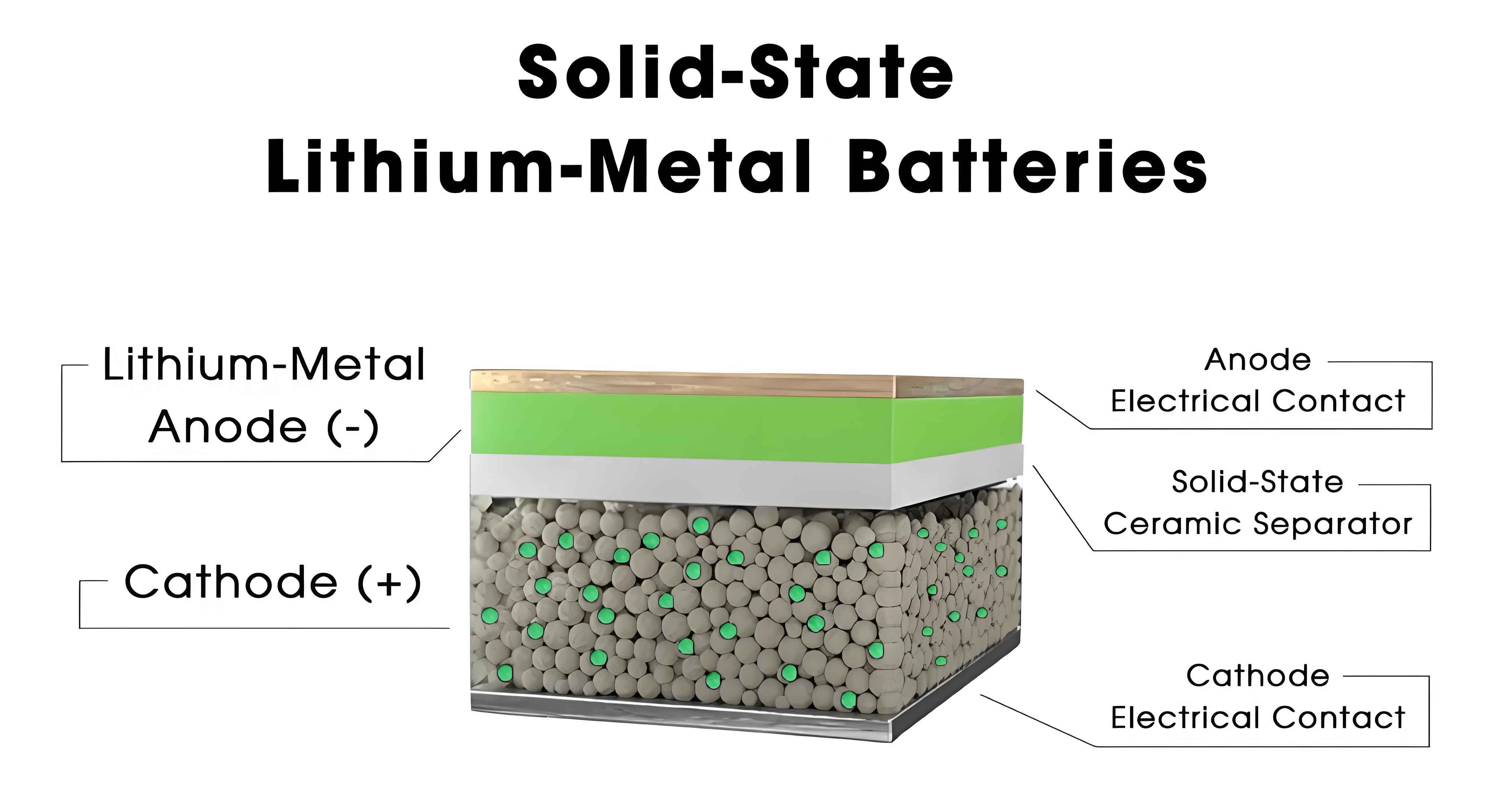
Despite their promise, polymer-based electrolytes face significant scientific and technological hurdles: their ionic conductivity is generally low (often < 10-4 S/cm at room temperature), large-scale production can be inconsistent, and conventional preparation processes are often complex with high emissions. A critical, common step in all preparation methods is the transition from a liquid precursor to a solid film—the solidification process. This step is paramount for achieving high-energy-density solid-state batteries, which require high-loading electrodes paired with an ultra-thin, defect-free electrolyte layer to maximize energy density. The solidification technique directly impacts the electrolyte’s thickness uniformity, interfacial compatibility, and overall electrochemical performance, presenting a major challenge for practical deployment.
This article provides a comprehensive overview of solidification technologies for polymer-based electrolytes, crucial for advancing high-energy-density solid-state battery technology. It contrasts traditional ex-situ methods with the emerging in-situ techniques, detailing their mechanisms, material selections, and applications. Finally, it evaluates future challenges and development directions for these critical processing technologies.
Ex-Situ Solidification Technologies
Traditional preparation of polymer-based electrolytes relies on ex-situ solidification. Here, the electrolyte film is fabricated separately and then assembled into the battery cell. Common methods include solution casting, electrospinning, and chemical polymerization. The choice of polymer matrix is critical, with common materials including Poly(ethylene oxide) (PEO), Poly(vinylidene fluoride) (PVDF), Poly(methyl methacrylate) (PMMA), and Poly(acrylonitrile) (PAN). PEO, with its polar ether oxygen atoms that strongly coordinate with Li+ ions, has been the most extensively studied host for solid polymer electrolytes.
Solution Casting
This is the most straightforward method. The polymer host and lithium salt are dissolved in a volatile organic solvent (e.g., acetonitrile, DMF). The solution is then cast onto a substrate, and the solvent is evaporated, leaving behind a freestanding polymer electrolyte film. To enhance ionic conductivity and mechanical stability, inorganic fillers like Al2O3 or fast-ion conductors like Li7La3Zr2O12 (LLZO) are often added to form composite polymer electrolytes (CPEs).
While simple, solution casting has drawbacks. The solvent evaporation process is slow, leads to significant volatile organic compound (VOC) emissions, and can result in films with pinholes, cracks, or non-uniform thickness, especially over large areas. Achieving films thinner than 50 µm while maintaining mechanical integrity is challenging. The ionic conductivity (σ) of such cast films typically follows the Vogel–Tamman–Fulcher (VTF) equation, relating to segmental motion of the polymer chains:
$$ \sigma = A T^{-1/2} \exp\left(\frac{-B}{T – T_0}\right) $$
where \(A\) is a pre-exponential factor, \(B\) is the pseudo-activation energy, and \(T_0\) is the ideal glass transition temperature.
Electrospinning
This technique produces a non-woven mat of polymer fibers, creating a highly porous membrane with a large surface area. A precursor solution containing the polymer and salt is ejected from a syringe under a high electric field, forming fine fibers that collect on a grounded substrate. This fibrous mat is often subsequently compressed and infused with a liquid electrolyte or a polymer/salt solution to form a quasi-solid or gel polymer electrolyte.
Electrospun electrolytes offer good mechanical flexibility and high porosity for effective liquid uptake. However, the process requires specialized equipment, high voltage, and controlled humidity. The resulting membrane is not inherently dense, and the subsequent filling/infiltration step adds complexity. Furthermore, the physical entanglement of fibers provides mechanical stability but may not offer long-term dimensional stability against solvent swelling or at elevated temperatures.
Chemical Polymerization
In this approach, a liquid monomer or oligomer mixture containing lithium salt is polymerized outside the battery cell, typically via thermal or UV initiation. This creates a cross-linked or semi-interpenetrating polymer network (semi-IPN) with enhanced mechanical and thermal stability compared to physically entangled systems. Common monomers include ethoxylated trimethylolpropane triacrylate (ETPTA) and triethylene glycol diacrylate (TEGDA).
Chemical polymerization allows for the creation of robust, self-standing films. However, it can be difficult to control the polymerization degree completely, potentially leaving unreacted small molecules or oligomers that may leach out over time, compromising the long-term stability and safety of the solid-state battery.
The table below summarizes key ex-situ solidification methods:
| Method | Mechanism | Key Materials | Advantages | Disadvantages | Typical Application |
|---|---|---|---|---|---|
| Solution Casting | Solvent Evaporation | PEO, PVDF, LiTFSI, LLZO filler | Simple, scalable, good film uniformity on small scale | High VOC emission, slow, thickness control >50 µm difficult, prone to defects | Lab-scale solid polymer & composite electrolytes |
| Electrospinning | Fiber Formation & Physical Entanglement | PAN, PVDF-HFP, LiClO4 | High porosity, flexibility, large surface area | Requires specialized setup, non-dense mat, needs post-treatment | Gel polymer electrolytes, composite substrates |
| Chemical Polymerization | In-situ Cross-linking (Thermal/UV) | Acrylate monomers (e.g., TEGDA), AIBN initiator, LiPF6 | Good mechanical/thermal stability, cross-linked network | Potential for unreacted monomers, complex precursor formulation | Cross-linked polymer networks for enhanced stability |
The fundamental limitation of all ex-situ methods is the inherently poor solid-solid contact between the pre-formed electrolyte film and the porous electrodes. This leads to high interfacial resistance, limiting power density and the utilization of high-mass-loading electrodes. Furthermore, integrating thin, freestanding electrolyte films into battery cells at scale is a non-trivial manufacturing challenge.
In-Situ Solidification Technologies
In-situ solidification has emerged as a powerful strategy to overcome the interfacial challenges of ex-situ methods. Here, a low-viscosity liquid precursor—containing monomers, lithium salt, and optional additives—is injected into an assembled cell. The precursor readily infiltrates the porous electrodes. Subsequently, an external trigger initiates polymerization within the cell, solidifying the precursor directly between the electrodes to form the polymer-based electrolyte.
This approach offers transformative advantages for high-energy-density solid-state battery development:
- Superior Interface: The liquid precursor conforms perfectly to the electrode surfaces, forming an intimate, low-resistance contact upon solidification.
- Ultra-thin Electrolytes: The electrolyte thickness is defined by the cell stack and can be precisely controlled to below 20 µm, significantly boosting energy density.
- Manufacturing Compatibility: The process is highly compatible with existing lithium-ion battery assembly lines (filling and sealing), potentially lowering production costs.
The selection of the monomer system and polymerization mechanism is critical, determining the electrolyte’s electrochemical stability, ionic conductivity, and compatibility with cell components.
Free Radical Polymerization
This is one of the most common in-situ techniques. It involves monomers with unsaturated bonds (C=C), such as acrylates or vinylene carbonate. Initiators like azobisisobutyronitrile (AIBN) or benzoyl peroxide (BPO) generate free radicals upon heating or UV exposure, attacking the double bonds and initiating chain-growth polymerization.
General Mechanism:
- Initiation: $$ I_2 \xrightarrow{\Delta \ or \ h\nu} 2I^\bullet $$ $$ I^\bullet + M \rightarrow I-M^\bullet $$
- Propagation: $$ I-M^\bullet + n M \rightarrow I-M_n^\bullet $$
- Termination: Combination or disproportionation of radical chains.
For example, vinylene carbonate (VC), a common electrolyte additive, can be in-situ polymerized to form poly(vinylene carbonate) (PVC), creating a stable interface on the anode while providing good ionic pathways. Acrylate-based systems (e.g., poly(ethylene glycol) methyl ether acrylate) are also popular, offering tunable properties through cross-linkers. However, residual radical initiators (e.g., AIBN) can react with lithium metal, and the exothermic nature of the polymerization must be managed.
Cationic Polymerization
This method uses electrophilic initiators to attack electron-rich monomers, forming a cationic active center that propagates the chain. Initiators can be Lewis acids (e.g., BF3, PF5) or protons generated from the decomposition of lithium salts like LiPF6 or LiDFOB. Common monomers include cyclic ethers like 1,3-dioxolane (DOL) and vinyl ethers.
General Mechanism (for DOL):
- Initiation via Lewis Acid: $$ LiPF_6 \rightarrow LiF + PF_5 $$ $$ PF_5 + H_2O \ (trace) \rightarrow H^+[PF_5OH]^- $$
- Chain growth via ring-opening: The proton attacks the oxygen in DOL, opening the ring and creating an oxonium ion that propagates.
In-situ cationic polymerization of DOL is particularly attractive because it uses commercial electrolyte components. LiPF6 salt acts as both the lithium source and the catalyst precursor. The resulting poly-DOL (PDOL) based quasi-solid electrolyte demonstrates excellent interfacial contact and good cycle life. Recent work has extended this to trioxane (TXE) polymerization initiated by LiDFOB, yielding polyoxymethylene (POM)-based electrolytes with high oxidation stability for use with nickel-rich cathodes.
Anionic Polymerization
Anionic polymerization employs nucleophilic initiators and monomers with electron-withdrawing groups. A unique feature is its “living” nature, allowing for controlled polymer structures. In batteries, the lithium metal anode itself can act as the initiator for certain monomers like cyanoacrylates.
General Mechanism (for Cyanoacrylate):
- Electron transfer from Li metal creates a carbanion: $$ Li + M \ (monomer) \rightarrow Li^+ + ^-M^\bullet $$
- The carbanion rapidly propagates the chain.
This method enables the formation of poly(ethyl cyanoacrylate) (PECA) electrolytes in-situ, which exhibit high ionic conductivity and a wide electrochemical window (>4.5 V), making them suitable for high-voltage solid-state battery configurations.
Physical Gelation
This method relies on physical interactions (hydrogen bonding, π-π stacking) rather than covalent bond formation. Small molecule gelators or nanoparticles are dispersed in the liquid electrolyte. Upon a trigger (often temperature change or time), they self-assemble into a three-dimensional network that immobilizes the liquid phase, forming a gel polymer electrolyte.
While simple and mild, the physical bonds are often reversible. The gel may liquefy upon heating or over long periods, leading to potential leakage and safety issues, which is a significant drawback for long-life solid-state battery applications.
The table below compares the primary in-situ polymerization mechanisms:
| Polymerization Type | Initiator/Condition | Typical Monomers | Reaction Characteristics | Key Advantages for Solid-State Battery | Challenges |
|---|---|---|---|---|---|
| Free Radical | Thermal/UV, AIBN, BPO | Acrylates, Vinylene Carbonate | Fast, exothermic, chain growth | Wide monomer choice, fast processing | Residual initiator side reactions, heat management |
| Cationic | Lewis Acid (PF5, BF3), often from Li salt decomposition | Cyclic Ethers (DOL, TXE), Vinyl Ethers | Ring-opening, can be living | Uses commercial salt as catalyst, excellent interface, stable polymers | Requires careful control of moisture and impurities |
| Anionic | Nucleophile, Alkoxides, Li metal surface | Cyanoacrylates, Acrylonitrile | Living polymerization, controlled structure | High voltage stability, can be initiated directly by Li anode | Highly sensitive to protic impurities, limited monomer scope |
| Physical Gelation | Temperature, Concentration | Gelator molecules (e.g., amides), SiO2 nanoparticles | Physical cross-linking, reversible | Simple, mild conditions, high ionic conductivity (liquid-like) | Poor thermal/mechanical stability, potential for syneresis (liquid expulsion) |
Performance Metrics and Key Considerations
The success of any solidification technology is measured by the resulting electrolyte’s properties and its performance in a solid-state battery. Key metrics include:
Ionic Conductivity (σ): The fundamental property for power capability. It should be maximized, preferably exceeding 10-4 S/cm at room temperature for practical applications. Conductivity is often expressed by the Nernst-Einstein relation: $$ \sigma = \sum n_i q_i \mu_i $$ where \(n_i\), \(q_i\), and \(\mu_i\) are the concentration, charge, and mobility of ionic species \(i\).
Li-ion Transference Number (tLi+): Critical for mitigating concentration polarization and enabling high-rate cycling. $$ t_{Li^+} = \frac{\sigma_{Li^+}}{\sigma_{total}} $$ Ideal polymer electrolytes for solid-state batteries should have a tLi+ close to 1.
Electrochemical Stability Window (ESW): Determines compatibility with high-voltage cathodes (>4.3 V vs. Li/Li+) for high-energy-density solid-state battery designs.
Interfacial Stability: The solidified electrolyte must form stable, low-resistance interfaces with both the anode (e.g., Li metal) and the cathode, resisting dendrite growth and parasitic side reactions.
Material selection for the precursor is paramount. Monomers must yield polymers with high oxidation resistance for high-voltage operation. The viscosity of the precursor must be low enough to infiltrate high-loading electrodes but high enough to prevent leakage before solidification. The choice of lithium salt (e.g., LiTFSI, LiDFOB, LiPF6) affects not only conductivity but also the stability of the derived solid electrolyte interphase (SEI) and catholyte interphase (CEI).
Future Outlook and Conclusion
Polymer-based electrolytes represent the most viable path toward the mass production of solid-state batteries. The solidification process—the transformation from liquid precursor to solid electrolyte—is a central technological lever. While ex-situ methods are well-understood, they struggle with interfacial and thickness challenges critical for high-energy-density cells. In-situ solidification directly addresses these issues by creating a conformal, ultra-thin electrolyte layer within the cell, offering a compelling route compatible with existing battery manufacturing.
However, to realize the full potential of in-situ solidified polymer electrolytes for commercial high-energy-density solid-state battery applications, several key areas require focused research and development:
- Fundamental Ion Transport: A deeper understanding of Li+ conduction mechanisms in the complex environment of a solidified polymer matrix (containing residual plasticizer, salts, and fillers) is needed. Advanced characterization (solid-state NMR, operando spectroscopy) and multi-scale modeling will be crucial to guide the design of next-generation materials with higher conductivity and transference numbers.
- Material Genome Development: Expanding beyond traditional ether-based systems (PEO, PDOL) is essential for high-voltage stability. High-throughput screening and computational design should be employed to discover new monomer and lithium salt combinations that offer wide electrochemical windows, high thermal stability, and excellent interfacial passivation abilities.
- Initiator Chemistry: The development of “smart” initiators that are electrochemically benign or that actively contribute to stable interface formation is needed. Salt-derived initiation (as in cationic polymerization) is highly attractive. Alternative triggering methods like controlled radiation or electron beams also warrant exploration.
- Technology Extension: The principles of in-situ solidification should be explored for other battery chemistries (e.g., sodium, potassium, magnesium solid-state battery systems) and for creating multifunctional layers, such as artificial SEI/CEI or electrode/electrolyte integrated structures.
- Scale-up and Uniformity: For industrialization, ensuring uniform polymerization throughout large-format cells is critical. Heat and mass transfer during in-situ curing must be engineered to avoid gradients in polymer cross-linking density or composition, which could lead to localized failure. The long-term stability of the interface against volume changes during cycling in a practical solid-state battery must be rigorously validated.
In conclusion, mastering solidification technology is synonymous with mastering the manufacturing of polymer-based solid-state batteries. In-situ polymerization, in particular, stands out as a transformative approach that bridges the gap between laboratory innovation and industrial-scale production. By strategically addressing the remaining scientific and engineering challenges related to materials, interfaces, and process control, in-situ solidified polymer electrolytes will play a pivotal role in enabling the safe, high-energy-density solid-state battery systems of the future.