
As an observer and participant in the automotive sector, I have witnessed a remarkable surge in interest and investment in solid-state battery technology. This next-generation power source, often hailed as a game-changer for electric vehicles (EVs), is now a focal point for nearly every major Chinese automaker. The promise of higher energy density, enhanced safety, and broader operational temperature ranges has made solid-state batteries a strategic battleground. However, amidst the flurry of announcements and ambitious timelines, a cautious and collaborative approach is essential to navigate the significant technical and economic hurdles that lie ahead.
The journey toward solid-state battery commercialization in China began earlier than many realize. Several domestic automakers initiated research and development (R&D) efforts years ago, positioning themselves in what was then a niche field. For instance, one leading automaker identified solid-state batteries as a key future direction as early as 2016, exploring small-scale applications and setting ambitious targets for commercialization within a decade. By 2018, projects were advancing toward commercial use, with patents for sulfur-based additive all-solid-state batteries emerging in subsequent years. Another state-owned manufacturer established a dedicated solid-state battery project team in 2018, completing its first-generation battery system by 2019 and initiating vehicle road tests by 2020. These early moves demonstrate a foundational commitment, though progress often alternated between visibility and periods of quiet development.
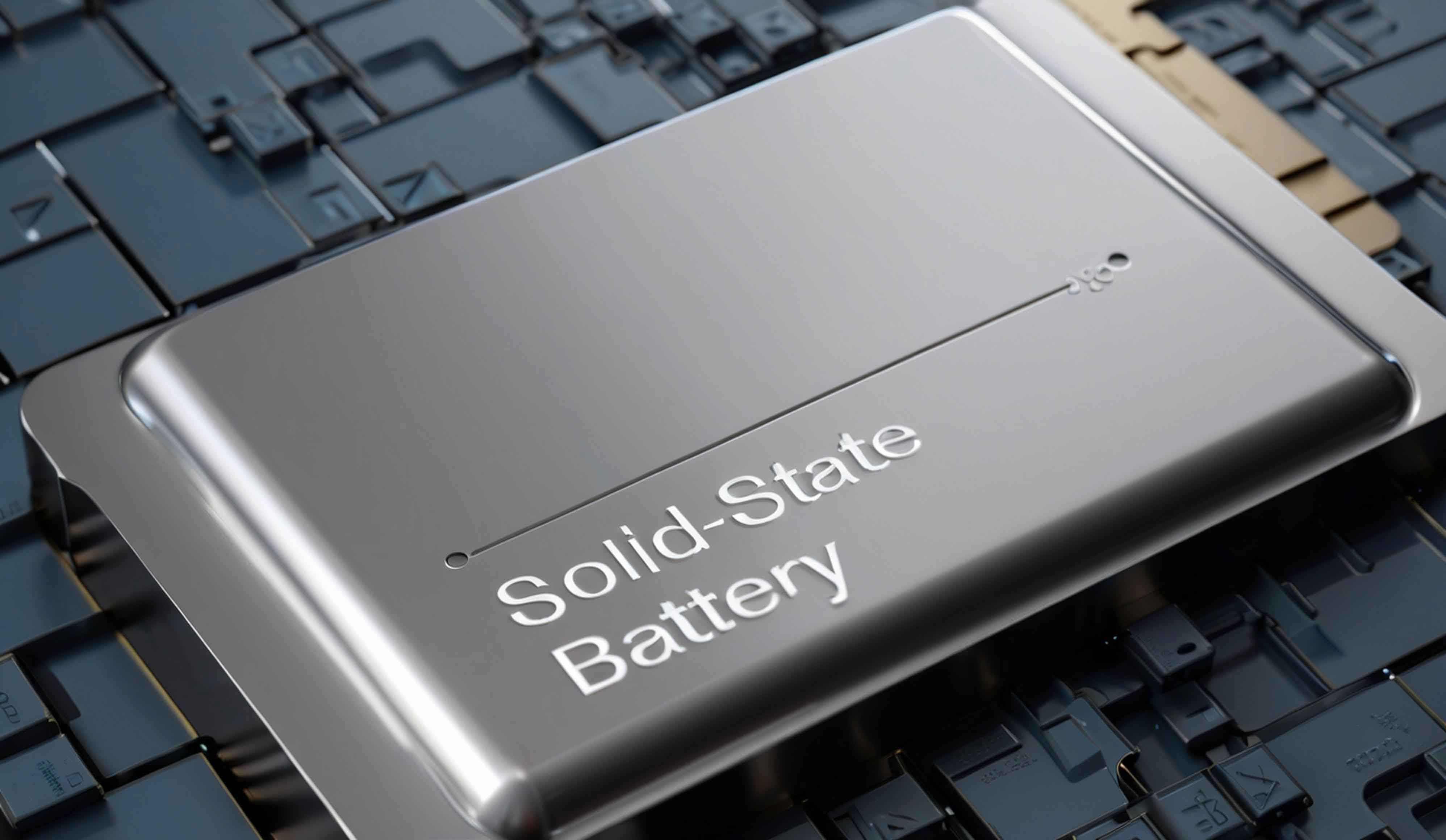
In recent years, the landscape has transformed dramatically. The solid-state battery has evolved from a specialized research topic into a central pillar of corporate technology showcases. Starting around 2023, a wave of automakers publicly unveiled their roadmaps and milestones for solid-state battery development. At major industry events, companies announced plans to launch a series of self-developed battery cells, including semi-solid and all-solid-state variants, targeting massive production capacity by 2030. The core objectives consistently revolve around achieving breakthrough energy density metrics. The race to integrate solid-state battery technology into vehicles is intensifying, with several players aiming for production and installation around 2026-2027.
The technological paths pursued by these companies show notable convergence. Solid-state batteries are primarily categorized by their electrolyte material: polymer, oxide, and sulfide. Based on disclosed information and technical analysis, the sulfide-based electrolyte route appears dominant among Chinese automakers’ aspirations for all-solid-state batteries. This preference stems from sulfide electrolytes’ high ionic conductivity at room temperature, a critical enabler for the thick electrodes required to achieve very high energy density. The ionic conductivity $\sigma_{ion}$ is a key parameter, often expressed in milliSiemens per centimeter (mS/cm). For a viable solid-state battery, $\sigma_{ion}$ must approach or exceed that of liquid electrolytes, typically around 10 mS/cm. Sulfide materials can achieve this, with some advanced formulations reaching up to 32 mS/cm, as represented by: $$ \sigma_{ion}^{sulfide} \approx 10^{-2} \, \text{S/cm} $$ This enables the use of high-capacity electrodes. For example, the energy density $E_d$ of a cell can be estimated by considering the active materials’ capacities and voltages. If a cell uses a high-nickel cathode with a specific capacity $C_{cat}$ (in mAh/g) and a silicon-based anode with capacity $C_{an}$ (in mAh/g), the theoretical gravimetric energy density can be approximated by: $$ E_d \approx \frac{V \cdot C_{cell}}{m_{cell}} $$ where $V$ is the average cell voltage, $C_{cell}$ is the cell capacity, and $m_{cell}$ is the cell mass. The push for values around 400 Wh/kg and 800 Wh/L drives the adoption of such aggressive chemistries.
However, the sulfide solid-state battery path is fraught with challenges. The electrolyte’s narrow electrochemical window and poor interfacial stability with electrodes require sophisticated engineering. Moreover, sulfide materials are highly sensitive to moisture, reacting to produce toxic hydrogen sulfide gas ($H_2S$). This imposes stringent requirements for dry-room manufacturing environments, significantly increasing capital expenditure. The production cost $C_{prod}$ for a sulfide solid-state battery can be modeled as a function of material cost $C_{mat}$, equipment cost $C_{eq}$, and yield $Y$: $$ C_{prod} = \frac{C_{mat} + C_{eq}}{Y} $$ Currently, $C_{mat}$ for key materials remains prohibitively high. Furthermore, achieving long cycle life often requires applying substantial stack pressure (often hundreds of atmospheres) to maintain intimate contact between solid components, a major engineering hurdle for battery pack design.
Alternative electrolyte routes are also being explored. The polymer-inorganic composite electrolyte approach, for instance, offers better process compatibility with existing manufacturing lines but typically suffers from lower ionic conductivity at room temperature, often described by the Arrhenius equation: $$ \sigma_{ion}(T) = A \exp\left(-\frac{E_a}{kT}\right) $$ where $E_a$ is the activation energy, $k$ is Boltzmann’s constant, and $T$ is temperature. This limits power performance unless operated at elevated temperatures.
The current status of key automakers’ solid-state battery development can be summarized in the following table, which compiles announced targets and parameters. It is crucial to note that these figures represent laboratory or pilot-scale achievements, and mass-production realities may differ.
| Automaker | Electrolyte Type | Cell Capacity (Ah) | Gravimetric Energy Density (Wh/kg) | Volumetric Energy Density (Wh/L) | Pack Energy Density (Wh/kg) | Planned Mass Production/Installation |
|---|---|---|---|---|---|---|
| Automaker A | Polymer-Inorganic Composite | 77.6 | 406 | 820 | 288.3 | 2025 scale搭载, 2026 production |
| Automaker B | Sulfide | 60 | 400 | 800 | 280 | 2027 small-batch production |
| Automaker C | New In-situ Cured Composite | — | 405+ | — | — | 2026 production & installation |
| Automaker D | — (Likely Sulfide) | 30 | 400 | 910 | — | 2026 production |
| Automaker E | Sulfide | 22 | 375 | — | — | 2027 small-batch demonstration |
| Automaker F | — | — | 350-500 | 750-1000 | — | Semi-solid by end of 2026 |
The table reveals a cluster of target energy densities around 400 Wh/kg for the cell, with volume energy densities aiming for 800-1000 Wh/L. The planned timelines are also closely bunched between 2026 and 2027. This similarity underscores that the industry faces a common set of core challenges: achieving high yield, acceptable charge/discharge rates (C-rate), long cycle life, scalable manufacturing processes, and ultimately, manageable cost.
Cost remains perhaps the most formidable barrier to the widespread adoption of solid-state battery technology. Current estimates suggest that all-solid-state batteries are significantly more expensive than their liquid lithium-ion counterparts. The total cost per kilowatt-hour $C_{kWh}$ for a solid-state battery pack can be broken down as: $$ C_{kWh} = C_{cell} + C_{BMS} + C_{pack\,structure} + C_{assembly} $$ where $C_{cell}$ dominates and is itself driven by raw material costs, process complexity, and yield. Presently, $C_{cell}$ for solid-state batteries is estimated to be 30% or more above that of liquid lithium-ion cells. Even for semi-solid batteries, the cost premium after scale production is projected to be 10-20%. A simplified cost model based on scale illustrates the potential: Let $C_{mat,ss}$ be the cost of solid electrolyte material. At a pilot scale (e.g., 1 MWh annual capacity), $C_{mat,ss}$ might be very high, say $2000/kg. For a larger scale (e.g., 10 GWh), procurement and process improvements can drive $C_{mat,ss}$ down to perhaps $50/kg. The per-cell cost $C_{cell}$ then becomes: $$ C_{cell} = C_{mat} + C_{labor} + C_{M&E} $$ where $C_{M&E}$ covers manufacturing and energy. At scale, $C_{cell}$ could drop by orders of magnitude, highlighting the critical importance of achieving volume production to make solid-state batteries economically viable. Another avenue for cost reduction lies in expanding cathode material choices beyond the conventional lithium iron phosphate (LFP) and high-nickel ternary systems, potentially lowering the bill of materials by up to 40% in the long term.
While the focus on all-solid-state batteries intensifies, a pragmatic intermediate step—semi-solid or hybrid electrolyte batteries—has already entered the market. These batteries contain a small amount of liquid electrolyte within a predominantly solid matrix, offering a compromise between performance improvement and manufacturability. Several vehicle models have been launched or announced featuring such semi-solid battery packs, claiming ranges exceeding 1000 km on a single charge. This development is significant as it represents the first commercial wave of solid-state battery-derived technology, providing real-world data and gradually building supply chain competence. However, it is vital to recognize that semi-solid batteries are not the final destination. The performance gap and underlying physics between semi-solid and true all-solid-state batteries are substantial. The ionic transport mechanism differs, and the residual liquid can still pose safety risks under extreme conditions. Therefore, progress in semi-solid technology, while valuable, does not guarantee a straightforward path to all-solid-state success.
The current fervor surrounding solid-state battery announcements carries a dual character. On one hand, it reflects a genuine and necessary strategic push to master a potentially transformative technology. On the other hand, there is a risk of hype and premature marketing, where the term “solid-state battery” is used to generate buzz without a clear path to mass-produced, cost-competitive, and truly superior products. This is a critical juncture for the industry. The development of all-solid-state batteries is a highly interdisciplinary endeavor, involving electrochemistry, materials science, mechanical engineering, and production technology. The challenges are not merely incremental; they are fundamental. A fragmented approach, with each company working in relative isolation, may lead to duplicated efforts and slow overall progress. Instead, a more coordinated strategy is needed. This could involve establishing industry-wide collaborative innovation platforms where automakers, battery producers, material suppliers, and research institutes pool resources to tackle common core issues such as interface stabilization, scalable electrolyte film fabrication, and standardized testing protocols. The goal should be to build a robust ecosystem for solid-state battery technology rather than engaging in a disjointed race to announce milestones.
Looking ahead, the timeline for full commercialization of all-solid-state batteries remains extended. Even optimistic projections suggest mass production and vehicle integration may not begin in earnest until the latter half of this decade. To capture a significant share of the EV battery market—say 50%—could then require another two to three decades of continuous improvement and cost reduction. Therefore, while the competitive pressure is real, patience and sustained investment are equally important. The industry must balance the pursuit of revolutionary all-solid-state technology with the steady advancement of existing liquid lithium-ion and interim semi-solid solutions. This balanced portfolio approach mitigates the risk of falling behind in a key future technology while maintaining competitiveness in the present market.
In conclusion, the solid-state battery landscape in China’s automotive industry is dynamic and increasingly crowded. The commitment from major automakers is clear, and technical targets are ambitious. However, the path forward is complex, littered with scientific, engineering, and economic obstacles. The similarity in announced parameters and timelines suggests a highly competitive but also potentially convergent technological race. Success will depend not only on individual corporate R&D prowess but also on the degree of collaboration across the value chain. By fostering open innovation, sharing pre-competitive research, and jointly addressing fundamental bottlenecks, the industry can accelerate the responsible development of solid-state battery technology. This will ensure that when solid-state batteries finally reach mass-market vehicles, they deliver on their promise of safer, longer-range, and more sustainable electric mobility without succumbing to the pitfalls of premature commercialization or excessive hype. The journey of the solid-state battery is a marathon, not a sprint, and its ultimate success will be written by those who combine vision with perseverance and collaboration.