
In the pursuit of next-generation energy storage systems, I have dedicated significant research efforts to understanding the complexities of solid-state batteries. Among the various components, silicon-based anodes stand out due to their exceptional theoretical capacity of approximately 3590 mAh/g and a moderate lithiation potential around 0.4 V versus Li+/Li. These properties make silicon a highly promising candidate for achieving high-energy-density solid-state batteries. However, my work and that of the broader scientific community have consistently highlighted a critical bottleneck: the interface failures between silicon-based electrodes and solid-state electrolytes. These failures, arising from significant volume changes, poor interfacial contact, and parasitic reactions, severely undermine ionic/electronic transport, increase internal impedance, and lead to rapid capacity fade and shortened cycle life. In this comprehensive article, I will delve into the root causes of these interface failures in silicon-based solid-state batteries, present a detailed analysis of the underlying mechanisms, and systematically evaluate the most effective strategies developed to overcome these challenges. The goal is to provide a thorough resource that guides future innovations in designing robust, high-performance solid-state battery systems.
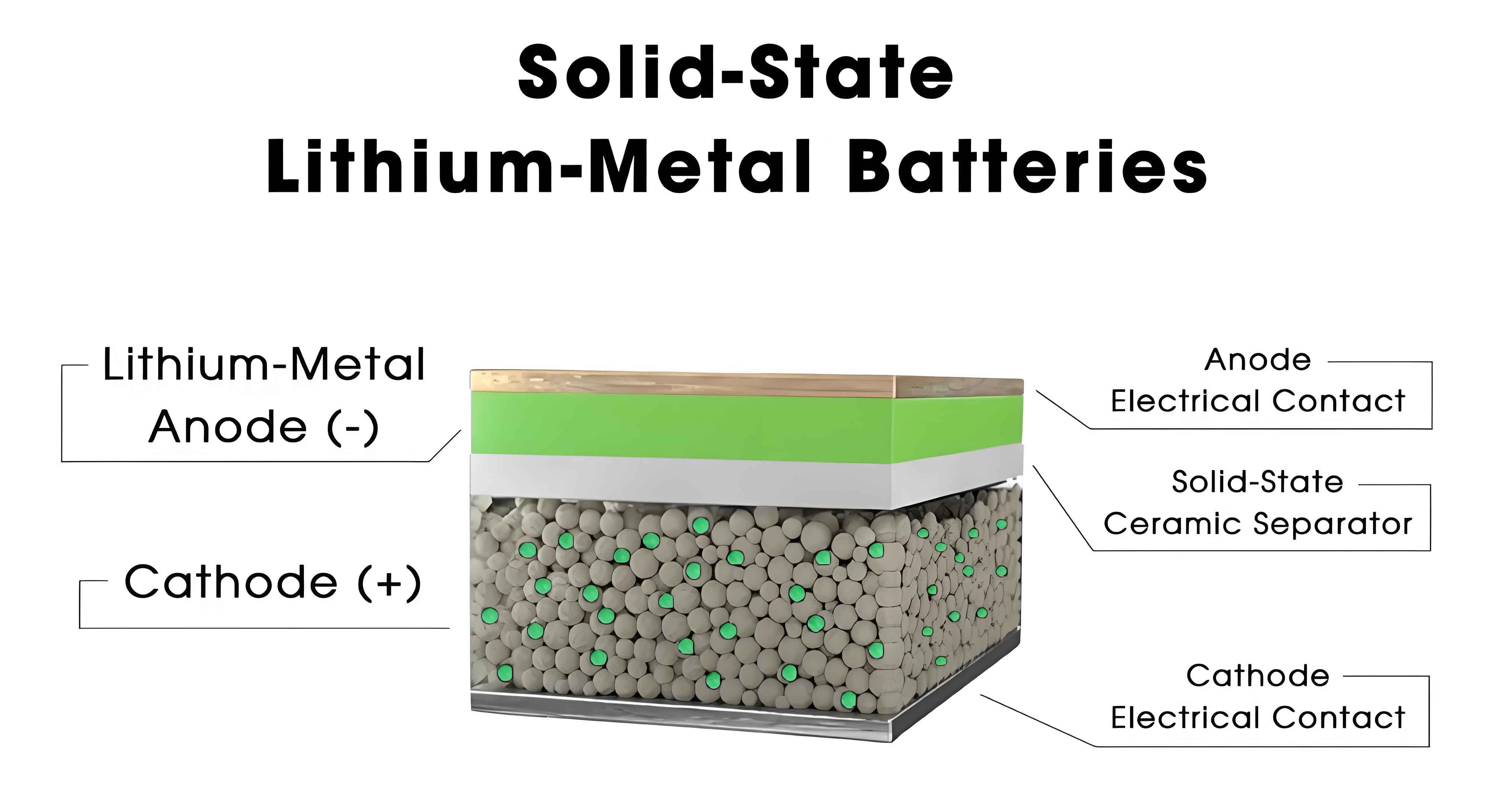
The transition from liquid-electrolyte lithium-ion batteries to solid-state batteries represents a paradigm shift aimed at enhancing safety and energy density. In a solid-state battery, the flammable organic liquid electrolyte is replaced by a non-flammable solid-state electrolyte. This substitution eliminates leakage risks and thermal runaway hazards associated with liquids. However, this advantage comes with new complexities. The solid-solid interfaces between electrode materials and the solid-state electrolyte are intrinsically less compliant and more prone to contact loss compared to liquid-infused interfaces. For silicon anodes, which undergo a colossal volume expansion of up to 300% upon full lithiation to Li3.75Si, this interface stability problem is acutely magnified. The repeated expansion and contraction during cycling generate immense mechanical stresses. If not properly managed, these stresses cause particle cracking, delamination from the solid-state electrolyte, and the formation of interfacial gaps. Concurrently, many promising solid-state electrolytes, particularly sulfide-based ones like Li6PS5Cl (LPSCl), are chemically unstable against low-potential anode materials and common conductive additives like carbon. This triggers continuous decomposition reactions at the interface, forming resistive interphases that hinder ion transport. Therefore, the successful implementation of silicon anodes in a solid-state battery hinges on a multi-faceted approach that addresses both chemo-mechanical and electrochemical stability at the interface.
Fundamental Mechanisms Governing Silicon Anode Behavior in Solid-State Batteries
To effectively tackle interface failures, one must first understand the intrinsic properties of silicon and how they evolve during electrochemical operation within the constrained environment of a solid-state battery. My analysis begins with the crystallographic and morphological determinants of silicon’s behavior.
Crystal Structure and Critical Particle Size
Silicon exists in different structural forms, primarily crystalline silicon (c-Si) and amorphous silicon (a-Si). The crystalline phase has a ordered diamond cubic lattice, while the amorphous phase lacks long-range order, resulting in a more isotropic structure. This difference profoundly impacts their lithiation mechanics in a solid-state battery. c-Si lithiates in an anisotropic manner; the phase boundary movement velocity depends on the crystallographic orientation. This leads to non-uniform stress development during volume expansion, often causing fracture in larger particles. In contrast, a-Si lithiates isotropically, distributing stress more evenly and allowing for greater mechanical integrity. A key concept here is the “critical diameter”—the maximum particle size below which fracture during lithiation is avoided. For c-Si, this critical diameter is remarkably small, typically around 150 nm. For a-Si, due to its isotropic nature, the critical diameter can be much larger, extending to around 870 nm. This principle is crucial for designing durable silicon-based electrodes for solid-state batteries, as larger particles are desirable for higher tap density and volumetric energy density.
The stress (\(\sigma\)) generated within a spherical silicon particle during lithiation can be approximated by considering the strain (\(\epsilon\)) due to volume change and the material’s elastic modulus (E). For a simplistic elastic model:
$$\sigma = E \cdot \epsilon$$
where \(\epsilon\) is related to the volume expansion ratio \(\beta\) (e.g., \(\beta \approx 3\) for Li3.75Si). The actual stress state is complex and depends on particle size, shape, and constraints imposed by the surrounding solid-state electrolyte matrix.
Electrochemical Sintering
A less discussed but critical phenomenon in solid-state batteries is electrochemical sintering. During repeated lithiation and delithiation cycles, the periodic breaking and reforming of Si-Si bonds can lead to the coalescence of adjacent silicon particles into larger agglomerates. This process is exacerbated in solid-state batteries, where high stack pressures (often applied to maintain contact) force particles into intimate contact. The resulting densified agglomerates lose the beneficial porosity of the initial electrode structure, leading to increased local stress during subsequent cycles, reduced ionic transport pathways, and accelerated performance degradation. Mitigating electrochemical sintering is therefore essential for long-term stability.
Evolution of Material Properties with Lithiation
Silicon’s properties are not static; they change dramatically with the degree of lithiation (x in LixSi). Understanding this evolution is key to modeling and optimizing solid-state battery performance.
Electronic and Ionic Conductivity: Pristine silicon is a semiconductor with low electronic conductivity (~10-4 S/cm). However, as lithium incorporates into the silicon lattice, forming lithium silicides, the electronic conductivity increases dramatically. Studies have shown that the conductivity of LixSi can reach up to 10 S/cm for x ~ 2. This transformation means that the lithiated silicon itself becomes a good electronic conductor, reducing the reliance on external conductive additives that may react with the solid-state electrolyte. The ionic diffusion coefficient of lithium within the LixSi phase also increases with lithium content, from around \(5.7 \times 10^{-10}\) cm2/s for Li0.188Si to about \(6.9 \times 10^{-8}\) cm2/s for Li3.656Si. This can be described by an empirical relation:
$$D_{Li} (x) \approx D_0 \cdot \exp(k \cdot x)$$
where \(D_0\) and \(k\) are constants. This improvement in both electronic and ionic transport within the active material itself is a unique advantage that can be leveraged in solid-state battery design.
Mechanical Properties: The Young’s modulus (E) of silicon decreases significantly upon lithiation. For amorphous silicon thin films, operando measurements have shown that the modulus drops sharply in the early stages of lithiation (x=0 to ~0.37) and then decreases more gradually. During delithiation, the modulus recovery is more linear with lithium extraction. This softening behavior has important implications for stress management at the interface with the solid-state electrolyte. A softer lithiated silicon may better accommodate strain by plastic deformation rather than brittle fracture. The volume change is the most critical mechanical parameter. The relative volume expansion (V/V0) can be correlated with the lithium content x. An approximate relationship for amorphous silicon is:
$$\frac{V}{V_0} \approx 1 + \alpha \cdot x$$
where \(\alpha\) is a coefficient roughly around 0.8-1.0 for the full range to Li3.75Si, leading to the ~300% final expansion.
The following table summarizes the property evolution of silicon upon lithiation, which directly influences interface stability in a solid-state battery.
| Property | Pristine Si (x=0) | Highly Lithiated LixSi (x≈3.75) | Impact on Solid-State Battery Interface |
|---|---|---|---|
| Electronic Conductivity | ~10-4 S/cm | ~101 S/cm | Reduces need for carbon additives; lowers interfacial resistance. |
| Li+ Diffusion Coefficient | Very low | ~10-7-10-8 cm2/s | Improves kinetics within anode; mitigates current focusing. |
| Young’s Modulus | ~150-180 GPa | ~20-50 GPa (amorphous) | Softer material may reduce stress on solid-state electrolyte. |
| Volume (Relative) | 1 | ~3.5-4 | Primary source of mechanical stress and contact loss. |
Primary Causes of Interface Failure in Silicon-Based Solid-State Batteries
Based on my review of the field, the interface failures in a silicon-based solid-state battery can be categorized into three interconnected root causes: mechanical degradation, chemical instability, and poor interfacial transport.
Mechanical Degradation and Contact Loss
The colossal and repeated volume changes of silicon are the foremost challenge. In a solid-state battery, the solid-state electrolyte has limited ability to flow and wet the electrode surface like a liquid electrolyte. Therefore, when the silicon expands, it can detach from the solid-state electrolyte, creating voids or gaps at the interface. Upon subsequent contraction, these gaps may not fully close, leading to a permanent loss of intimate contact. This directly increases the interfacial resistance for lithium-ion transfer. The stress generated can also fracture brittle solid-state electrolyte particles or cause cracking within the silicon particles themselves, further degrading the ionic percolation network. The mechanical problem is described by the mismatch strain (\(\epsilon_{m}\)) between the expanding electrode and the constraining solid-state electrolyte:
$$\epsilon_{m} = \frac{\Delta V}{3V_0} = \frac{\beta – 1}{3}$$
where \(\Delta V\) is the volume change and \(\beta\) is the expansion ratio. This strain, if not accommodated, generates interfacial shear and normal stresses that can drive delamination.
Chemical and Electrochemical Instability
Many high-conductivity solid-state electrolytes, especially thiophosphates (sulfides), are thermodynamically unstable against reduced lithium chemical potentials. At the low operating potential of a silicon anode (<0.5 V vs. Li/Li+), these solid-state electrolytes can decompose. For instance, a common sulfide solid-state electrolyte like Li6PS5Cl may reduce to form Li2S, Li3P, and other compounds. This decomposition reaction:
$$\text{Li}_6\text{PS}_5\text{Cl} + x \text{Li}^+ + x e^- \rightarrow \text{Li}_2\text{S} + \text{Li}_3\text{P} + \text{LiCl} + \text{other products}$$
creates a resistive decomposition layer at the interface. This layer, often referred to as a solid electrolyte interphase (SEI) in the context of solid-state batteries, grows with cycling, continuously increasing the impedance. Furthermore, common conductive additives like carbon black can catalyze these decomposition reactions, exacerbating the problem. The chemical stability window of the solid-state electrolyte is thus a critical parameter for compatibility with silicon.
Poor Ionic and Electronic Transport Across the Interface
Even in the absence of severe decomposition, the inherent poor point contact between solid particles limits the effective area for ion transfer. The area-specific resistance (ASR) of the electrode-solid-state electrolyte interface is often high. This is compounded by the formation of any resistive interphases. High ASR leads to polarization, inefficient current distribution, and localized over-lithiation or plating, which can further accelerate degradation. The effective ionic conductivity (\(\sigma_{eff}\)) of the composite electrode in a solid-state battery is a function of the solid-state electrolyte’s intrinsic conductivity (\(\sigma_{SSE}\)), the volume fraction (\(\phi_{SSE}\)), and the tortuosity (\(\tau\)) of the ion-conducting path:
$$\sigma_{eff} = \frac{\phi_{SSE}}{\tau} \cdot \sigma_{SSE}$$
Volume changes of silicon can disrupt the percolation network of the solid-state electrolyte within the composite electrode, increasing tortuosity and reducing \(\sigma_{eff}\).
Comprehensive Strategies to Mitigate Interface Failures
Addressing the multifaceted challenge of interface stability requires an integrated approach. From my perspective, successful strategies often combine materials design, electrode engineering, and cell operation protocols. Below, I detail the most promising avenues for enabling high-performance silicon-based solid-state batteries.
Strategy 1: Advanced Binder Systems
Polymeric binders play a more crucial role in solid-state batteries than in conventional ones. They must not only hold particles together but also maintain adhesion between the electrode and the rigid solid-state electrolyte during volume changes. Ideal binders for silicon-based solid-state batteries need elasticity, chemical stability, and ideally, some ionic or electronic conductivity to supplement transport. Traditional polyvinylidene fluoride (PVDF) binders used with liquid electrolytes often lack the necessary elasticity. Recent developments focus on functional binders. For example, binders with intrinsic elasticity (e.g., polyacrylic acid with suitable crosslinking, or conductive polymers) can accommodate strain. More innovatively, composite binders containing ionic conductive moieties (like lithium salts or ionic liquids) or dispersed electronic conductors (like silver nanoparticles) have been proposed. These “multi-functional” binders can create resilient, conductive networks that preserve electrical and ionic contact even as silicon particles expand and contract. A key consideration is the processing method. Dry-press processing without solvents avoids exposing moisture-sensitive sulfide solid-state electrolytes to polar solvents, which can degrade their conductivity. Binders suitable for dry processing, such as polytetrafluoroethylene (PTFE) fibers, are being explored, though their stability at low potential needs careful evaluation.
Strategy 2: Structural Design of the Silicon Electrode
Engineering the morphology and architecture of the silicon material itself is a powerful way to manage volume changes at the source. The goal is to create structures that accommodate expansion internally, minimizing the external dimensional change that stresses the interface with the solid-state electrolyte.
Nanostructuring: Using silicon nanoparticles below the critical diameter prevents fracture. However, nanoparticles have low tap density and high surface area, which can exacerbate side reactions with the solid-state electrolyte. This trade-off must be balanced.
Porous and Templated Structures: Designing micron-sized silicon particles with intentional porosity (e.g., ant-nest structures, closed pores) is highly effective. The internal pores provide free volume into which the silicon can expand, significantly reducing the net outward expansion of the particle. For a porous particle with porosity \(P\), the effective volumetric strain experienced by the external boundary is reduced:
$$\epsilon_{eff} \approx (1-P) \cdot \epsilon_{bulk}$$
where \(\epsilon_{bulk}\) is the strain of dense silicon. This approach enables the use of high-tap-density micron-silicon while maintaining good cycling stability in solid-state batteries.
Thin Films and Patterned Electrodes: Depositing silicon as a thin film (e.g., by physical vapor deposition) directly onto a current collector or solid-state electrolyte substrate allows for very controlled expansion. When patterned into columns or pillars, the expansion is directed vertically, minimizing in-plane stress that could cause delamination. The capacity per unit area (\(Q_A\)) for a thin film is:
$$Q_A = C_{Si} \cdot \rho_{Si} \cdot t$$
where \(C_{Si}\) is the specific capacity, \(\rho_{Si}\) is the density, and \(t\) is the film thickness. While thin films offer excellent control, scaling their thickness to achieve high areal capacity (>3 mAh/cm²) remains a practical challenge due to stress buildup.
Composite Electrode Architecture: Creating a 3D composite where silicon is embedded within a continuous, compliant, and conductive matrix can effectively isolate volume changes. For instance, silicon nanoparticles encapsulated within a carbon nanofiber network or mixed with a ductile lithium alloy phase (formed in situ during prelithiation) can create a buffer that absorbs stress and maintains electronic pathways. The matrix phase should be electrochemically stable with the solid-state electrolyte.
Strategy 3: Particle Size Matching Between Electrode and Solid-State Electrolyte
The microstructure of the composite electrode, determined by the size distribution of silicon and solid-state electrolyte particles, critically influences ionic transport and interfacial contact area. Optimizing this match is a subtle but important engineering task. Using solid-state electrolyte particles that are too large relative to silicon particles can lead to poor packing and large, discontinuous pores. Conversely, very fine solid-state electrolyte particles may coat the silicon excessively but also increase the total interfacial area for potential side reactions. An optimal size ratio promotes dense packing, maximizing the contact area for ion transfer while minimizing porosity. This improves the effective ionic conductivity of the composite electrode. Furthermore, a well-packed structure can provide better mechanical support, constraining silicon expansion more uniformly. Simulation and experimental studies suggest there is an optimal median size ratio (dSSE/dSi) for minimum electrode resistance, often found to be in the range of 0.5 to 2, depending on the specific materials and desired electrode porosity.
Strategy 4: Application of Functional Interlayers or Buffer Layers
Inserting a thin, functional layer between the silicon electrode and the bulk solid-state electrolyte is a highly effective strategy to decouple the problems. This interlayer can serve multiple purposes:
- Mechanical Buffer: A soft, ductile layer (e.g., certain polymers, lithium metal, or lithium alloys) can deform plastically to accommodate silicon’s volume change, protecting the more brittle bulk solid-state electrolyte from stress.
- Chemical Barrier: A layer that is thermodynamically stable against both silicon and the solid-state electrolyte can prevent direct contact and thus inhibit decomposition reactions. Examples include stable lithium salts (LiF, Li3N), or thin films of more stable solid-state electrolytes (e.g., oxide coatings).
- Transport Mediator: The interlayer can be designed to have high ionic conductivity to ensure efficient Li+ transfer across the interface.
For instance, a conformal coating of a few nanometers of lithium phosphate or lithium borate on silicon particles has been shown to improve compatibility with sulfide solid-state electrolytes. Another approach is to use a polymer-ceramic composite as a compliant interlayer. The effectiveness of a buffer layer can be modeled by considering its impedance (\(Z_{buffer}\)) in series with the charge transfer resistance. A good buffer minimizes the total interface resistance \(R_{int}\):
$$R_{int} = R_{ct} + Z_{buffer} + R_{SEI}$$
where \(R_{ct}\) is the charge transfer resistance and \(R_{SEI}\) is the resistance of any decomposition layer.
Strategy 5: Optimization of Stack Pressure During Operation
Unlike liquid cells, solid-state batteries often require the application of external stack pressure during cycling to maintain interfacial contact. This is a unique operational parameter for solid-state batteries. The pressure (\(P_{stack}\)) must be carefully optimized. Too low a pressure allows contact loss and gap formation as silicon expands. Too high a pressure can cause excessive deformation of soft components, creep of solid-state electrolytes, or even crushing of active materials. Moreover, excessively high pressure may artificially suppress the full volume expansion of silicon, limiting its achievable capacity. Perhaps most critically, the pressure must be applied uniformly and maintained constantly throughout the cycle to avoid localized stress concentrations. Non-uniform pressure leads to uneven current distribution and localized failure. Recent advances involve using isostatic pressure systems (e.g., using fluid pressure) or integrating internal spring mechanisms in test cells to provide a constant, uniform force. The relationship between optimal stack pressure, silicon particle size/morphology, and solid-state electrolyte mechanical properties is an active area of research. A simplified view suggests that the pressure should at least counter the stress generated by the volume expansion to prevent delamination. This required pressure can be estimated as:
$$P_{req} \approx \frac{E_{SSE} \cdot \epsilon_m}{1 – \nu_{SSE}}$$
where \(E_{SSE}\) and \(\nu_{SSE}\) are the Young’s modulus and Poisson’s ratio of the solid-state electrolyte, respectively. In practice, required pressures for silicon-based solid-state batteries range from a few MPa to tens of MPa.
The table below compares the key mitigation strategies, their primary mechanisms of action, and associated challenges for implementation in solid-state batteries.
| Strategy | Primary Mechanism | Key Advantages | Challenges & Considerations |
|---|---|---|---|
| Advanced Binders | Maintains adhesion and electrical contact during volume changes. | Can be integrated into standard electrode processing; enables dry processing. | Must be electrochemically stable; may require ionic conductivity; optimization of viscoelastic properties needed. |
| Silicon Structure Design | Internally accommodates volume expansion, reducing external strain. | Addresses root cause; enables high areal capacity with micron-Si. | Synthesis scalability; cost of producing porous/hierarchical structures; trade-off between porosity and energy density. |
| Particle Size Matching | Optimizes electrode microstructure for ionic percolation and mechanical stability. | Improves effective ionic conductivity; enhances uniformity of current distribution. | Requires precise control of particle size distributions; optimal ratio depends on many factors. |
| Functional Interlayers | Physically separates and protects materials; manages stress and chemistry. | Highly effective; can combine multiple functions (buffer, conductor, barrier). | Adds processing complexity and cost; must be ultra-thin to avoid significant resistance; long-term stability of the interlayer itself. |
| Stack Pressure Control | Applies external force to maintain intimate solid-solid contact. | Operationally straightforward in principle; essential for many cell designs. | Requires additional cell hardware; pressure must be uniform and constant; high pressure reduces system-level energy density. |
Modeling and Future Perspectives
To accelerate the development of reliable silicon-based solid-state batteries, advanced modeling coupled with in-situ and operando characterization is indispensable. Multiphysics models that couple electrochemical reactions, Li+ diffusion, stress generation, and fracture mechanics are needed to predict failure modes and guide design. For example, a model simulating the stress (\(\sigma_{ij}\)) development in a silicon particle embedded in a solid-state electrolyte matrix would solve coupled equations for diffusion and elasticity:
$$\frac{\partial c}{\partial t} = \nabla \cdot (D \nabla c)$$
$$\nabla \cdot \sigma_{ij} + b_i = 0$$
with boundary conditions representing the interface, and where \(c\) is Li concentration, \(D\) is diffusion coefficient, and \(b_i\) are body forces. Such models can help identify critical parameters like the maximum allowable silicon particle size for a given solid-state electrolyte modulus or the optimal electrode porosity.
Looking forward, the path to commercializing silicon-based solid-state batteries involves addressing several key questions:
- Unified Understanding of Interfacial Evolution: We need a clearer atomic- and micro-scale picture of how the silicon-solid-state electrolyte interface evolves during cycling, including the formation, composition, and growth mechanisms of any interphases, using techniques like in-situ TEM, XPS, and neutron depth profiling.
- High-Areal-Capacity Pure Silicon Electrodes: Moving beyond model thin films, strategies must be scaled to create thick, high-loading silicon electrodes (>4 mAh/cm²) that remain stable over hundreds of cycles within a solid-state battery configuration.
- Rational Design Rules for Particle and Microstructure: Establishing general principles for particle size matching, porosity, and binder selection based on the properties of the specific solid-state electrolyte and silicon material used.
- Solid-State Electrolyte Development: The ultimate solution may lie in developing new solid-state electrolytes that are inherently more compliant (higher fracture toughness, lower modulus) and chemically stable against silicon at low potentials. Halide and hydride-based solid-state electrolytes are showing promise in this regard.
- System Integration and Pressure Management: Designing cell stacks and modules that can apply and maintain optimal, uniform pressure without overly complicating the system or sacrificing energy density. Integrating self-compensating mechanisms or using intrinsically elastic solid-state electrolyte composites could eliminate the need for external pressurization systems.
In conclusion, the journey to realize high-performance silicon-based solid-state batteries is challenging but far from insurmountable. The interface failure problem is multifaceted, rooted in the fundamental materials physics of silicon and the solid-state electrolyte. However, as I have outlined, a comprehensive toolkit of strategies is emerging. By intelligently combining silicon morphology control, interface engineering with functional layers, advanced binder systems, microstructure optimization, and precise control of operational stack pressure, we can progressively mitigate these failures. Each solid-state battery component must be co-designed with the others in mind—a holistic, system-level approach is essential. Continued research focused on understanding interfacial degradation mechanisms in operando, coupled with innovative materials synthesis and cell engineering, will undoubtedly unlock the full potential of silicon anodes. This will pave the way for solid-state batteries that are not only safer but also offer the step-change in energy density required for the future of electric transportation and grid storage. The progress in this field reaffirms my belief that the solid-state battery, with a robust silicon anode at its heart, remains one of the most promising avenues for the next generation of electrochemical energy storage.