
As a researcher in the field of energy storage, I have witnessed the rapid evolution of battery technologies driven by the global push toward carbon neutrality. Among these, solid-state batteries represent a transformative advancement, promising higher energy density and enhanced safety compared to conventional lithium-ion batteries. The transition from liquid electrolytes to solid electrolytes is pivotal, but it introduces complex challenges in material design and interface engineering. In this article, I will explore the theoretical foundations and computational approaches that underpin the development of solid-state battery materials, drawing from recent advancements to illustrate how first-principles calculations and multi-scale simulations are reshaping our understanding. I will emphasize the keyword “solid-state battery” throughout, as it is central to this discussion, and incorporate tables and formulas to summarize key concepts. The integration of theoretical insights with experimental progress is crucial for realizing practical solid-state battery systems, and I aim to provide a comprehensive overview from my perspective.
The urgency of developing efficient energy storage solutions cannot be overstated. With the global emphasis on reducing carbon emissions, solid-state batteries have emerged as a leading candidate for next-generation applications in electric vehicles, portable electronics, and grid storage. Their core advantage lies in the replacement of flammable organic liquid electrolytes with solid electrolytes, which mitigates safety risks such as leakage and thermal runaway. Moreover, solid-state batteries enable the use of high-capacity lithium metal anodes, potentially boosting energy densities beyond 500 Wh/kg. However, the practical implementation of solid-state batteries is hindered by several material-level challenges. These include low ionic conductivity in solid electrolytes, poor interfacial compatibility between electrodes and electrolytes, and mechanical instability during cycling. To address these issues, theoretical design methods have become indispensable, allowing for the predictive screening of materials and the elucidation of atomic-scale mechanisms. In my work, I leverage computational tools to guide the discovery of novel solid-state battery components, and in this article, I will share insights into how these approaches are advancing the field.
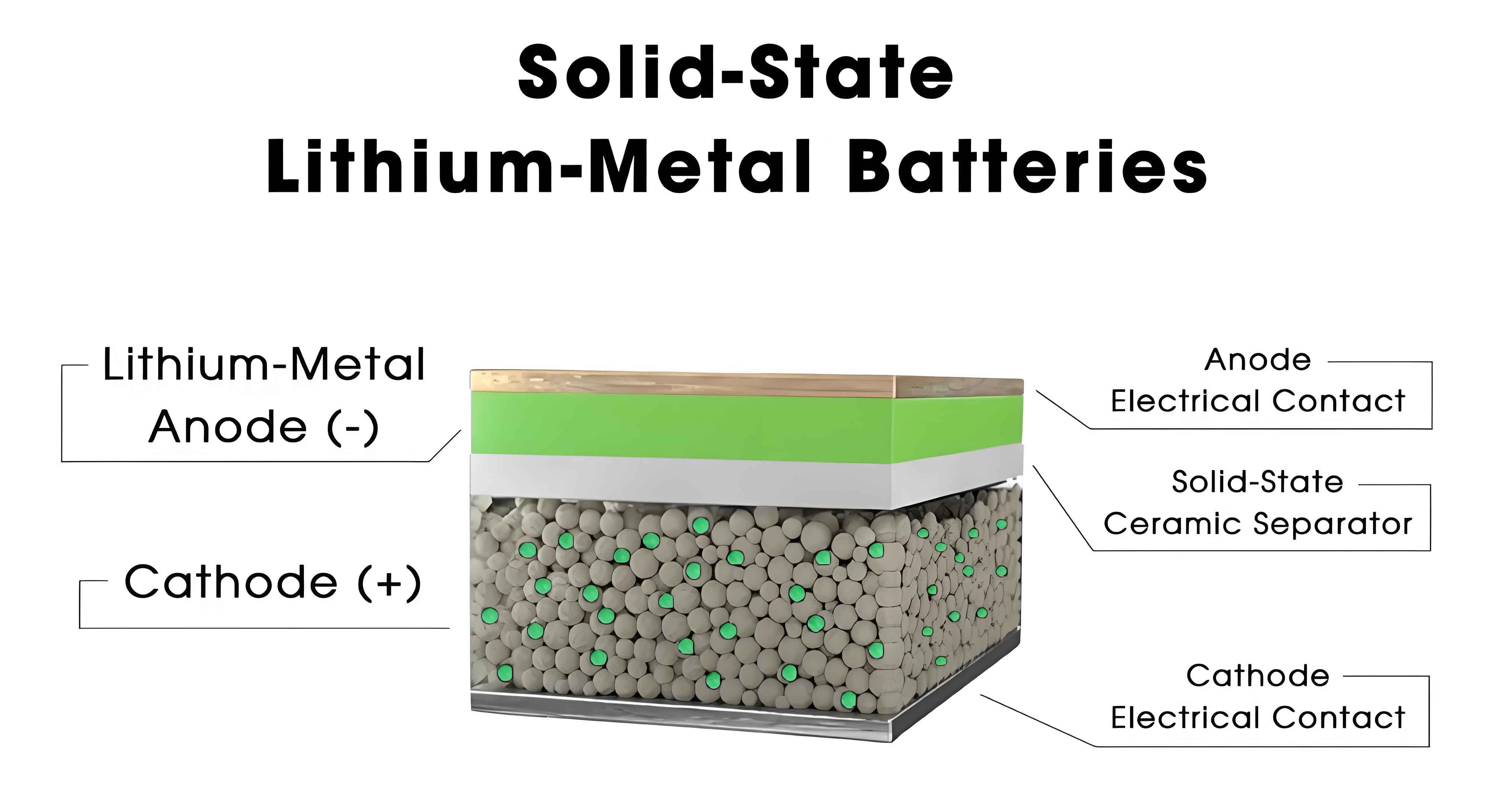
Theoretical design in solid-state battery research encompasses a range of computational techniques, from density functional theory (DFT) to molecular dynamics (MD) simulations. These methods enable the calculation of critical properties such as ionic conductivity, electrochemical stability, and interface reactions. For instance, the ionic conductivity of a solid electrolyte, a key metric for solid-state battery performance, can be derived from diffusion coefficients obtained via ab initio molecular dynamics (AIMD). The diffusion coefficient \( D \) is calculated from the mean square displacement of lithium ions over time \( t \):
$$ D = \frac{1}{2dt} \langle [\Delta r(t)]^2 \rangle $$
where \( d \) is the dimensionality. The temperature dependence follows the Arrhenius relation:
$$ D = D_0 \exp\left(-\frac{E_a}{k_B T}\right) $$
leading to the ionic conductivity \( \sigma \):
$$ \sigma = \frac{\rho z^2 F^2}{RT} D = \frac{A_0}{T} \exp\left(-\frac{E_a}{k_B T}\right) $$
Here, \( \rho \) is the molar density of lithium ions, \( z \) is the charge number, \( F \) is Faraday’s constant, \( R \) is the gas constant, \( E_a \) is the activation energy, \( k_B \) is Boltzmann’s constant, and \( A_0 \) is a pre-exponential factor. Such formulas are fundamental in evaluating candidate solid electrolytes for solid-state battery applications. Additionally, the voltage platform of electrode materials in a solid-state battery can be computed from the Gibbs free energy change during lithiation. For a reaction from state \( \text{Li}_x \Pi \) to \( \text{Li}_{x+\Delta x} \Pi \), the average voltage \( \bar{V} \) is:
$$ \bar{V} = -\frac{\Delta G_r}{F \Delta x} $$
where \( \Delta G_r \) is approximated by the internal energy change \( \Delta E_r \) from DFT calculations. These theoretical frameworks allow for high-throughput screening of materials, accelerating the development of solid-state battery components.
To illustrate the diversity of solid electrolyte systems in solid-state batteries, I have compiled a table summarizing key classes, their typical ionic conductivities, and advantages. This table highlights how theoretical design can target specific properties for optimization.
| Solid Electrolyte Class | Example Composition | Room-Temperature Ionic Conductivity (S/cm) | Key Advantages | Theoretical Design Insights |
|---|---|---|---|---|
| Sulfide-based | Li10GeP2S12 (LGPS) | ~10-2 | High ionic conductivity, soft mechanical properties | One-dimensional Li+ diffusion along c-axis; substitution of Ge with Si or Sn to reduce cost |
| Argyrodite | Li6PS5Cl | ~10-3 | Three-dimensional diffusion pathways, tunable halogens | Alloying with Te or Se to lower activation energy; Cl substitution enhances stability |
| Anti-perovskite | Li3OCl | ~10-4 – 10-3 | Wide electrochemical window, compatibility with Li metal | Defect engineering to increase Li+ vacancies; double anti-perovskite Li6OSI2 for faster transport |
| Oxide-based | Li7La3Zr2O12 (LLZO) | ~10-4 – 10-3 | Excellent chemical stability, high mechanical strength | Doping with Al or Ta to stabilize cubic phase; vacancy-mediated diffusion mechanisms |
| Halide-based | Li3YCl6 | ~10-3 | Good oxidative stability, compatibility with high-voltage cathodes | Site-occupation tuning in LixScCl3+x to optimize Li+ pathways; anion substitution effects |
This table underscores the role of theoretical predictions in identifying promising solid electrolytes for solid-state batteries. For example, in sulfide-based systems, DFT calculations have revealed that the high ionic conductivity of LGPS stems from its unique crystal structure, where lithium ions migrate through one-dimensional channels. However, the high cost of germanium prompted studies on alternatives like Li10SiP2S12, which theoretical models suggest could offer similar performance at lower cost. In argyrodite systems, computational screening has guided the substitution of sulfur with tellurium to soften the lattice and reduce the activation energy for lithium ion migration, a critical factor for enhancing the kinetics in solid-state batteries. These insights are derived from phonon dispersion calculations and energy barrier analyses using the nudged elastic band method.
Beyond bulk properties, the interfaces in solid-state batteries are a major focus of theoretical research. The solid-solid contact between electrodes and electrolytes often leads to high interfacial resistance, which can degrade the performance of solid-state batteries. To understand this, I employ DFT-based interface models to simulate reactions at the atomic scale. For instance, the formation of a space charge layer due to lithium chemical potential differences can be analyzed using Poisson-Boltzmann equations. The interfacial stability can be assessed by calculating the decomposition energy \( E_D \) of solid electrolytes against electrode materials. For a solid electrolyte in contact with lithium metal, \( E_D \) is given by:
$$ E_D = \frac{E(\text{decomposition products}) – E(\text{electrolyte})}{N} $$
where \( N \) is the number of atoms. A negative \( E_D \) indicates thermodynamic instability, leading to the formation of interphases. In solid-state batteries, such interphases can be either detrimental (if electronically conductive) or beneficial (if ionically conductive but electronically insulating). My simulations have shown that for sulfide solid electrolytes like Li6PS5Cl, the interface with lithium metal is reactive, forming a mixed conducting interphase that grows over time. This highlights the need for interface engineering, such as applying buffer layers, to stabilize solid-state battery systems.
To quantify the impact of interface modifications, I have developed models that incorporate mechanical stress and electrochemical reactions. The stress \( \sigma \) at an interface due to volume changes during cycling can be estimated using linear elasticity theory:
$$ \sigma = E \cdot \epsilon $$
where \( E \) is Young’s modulus and \( \epsilon \) is the strain from lattice mismatch. In solid-state batteries, this stress can cause cracking or delamination, increasing resistance. Theoretical studies suggest that using ductile solid electrolytes or compliant interlayers can mitigate these issues. For example, in oxide-based solid electrolytes, doping to reduce grain boundary resistance has been predicted to improve overall conductivity. The following formula summarizes the effective conductivity \( \sigma_{\text{eff}} \) in polycrystalline solid electrolytes:
$$ \sigma_{\text{eff}} = \frac{\sigma_{\text{bulk}} \cdot \sigma_{\text{GB}}}{\sigma_{\text{bulk}} + \sigma_{\text{GB}}} $$
where \( \sigma_{\text{bulk}} \) and \( \sigma_{\text{GB}} \) are the bulk and grain boundary conductivities, respectively. This emphasizes the importance of microstructure design in solid-state batteries, which can be guided by phase-field simulations.
Another critical aspect is the electrochemical window of solid electrolytes in solid-state batteries. The stability window determines the compatibility with high-voltage cathodes, such as LiCoO2 or LiNi0.8Mn0.1Co0.1O2 (NMC811). Using DFT, I calculate the band gap and the energies for oxidation and reduction reactions. The electrochemical window \( \Delta V \) can be derived from the difference between the lithium chemical potential \( \mu_{\text{Li}} \) in the electrolyte and the electrodes:
$$ \Delta V = \frac{\mu_{\text{Li, cathode}} – \mu_{\text{Li, anode}}}{F} $$
For instance, halide solid electrolytes like Li3YCl6 exhibit wide windows (~4 V), making them suitable for high-energy solid-state batteries. In contrast, sulfide solid electrolytes often have narrower windows (~2 V), limiting their use with conventional cathodes. Theoretical design can help expand these windows by adjusting the anion chemistry or introducing protective coatings.
The development of solid-state battery technology also involves assembly processes. Theoretical models can inform manufacturing techniques, such as thin-film deposition or roll-to-roll processing. For example, the adhesion energy between layers in a solid-state battery stack can be computed using surface energy calculations. This is crucial for ensuring mechanical integrity during cycling. I have explored the use of solid polymer electrolytes as interlayers to improve contact, and simulations show that their viscoelastic properties can accommodate volume changes. The following table summarizes key assembly challenges and theoretical solutions for solid-state batteries.
| Assembly Challenge | Theoretical Analysis Method | Proposed Solutions | Impact on Solid-State Battery Performance |
|---|---|---|---|
| Poor electrode-electrolyte contact | Finite element analysis (FEA) of stress distribution | Apply external pressure; use soft solid electrolytes or gel interlayers | Reduces interfacial resistance, improves cycle life |
| Formation of resistive interphases | DFT-based reaction pathway calculations | Design buffer layers (e.g., Li3PO4 coatings) to suppress reactions | Enhances stability, prevents capacity fade |
| Dendrite growth through solid electrolytes | Phase-field modeling of lithium deposition | Optimize solid electrolyte modulus and defect structure | Increases safety, enables high-current operation |
| Thermal management issues | Thermodynamic simulations of heat generation | Integrate thermally conductive fillers into solid electrolytes | Prevents overheating, maintains performance at high rates |
This table illustrates how theoretical insights directly translate into practical strategies for solid-state battery fabrication. For instance, phase-field models have revealed that lithium dendrites in solid-state batteries propagate along grain boundaries or through defects, suggesting that densification and grain size control are essential. Moreover, thermal simulations indicate that solid-state batteries may generate less heat than liquid-based systems, but localized hot spots can still occur, necessitating materials with high thermal conductivity.
Looking ahead, the future of solid-state battery development hinges on the integration of multi-scale simulations. From atomistic DFT to continuum models, these tools can predict performance across length and time scales. For example, machine learning algorithms trained on computational databases can accelerate the discovery of novel solid electrolytes with tailored properties. I envision a materials genome approach for solid-state batteries, where high-throughput calculations identify promising candidates for experimental validation. Key targets include solid electrolytes with ionic conductivities exceeding 10 mS/cm, wide electrochemical windows (>5 V), and excellent interfacial stability. Additionally, the design of composite electrodes that mix active materials with solid electrolytes can be optimized using percolation theory, ensuring efficient ion and electron transport in solid-state batteries.
In conclusion, the theoretical design of materials is revolutionizing the development of solid-state batteries. By leveraging computational methods, we can overcome the challenges of ionic conductivity, interface compatibility, and mechanical stability. The progress in sulfide, oxide, halide, and polymer-based solid electrolytes underscores the power of predictive modeling. As we advance, interdisciplinary collaboration between theorists and experimentalists will be crucial to bring high-performance solid-state batteries to market. I am optimistic that with continued innovation, solid-state batteries will play a pivotal role in achieving a sustainable energy future, enabling safer, longer-lasting, and more powerful energy storage solutions. The journey from theory to practice is complex, but each computational insight brings us closer to realizing the full potential of solid-state battery technology.
To further elaborate, let me discuss specific formulas and tables that encapsulate the core principles. The ionic conductivity in solid-state batteries is often limited by activation energies, which can be lowered through strategic doping. For a doped solid electrolyte, the activation energy \( E_a \) can be expressed as:
$$ E_a = E_0 – k \cdot x $$
where \( E_0 \) is the intrinsic activation energy, \( k \) is a constant, and \( x \) is the dopant concentration. This linear approximation is useful for screening dopants in oxide solid electrolytes like LLZO. Similarly, the voltage profile of a solid-state battery cathode can be modeled using the Nernst equation, considering the solid-state diffusion of lithium ions:
$$ V = V^0 – \frac{RT}{F} \ln\left(\frac{a_{\text{Li, cathode}}}{a_{\text{Li, anode}}}\right) $$
where \( a \) denotes activities. In practice, these activities are influenced by the solid electrolyte interface, highlighting the need for integrated models.
Another important aspect is the cost modeling of solid-state battery materials. While theoretical design often focuses on performance, economic viability is crucial for widespread adoption. I have developed simplified cost functions based on elemental abundances and synthesis complexity. For a solid electrolyte with composition \( \text{Li}_a\text{M}_b\text{X}_c \), the relative cost \( C \) can be estimated as:
$$ C = \sum_i w_i \cdot p_i $$
where \( w_i \) is the weight fraction of element \( i \), and \( p_i \) is its market price. This encourages the exploration of earth-abundant elements, such as replacing germanium with silicon in sulfide solid electrolytes for solid-state batteries.
In summary, the theoretical design of solid-state battery materials is a multifaceted endeavor that combines physics, chemistry, and engineering. Through continuous refinement of computational tools, we can unlock new possibilities for energy storage. I encourage fellow researchers to embrace these methods, as they hold the key to overcoming the remaining hurdles in solid-state battery technology. The path forward is clear: by harnessing the power of simulation, we can design the next generation of solid-state batteries that are not only high-performing but also scalable and safe.