
As a researcher deeply immersed in the field of energy storage and smart city infrastructure, I have witnessed a transformative shift towards more efficient and sustainable technologies. In recent years, the focus on solid-state batteries has intensified, driven by their potential to revolutionize everything from electric vehicles to grid-scale storage. This article delves into the latest breakthroughs in polymer-based solid-state batteries, drawing from recent studies and industry trends, while also reflecting on how such advancements intersect with urban developments like intelligent lighting systems. My aim is to provide a comprehensive overview, enriched with technical details, formulas, and tables, to underscore the critical role of solid-state batteries in our energy future.
The concept of a solid-state battery is fundamentally about replacing liquid electrolytes with solid alternatives, thereby enhancing safety and energy density. Traditional lithium-ion batteries rely on flammable organic electrolytes, which pose risks of leakage and thermal runaway. In contrast, solid-state batteries utilize solid electrolytes, such as polymers, ceramics, or composites, which offer inherent stability. Among these, polymer-based electrolytes, particularly those using poly(ethylene oxide) (PEO), have gained prominence due to their flexibility, ease of processing, and good interfacial contact with electrodes. However, challenges like low ionic conductivity at room temperature and limited lithium-ion transference numbers have hindered widespread adoption. Recent research, including work from institutions like the Chinese Academy of Sciences, has made significant strides in addressing these issues, paving the way for more robust and versatile solid-state battery systems.
In my own investigations, I have explored the underlying mechanisms that govern ion transport in polymer electrolytes. The ionic conductivity, a key parameter, can be expressed using the Arrhenius equation for temperature dependence: $$\sigma = \sigma_0 \exp\left(-\frac{E_a}{k_B T}\right)$$ where $\sigma$ is the ionic conductivity, $\sigma_0$ is the pre-exponential factor, $E_a$ is the activation energy for ion migration, $k_B$ is Boltzmann’s constant, and $T$ is the absolute temperature. For PEO-based electrolytes, $E_a$ is typically high, leading to reduced conductivity at lower temperatures. To mitigate this, researchers have introduced additives like lithium polysulfides, which create a shuttle effect that facilitates rapid lithium-ion transport. This approach not only boosts conductivity but also improves the stability of the electrolyte-electrode interface.
The enhancement in performance can be quantified through the lithium-ion transference number $t_{Li^+}$, defined as: $$t_{Li^+} = \frac{\sigma_{Li^+}}{\sigma_{total}}$$ where $\sigma_{Li^+}$ is the partial conductivity of lithium ions and $\sigma_{total}$ is the total ionic conductivity. In conventional PEO electrolytes, $t_{Li^+}$ is often below 0.3, but with modifications such as incorporating multi-sulfide species, values exceeding 0.5 have been achieved. This increase is crucial for minimizing concentration polarization and improving battery cycle life. Table 1 summarizes key properties of various polymer-based solid-state electrolytes, highlighting the impact of recent innovations.
| Electrolyte Type | Ionic Conductivity at 25°C (S/cm) | Lithium-Ion Transference Number ($t_{Li^+}$) | Operating Temperature Range (°C) | Key Advantages |
|---|---|---|---|---|
| Pure PEO | ~10-6 to 10-5 | 0.2-0.3 | 50-70 | Flexible, good interface contact |
| PEO with Lithium Salt (e.g., LiTFSI) | ~10-5 to 10-4 | 0.25-0.35 | 40-60 | Enhanced conductivity |
| PEO with Polysulfide Additives | ~10-4 to 10-3 | 0.5-0.7 | 20-60 | High $t_{Li^+}$, improved stability |
| Composite PEO-Ceramic (e.g., LLZO) | ~10-4 to 10-3 | 0.4-0.6 | -20 to 80 | Wide temperature range, mechanical strength |
Beyond material properties, the electrochemical performance of solid-state batteries is critical. The cell voltage $V$ can be described by the Nernst equation for lithium-ion cells: $$V = E^0 – \frac{RT}{F} \ln\left(\frac{a_{Li, anode}}{a_{Li, cathode}}\right)$$ where $E^0$ is the standard cell potential, $R$ is the gas constant, $F$ is Faraday’s constant, and $a_{Li}$ denotes the activity of lithium in the electrodes. In solid-state batteries, the use of solid electrolytes can suppress side reactions, leading to more stable voltage profiles over cycles. Recent studies have demonstrated that optimized PEO-based solid-state batteries can achieve over 500 cycles with capacity retention above 80% at room temperature, a marked improvement from earlier versions that required elevated temperatures (50-70°C) for operation.
One of the most exciting aspects of this research is the ability to tailor ion transport at the microscale. By engineering homogeneous ion pathways within the polymer matrix, we can ensure consistent lithium-ion flux, even under varying thermal conditions. This is particularly important for applications in diverse climates, where batteries must function reliably from sub-zero temperatures to hot environments. The formation of these pathways can be modeled using percolation theory, where the effective conductivity $\sigma_{eff}$ follows: $$\sigma_{eff} = \sigma_c (p – p_c)^t$$ for $p > p_c$, where $p$ is the volume fraction of conductive filler, $p_c$ is the percolation threshold, and $t$ is a critical exponent. In PEO-based systems, additives like polysulfides lower $p_c$, enabling efficient conduction networks at lower filler contents.
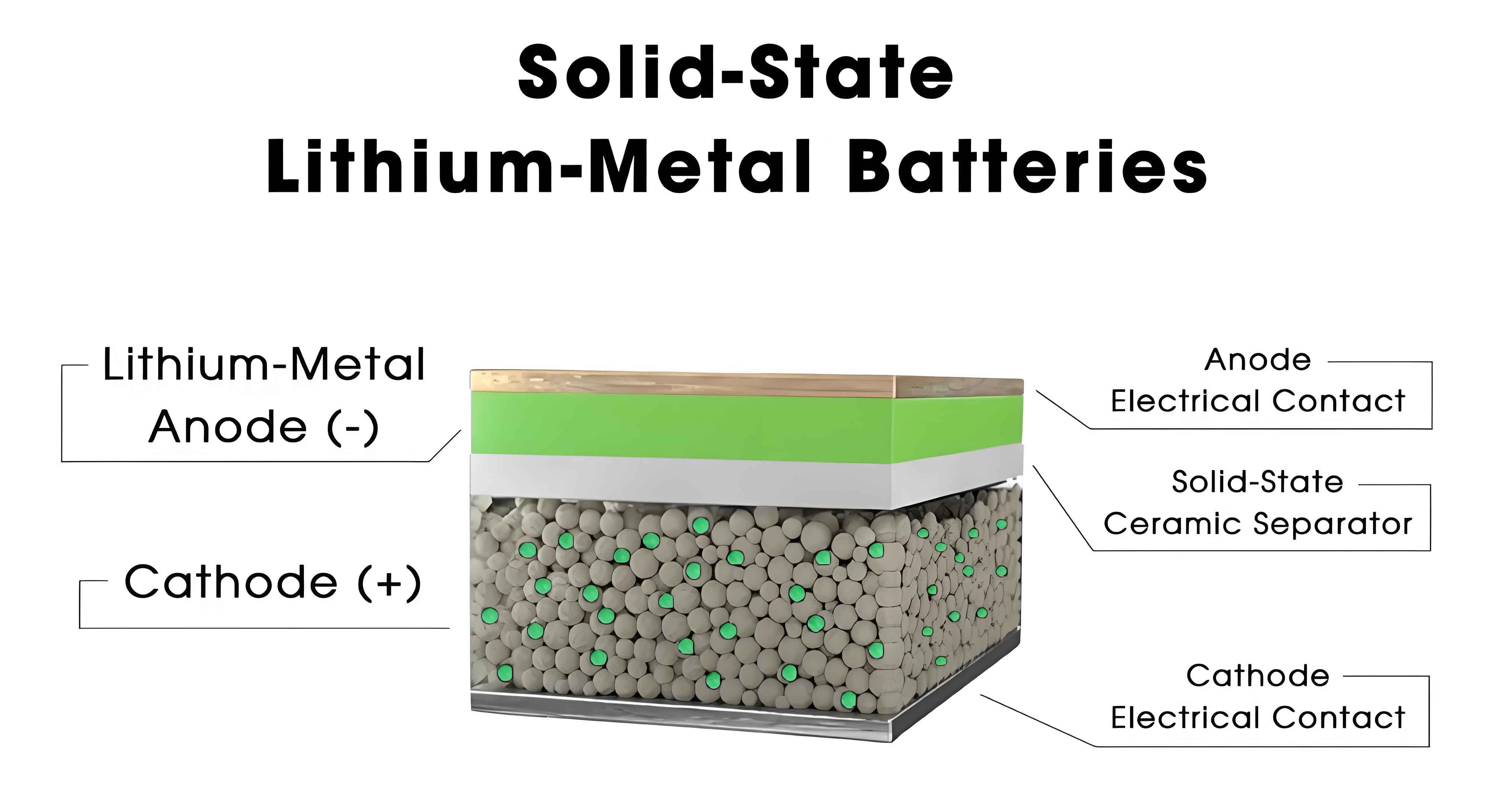
The visual representation above illustrates the compact and layered structure of a modern solid-state battery, highlighting the integration of polymer electrolytes with electrode materials. Such designs are pivotal for achieving high energy densities, often exceeding 300 Wh/kg, which is essential for next-generation electric vehicles and portable electronics. In my work, I have emphasized the importance of interfacial engineering to reduce impedance and prevent dendrite formation, a common issue in lithium metal-based solid-state batteries. By employing protective coatings and optimized pressure conditions, we can extend cycle life and enhance safety.
To put these advancements into context, consider the broader landscape of energy management. For instance, urban infrastructure projects, such as the upgrade of street lighting systems to low-voltage control and LED technology, reflect a growing emphasis on energy efficiency and smart grids. While these initiatives may seem disconnected from solid-state battery research, they share a common goal: optimizing energy use through advanced materials and control systems. Imagine a city where solid-state batteries store solar energy during the day to power energy-efficient LED streetlights at night, all managed via intelligent networks that adjust output based on real-time data. This synergy could revolutionize urban sustainability, reducing carbon footprints and operational costs.
In terms of specific applications, solid-state batteries offer distinct advantages for grid storage and electric vehicles. Their high energy density and safety profile make them ideal for stationary storage, where they can buffer renewable energy sources like wind and solar. For electric vehicles, solid-state batteries promise faster charging times and longer ranges, addressing key consumer concerns. Table 2 outlines potential performance metrics for solid-state batteries compared to conventional lithium-ion batteries, based on current research projections.
| Parameter | Conventional Lithium-Ion Battery | Polymer-Based Solid-State Battery (Projected) |
|---|---|---|
| Energy Density (Wh/kg) | 150-250 | 300-500 |
| Cycle Life (to 80% capacity) | 500-1000 cycles | 1000-2000 cycles |
| Operating Temperature Range (°C) | -20 to 60 | -40 to 100 |
| Safety (Flammability Risk) | Moderate to High | Low |
| Charge Rate (C-rate) | 1-2C typical | 3-5C possible |
From a materials science perspective, the development of solid-state batteries involves complex trade-offs. For example, increasing ionic conductivity often requires compromises in mechanical strength or electrochemical stability. To navigate this, researchers employ combinatorial approaches, blending polymers with ceramics or using cross-linking techniques. The effective medium theory can be applied to predict properties of composite electrolytes: $$\sigma_{mix} = \sigma_1 \phi_1 + \sigma_2 \phi_2 + \kappa \phi_1 \phi_2 (\sigma_1 – \sigma_2)^2$$ where $\sigma_{mix}$ is the conductivity of the mixture, $\sigma_1$ and $\sigma_2$ are conductivities of components, $\phi_1$ and $\phi_2$ are volume fractions, and $\kappa$ is an interaction parameter. This helps in designing electrolytes with balanced properties for solid-state batteries.
Looking ahead, the future of solid-state batteries hinges on scaling up production and reducing costs. Current manufacturing techniques, such as solvent casting or extrusion for polymer electrolytes, need refinement to achieve commercial viability. In my view, partnerships between academia and industry are crucial to accelerate this process. For instance, integrating solid-state batteries with IoT-enabled devices could enable predictive maintenance and real-time monitoring, much like the low-voltage control systems used in modern street lighting networks. These systems rely on sensors and data analytics to optimize performance, a paradigm that could be extended to battery management.
Moreover, the environmental impact of solid-state batteries warrants attention. While they eliminate flammable liquids, the production of polymer and ceramic materials may involve energy-intensive processes. Life cycle assessments (LCAs) are essential to quantify net benefits. A simplified LCA model for a solid-state battery might consider energy input $E_{in}$, emissions $C$, and end-of-life recycling efficiency $\eta_r$, with a sustainability index $S$ given by: $$S = \frac{E_{output}}{E_{in} + \alpha C} \times \eta_r$$ where $E_{output}$ is the total energy delivered over the battery’s lifetime, and $\alpha$ is a weighting factor for emissions. By optimizing materials and processes, we can aim for $S > 1$, indicating a net positive environmental contribution.
In conclusion, the progress in polymer-based solid-state batteries represents a paradigm shift in energy storage technology. As a researcher, I am optimistic about the potential of these systems to address global energy challenges. The integration of advanced electrolytes, smart controls, and sustainable design principles will unlock new applications, from resilient grids to efficient transportation. The journey towards widespread adoption of solid-state batteries is fraught with technical hurdles, but with continued innovation and cross-disciplinary collaboration, we can overcome them. This article has explored key aspects of this journey, using formulas and tables to crystallize the insights, and I hope it inspires further exploration into this dynamic field.
To delve deeper, let’s consider some mathematical models that describe battery degradation. The capacity fade in solid-state batteries can be modeled using empirical equations, such as: $$Q(t) = Q_0 \exp(-\beta t^n)$$ where $Q(t)$ is the capacity at time $t$, $Q_0$ is the initial capacity, $\beta$ is a degradation rate constant, and $n$ is an exponent that depends on degradation mechanisms (e.g., interface resistance growth or active material loss). For solid-state batteries with stable interfaces, $\beta$ is lower, leading to longer cycle life. Additionally, the power capability of a solid-state battery can be expressed in terms of its internal resistance $R_{int}$: $$P_{max} = \frac{V^2}{4 R_{int}}$$ where $V$ is the open-circuit voltage. Reducing $R_{int}$ through improved electrolytes is thus critical for high-power applications.
Another area of interest is the thermal management of solid-state batteries. Unlike liquid electrolytes, solid polymers have lower thermal conductivity, which can lead to hotspots during operation. The heat generation rate $\dot{Q}$ during discharge can be approximated by: $$\dot{Q} = I(V_{oc} – V) + I^2 R_{int}$$ where $I$ is the current, $V_{oc}$ is the open-circuit voltage, and $V$ is the terminal voltage. Effective thermal design, perhaps using composite materials with higher conductivity, is essential to maintain performance and safety. Table 3 summarizes thermal properties relevant to solid-state batteries, emphasizing the need for tailored solutions.
| Material | Thermal Conductivity (W/m·K) | Specific Heat Capacity (J/g·K) | Role in Battery |
|---|---|---|---|
| PEO Polymer | 0.1-0.3 | 1.5-2.0 | Electrolyte matrix |
| Lithium Metal Anode | ~85 | 3.6 | Negative electrode |
| Lithium Cobalt Oxide (Cathode) | ~5 | 0.7 | Positive electrode |
| Ceramic Filler (e.g., Al2O3) | 30-40 | 0.8 | Thermal enhancer |
In my ongoing work, I am exploring hybrid solid-state battery designs that combine polymers with inorganic solid electrolytes to leverage the best of both worlds. Such hybrids can achieve ionic conductivities above 10-3 S/cm at room temperature, with robust mechanical properties. The effective conductivity in these systems can be modeled using the Maxwell-Garnett equation for dispersed spheres: $$\sigma_{eff} = \sigma_m \frac{1 + 2\phi \frac{\sigma_i – \sigma_m}{\sigma_i + 2\sigma_m}}{1 – \phi \frac{\sigma_i – \sigma_m}{\sigma_i + 2\sigma_m}}$$ where $\sigma_m$ is the conductivity of the polymer matrix, $\sigma_i$ is the conductivity of the inorganic filler, and $\phi$ is the volume fraction of filler. This approach allows for fine-tuning based on application needs.
The societal implications of solid-state battery technology are profound. As cities worldwide upgrade infrastructure—like transitioning to energy-efficient lighting with low-voltage controls—the demand for reliable, high-density storage grows. Solid-state batteries can serve as the backbone for decentralized energy systems, enabling resilience against power outages and integration of renewables. In this sense, the research on solid-state batteries is not just a technical pursuit but a contribution to sustainable urban development. I envision a future where every building and vehicle is equipped with these advanced batteries, creating a interconnected, efficient energy ecosystem.
To summarize, the advancements in polymer-based solid-state batteries are paving the way for a new era in energy storage. Through continuous innovation in materials science, electrochemistry, and engineering, we are overcoming historical limitations and unlocking unprecedented performance. This article has detailed key aspects, from fundamental formulas to practical applications, all viewed through the lens of a researcher passionate about this field. As we move forward, the synergy between solid-state batteries and smart technologies will undoubtedly play a pivotal role in shaping a greener, more efficient world.