
The pursuit of advanced energy storage is more than an academic exercise; it is a fundamental necessity for our technological future. As I survey the landscape of electrochemical power sources, it is evident that conventional lithium-ion batteries (LIBs), while transformative, are approaching their inherent limits. Their reliance on flammable liquid electrolytes poses an undeniable safety risk, a concern that grows with scale. Simultaneously, the incremental gains in their energy density are slowing, constrained by material physics. This dual challenge of safety and performance has catalysed a global resurgence in research towards a fundamentally different architecture: the all-solid-state battery. In my view, the promise of the solid-state battery lies not in a single breakthrough but in a systems-level reimagining of how we store energy—replacing volatile liquids with stable, solid ion conductors.
The core premise is elegant: by eliminating the organic liquid electrolyte, we inherently remove a primary source of combustion risk. This grants the solid-state battery an unparalleled safety profile, a non-negotiable attribute for electric vehicles and grid storage. Furthermore, this shift unlocks the potential to use high-capacity electrodes, such as lithium metal anodes, which are largely incompatible with liquid systems due to dendrite formation. The theoretical energy density leap is substantial, promising to extend the range of electric vehicles and the duration of grid storage. However, my experience in this field has taught me that the path from elegant premise to commercial reality is paved with intricate scientific and engineering challenges. The evolution from liquid to solid-state systems is not a simple substitution but a paradigm shift demanding new materials, new interfaces, and new manufacturing philosophies.
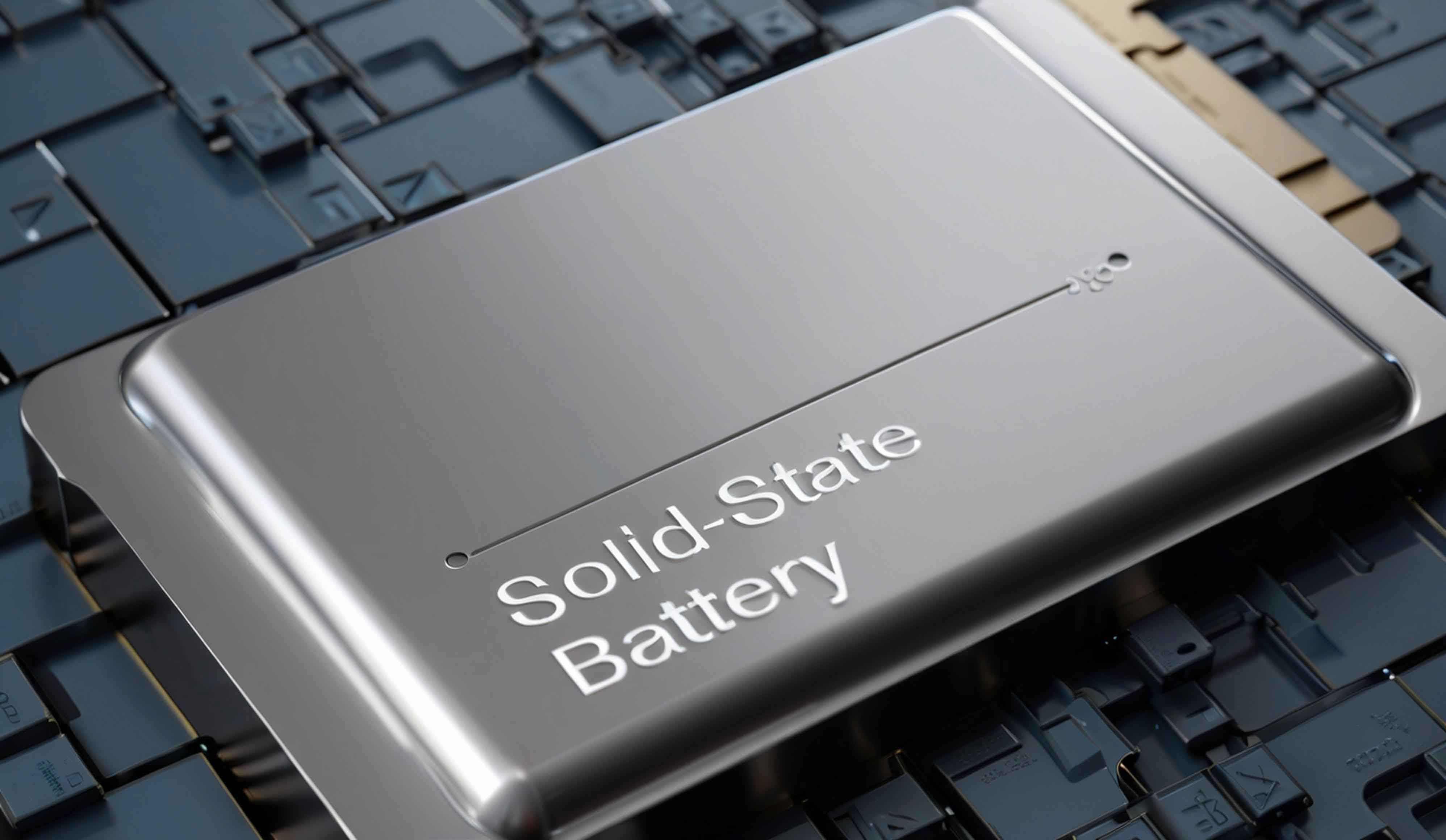
The heart of any solid-state battery is, unequivocally, the solid-state electrolyte (SSE). This component must simultaneously fulfill a daunting set of criteria: high ionic conductivity ($\sigma_{Li^+}$) rivaling liquids, negligible electronic conductivity ($\sigma_{e^-}$), a wide electrochemical stability window, excellent mechanical properties, and chemical stability against electrode materials and ambient air. Cost and scalability are the final, critical gates for commercialization. Over the past decade, my work has involved a deep dive into several major families of SSEs, each with a distinct profile of advantages and trade-offs.
To systematically compare these diverse material systems, I find a table indispensable for summarizing their key characteristics:
| SSE Class | Exemplary Composition | Room-Temp $\sigma_{Li^+}$ (S/cm) | Key Advantages | Primary Challenges |
|---|---|---|---|---|
| Sulfide | $\text{Li}_{9.54}\text{Si}_{1.74}\text{P}_{1.44}\text{S}_{11.7}\text{Cl}_{0.3}$ | $~10^{-2}$ (Superionic) | Highest conductivity; good mechanical sinterability. | Poor air stability (H$_2$S release); narrow electrochemical window; high cost of raw materials. |
| Oxide (Garnet) | $\text{Li}_7\text{La}_3\text{Zr}_2\text{O}_{12}$ (LLZO) | $~10^{-3} – 10^{-4}$ | Good air stability; wide electrochemical window; high modulus. | Rigid, brittle nature; grain boundary resistance; surface reactivity (Li$_2$CO$_3$ formation). |
| Halide | $\text{Li}_3\text{YCl}_6$, $\text{Li}_2\text{ZrCl}_6$ | $~10^{-3}$ | High voltage stability (>4V vs. Li/Li$^+$); good deformability; versatile synthesis. | Hygraphroscopic (moisture sensitive); stability against Li metal can be limited. |
| Polymer | PEO:$\text{LiTFSI}$ | $~10^{-5} – 10^{-6}$ (at 25°C) | Excellent flexibility; ease of processing; low cost. | Low RT conductivity; narrow electrochemical window; poor mechanical strength at elevated T. |
| Anti-Perovskite | $\text{Li}_3\text{OCl}$ | $~10^{-5}$ (requires optimization) | Excellent theoretical stability vs. Li metal. | Moderate conductivity; stability in humid air. |
My research on sulfide electrolytes revealed their superb bulk conductivity, often described by an Arrhenius relationship: $$\sigma T = A \exp\left(\frac{-E_a}{k_B T}\right)$$ where $E_a$ is the activation energy for ion hopping. However, the practical handling difficulties and potential for toxic gas generation present significant non-electrochemical hurdles. Conversely, oxide electrolytes like LLZO offer compelling stability but introduce formidable ceramic processing and interfacial contact challenges. The recent emergence of halide-based solid-state electrolytes has been particularly fascinating. Their combination of decent ionic conductivity, high oxidation stability (enabling cobalt-free, high-voltage cathodes), and softer mechanical properties positions them uniquely. In my laboratory, we have explored wet-chemical synthesis routes for these materials, finding that structural tuning, such as anion site mixing or cation doping, can significantly alter transport properties. For instance, the ionic conductivity in a doped halide can be modeled as a function of carrier concentration and mobility: $$\sigma = n \cdot q \cdot \mu$$ where the mobility $\mu$ is highly dependent on the energetic landscape of the lithium sites within the crystal lattice.
However, I have come to believe that the search for a single, “perfect” universal solid-state electrolyte may be a chimera. A more pragmatic path forward lies in composite and hybrid approaches. For example, embedding oxide or sulfide particles within a polymer matrix can yield a composite electrolyte with improved mechanical integrity and mitigated interfacial resistance. The effective medium theory can sometimes provide a first-order approximation for the composite conductivity $\sigma_{\text{eff}}$: $$\sigma_{\text{eff}} = \sigma_m \left[ \frac{1+2\phi(\beta-1)/(\beta+2)}{1-\phi(\beta-1)/(\beta+2)} \right]$$ where $\sigma_m$ is the matrix conductivity, $\phi$ is the filler volume fraction, and $\beta = \sigma_f / \sigma_m$ is the conductivity ratio of filler to matrix. This paradigm of tailoring the electrolyte to specific cell chemistries and applications is, in my opinion, the most viable strategy for advancing the solid-state battery.
If the solid-state electrolyte is the heart, the interfaces are the circulatory system of the solid-state battery. Their proper function is paramount, and their failure is the most common cause of cell degradation. The transition from a liquid-soaked, conformal interface to a rigid solid-solid contact creates a suite of complex problems. At the cathode, the interface between the active material (e.g., NMC, LCO) and the SSE is a hotbed of challenges: interfacial reactions forming high-resistance decomposition layers, the space-charge layer effect which depletes or accumulates Li$^+$ at the junction, and physical contact loss due to the cyclic volume changes of the cathode particles. My work has focused on atomic-scale coatings applied to cathode particles. These coatings—often Li-containing oxides or phosphates—must be electronically insulating, ionically conducting, and chemically stable. Their role can be conceptualized as modifying the interfacial energy and providing a kinetic barrier to side reactions, effectively shifting the thermodynamic driving force for decomposition.
The anode interface, particularly with lithium metal, presents an even more daunting frontier. The fundamental instability of most SSEs against reduction by Li metal (with a potential of -3.04 V vs. SHE) leads to the growth of an interphase. The properties of this interphase are critical. If it is ionically conductive but electronically insulating, it can be passivating. However, if it contains electronic pathways, it can lead to continuous degradation and Li consumption. Furthermore, the phenomenon of Li dendrite penetration through seemingly rigid SSEs remains a critical safety concern for the solid-state battery. The mechanism differs from liquid cells and is often linked to local hotspots of current density, defects in the SSE, or the presence of electronic conductivity within the electrolyte itself. The critical current density (CCD) before short-circuit is a key metric, but it must be evaluated under realistic conditions (e.g., with thin Li, high areal capacity). I have investigated strategies like introducing a thin, lithiophilic interlayer (e.g., Au, Si) at the interface to homogenize Li plating/stripping. The modified surface energy promotes planar deposition, following a relationship where the overpotential $\eta$ for nucleation is lowered: $$\eta = \frac{\Delta G_{\text{hetero}}^*}{z e_0} = \frac{\phi(\theta) \Omega \gamma_{\text{SL}}^2}{z e_0 k_B T \Delta\mu}$$ where $\phi(\theta)$ is a function of the contact angle, reducing the energy barrier $\Delta G_{\text{hetero}}^*$ for heterogeneous nucleation.
Beyond lithium metal, revisiting intercalation anodes like graphite or silicon within a solid-state battery context is valuable. While they sacrifice some energy density, they offer better cycle life and ease of integration. For instance, the volume expansion of silicon ($\sim$300%) is a major issue in liquid cells but can be better managed in a solid-state configuration with applied stack pressure, though this introduces engineering complexity. The development of anode-free configurations—where a bare current collector is plated with Li from a Li-rich cathode during the first charge—represents the ultimate challenge and opportunity for maximizing energy density in a solid-state battery.
The integration of components into a full, operational solid-state battery is where fundamental science meets pragmatic engineering. The leap from a laboratory coin cell, tested under several atmospheres of stack pressure, to a practical multilayer pouch cell is enormous. The primary challenges shift from material properties to manufacturing and integration. A key consideration is the fabrication of thick, low-porosity composite electrodes. Dry powder processing or slurry casting with compatible solvents is essential. In a composite cathode, the volumetric ratios of active material, solid electrolyte, and conductive additive must be optimized to percolation thresholds for both Li$^+$ and e$^-$ transport. The famous Bruggeman relation for tortuosity $\tau$ in a porous medium, $\tau = \epsilon^{-\alpha}$ (where $\epsilon$ is porosity and $\alpha$ is a factor), becomes critically important for designing cathodes with practical loadings (>3 mAh cm$^{-2}$).
Long-term performance metrics for a commercial solid-state battery must extend beyond cycle life. Self-discharge rates, thermal runaway characteristics, performance across a wide temperature range, and the ability to function without constant external pressure are all vital. The thermal stability of a solid-state battery is often touted as superior, but it requires rigorous validation under abuse conditions like nail penetration or overcharge. The heat generation ($Q$) during operation or failure is governed by electrochemical and chemical reactions: $$Q = I(E_{\text{therm}} – V) + I T \frac{dV}{dT} + \sum \Delta H_r \frac{d\lambda_r}{dt}$$ where the terms represent irreversible Joule heating, reversible entropic heat, and heat from parasitic side reactions, respectively. A well-designed solid-state battery should minimize all sources of $Q$, especially the exothermic side reactions ($\Delta H_r$).
Looking forward, the trajectory for the solid-state battery is one of convergence. It requires sustained collaboration between chemists synthesizing new SSEs, physicists and theorists modeling transport and degradation, engineers designing interfaces and cell architectures, and manufacturers developing scalable processes. Machine learning is beginning to play a role in accelerating the discovery of new solid electrolyte compositions with targeted properties. Advanced in situ and operando characterization techniques—such as neutron depth profiling, X-ray tomography, and cryo-electron microscopy—are providing unprecedented views into the dynamic evolution of interfaces within an operating solid-state battery.
In my assessment, the promise of the solid-state battery is not a guaranteed future but a compelling probability. It represents a paradigm shift towards inherently safer, higher-energy-density storage. The challenges at the material, interface, and cell levels are significant but not insurmountable. They are puzzles of physics, chemistry, and engineering awaiting solutions. The transition will likely be incremental, with hybrid or semi-solid systems bridging the gap towards the ultimate goal of a truly all-solid-state battery. The pursuit is demanding, but the potential reward—a transformative energy storage technology that enables a more sustainable and electrified world—makes it one of the most critical scientific endeavors of our time. The solid-state battery stands not merely as an incremental improvement, but as a foundational pillar for the next generation of electrochemical energy storage.