
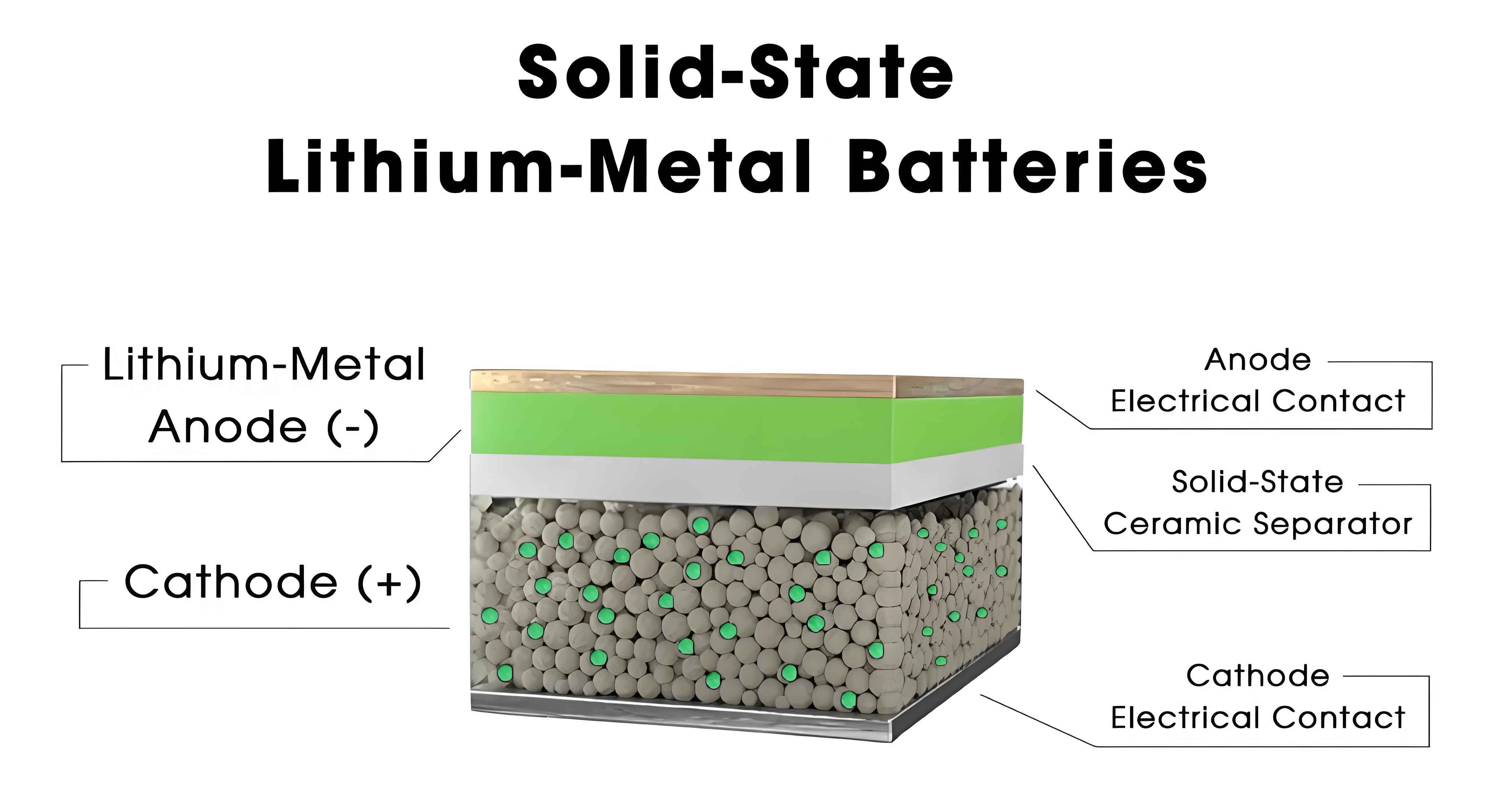
The pursuit of higher energy density and absolute safety is the defining quest in electrochemical energy storage. Traditional lithium-ion batteries, reliant on flammable organic liquid electrolytes, are fundamentally constrained by these dual challenges. My research, and that of the broader community, is increasingly focused on the paradigm shift offered by the solid-state battery. By replacing the liquid with a solid ion conductor, we unlock a future of batteries that are not only non-flammable and leak-proof but also compatible with the ultimate anode: lithium metal. This compatibility is the cornerstone for achieving the long-sought goal of a safe, high-energy-density solid-state battery.
Among the pantheon of solid electrolyte candidates, cubic garnet-type Li7La3Zr2O12 (LLZO) and its derivatives hold a privileged position. Their appeal lies in a rare combination of properties: high room-temperature ionic conductivity (on the order of 10-3 S cm-1 with doping), an exceptionally wide electrochemical window (0–6 V vs. Li+/Li), and remarkable thermodynamic stability against metallic lithium. These characteristics nominally position garnets as an ideal enabler for the all-solid-state lithium metal solid-state battery. However, the transition from a promising pellet in a research lab to a reliable component in a commercial cell is fraught with interfacial complexities. The seemingly simple junction between the garnet solid electrolyte and the lithium metal anode is, in fact, a critical frontier where performance is often lost. In this discussion, I will dissect the nature of these interface problems and systematically explore the strategies being developed to tame this frontier, thereby paving a more realistic path for the garnet-based solid-state battery.
The Core Interface Challenges: A Triad of Problems
Theoretical stability does not guarantee practical functionality. The garnet/lithium interface is plagued by a triad of interconnected issues that manifest as high impedance, erratic cycling, and premature failure.
1. The Rigid Handshake: Poor Solid-Solid Contact
Unlike liquid electrolytes that can readily wet and conform to electrode surfaces, a solid-state battery relies on intimate physical contact between rigid components. Lithium metal is soft, but garnet electrolytes are ceramics with a high Young’s modulus (E ≈ 60-150 GPa). When simply pressed together, the contact is inherently imperfect, consisting of discrete asperity points rather than a continuous, atomically close interface. This leads to a high area-specific resistance (ASR) because the actual contact area for Li+ transfer is severely limited. The problem is exacerbated during cycling. The plating and stripping of lithium at the interface is not a perfectly reversible, congruent process. It leads to local volume changes and void formation, further degrading contact and increasing impedance over time. This phenomenon can be conceptually modeled by considering the effective current density at the real contact points. If the nominal macroscopic current density is imacro, and the true contact area fraction is θ (θ < 1), the local current density at the contact points becomes:
$$ i_{local} = \frac{i_{macro}}{\theta} $$
This intensified local current density accelerates degradation and is a primary driver for the next major problem.
2. The Contaminated Skin: Surface Li2CO3 and Wettability
Garnet electrolytes are susceptible to surface contamination upon even brief exposure to ambient air. This process involves a proton exchange (H+/Li+) with moisture, forming LiOH, followed by reaction with atmospheric CO2:
$$ \text{Li}_7\text{La}_3\text{Zr}_2\text{O}_{12} + x\text{H}_2\text{O} \rightarrow \text{Li}_{7-x}\text{H}_x\text{La}_3\text{Zr}_2\text{O}_{12} + x\text{LiOH} $$
$$ 2\text{LiOH} + \text{CO}_2 \rightarrow \text{Li}_2\text{CO}_3 + \text{H}_2\text{O} $$
The resulting Li2CO3 layer is highly lithiophobic. The contact angle between molten lithium and a clean garnet surface can be as low as 90°, but on a Li2CO3-coated surface, it exceeds 140°, effectively repelling lithium. Furthermore, Li2CO3 is a poor ionic conductor (σ ~10-8 S cm-1 at 25°C) and decomposes at low voltages (~1.8 V vs. Li+/Li), creating a resistive, electrochemically unstable interphase. This layer is the single largest contributor to the catastrophic interfacial resistance often reported for untreated garnet/lithium interfaces, frequently in the range of 1000-2000 Ω cm², which is fatal for any practical solid-state battery.
3. The Penetrating Threat: Lithium Dendrite Propagation
Perhaps the most serious failure mode is the growth of lithium dendrites through the ceramic electrolyte, leading to short circuit. Despite garnet’s high mechanical strength, dendrites propagate. Several mechanisms are at play:
- Current Focusing at Defects: Pores, grain boundaries, and surface cracks create local regions of higher electric field and lower mechanical resistance. The intensified local current density, as described earlier, promotes preferential lithium deposition at these “hot spots,” initiating dendrite nuclei.
- Electrochemical Reduction within the Electrolyte: Garnets are not perfect electronic insulators. Their electronic conductivity, though low (σe ~10-8 S cm-1), is non-zero. Under an applied potential, Li+ ions migrating through the electrolyte can combine with these stray electrons at internal defects (especially interconnected grain boundaries), leading to metallic lithium deposition inside the electrolyte, not just at the anode surface.
$$ \text{Li}^+ + e^- \rightarrow \text{Li}^0 \quad \text{(within the ceramic bulk)} $$ - Inhomogeneous Li+ Flux at the Interface: Poor contact and contaminant layers cause an uneven distribution of Li+ flux across the interface. Regions with higher flux reach the lithium deposition potential faster, leading to non-uniform plating and dendrite initiation.
Engineering the Interface: A Strategic Toolkit
To realize a viable garnet-based solid-state battery, a comprehensive interfacial engineering toolkit has been developed. These strategies aim to transform the problematic interface into a stable, low-resistance, and dendrite-suppressing conduit.
Strategy 1: Garnet Electrolyte Surface Reformation
The goal here is to eradicate the lithiophobic Li2CO3 layer and create a pristine or modified garnet surface. Common methods are summarized below:
| Method | Process | Mechanism / Result | Typical Outcome |
|---|---|---|---|
| Mechanical Polishing & Thermal Treatment | Physical abrasion followed by annealing at ~500°C in inert atmosphere. | Removes surface layer; heat decomposes residual carbonates. Restores somewhat lithiophilic surface. | ASR reduction to ~2 Ω cm²; CCD* to ~0.3 mA cm-2. |
| Acid Treatment (e.g., HCl, HNO3) | Brief etching of garnet pellet in dilute acid. | Chemical dissolution of Li2CO3/LiOH. Can leave a Li+-deficient surface layer that enhances wettability. | ASR reduction to ~26 Ω cm²; stable symmetric cell cycling. |
| Carbon/Air Reactivity | Heating garnet with carbon (e.g., graphite) at >700°C. | Carbon reduces surface Li2CO3 to volatile products (CO/CO2), leaving a clean surface. | Ultra-low ASR (~28 Ω cm² at 65°C). |
| Fluorination (e.g., NH4F, XeF2) | Chemical reaction forming a thin LiF layer. | Converts contaminants to a LiF-rich interphase. LiF is ionically conductive, stable, and promotes uniform Li plating. | Enhanced CCD and cyclability; improved air stability. |
*CCD: Critical Current Density (maximum current before short circuit)
Strategy 2: Lithium Metal Anode Modification
Instead of solely modifying the ceramic, we can engineer the properties of the lithium anode itself to improve compatibility.
Lithium Alloys: Introducing a second metal (M) to form a Li-M alloy (e.g., Li-Mg, Li-Ag, Li-Si) offers multiple benefits. The alloy often has higher mechanical strength, reducing deformation and void formation. It can also have a more favorable surface energy for bonding with the garnet. For instance, a Li-Mg alloy provides a stable, composite-like framework at the interface, enabling stable cycling at high current densities (>2 mA cm-2). The alloying reaction and its equilibrium potential can be considered:
$$ \text{Li} + \text{M} \rightleftharpoons \text{Li}_x\text{M} \quad E_{\text{Li}_x\text{M}} \approx E_{\text{Li}^+/\text{Li}} + \frac{RT}{F} \ln(a_{\text{Li}}) $$
where a lower activity of Li (aLi) in the alloy slightly raises the operating potential but greatly enhances interfacial stability.
Li-Infused Scaffolds: Using a porous, lithiophilic host (e.g., carbon fiber network, 3D copper mesh) infused with molten lithium creates a composite anode. This structure confines lithium volume changes, maintains electrical connectivity, and provides a large, stable surface area for contact with the solid electrolyte, significantly reducing the effective current density and mitigating dendrites.
Strategy 3: The Interfacial Buffer Layer
This is the most versatile and widely adopted approach. A thin, functional layer is deliberately introduced between the garnet and lithium. Its functions are multifaceted: i) block electron leakage into the garnet, ii) enhance physical adhesion and wettability, iii) homogenize Li+ flux, and iv) provide a mechanical buffer.
| Layer Type | Examples | Deposition Method | Key Function & Mechanism |
|---|---|---|---|
| Inorganic Thin Films | Al2O3, ZnO, Si, Cu3N, Li3N, LiF | ALD, Sputtering, Evaporation | Ultra-thin (<10 nm) layers that react with Li to form a stable SEI-like composite (e.g., Al2O3 + Li → Li-Al-O + Li2O). Excellent conformity and precision. |
| Soft Carbon/Graphite | Pencil-drawing, spray coating | Solution/Solid Transfer | Provides a soft, deformable, and electronically conductive interface that improves contact. Li intercalates into graphite, buffering volume changes. |
| Polymer Hybrid Layers | PEO, PAN with Li salts | Spin-coating, Drop-casting | Offers excellent viscoelasticity and contact. The polymer chain can coordinate with garnet surface atoms (e.g., -C≡N with La3+), forming a stable bonded interface. Conducts Li+ while blocking electrons. |
| Metallic Layers | Au, Ag, Sn | Sputtering, Evaporation | Form lithiophilic alloys in-situ (e.g., AuLi3, AgLi). They are electron-conductive but promote uniform Li plating/stripping due to alloying reaction kinetics. |
The choice of method involves a trade-off between performance, scalability, and cost. Atomic Layer Deposition (ALD) offers superb control but is expensive. Simple methods like pencil-drawing or spin-coating polymers are scalable and can yield dramatic improvements, making them attractive for the development of a practical solid-state battery.
Quantifying Improvement: Performance Metrics and Models
The success of any interface engineering strategy is measured by key electrochemical metrics. The interfacial resistance is typically modeled using an equivalent circuit, often a resistor (Rint) in series with a constant phase element (CPE) representing the non-ideal capacitive behavior of the interface. A successful modification can lower Rint by two to three orders of magnitude.
The critical current density (CCD) is a vital indicator of dendrite suppression. It can be related to material properties via models considering surface energy, shear modulus, and overpotential. A simplified form of the Monroe-Newman criterion suggests that dendrite suppression is favored when the shear modulus of the electrolyte (Gelec) is greater than that of lithium (GLi ~ 4.8 GPa):
$$ G_{\text{elec}} > G_{\text{Li}} $$
While garnet satisfies this, local defects and electronic conductivity breach this condition, allowing dendrites. An effective interface layer raises the practical CCD by homogenizing the Li+ flux and blocking electrons.
The Li+ transference number at the interface (tLi+int) should ideally be 1. The presence of a contaminant layer or an electronically conducting interphase reduces this, promoting side reactions and dendrites. A good buffer layer maximizes tLi+int by being a pure ionic conductor or a mixed conductor with very low electronic mobility.
Future Perspectives and Concluding Synthesis
The journey towards a commercial garnet-based solid-state battery is a multi-scale engineering challenge. While interfacial modification strategies have yielded remarkable progress—reducing ASR to single-digit Ω cm² and pushing CCD beyond 1 mA cm-2 in lab-scale cells—significant hurdles remain on the path to widespread adoption.
Scale and Cost: The most effective techniques (e.g., ALD, ultra-high vacuum processes) must be adapted for high-throughput, low-cost manufacturing. Roll-to-roll processing of thin ceramic electrolytes with integrated interface layers is a critical R&D direction.
Understanding Dynamic Evolution: We need deeper insights into the in-situ and operando evolution of the interface during long-term cycling. How does the interphase chemistry change over hundreds of cycles? Advanced characterization techniques like time-resolved X-ray tomography, in-situ TEM, and depth-profiling NMR are essential to move beyond post-mortem analysis.
Integrative Cell Design: The interface cannot be optimized in isolation. Its design must be integrated with that of the cathode composite interface and the overall cell architecture (e.g., stack pressure management). The mechanical stress generated during cycling, given by the product of the strain (ε) and the composite modulus (Y), must be accommodated:
$$ \sigma_{\text{interface}} \propto Y \cdot \varepsilon $$
Strategies like using soft interlayers or compliant anode scaffolds are direct responses to this stress challenge.
Beyond Dendrite Suppression to Elimination: Future work must focus not just on raising the CCD but on fundamentally understanding and designing interfaces where lithium plates in a perfectly columnar or mosaic form, without any filamentary growth, even at extreme current densities required for fast charging.
In conclusion, the interface between garnet electrolyte and lithium metal is the decisive battlefield for the success of the next-generation solid-state battery. The problems of poor contact, contamination, and dendrite propagation are profound but not insurmountable. Through a strategic combination of surface cleaning, lithium anode engineering, and the rational design of multifunctional interlayers, we are steadily transforming this problematic junction into a robust and highly conductive gateway. This relentless focus on interfacial science and engineering is what will ultimately unlock the full potential of the garnet-based solid-state battery, turning the promise of safe, high-energy-density storage into a tangible reality.