
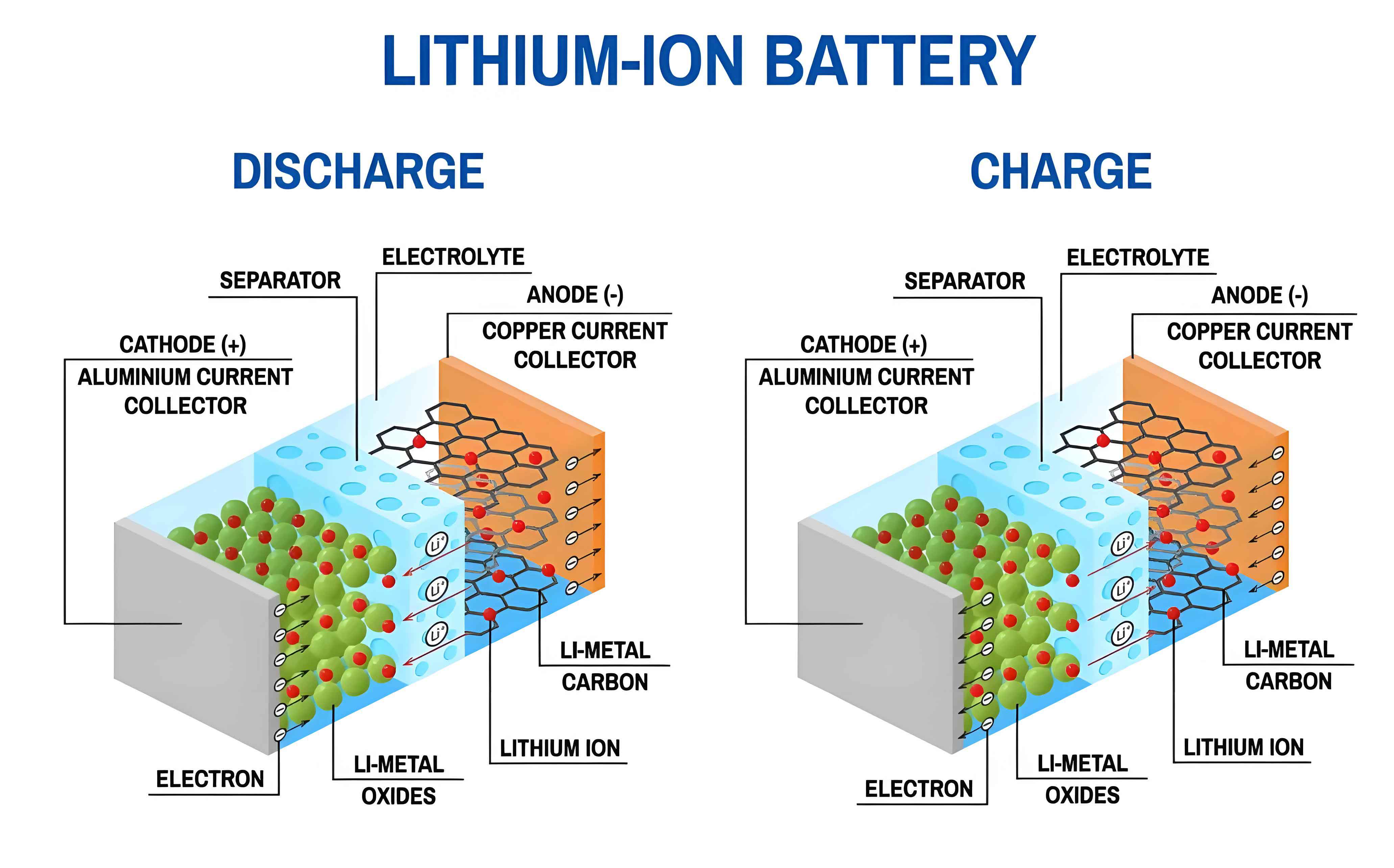
The pursuit of sustainable energy solutions has placed electrochemical energy storage at the forefront of technological innovation. Among various technologies, the lithium-ion battery reigns supreme due to its high energy density, long cycle life, and mature manufacturing ecosystem. It is the cornerstone for powering portable electronics, electric vehicles, and grid-scale storage systems. However, the constant demand for higher energy density pushes the limits of conventional electrode materials. Graphite, the dominant anode material, is approaching its theoretical capacity limit, spurring intensive research into next-generation alternatives.
Silicon (Si) stands out as the most promising candidate due to its exceptionally high theoretical specific capacity (approximately 4200 mAh g-1). Yet, its practical application in lithium-ion batteries is severely hampered by a colossal volume expansion (>300%) during lithiation, which leads to rapid pulverization, unstable solid electrolyte interphase (SEI) growth, and swift capacity fade. Silicon monoxide (SiO), a derivative, presents a compelling compromise. It offers a substantial theoretical capacity (~2600 mAh g-1) while exhibiting a more manageable volume change (~160%) due to the formation of buffering lithium silicate and oxide phases. Despite this improvement, SiO anodes still face significant challenges, including low initial Coulombic efficiency (ICE) caused by irreversible lithium consumption, poor intrinsic electronic conductivity, and residual volume effects that degrade long-term cycling stability in lithium-ion batteries.
To overcome these hurdles, composite engineering has emerged as a vital strategy. Incorporating secondary phases, particularly metal oxides (MOs), can enhance structural integrity, electronic/ionic conductivity, and interfacial stability. Among various MOs, titanium oxides (TiO2 and its sub-stoichiometric variants, TiO2-x) have garnered significant attention for modifying SiO. Titanium dioxide is renowned for its minimal volume change (<4%) during lithium insertion/extraction, excellent chemical stability, and ability to form highly conductive lithiated phases (LixTiO2). Meanwhile, oxygen-deficient TiO2-x boasts enhanced electronic conductivity. This review, from my perspective, synthesizes the recent progress in titanium oxide-modified SiO anodes for lithium-ion batteries. I will delve into the material’s inherent characteristics, the mechanisms of improvement, and analyze the structure-performance relationships established through various design strategies, emphasizing the critical role of composite architecture in advancing lithium-ion battery technology.
The Enigmatic Nature and Lithium Storage Mechanism of SiO
Commercial SiO is typically an amorphous mixture, not a pure compound. Its precise microstructure has been a subject of extensive study, evolving through several models as characterization techniques advanced.
Microstructural Models: The understanding progressed from a Random Mixture (RM) of Si-Si and Si-O bonds to more nuanced models acknowledging phase separation. The prevailing contemporary view is described by the Heterogeneous Model or Modified Random Cluster Model. This model posits that amorphous SiO consists of nano-sized silicon clusters dispersed within a continuous silicon dioxide (SiO2) matrix, with a crucial interfacial region of sub-stoichiometric silicon oxide (SiOx, 0 < x < 2) connecting them. This complex structure directly dictates its electrochemical behavior in a lithium-ion battery.
| Model | Key Description | Implication for Electrochemistry |
|---|---|---|
| Random Mixture (RM) | Random network of Si-Si and Si-O bonds. | Oversimplified; doesn’t explain phase separation upon cycling. |
| Random Bonding (RB) | Si atoms bonded to varying numbers of Si and O neighbors. | Closer to reality but lacks distinct cluster definition. |
| Interfacial Cluster / Heterogeneous Model | Si nanoclusters embedded in a-SiO2, with a SiOx interface. | Most accurate. Explains the coexistence of active Si and inert/buffering phases. |
Lithiation Mechanism and Associated Challenges: The electrochemical reaction of SiO with lithium is complex and involves both irreversible (conversion) and reversible (alloying) steps:
1. Initial Irreversible Conversion: During the first lithiation, SiO reacts irreversibly with Li+ to form elemental Si, lithium oxide (Li2O), and various lithium silicate phases (e.g., Li4SiO4, Li2Si2O5).
$$ 4SiO + 4Li^+ + 4e^- \rightarrow Li_4SiO_4 + 3Si $$
$$ 2SiO + 2Li^+ + 2e^- \rightarrow Li_2O + Si $$
The Li2O and most lithium silicates (except Li2Si2O5) are electrochemically inactive. Their formation irreversibly consumes a large amount of lithium, leading to the characteristically low ICE (often 50-70%) of SiO anodes, which is a major bottleneck for energy density in practical lithium-ion batteries.
2. Reversible Alloying/De-alloying: The in-situ generated nano-Si subsequently undergoes the reversible alloying reaction with lithium.
$$ Si + xLi^+ + xe^- \leftrightarrow Li_xSi \quad (0 \le x \le 4.4) $$
This reaction provides the high reversible capacity. The inactive Li2O and lithium silicate matrix act as a buffer, mitigating the volume expansion of the Si phase and enhancing mechanical stability compared to pure Si. However, the overall volume change (~160%) is still significant, and the poor electronic conductivity of the composite structure limits rate capability.
The challenges for SiO anodes in lithium-ion batteries can thus be summarized as:
$$ \text{Low ICE} \propto \text{Mass of Irreversible Phases (Li}_2\text{O, Li}_4\text{SiO}_4\text{)} $$
$$ \text{Poor Cycling} \propto \text{Residual Volume Stress} + \text{Unstable SEI} $$
$$ \text{Limited Rate Performance} \propto \frac{1}{\sigma_{\text{electronic}} + D_{\text{Li}^+}} $$
where $\sigma_{\text{electronic}}$ is the electronic conductivity and $D_{\text{Li}^+}$ is the Li+ diffusion coefficient.
Rationale for Metal Oxide Compositing and the Rise of Titanium Oxides
Compositing SiO with functional materials aims to address its trifecta of issues. While carbon coating is ubiquitous, improving conductivity and constraining volume change to some degree, it often lacks the mechanical robustness and interfacial stabilization needed for long-cycle life. Metal oxides introduce complementary properties:
- Mechanical Reinforcement: High modulus oxides can physically constrain SiO expansion.
- Interfacial Stabilization: They can act as a barrier, reducing direct contact between SiO and the electrolyte, thus suppressing continuous SEI growth and parasitic reactions.
- Tailored Functionality: Some MOs (like TiO2) are electrochemically active, contributing additional capacity, while others (like MgO) can chemically react to modify the SiO structure itself.
Table 2 summarizes the role of different metal oxides used in SiO composite anodes for lithium-ion batteries.
| Metal Oxide | Primary Role/Mechanism | Key Effect on SiO Performance |
|---|---|---|
| MgO | Chemical consumption of SiO2 during synthesis; forms inert Li-Mg-Si-O phases. | Reduces irreversible Li loss, improves ICE and cycling. |
| FexOy (e.g., Fe2O3) | Conductive additive/buffer; can undergo conversion reactions. | Enhances conductivity, buffers volume change. |
| TiO2 | Active coating/buffer; forms conductive LixTiO2; excellent interfacial stabilizer. | Improves ICE, cycling stability, rate performance, and thermal safety. |
| TiO2-x | Defect-engineered conductive coating; provides high electronic conductivity. | Significantly boosts rate capability and cycling. |
From this comparison, titanium oxides offer a unique combination of advantages critical for lithium-ion battery anodes: near-zero strain behavior, in-situ transformation into a conductive phase (LixTiO2), and exceptional electrochemical and thermal stability. These attributes make them superior candidates for creating robust, high-performance SiO-based composites.
TiO2-Modified SiO Anodes: Coating, Confinement, and Synergy
The integration of TiO2 with SiO follows two main design philosophies: applying it as a surface coating/barrier or embedding it within a tailored microstructure. The chosen synthesis method—sol-gel, hydrothermal, electrospinning, or chemical vapor deposition—profoundly influences the final architecture and performance.
1. Surface Coating and Core-Shell Architectures: A simple yet effective approach is to encapsulate SiO particles with a conformal TiO2 layer. This coating serves multiple functions:
- SEI Modulator: The TiO2 layer undergoes prior lithiation at a higher potential (~1.7 V vs. Li/Li+), forming a stable, ion-conducting LixTiO2 shell. This pre-formed shell passivates the surface, preventing extensive electrolyte decomposition on the underlying SiO and dramatically improving the ICE.
$$ \text{TiO}_2 + x\text{Li}^+ + xe^- \leftrightarrow \text{Li}_x\text{TiO}_2 \quad (\text{at} \sim 1.7 \text{V}) $$ - Mechanical Constraint: The rigid TiO2 shell acts as a physical barrier, confining the volume expansion of the SiO core and maintaining electrode integrity.
- Conductive Pathway: The lithiated shell provides highways for both electrons and Li+ ions, enhancing the kinetics of the composite.
For instance, a core-shell SiO@amorphous-TiO2 nanocomposite delivered an ICE of 79.4% and retained 901 mAh g-1 after 200 cycles, starkly outperforming bare SiO. The amorphous nature of the TiO2 coating is often beneficial due to its isotropic properties and lack of grain boundaries that could be weak points.
2. Advanced Structural Engineering: Beyond simple shells, researchers have designed sophisticated structures to manage stress and transport more effectively.
- Yolk-Shell or Double-Shell Structures: Introducing void space between the active core and the constraining shell is a masterstroke in volume change management. A design like SiOx@TiO2@C incorporates an internal void (between SiOx and TiO2) to accommodate expansion, a robust TiO2 middle shell for mechanical constraint and ionic conduction, and an outer carbon shell for superior electronic wiring. Such architecture achieved an exceptional capacity retention of 701 mAh g-1 after 800 cycles at 1 A g-1.
- Embedded and Hybrid Structures: Instead of a discrete shell, TiO2 can be uniformly embedded within the SiO matrix or carbon network. For example, a “watermelon-like” SiOx-TiO2@C composite features ultrafine TiO2 nanocrystals embedded in the SiOx core. This intimate mixing ensures efficient charge collection throughout the particle volume. The TiO2 nanocrystals weaken the Si-O bonds in SiOx, facilitating its reduction to more active Si during carbon coating, thereby increasing the accessible capacity.
- Synergy with Carbon: The combination of TiO2 and carbon in a dual-layer or hybrid coating is particularly powerful. The carbon ensures long-range electronic percolation, while the TiO2 provides ionic conduction and superior interfacial stability. This synergy often results in composites with high ICE (>80%), excellent rate capability, and unprecedented cycle life in lithium-ion batteries.
| Composite Structure | Key Fabrication Method | Electrochemical Performance (Half-cell vs. Li) | Enhancement Mechanism |
|---|---|---|---|
| Core-Shell SiO@TiO2 | Sol-gel | ICE: ~72%; 1265 mAh g-1 initial; 750 mAh g-1 after 50 cycles at 0.1 A g-1. | Surface passivation, SEI stabilization, mechanical buffering. |
| Double-Shell SiOx@TiO2@C | Precursor transfer & CVD | ICE: 81%; 1319 mAh g-1 initial; 1198 mAh g-1 after 600 cycles at 2 A g-1. | Internal void for expansion, dual conductive layers, superior interfacial barrier. |
| Yolk/Double-Shell SiOx@TiO2@C Nanosphere | Sol-gel & carbonization | ICE: 84.3%; 791 mAh g-1 initial; 701 mAh g-1 after 800 cycles at 1 A g-1. | Hierarchical buffering space, shortened Li+ path from LixTiO2. |
| Watermelon-like SiOx-TiO2@C | Sol-gel & carbonization | ICE: 63%; 1011 mAh g-1 initial; 700 mAh g-1 after 600 cycles at 1 A g-1. | Embedded TiO2 enhances bulk conductivity and modifies SiOx structure. |
| SiO@TiO2/Carbon Nanofiber Web | Electrospinning & sol-gel | ICE: 70%; 1242 mAh g-1 initial; 760 mAh g-1 after 200 cycles at 0.2 A g-1. | 3D conductive network + TiO2 shell for dual confinement and charge transport. |
TiO2-x-Modified SiO Anodes: Harnessing Defects for Superior Conductivity
While TiO2 is an excellent ionic conductor, its electronic conductivity is modest. Introducing oxygen vacancies creates sub-stoichiometric TiO2-x, which exhibits dramatically improved electronic conductivity due to the formation of donor states within the bandgap and the presence of Ti3+ species. This property is invaluable for enhancing the rate performance of SiO-based anodes in lithium-ion batteries.
1. Defect Engineering and Conductivity Enhancement: The oxygen vacancies narrow the bandgap (Eg) of TiO2. For a semiconductor, the electronic conductivity ($\sigma$) has an exponential relationship with the bandgap:
$$ \sigma \propto \exp\left(-\frac{E_g}{2kT}\right) $$
where $k$ is Boltzmann’s constant and $T$ is temperature. A reduced $E_g$ leads to a significant increase in $\sigma$, making TiO2-x a much better electronic conductor than stoichiometric TiO2. When coated on SiO, this conductive shell ensures efficient electron supply to the active material, even at high current densities.
2. Material Designs and Performance:
- Conductive Coating: A direct application is using TiO2-x as a single conductive coating. For example, a TiO2-x@Si/SiOx core-shell structure showed enhanced ICE and high-temperature storage stability, attributed to the robust and conductive shell.
- Combination with Porous Structures: Integrating defect engineering with morphological control yields superior results. A porous SiO/TiO2-x composite combines the benefits of a porous SiO backbone (shortened Li+ diffusion path, space for expansion) with a conductive TiO2-x coating. This material demonstrated excellent rate capability and long-cycle life, retaining 423 mAh g-1 after 500 cycles at a high current density of 2 A g-1.
- Anion Doping (e.g., N-doping): Further enhancement can be achieved by doping TiO2-x with anions like nitrogen, creating TiO2-xNy or titanium oxynitride (TiON). Nitrogen doping introduces additional charge carriers and can further improve conductivity and surface reactivity. A SiOx-TiO0.6N0.4 composite achieved a high ICE of 70% and a substantial initial capacity of 1570 mAh g-1.
The improvement mechanism for TiO2-x can be summarized as:
$$ \text{Enhanced Performance} = \frac{\text{High $\sigma_{\text{electronic}}$ of TiO}_{2-x} + \text{Structural Buffering}}{\text{Reduced Polarization}} $$
This leads directly to better rate capability and cycling stability in demanding lithium-ion battery applications.
Conclusion and Future Perspectives
In summary, titanium oxide modification is a highly effective strategy to unlock the potential of SiO anodes for next-generation lithium-ion batteries. The key improvement mechanisms are multi-faceted:
- Interphase Engineering: TiO2 forms a stable, ion-conducting LixTiO2 layer that suppresses excessive electrolyte decomposition, leading to a higher ICE and more stable SEI.
- Stress Management: The high mechanical strength of titanium oxides, especially when designed into core-shell, yolk-shell, or porous structures, effectively confines the volume expansion of SiO, preventing particle pulverization and maintaining electrical contact.
- Conductivity Enhancement: Both LixTiO2 (from TiO2) and TiO2-x (via defect engineering) significantly improve the electronic and ionic transport properties of the composite electrode, boosting rate performance.
- Synergistic Effects: In hybrid designs with carbon, titanium oxides often play a crucial role in promoting the formation of ordered carbon coatings or providing complementary charge transport pathways.
Looking forward, several promising avenues can accelerate the commercialization of titanium oxide-modified SiO anodes in lithium-ion batteries:
- From Half-Cell to Full-Cell Evaluation: Most reported studies use lithium metal counter electrodes. Rigorous evaluation in full-cell configurations (e.g., paired with high-nickel NCM or LFP cathodes) under realistic conditions (limited lithium inventory, lean electrolyte) is essential to assess practical viability, including energy density, cycle life, and swelling behavior.
- Exploration of Cost-Effective Titanium Oxides: While TiO2 and TiO2-x are prominent, other titanium oxides like Ti2O3 (which has even higher electronic conductivity) remain largely unexplored as modifiers for SiO. Research into these alternatives could yield materials with superior performance-to-cost ratios.
- Advanced Manufacturing and Scalability: Developing scalable, low-cost, and environmentally friendly synthesis routes (e.g., continuous flow processes, scalable coating technologies) for these complex composite structures is critical for industrial adoption.
- Integrated Computational and Experimental Design: Utilizing multi-scale modeling (DFT, MD, continuum models) to predict the most stable interface structures (e.g., SiOx/TiO2), Li+ diffusion pathways, and stress evolution can guide the rational design of optimal composite architectures with minimal trial-and-error experimentation.
The journey to develop high-energy-density lithium-ion batteries is inextricably linked to the success of advanced anode materials. Titanium oxide-modified SiO composites, with their balanced combination of high capacity, improved stability, and enhanced kinetics, represent a crucial step forward. By continuing to refine their design, understanding interfacial phenomena at the atomic level, and solving scale-up challenges, these materials hold immense promise for powering the future of electric mobility and grid storage, contributing significantly to a sustainable energy ecosystem.