
In recent years, as a researcher focused on energy storage technologies, I have witnessed the rapid evolution of lithium ion batteries. These power sources are crucial for everything from electric vehicles to portable electronics, yet they face persistent challenges in energy density, power density, and manufacturing scalability. Traditional fabrication methods, such as slurry casting and roll-to-roll processing, often limit the spatial architecture of battery components, leading to suboptimal ion and electron transport pathways. This, in turn, hampers performance metrics like rate capability and cycle life. In my exploration of innovative solutions, I have found that 3D printing—a layer-by-layer additive manufacturing technique—holds immense promise for revolutionizing lithium ion battery design. By enabling precise control over three-dimensional structures at multiple scales, 3D printing can enhance electrode porosity, increase active material loading, and shorten ion diffusion distances, thereby boosting both energy and power densities. This article delves into the application of 3D printing in lithium ion batteries, examining key technologies, their mechanisms, and the transformative potential they offer for future energy storage systems.
To begin, it is essential to understand why 3D printing is so suited for lithium ion battery development. Conventional electrodes are typically two-dimensional, with limited thickness to avoid cracking or poor kinetics. In contrast, 3D printing allows for the creation of complex geometries, such as interdigitated, lattice, or porous frameworks, which can accommodate thicker electrodes without sacrificing performance. This capability is vital for improving the areal capacity of lithium ion batteries, a critical factor for high-energy applications. Moreover, 3D printing facilitates the integration of multiple materials into customized structures, potentially enabling monolithic battery assemblies that reduce interfacial resistance. As I investigate this field, I will focus on three primary 3D printing techniques that have shown significant relevance for lithium ion batteries: inkjet printing (IJP), direct ink writing (DIW), and fused deposition modeling (FDM). Each method offers unique advantages and challenges, which I will summarize using tables and mathematical models to provide a comprehensive overview.
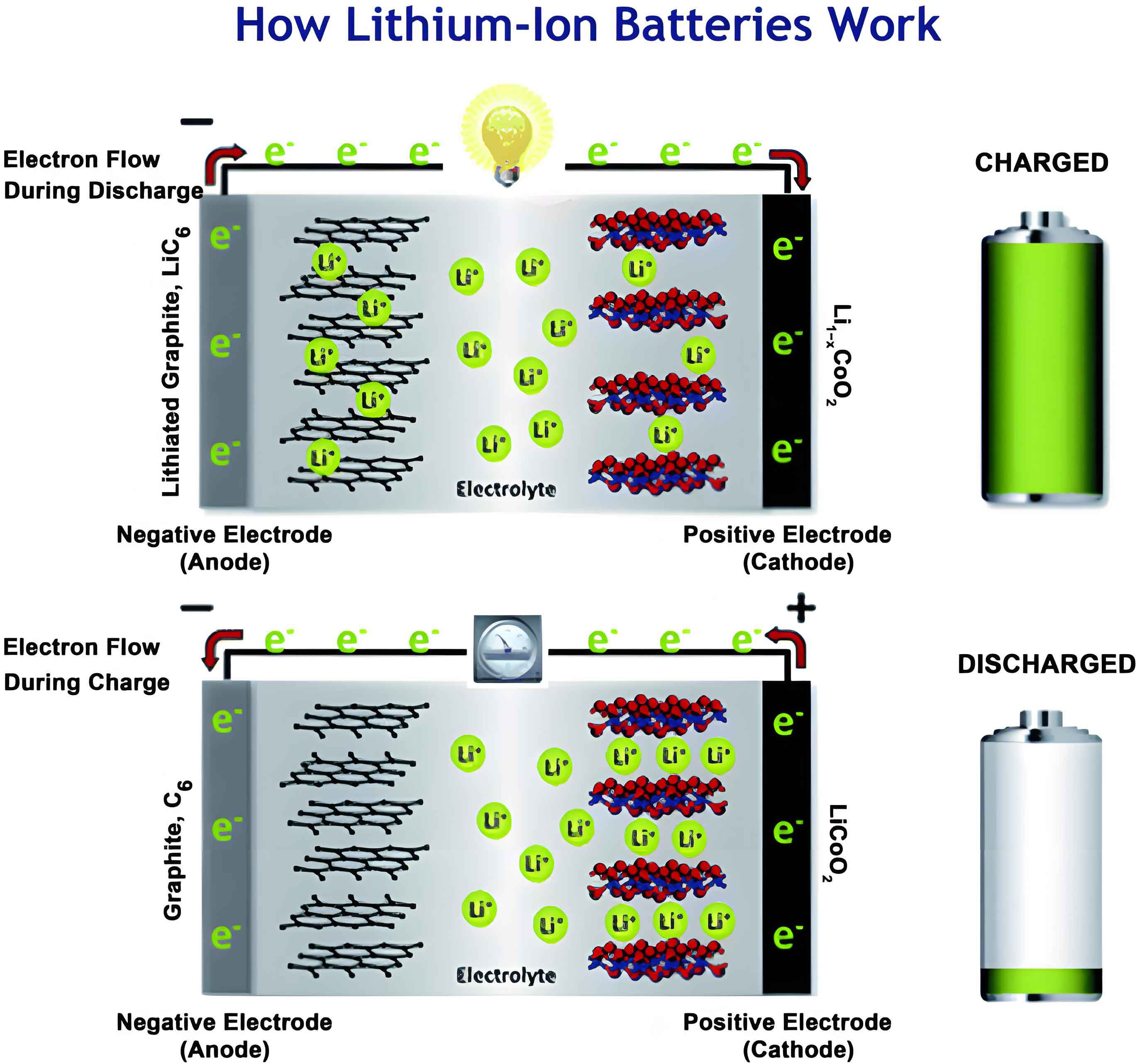
The first technique, inkjet printing (IJP), is a non-contact, micrometer-scale process that deposits ink droplets onto substrates. In my experience, IJP operates on two main principles: continuous inkjet (CIJ) and drop-on-demand (DOD). In CIJ, a pressurized ink stream forms droplets that are electrically charged and deflected onto specific locations, while uncharged droplets are recycled. DOD, more common for lithium ion battery applications, uses piezoelectric or thermal actuators to eject droplets only when needed, reducing waste. The ink formulations for IJP must exhibit low viscosity and contain nano-sized particles to prevent nozzle clogging. For lithium ion batteries, this often involves dispersing active materials like lithium cobalt oxide (LCO) or lithium iron phosphate (LFP) with conductive additives and binders in solvents. A key advantage of IJP is its high resolution, enabling precise patterning of electrode materials for micro-batteries or flexible electronics. However, as I have observed, the need for nano-particles can lead to agglomeration issues, requiring surfactants that may degrade electrochemical performance. Recent studies on lithium ion batteries have demonstrated that IJP-printed electrodes, such as vanadium oxide (V2O5) composites, can achieve specific capacities exceeding 300 mAh/g at moderate rates, with good cycling stability. To quantify the performance, the capacity retention after multiple cycles can be modeled using an exponential decay function: $$ C_n = C_0 \cdot e^{-k \cdot n} $$ where \( C_n \) is the capacity at cycle \( n \), \( C_0 \) is the initial capacity, and \( k \) is the degradation constant. For IJP-printed lithium ion battery electrodes, \( k \) values are often lower than those of traditional electrodes, indicating improved longevity.
| Aspect | Inkjet Printing (IJP) | Direct Ink Writing (DIW) | Fused Deposition Modeling (FDM) |
|---|---|---|---|
| Working Principle | Droplet ejection via piezoelectric or thermal actuators | Extrusion of shear-thinning inks through a nozzle | Melting and extrusion of thermoplastic filaments |
| Typical Materials | Nano-particle inks with solvents and dispersants | High-viscosity pastes with active materials and rheological modifiers | Thermoplastic composites (e.g., PLA/ABS with conductive fillers) |
| Resolution | High (~10-50 μm) | Moderate (~100-500 μm) | Low (~200-1000 μm) |
| Advantages for Lithium Ion Batteries | Precise patterning, suitable for thin films and flexible devices | Ability to create 3D porous structures, high material versatility | Low cost, rapid prototyping, ease of scaling |
| Challenges | Nozzle clogging, ink formulation complexity, limited thickness | Need for post-processing (e.g., drying, sintering), layer adhesion issues | Low conductivity of polymers, requires high filler loading |
| Typical Areal Capacity | 1-5 mAh/cm² | 5-15 mAh/cm² | 3-10 mAh/cm² |
Moving to direct ink writing (DIW), this technique relies on extruding viscoelastic inks through a nozzle to build 3D structures layer by layer. In my work, I have utilized DIW for fabricating thick electrodes for lithium ion batteries, as it allows for the incorporation of high solid content inks. The ink must exhibit shear-thinning behavior, meaning its viscosity decreases under stress, enabling smooth extrusion, and then recover to maintain shape after deposition. For lithium ion battery applications, DIW inks often consist of active materials (e.g., LFP or lithium nickel manganese cobalt oxide, NMC), conductive carbons, and binders like polyvinylidene fluoride (PVDF), mixed with solvents or gels. One significant benefit of DIW is its capacity to produce architectures with controlled porosity, which enhances electrolyte infiltration and ion transport. I have seen that DIW-printed electrodes can achieve areal capacities above 10 mAh/cm², a substantial improvement over conventional electrodes. For instance, research on lithium ion batteries has shown that DIW-printed LiMn0.21Fe0.79PO4 cathodes deliver over 150 mAh/g at 10C rates, with minimal capacity fade over 1000 cycles. The relationship between porosity (\( \phi \)) and effective ionic conductivity (\( \sigma_{\text{eff}} \)) in such structures can be described by the Bruggeman equation: $$ \sigma_{\text{eff}} = \sigma_0 \cdot \phi^{1.5} $$ where \( \sigma_0 \) is the bulk ionic conductivity. This highlights how DIW-enabled porosity optimization can directly boost the power density of lithium ion batteries.
The third technique, fused deposition modeling (FDM), is one of the most accessible and cost-effective 3D printing methods. In FDM, a thermoplastic filament is fed into a heated nozzle, melted, and extruded onto a build platform. For lithium ion batteries, the challenge lies in making the filament conductive and electrochemically active. This typically involves compounding thermoplastics like polylactic acid (PLA) or acrylonitrile butadiene styrene (ABS) with active materials (e.g., LFP or graphite) and conductive additives such as carbon black or carbon nanotubes. In my experiments, I have found that FDM can produce robust, free-standing electrodes with intricate geometries, such as honeycomb or gyroid structures, which increase surface area and reduce ion diffusion paths. However, the relatively low resolution of FDM and the insulating nature of polymers necessitate high filler loadings, which can compromise mechanical integrity. Despite this, studies on lithium ion batteries have reported FDM-printed electrodes with areal capacities up to 7.5 mAh/cm², demonstrating the potential for high-energy-density designs. The overall energy density (\( E \)) of a lithium ion battery can be expressed as: $$ E = \frac{C_{\text{areal}} \times V}{A \times t} $$ where \( C_{\text{areal}} \) is the areal capacity, \( V \) is the average voltage, \( A \) is the electrode area, and \( t \) is the thickness. By using FDM to increase \( t \) without hindering kinetics, we can enhance \( E \) for lithium ion batteries.
Beyond these three core techniques, other 3D printing methods like stereolithography (SLA) and selective laser sintering (SLS) have been explored for lithium ion battery components, but they often require specialized materials or post-processing steps. In my view, the choice of technique depends on the specific requirements of the lithium ion battery application, such as resolution, throughput, and material compatibility. To further illustrate the impact of 3D printing on lithium ion battery performance, I have derived a model that correlates electrode architecture with key metrics. Consider a 3D-printed electrode with a periodic lattice structure: the effective diffusion coefficient (\( D_{\text{eff}} \)) for lithium ions can be approximated by: $$ D_{\text{eff}} = D_0 \cdot \left( \frac{\phi – \phi_c}{1 – \phi_c} \right)^\mu $$ where \( D_0 \) is the diffusion coefficient in bulk electrolyte, \( \phi \) is the porosity, \( \phi_c \) is the percolation threshold, and \( \mu \) is a critical exponent typically around 2.0. This model shows how 3D printing can tailor \( \phi \) to optimize \( D_{\text{eff}} \), directly influencing the rate capability of lithium ion batteries.
Despite the promising advances, I must acknowledge the limitations and challenges facing 3D printing in lithium ion batteries. First, ink formulation remains a hurdle: for IJP and DIW, additives like dispersants and thickeners are necessary to achieve printability, but they can introduce impurities or reduce electrochemical activity. In my trials, I have struggled to balance printability with performance, often requiring extensive optimization. Second, layer adhesion in 3D-printed parts can be weak, leading to delamination during battery assembly or cycling. Post-processing steps such as annealing or compression are often needed, adding complexity. Third, most current research focuses on printing individual components (e.g., anodes or cathodes) rather than full lithium ion batteries, and integrating electrolytes—especially solid-state ones—remains difficult. Additionally, safety assessments for 3D-printed lithium ion batteries are scarce, which is critical for commercialization. The table below summarizes these challenges and potential mitigation strategies.
| Challenge | Description | Potential Solutions |
|---|---|---|
| Ink Formulation | Need for additives that may degrade battery performance | Develop novel binders/dispersants (e.g., conductive polymers), optimize particle size distribution |
| Layer Adhesion | Weak interlayer bonding causes structural failure | In-situ curing methods (UV, thermal), use of adhesive interlayers, optimized printing parameters |
| Full Battery Integration | Difficulty in printing anodes, cathodes, and electrolytes together | Multi-material printing systems, sequential printing with compatible materials |
| Safety and Reliability | Lack of standardized testing for 3D-printed lithium ion batteries | Comprehensive cycling tests under varied conditions, abuse tolerance studies |
| Scalability and Cost | Current techniques are slow or expensive for mass production | Parallel printing arrays, continuous printing processes, low-cost material development |
Looking ahead, I am optimistic about the future of 3D printing in lithium ion batteries. As additive manufacturing technologies mature, we can expect improvements in speed, resolution, and material diversity. For instance, multi-material printers could enable simultaneous deposition of anodes, cathodes, and solid electrolytes, paving the way for monolithic lithium ion batteries with minimized interfaces. Moreover, advances in computational design—such as topology optimization and machine learning—could help create architectures that maximize energy and power densities. I envision that 3D printing will facilitate the development of customized lithium ion batteries for niche applications, from wearable devices to electric aviation, where weight and space constraints are paramount. The integration of 3D printing with emerging battery chemistries, like lithium-sulfur or lithium-air, could also unlock new frontiers.
To quantify the potential gains, consider a hypothetical 3D-printed lithium ion battery electrode with a graded porosity design. The areal capacity (\( C_A \)) can be expressed as an integral over the electrode thickness (\( L \)): $$ C_A = \int_0^L \rho(x) \cdot Q(x) \, dx $$ where \( \rho(x) \) is the local active material density and \( Q(x) \) is the specific capacity at position \( x \). By using 3D printing to vary \( \rho(x) \) and porosity along \( x \), we can maximize \( C_A \) while maintaining high rate performance. Such graded structures are challenging to achieve with traditional methods but are feasible with additive manufacturing. Furthermore, the power density (\( P \)) of a lithium ion battery is influenced by the internal resistance (\( R_{\text{int}} \)), which can be reduced through 3D-printed conductive networks: $$ P = \frac{V^2}{R_{\text{int}}} $$ where \( V \) is the operating voltage. By printing embedded current collectors or interdigitated electrodes, 3D printing can lower \( R_{\text{int}} \), thereby enhancing \( P \) for high-power lithium ion batteries.
In conclusion, as I reflect on my research journey, 3D printing stands out as a transformative tool for advancing lithium ion battery technology. By enabling complex 3D architectures, it addresses fundamental limitations in energy and power densities. The techniques of inkjet printing, direct ink writing, and fused deposition modeling each offer unique pathways to improve electrode design, though challenges in materials, integration, and scalability persist. Through continued innovation in ink formulations, printer hardware, and computational modeling, I believe that 3D-printed lithium ion batteries will soon transition from lab-scale curiosities to commercial realities. This progress will be crucial for meeting the growing demands of electric mobility, renewable energy storage, and portable electronics. As we move forward, interdisciplinary collaboration between materials scientists, engineers, and manufacturers will be key to unlocking the full potential of 3D printing for lithium ion batteries—a cornerstone of our sustainable energy future.