
As a researcher focused on next-generation energy storage, I have witnessed the pivotal role of lithium-ion batteries in powering our transition to sustainable transportation. The fundamental working principle of a lithium-ion battery involves the shuttling of lithium ions between a cathode and an anode through an electrolyte, with electrons moving via an external circuit. A critical, yet often underappreciated, component in this system is the current collector. It serves as the physical backbone for the electrode material and the essential highway for electron transport to and from the external circuit. The efficiency and safety of the entire lithium-ion battery are profoundly influenced by the properties of these collectors.
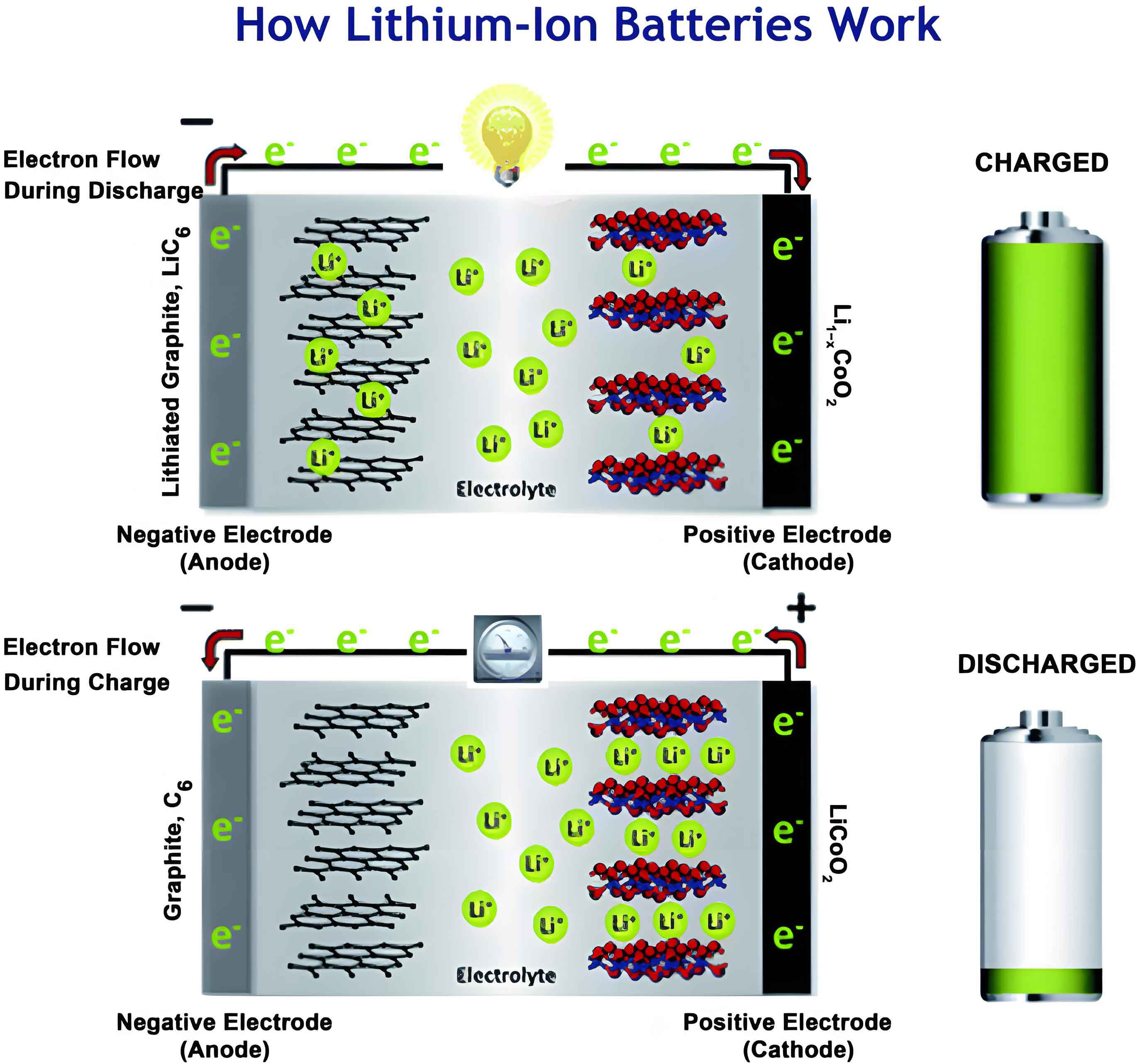
While copper (anode) and aluminum (cathode) foils have been the industry standard for decades, their limitations become stark when pushing lithium-ion batteries to higher energy densities and faster charging rates. A primary challenge is the growth of lithium dendrites on the anode side. During charging, lithium ions are reduced and deposited onto the anode current collector. On a conventional, planar copper foil, this deposition can be highly uneven due to factors like local current density hotspots and the inherently poor lithium wettability (lithiophobicity) of copper. This leads to needle-like dendrite structures. These dendrites can penetrate the separator, causing internal short circuits, rapid capacity fade, and severe safety hazards like thermal runaway. Therefore, developing advanced current collectors is not merely an incremental improvement but a fundamental necessity for the next leap in lithium-ion battery technology. My analysis focuses on three promising avenues: modification of traditional metal foils, three-dimensional porous collectors, and composite collectors.
Modification of Traditional Metal Foil Current Collectors
The simplest approach to enhance current collector performance is to modify the surface of existing copper or aluminum foils. The goal is to alter the interface to guide uniform lithium deposition and improve structural stability. The strategies can be broadly categorized into applying lithiophilic coatings and creating three-dimensional surface structures.
A pristine copper surface has a high nucleation barrier for lithium, expressed by a significant nucleation overpotential. This promotes random and uneven lithium nucleation, seeding dendrite growth. By coating the foil with a material that has favorable lithium adsorption energy, this barrier can be drastically reduced. The nucleation overpotential $\Delta \phi_{nuc}$ can be modeled as:
$$\Delta \phi_{nuc} = \phi_{Li/M} – \phi_{Li/Cu}$$
where $\phi_{Li/M}$ is the nucleation potential of lithium on the coating material M, and $\phi_{Li/Cu}$ is that on pure copper. A coating with a $\phi_{Li/M}$ closer to the Li/Li⁺ potential makes $\Delta \phi_{nuc}$ smaller, leading to more uniform and dense lithium plating. Metals like silver (Ag), gold (Au), zinc (Zn), and certain metal oxides (e.g., ZnO, CuO) exhibit excellent lithiophilic properties. For instance, a uniform layer of Ag nanoparticles on copper, formed via a simple displacement reaction, can lower the nucleation overpotential to near zero. This transforms the lithium deposition morphology from dendritic to a dense, pebble-like structure, significantly enhancing the cycle life of the lithium-ion battery. The Coulombic efficiency (CE), a key metric for reversibility, is defined as:
$$CE = \frac{Q_{discharge}}{Q_{charge}} \times 100\%$$
where $Q$ represents capacity. Modified copper foils with lithiophilic coatings consistently demonstrate CE values exceeding 98.5% for hundreds of cycles, a marked improvement over bare copper.
Beyond surface chemistry, modifying the surface topography to create a three-dimensional (3D) structure on the foil is highly effective. A 3D structure, such as an array of micro-pillars or a porous layer, increases the effective surface area ($A_{eff}$). This reduces the local current density ($J_{local}$) during plating/stripping, a primary driver of dendrite formation:
$$J_{local} = \frac{I}{A_{eff}}$$
where $I$ is the total current. A lower $J_{local}$ promotes smoother lithium deposition. Furthermore, the voids in the 3D structure provide confined spaces to accommodate the volume change during lithium plating, reducing mechanical stress. A common method involves electrodepositing a porous metal layer or using laser ablation to create microstructures. When combined with a lithiophilic coating—for example, depositing a nanoscale Al layer on a 3D Cu scaffold—the benefits are synergistic. The Al reacts with lithium to form a Li-Al alloy, which is highly lithiophilic and provides a stable interface, while the 3D structure manages current density and volume expansion.
| Modification Strategy | Mechanism | Key Features/Examples | Impact on Lithium-ion Battery Performance |
|---|---|---|---|
| Lithiophilic Coating | Reduces Li nucleation barrier, guides uniform deposition. | Ag, Au, ZnO nanoparticles; Sputtered Al layer. | Lower overpotential, higher Coulombic efficiency (>98.5%), suppressed dendrite growth. |
| 3D Structure Fabrication | Increases surface area, lowers local current density, accommodates volume change. | Electrodeposited Cu pillars; Laser-ablated porous surfaces. | Stable long-term cycling, improved rate capability due to better ion transport. |
| Combined Approach (3D + Coating) | Synergy of topological and chemical control. | 3D Cu scaffold coated with Al or Ag. | Ultra-stable Li metal anode with minimal volume change and no dendrites. |
Three-Dimensional Porous Current Collectors
Taking the concept of 3D structuring further, standalone three-dimensional porous current collectors represent a paradigm shift from 2D foils. These are typically freestanding, lightweight scaffolds with a highly interconnected pore network, such as copper or nickel foam. Their advantages for lithium-ion battery anodes, particularly lithium metal anodes, are multi-faceted:
- Ultra-High Surface Area: Drastically reduces the effective current density, as per the equation above.
- Porous Volume: Provides immense internal space to host lithium metal, essentially acting as a “host” or “reservoir,” which confines lithium deposition within the pores and prevents uncontrolled outward growth.
- Structural Stability: The robust metallic skeleton can withstand the repeated volume expansion and contraction during cycling.
The porosity $\varepsilon$ is a critical parameter:
$$\varepsilon = \frac{V_{pores}}{V_{total}} \times 100\%$$
where $V_{pores}$ is the volume of the empty pores and $V_{total}$ is the total volume of the collector. A high $\varepsilon$ (often >95% for metal foams) is desirable for maximum lithium storage capacity per unit mass.
A prominent method for creating 3D porous copper is dealloying. Starting from a homogeneous precursor alloy like Cu-Zn (brass), the less noble element (Zn) is selectively dissolved in an acidic or electrochemical process, leaving behind a nanoporous copper skeleton. This structure exhibits a bi-continuous network of ligaments and pores. Lithium deposited within this network experiences uniform current distribution and is physically constrained by the pore walls, leading to a dense, dendrite-free morphology even after many cycles.
However, the intrinsic lithiophobicity of copper and nickel remains a challenge even in 3D form. Therefore, surface modification of these porous collectors is a vital research area. Coating the internal surface of the foam with lithiophilic materials, such as carbon layers, silicon, or black phosphorus (BP), can further enhance performance. For example, a uniform coating of BP nanoparticles on copper foam via electrophoretic deposition creates numerous favorable nucleation sites. The strong interaction between BP and Li⁺ ions ensures that lithium nucleates uniformly across the entire 3D framework, not just at the top surface, leading to exceptionally stable cycling in a lithium-ion battery.
Beyond metal foams, 3D porous carbon materials (e.g., carbon nanofiber papers, graphene aerogels) are also investigated due to their light weight, excellent conductivity, and chemical stability. Their tunable surface chemistry also allows for functionalization with lithiophilic groups. The primary challenge hindering their widespread adoption in commercial lithium-ion batteries is the difficulty of welding tabs to these carbon-based collectors for electrical connection within the cell, a process that is trivial with ductile metal foils.
| Type | Preparation Method | Structural Features | Advantages for Lithium-ion Battery | Challenges |
|---|---|---|---|---|
| Metal Foams (Cu, Ni) | Template-assisted electrodeposition, Dealloying. | High porosity (>95%), interconnected pores, high conductivity. | Excellent Li hosting, volume accommodation, high rate capability. | Relatively heavy, requires lithiophilic modification. |
| Dealloyed Porous Metal | Chemical or electrochemical dealloying of precursors (e.g., Cu-Zn). | Nanoporous structure, bi-continuous ligament-pore network. | Very high surface area, excellent Li confinement, tunable pore size. | Mechanical brittleness of thin nanoporous layers. |
| 3D Porous Carbon | Electrospinning, CVD, freeze-drying. | Lightweight, fibrous or foam-like, tunable surface chemistry. | Ultra-lightweight, corrosion resistant, good wettability with electrolyte. | Poor weldability for tab connection, lower volumetric capacity. |
Composite Current Collectors
The third major direction moves away from pure metals altogether. Composite current collectors are engineered materials that combine a lightweight polymer substrate with a thin conductive layer, typically a metal coating. The core motivation is to reduce the weight and cost of the current collector while adding functionalities like mechanical flexibility and built-in safety features. In a lithium-ion battery, every component’s mass matters for the overall energy density. The weight percentage of the current collector in a cell can be significant. A composite collector’s density $\rho_{composite}$ is given by the rule of mixtures:
$$\rho_{composite} = \frac{m_{polymer} + m_{metal}}{V_{total}}$$
Since polymers like polyimide (PI) or polyethylene terephthalate (PET) are much less dense than copper or aluminum, the composite can be 50-75% lighter than a metal foil of comparable mechanical strength.
A common design involves a thin (5-10 µm) polymer film coated on both sides with a much thinner (0.5-1 µm) layer of copper or aluminum via vacuum metallization or electroplating. This creates a “metal-polymer-metal” sandwich structure. The polymer core provides mechanical integrity and flexibility, while the metal skins provide the necessary electronic conductivity. The total thickness can be less than that of a standard metal foil while maintaining sufficient tensile strength for electrode processing in high-speed roll-to-roll coating machines.
An exciting advancement in this field is the integration of multi-functionality directly into the collector. For instance, flame-retardant molecules like triphenyl phosphate (TPP) can be encapsulated within the polyimide substrate. In the event of thermal abuse in the lithium-ion battery, the TPP is released, helping to extinguish potential fires. This design is superior to adding flame retardants to the electrolyte, as it avoids detrimental side reactions with the electrodes. Such a PI-TPP-Cu composite collector has been shown to increase the specific energy of a cell by 16-26% while enhancing safety, a critical dual benefit.
Another composite approach uses a conductive polymer matrix filled with conductive carbon (e.g., carbon black, carbon nanotubes) as the collector itself, eliminating the metal layer. While promising for extreme lightweighting, achieving the combined high conductivity, mechanical robustness, and electrochemical stability required for long-life lithium-ion batteries remains a significant challenge.
| Composite Type | Typical Structure | Key Properties | Advantages for Lithium-ion Battery |
|---|---|---|---|
| Metal-Polymer-Metal Sandwich | Polymer core (PI, PET) coated with thin Cu/Al layers. | Lightweight (~50% of metal foil), flexible, good strength. | Increases gravimetric energy density, suitable for flexible cells. |
| Function-Integrated Composite | Polymer substrate with encapsulated additives (e.g., flame retardant). | Lightweight + added safety function (flame retardancy). | Enhances both energy density and safety without compromising electrolyte chemistry. |
| Conductive Polymer Composite | Polymer matrix (e.g., PVDF) filled with conductive carbons (CB, CNT). | Ultra-lightweight, fully organic, tunable conductivity. | Maximum weight reduction potential, avoids metal corrosion. |
Conclusion
The evolution of current collectors from passive conductive foils to active, engineered components is a testament to the innovative drive within lithium-ion battery research. Each advanced strategy—surface-modified foils, 3D porous hosts, and lightweight composites—addresses the core challenges of uneven lithium deposition, volume change, and weight from a unique angle. Modified foils offer a relatively simple upgrade path for existing manufacturing lines. 3D porous collectors provide a fundamental solution for hosting reactive metals like lithium, potentially unlocking lithium metal anodes. Composite collectors chart a path toward safer, lighter, and more flexible battery designs.
However, the transition from laboratory success to widespread commercial adoption in lithium-ion batteries faces hurdles. Cost, scalability of manufacturing processes (especially for complex 3D structures), and long-term reliability under realistic conditions are critical barriers. The ideal current collector must not only perform well electrochemically but also be compatible with high-speed electrode coating, cell assembly, and formation processes. Future research will likely focus on hybrid designs that combine the best features of these approaches—for example, a micro-porous polymer composite with a lithiophilic nanocoating—while relentlessly driving down cost and simplifying production. As we push the boundaries of energy density, charging speed, and safety for lithium-ion batteries, the humble current collector will undoubtedly remain a focal point of material science innovation.