
As a researcher and practitioner in the field of energy storage, I have been closely monitoring the evolving regulatory landscape that shapes the lithium ion battery industry. The recent introduction of the European Union’s new battery regulation, formally known as the “Regulation concerning batteries and waste batteries,” marks a pivotal shift in how batteries are managed throughout their lifecycle. This regulation, which replaces the earlier 2006 Battery Directive, is not merely an update but a comprehensive framework aimed at minimizing environmental and social impacts while fostering a circular economy. For me, understanding this regulation is crucial, especially since the EU is a major destination for lithium ion battery exports from China, the world’s largest producer. In this article, I will delve into the nuances of the EU’s new battery regulation, compare it with China’s domestic policies, and explore the implications for the global lithium ion battery market. I will use tables and formulas to summarize key points, ensuring that the term “lithium ion battery” is frequently highlighted to emphasize its centrality in this discussion.
The EU’s new battery regulation emerged against the backdrop of ambitious climate goals. With transportation accounting for a quarter of the EU’s greenhouse gas emissions, electrification via lithium ion batteries has become a cornerstone of decarbonization strategies. The regulation, enacted on January 1, 2022, encompasses 13 chapters and 79 articles, focusing on the entire value chain of batteries—from design and production to use and end-of-life management. For me, the regulation’s emphasis on transparency, carbon footprint reduction, and material recycling presents both challenges and opportunities. It mandates detailed reporting on battery composition, performance, and sustainability, which requires robust data management systems. As I analyze these requirements, I see that they align with global trends toward sustainable manufacturing, but they also impose new burdens on producers, particularly those outside the EU.
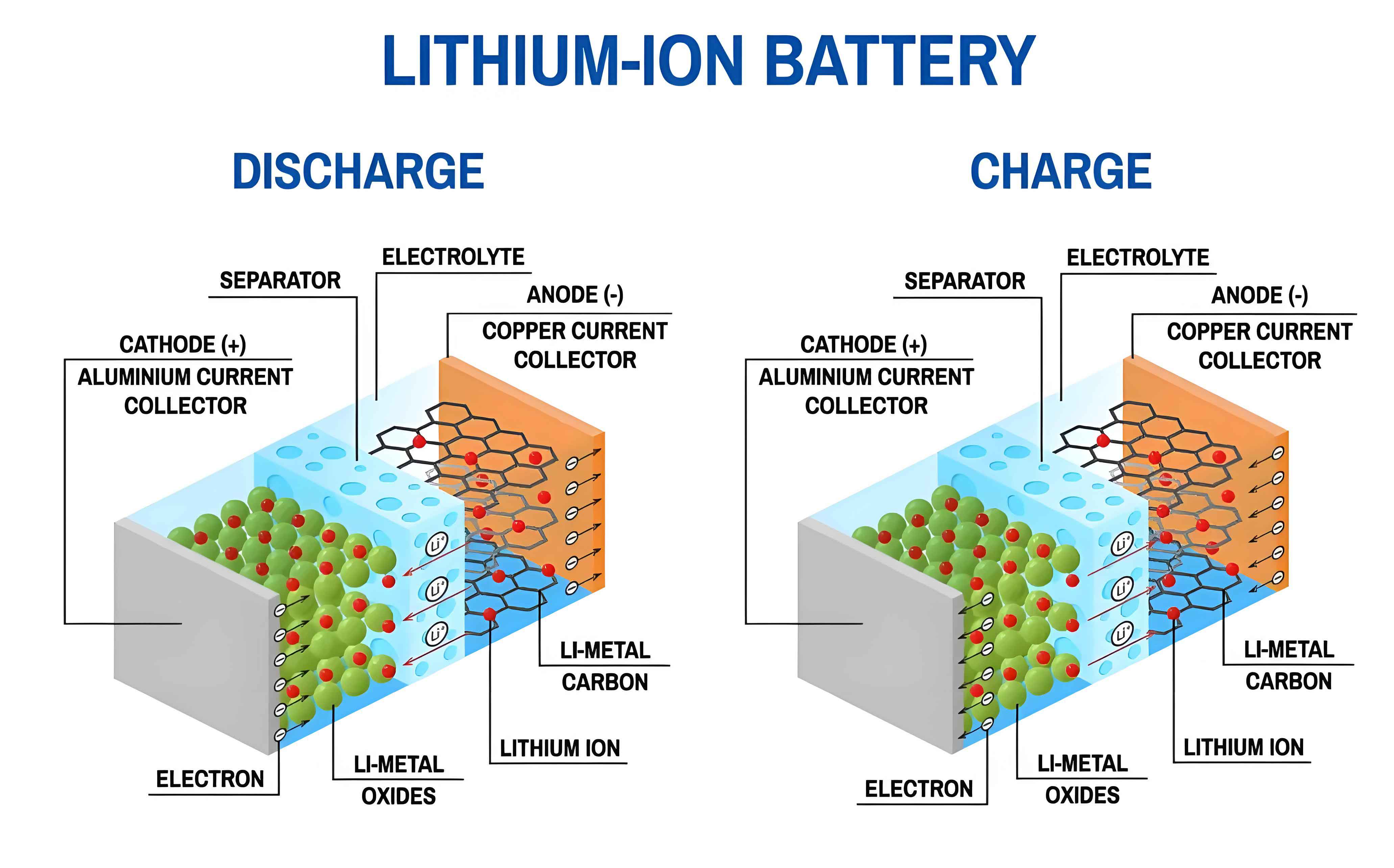
In my experience, the lithium ion battery industry is rapidly evolving, driven by technological advancements and policy incentives. The EU’s regulation introduces several key metrics that I categorize into quantitative and qualitative indicators. Quantitative indicators include specific thresholds for hazardous substance restrictions, recycled content in battery active materials, and battery recycling rates. For instance, the regulation sets minimum recycling efficiency targets, such as requiring 65% recovery of lithium from waste lithium ion batteries by 2025, increasing to 70% by 2030. These targets can be expressed using formulas for recycling efficiency: $$R_{\text{Li}} = \frac{M_{\text{recovered, Li}}}{M_{\text{input, Li}}} \times 100\%$$ where \(R_{\text{Li}}\) is the lithium recovery rate, \(M_{\text{recovered, Li}}\) is the mass of lithium recovered, and \(M_{\text{input, Li}}\) is the mass of lithium in the input waste streams. Such formulas help in standardizing performance assessments across the industry.
On the other hand, qualitative indicators encompass electrochemical performance and durability requirements, carbon footprint declarations, battery passport systems, and labeling information. The carbon footprint requirement, for example, necessitates a lifecycle assessment (LCA) for lithium ion batteries, calculated as: $$CF_{\text{battery}} = \sum_{i=1}^{n} (E_i \times EF_i) + \sum_{j=1}^{m} (M_j \times CF_j)$$ where \(CF_{\text{battery}}\) is the total carbon footprint, \(E_i\) represents energy consumption at stage \(i\), \(EF_i\) is the emission factor for that energy, \(M_j\) denotes material use, and \(CF_j\) is the carbon footprint per unit material. This formula highlights the complexity of measuring environmental impacts, urging manufacturers to adopt transparent supply chains.
Turning to China’s battery industry policies, I have observed a progressive evolution from subsidy-driven support to comprehensive value-chain management. Over the past two decades, China has issued numerous guidelines and standards, such as the “New Energy Vehicle Industry Development Plan (2021-2035)” and the “Technical Policies for the Recycling of Electric Vehicle Power Batteries.” These policies emphasize innovation, recycling, and global integration. For me, a key difference lies in the approach: while the EU’s regulation is legally binding and detailed, China’s policies often provide framework guidance, allowing flexibility for adaptation. However, China has been accelerating its regulatory efforts, with recent standards focusing on safety, performance, and sustainability of lithium ion batteries.
To illustrate the comparison between the EU’s new battery regulation and China’s policies, I have compiled a table summarizing key indicators. This table highlights both similarities and differences, which I find essential for strategic planning.
| Key Indicator | EU New Battery Regulation | China Battery Policies |
|---|---|---|
| Hazardous Substance Restrictions | Strict limits on cadmium, lead, etc., with specific thresholds (e.g., < 0.002% cadmium by weight). | Similar restrictions under GB standards, but enforcement varies; often aligned with international norms. |
| Recycled Content in Lithium Ion Batteries | Mandatory minimums: 12% cobalt, 4% lithium, 4% nickel from recycled sources by 2030. | Encouraged but not mandatory; pilot projects for closed-loop recycling are promoted. |
| Battery Recycling Rate | Targets: 65% lithium recovery by 2025, 70% by 2030; overall battery collection rate of 70% by 2030. | Targets set in “14th Five-Year Plan”: 50% recycling rate for power lithium ion batteries by 2025. |
| Carbon Footprint Declaration | Required for all lithium ion batteries > 2 kWh; thresholds to be set by 2027. | Voluntary under current standards; carbon footprint methodology under development. |
| Battery Passport | Digital passport mandatory for industrial and EV lithium ion batteries, detailing lifecycle data. | Traceability systems being implemented, but not yet unified; focus on anti-counterfeiting. |
| Labeling and Information | Detailed labels on capacity, chemistry, and durability; QR codes for access to data. | Labeling requirements under GB/T standards, but less comprehensive than EU. |
From my perspective, the EU’s regulation excels in establishing a transparent and traceable system for lithium ion batteries, which enhances accountability. The battery passport, for instance, is a digital record that includes information on battery composition, carbon footprint, and recycling history. This can be modeled as a database query: $$P_{\text{battery}} = \{ \text{ID}, C_{\text{chem}}, CF, R_{\text{history}} \}$$ where \(P_{\text{battery}}\) represents the passport, \(\text{ID}\) is the unique identifier, \(C_{\text{chem}}\) denotes chemical composition, \(CF\) is the carbon footprint, and \(R_{\text{history}}\) is the recycling history. Such systems require advanced IoT and blockchain technologies, which I believe will become standard in the lithium ion battery industry globally.
In terms of electrochemical performance, the EU regulation mandates durability standards, such as minimum capacity retention after cycles. For a lithium ion battery, capacity fade can be described by empirical models: $$C_{\text{retention}}(t) = C_0 \times e^{-\beta t}$$ where \(C_{\text{retention}}(t)\) is the capacity at time \(t\), \(C_0\) is the initial capacity, and \(\beta\) is the degradation rate. The regulation may set thresholds, e.g., 80% capacity retention after 500 cycles for EV lithium ion batteries. This pushes manufacturers to innovate in materials and design, which I see as a positive driver for the industry.
China’s policies, while less prescriptive, have fostered a robust lithium ion battery ecosystem. The country leads in production capacity, with companies like CATL and BYD dominating global markets. From my analysis, China’s focus on vertical integration—from raw material mining to battery recycling—gives it a competitive edge. However, the EU’s regulation could disrupt this by imposing carbon footprint requirements that may disadvantage imports with higher embedded emissions. To address this, I recommend that Chinese lithium ion battery manufacturers accelerate their decarbonization efforts. For example, optimizing manufacturing energy efficiency can reduce the carbon footprint: $$CF_{\text{manufacturing}} = \sum_{k} (E_{\text{process,k}} \times EF_{\text{grid}})$$ where \(E_{\text{process,k}}\) is energy for process \(k\), and \(EF_{\text{grid}}\) is the grid emission factor. Switching to renewable energy can lower \(EF_{\text{grid}}\), aligning with EU standards.
Another critical aspect is the supply chain due diligence required by the EU regulation for lithium ion batteries above 2 kWh. This involves assessing risks related to raw materials, such as cobalt and lithium, sourced from conflict-affected areas. The due diligence process can be formalized as: $$DD_{\text{score}} = \sum_{r} (R_r \times W_r)$$ where \(DD_{\text{score}}\) is a due diligence score, \(R_r\) represents risk level for raw material \(r\), and \(W_r\) is its weight in the battery. Companies must achieve a minimum score to comply. For me, this underscores the importance of ethical sourcing, which is increasingly valued in the lithium ion battery market.
Looking at recycling, both the EU and China emphasize circular economy principles. The EU sets high material recovery targets, while China has been building large-scale recycling facilities. The efficiency of recycling lithium ion batteries can be expressed as: $$\eta_{\text{recycle}} = \frac{M_{\text{output}}}{M_{\text{input}}} \times 100\%$$ where \(\eta_{\text{recycle}}\) is the recycling efficiency, \(M_{\text{output}}\) is the mass of recovered materials, and \(M_{\text{input}}\) is the mass of waste batteries. Advanced hydrometallurgical processes for lithium ion batteries can achieve \(\eta_{\text{recycle}} > 90\%\) for metals like cobalt and nickel. I believe that investing in such technologies is crucial for meeting regulatory demands.
Based on my experience, I offer several recommendations for lithium ion battery manufacturers, especially those exporting to the EU. First, familiarize with the regulation’s specifics: conduct gap analyses to identify compliance shortfalls. Second, enhance product compliance by redesigning lithium ion batteries to meet material restrictions and performance criteria. Third, establish transparent supply chains using digital tools like blockchain for traceability. Fourth, engage in third-party certifications for carbon footprint and recycling claims. Fifth, proactively share information with consumers via labels and digital platforms. These steps, while challenging, can turn regulatory pressure into a competitive advantage for lithium ion battery producers.
In conclusion, the EU’s new battery regulation represents a paradigm shift in the global lithium ion battery industry. It sets high standards for sustainability, transparency, and circularity, which I view as inevitable trends for all major markets. China’s policies, though different in approach, are converging toward similar goals. For me, the key takeaway is that lithium ion battery manufacturers must adopt a holistic lifecycle perspective, integrating environmental and social considerations into their operations. By leveraging innovations in technology and data management, the industry can not only comply with regulations but also drive the transition to a cleaner energy future. As I reflect on this, I am optimistic that collaboration between regions will foster shared standards, benefiting the entire lithium ion battery ecosystem.
To further elaborate on the technical aspects, I will delve into some formulas that are relevant for lithium ion battery performance and compliance. The energy density of a lithium ion battery, a critical metric, is given by: $$E_d = \frac{C \times V}{m}$$ where \(E_d\) is the energy density in Wh/kg, \(C\) is the capacity in Ah, \(V\) is the voltage, and \(m\) is the mass. Higher \(E_d\) is often sought for electric vehicles, but it must balance with safety and durability, as per EU requirements. Additionally, the round-trip efficiency of a lithium ion battery, important for grid storage, is: $$\eta_{\text{rt}} = \frac{E_{\text{discharge}}}{E_{\text{charge}}} \times 100\%$$ where \(E_{\text{discharge}}\) and \(E_{\text{charge}}\) are the energies during discharge and charge cycles, respectively. The EU regulation may set minimum \(\eta_{\text{rt}}\) thresholds for stationary lithium ion batteries.
Another area is the thermal management of lithium ion batteries, which affects safety and lifespan. The heat generation rate can be modeled using: $$Q = I^2 R + I \left( \frac{\partial U}{\partial T} \right)$$ where \(Q\) is the heat rate, \(I\) is the current, \(R\) is the internal resistance, and \(\frac{\partial U}{\partial T}\) is the temperature coefficient of the open-circuit voltage. Proper thermal design is essential to meet EU safety standards for lithium ion batteries.
Regarding carbon footprint, I recommend that manufacturers use standardized LCA databases. The total carbon footprint of a lithium ion battery over its lifecycle can be broken down as: $$CF_{\text{total}} = CF_{\text{materials}} + CF_{\text{manufacturing}} + CF_{\text{transport}} + CF_{\text{use}} + CF_{\text{end-of-life}}$$ Each component can be calculated with specific data. For instance, \(CF_{\text{materials}}\) for lithium ion batteries includes mining and processing of lithium, cobalt, and other materials. With the EU’s impending thresholds, companies must aim to reduce \(CF_{\text{total}}\) through renewable energy and recycling.
In terms of recycling economics, the value recovered from a lithium ion battery can be expressed as: $$V_{\text{recovered}} = \sum_{m} (P_m \times M_m) – C_{\text{recycle}}$$ where \(V_{\text{recovered}}\) is the net value, \(P_m\) is the market price for material \(m\), \(M_m\) is the mass recovered, and \(C_{\text{recycle}}\) is the recycling cost. The EU’s recycled content mandates will drive demand for recycled materials, potentially increasing \(P_m\) for lithium and cobalt, making recycling more viable for lithium ion batteries.
To summarize the regulatory timeline, the EU’s new battery regulation phases in requirements over the coming years. For example, carbon footprint declarations for lithium ion batteries become mandatory in 2025, while recycled content rules apply from 2030. Companies must plan accordingly, investing in R&D and supply chain adjustments. I suggest that lithium ion battery manufacturers establish cross-functional teams to monitor regulatory updates and implement changes proactively.
Finally, I emphasize that the lithium ion battery industry is at a crossroads. Regulations like the EU’s are shaping the future of sustainable energy storage. By embracing these changes, manufacturers can not only access key markets but also contribute to global environmental goals. As I continue my work in this field, I am committed to advancing the science and policy of lithium ion batteries for a greener planet.