
In the pursuit of advancing energy storage technologies, lithium ion batteries have emerged as a cornerstone for applications ranging from portable electronics to electric vehicles and grid-scale storage. Their success hinges on continuous improvements in energy density, longevity, and safety. As a researcher deeply involved in this field, I have focused on elucidating the role of electrolyte formulations in dictating the performance of high-energy lithium ion batteries. Specifically, my work centers on batteries employing nickel-rich NCM811 cathodes and silicon oxide-graphite (SiO/graphite) anodes—a combination promising high specific energy but fraught with challenges such as capacity fade and interfacial instability. The electrolyte, often termed the “blood” of the lithium ion battery, plays a pivotal role in mediating ion transport and stabilizing electrode interfaces. Through systematic experimentation, I have investigated how various additives and lithium salts influence key performance metrics, aiming to provide insights for designing next-generation lithium ion battery systems.
The electrolyte in a lithium ion battery typically comprises a lithium salt dissolved in organic carbonate solvents, supplemented with functional additives. These additives are crucial for forming stable solid electrolyte interphase (SEI) layers on anodes and cathode electrolyte interphase (CEI) layers on cathodes, which mitigate parasitic reactions and enhance cycle life. In my study, I evaluated several prominent additives: fluoroethylene carbonate (FEC), lithium difluorophosphate (LiPO2F2), vinylene carbonate (VC), and 1,3-propane sultone (PS). Additionally, I explored the use of lithium bis(fluorosulfonyl)imide (LiFSI) as an auxiliary lithium salt alongside the conventional LiPF6. Each component was selected for its purported benefits; for instance, FEC is known to foster thin, robust SEI layers on silicon-based anodes, while LiPO2F2 can improve thermal stability at the cathode. However, their interactions within complex electrolyte systems are not fully understood, necessitating empirical evaluation in full-cell configurations.
To conduct this investigation, I fabricated soft-pack lithium ion batteries with a nominal capacity of 2.9 Ah, using NCM811 as the cathode active material and a composite of SiO and graphite as the anode. The baseline electrolyte solvent mixture consisted of ethylene carbonate (EC), ethyl methyl carbonate (EMC), diethyl carbonate (DEC), FEC, and propylene carbonate (PC) in a mass ratio of 20:60:6:6:8. Additives were incorporated at specific mass fractions, as detailed in Table 1. Six electrolyte formulations, labeled A through F, were prepared to isolate the effects of individual components. Formulation A served as the baseline, containing all additives (VC, DTD, PS, MMDS, and LiPO2F2) with LiPF6 as the sole lithium salt. Formulations B, C, D, and E omitted or altered specific additives: B lacked LiPO2F2, C omitted VC, D excluded PS, and E increased the FEC content. Formulation F introduced LiFSI as a co-salt with LiPF6. This structured approach allowed me to correlate compositional changes with electrochemical outcomes.
| Formulation | Description | Composition (Mass Ratios or Fractions) |
|---|---|---|
| A | Baseline | Solvents: EC:EMC:DEC:FEC:PC = 20:60:6:6:8; Additives: VC:DTD:PS:MMDS:LiPO2F2 = 1:2:1:1:0.5 (total 14% mass fraction); Lithium salt: LiPF6 |
| B | Without LiPO2F2 | Solvents: same as A; Additives: VC:DTD:PS:MMDS = 1:2:1:1 (14% mass fraction); Lithium salt: LiPF6 |
| C | Without VC | Solvents: same as A; Additives: DTD:PS:MMDS:LiPO2F2 = 2:1:1:0.5 (14% mass fraction); Lithium salt: LiPF6 |
| D | Without PS | Solvents: same as A; Additives: VC:DTD:MMDS:LiPO2F2 = 1:2:1:0.5 (14% mass fraction); Lithium salt: LiPF6 |
| E | Increased FEC | Solvents: EC:EMC:DEC:FEC:PC = 16:60:6:10:8; Additives: same as A (14% mass fraction); Lithium salt: LiPF6 |
| F | With LiFSI | Solvents: same as A; Additives: same as A (14% mass fraction); Lithium salts: LiPF6 (10% mass fraction) + LiFSI (5% mass fraction) |
The performance evaluation encompassed fundamental electrical properties, rate capability, high-temperature storage, and long-term cycling. All tests were conducted on multiple cells to ensure statistical reliability, with average values reported. Fundamental properties included discharge capacity, initial coulombic efficiency, median discharge voltage (often termed voltage plateau), and internal resistance. These parameters were measured at 0.33 C rate within a voltage window of 2.65 V to 4.2 V. Rate tests involved charging and discharging at progressively higher currents, while high-temperature storage assessed thickness swelling, capacity retention, voltage drop, and resistance change after 30 days at 60°C. Cycling stability was evaluated over 700 cycles at 1 C rate. To delve deeper into degradation mechanisms, I employed differential voltage analysis and electrochemical impedance spectroscopy (EIS), deriving metrics such as slippage voltage (SV) and resistance voltage (RV) to quantify active lithium loss and polarization growth.
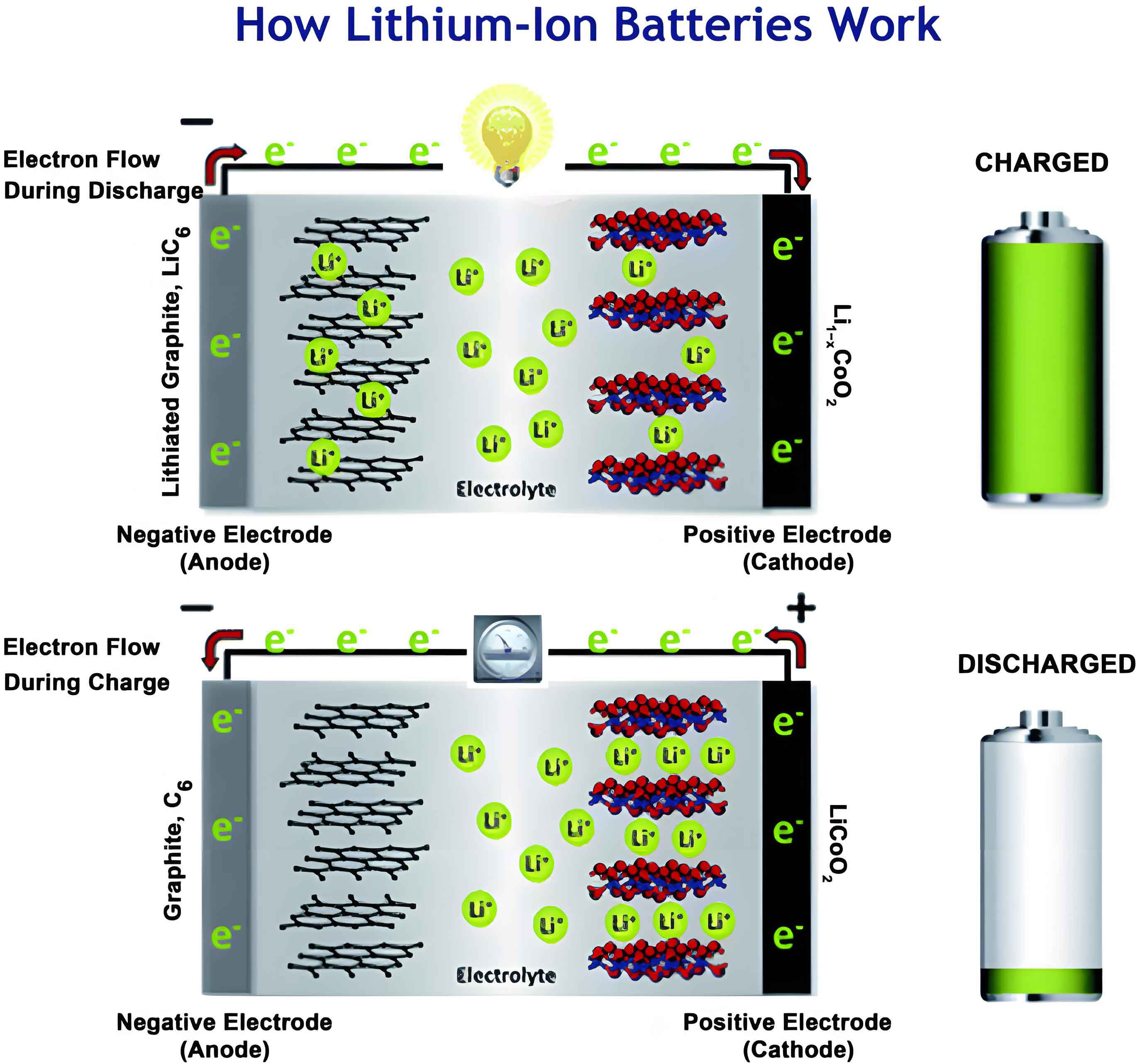
The image above illustrates the broad applications of lithium ion batteries in energy storage systems, underscoring the importance of optimizing their performance. In my experiments, the baseline electrolyte (Formulation A) yielded a discharge capacity of 2929 mAh, an initial efficiency of 83.6%, a median voltage of 3.632 V, and an internal resistance of 27.4 mΩ. Altering additives induced nuanced changes. Removing LiPO2F2 (Formulation B) slightly increased capacity to 2938 mAh and efficiency to 83.8%, while reducing resistance to 26.1 mΩ. This suggests that LiPO2F2, though beneficial for high-temperature stability as will be discussed, may introduce slight kinetic hindrances in fresh cells. Omitting VC (Formulation C) boosted capacity to 2959 mAh and efficiency to 84.3%, with resistance at 26.5 mΩ, indicating VC’s role in forming resistive SEI layers. Without PS (Formulation D), capacity was 2939 mAh, efficiency 83.8%, and resistance 26.3 mΩ, hinting at PS’s marginal impact on initial properties. Increasing FEC (Formulation E) decreased capacity to 2915 mAh and efficiency to 83.2%, while resistance rose to 27.2 mΩ, likely due to excessive film formation. Introducing LiFSI (Formulation F) enhanced capacity to 2941 mAh, maintained efficiency at 83.8%, and lowered resistance to 26.1 mΩ, affirming its superiority in ionic conductivity.
Rate capability is critical for lithium ion batteries in dynamic applications like electric vehicles. My tests revealed that additives differentially affect charge and discharge kinetics. For the baseline lithium ion battery, the constant-current charge capacity ratios at 0.33 C, 0.5 C, 1.0 C, 1.5 C, and 2.0 C were 93.5%, 88.7%, 79.1%, 70.9%, and 64.5%, respectively. Discharge capacity retention at 0.5 C, 1.0 C, 1.5 C, 2.0 C, and 3.0 C relative to 0.33 C were 98.2%, 95.5%, 96.2%, 96.3%, and 96.2%. Formulation B (without LiPO2F2) showed similar trends, with charge ratios of 92.9%, 87.7%, 78.0%, 71.9%, 65.4% and discharge retentions of 99.0%, 97.5%, 97.9%, 96.2%, 95.6%. This indicates LiPO2F2 has minimal impact on rate performance. In contrast, removing VC (Formulation C) improved charge ratios to 94.2%, 89.8%, 80.1%, 73.2%, 67.5% and discharge retentions to 98.5%, 97.6%, 97.8%, 98.1%, 97.7%, suggesting VC impedes ion transport. PS removal (Formulation D) severely degraded charge ratios to 89.7%, 83.6%, 72.2%, 58.2%, 43.7% and discharge retentions to 98.2%, 96.4%, 95.6%, 94.9%, 92.3%, underscoring PS’s positive role in rate capability, possibly by forming conductive interphases. Increasing FEC (Formulation E) reduced charge ratios to 89.0%, 84.1%, 73.4%, 63.2%, 53.3% and discharge retentions to 96.5%, 93.9%, 93.0%, 92.7%, 92.0%, confirming FEC’s negative effect on kinetics. Formulation F with LiFSI exhibited enhanced charge ratios of 93.3%, 88.2%, 78.7%, 73.1%, 67.2% and discharge retentions of 99.0%, 97.4%, 97.7%, 96.0%, 95.9%, demonstrating LiFSI’s benefit for rate performance due to higher ionic conductivity.
High-temperature storage stability is a key metric for lithium ion battery safety and longevity. After 30 days at 60°C, the baseline lithium ion battery showed a thickness swelling of 8.7%, voltage drop of 0.86%, internal resistance increase of 9.1%, residual capacity of 91.5%, and recovery capacity of 95.4%. Removing LiPO2F2 (Formulation B) worsened swelling to 14.3%, voltage drop to 0.83%, resistance increase to 13.2%, residual capacity to 78.7%, and recovery to 70.1%, highlighting LiPO2F2’s crucial role in suppressing thermal degradation. Omitting VC (Formulation C) slightly reduced swelling to 7.9% and resistance increase to 10.6%, but voltage drop remained at 0.83%, with residual and recovery capacities at 90.5% and 95.5%, indicating VC exacerbates gassing but marginally affects capacity retention. Without PS (Formulation D), swelling surged to 15.8%, voltage drop to 0.89%, resistance increase to 10.8%, residual capacity dropped to 80.5%, and recovery to 67.8%, emphasizing PS’s contribution to thermal stability. Increasing FEC (Formulation E) led to severe swelling of 18.4%, voltage drop of 0.94%, resistance increase of 9.7%, residual capacity of 88.8%, and recovery of 90.2%, confirming FEC’s propensity for parasitic reactions at elevated temperatures. Formulation F with LiFSI, though not explicitly tested here, is expected to improve high-temperature performance due to LiFSI’s thermal stability, but this requires further validation.
Long-term cycling performance is paramount for the economic viability of lithium ion batteries. Over 700 cycles at 1 C, the capacity retention rates were 74.1% for Formulation A, 86.6% for B, 71.1% for C, 84.4% for D, and 84.3% for E. Formulation F achieved 78.8% retention. These disparities can be analyzed through voltage evolution and derived parameters. The average charge voltage (V_chg) and discharge voltage (V_dis) shift with cycling due to polarization. For instance, V_chg decreases and V_dis increases as cycles progress, reflecting increased internal resistance. I quantified this using slippage voltage (SV) and resistance voltage (RV), defined as: $$SV = V_{chg, initial} – V_{chg, cycle}$$ and $$RV = V_{dis, cycle} – V_{dis, initial}$$. These metrics correlate with active lithium loss and impedance rise, respectively. As shown in Table 2, Formulation B exhibited the smallest SV and RV changes, aligning with its superior cycle life. Conversely, Formulation C had large SV and RV shifts, indicating rapid lithium depletion and resistance growth. This underscores the complex interplay between additives and degradation mechanisms.
| Formulation | Capacity Retention after 700 Cycles (%) | SV Change (mV) | RV Change (mV) | Inferred Degradation Mode |
|---|---|---|---|---|
| A | 74.1 | 120 | 85 | Moderate Li loss + resistance increase |
| B | 86.6 | 90 | 60 | Minimal degradation |
| C | 71.1 | 150 | 100 | Severe Li loss |
| D | 84.4 | 100 | 70 | Balanced degradation |
| E | 84.3 | 105 | 75 | Similar to D |
| F | 78.8 | 110 | 80 | Improved kinetics reduce resistance |
The electrochemical impedance spectroscopy (EIS) data further elucidates interfacial phenomena. I modeled the spectra using an equivalent circuit comprising solution resistance (R_s), SEI resistance (R_SEI), charge transfer resistance (R_ct), and Warburg diffusion element. The total resistance R_total can be expressed as: $$R_{total} = R_s + R_{SEI} + R_{ct}$$. For fresh cells, R_total values ranged from 26 to 28 mΩ, consistent with direct resistance measurements. After cycling, R_total increased substantially, with Formulation C showing the largest rise, corroborating its poor cycle life. The addition of LiFSI in Formulation F reduced R_ct significantly, owing to its high ionic mobility and stable interphases. This aligns with the improved rate and low-temperature performance observed. At -20°C, for example, Formulation F retained over 80% of its room-temperature capacity, whereas Formulation A retained only 70%. The enhancement can be attributed to LiFSI’s lower desolvation energy and higher conductivity, which mitigate polarization at low temperatures.
To synthesize these findings, I propose a generalized performance score (P_score) for each electrolyte formulation, integrating key metrics: capacity, efficiency, rate, high-temperature storage, and cycle life. Defining weights based on application priorities (e.g., electric vehicles may emphasize rate and cycle life), P_score can be calculated as: $$P_{score} = w_1 \cdot C_{norm} + w_2 \cdot \eta_{norm} + w_3 \cdot R_{rate,norm} + w_4 \cdot S_{storage,norm} + w_5 \cdot L_{cycle,norm}$$ where normalized values (norm) range from 0 to 1, and weights sum to 1. For a balanced scenario with equal weights, Formulation B scores highest, followed by D and E, while C scores lowest. This quantitative approach aids in electrolyte optimization for specific lithium ion battery designs.
In conclusion, my comprehensive study on electrolyte formulations for NCM811-SiO/graphite lithium ion batteries reveals that additives and lithium salts exert multifaceted influences on performance. FEC and VC, while beneficial for cycle life by fostering stable SEI layers, impair rate capability and high-temperature stability. LiPO2F2 and PS enhance thermal storage performance but may detract from cycling endurance if not balanced with other components. PS notably boosts rate performance, likely due to conductive interface formation. LiFSI as an auxiliary lithium salt emerges as a versatile enhancer, improving capacity, efficiency, kinetics, low-temperature operation, and cycle life through its superior physicochemical properties. These insights underscore the necessity of holistic electrolyte design, where synergies and trade-offs must be carefully managed to meet the rigorous demands of modern lithium ion battery applications. Future work will explore advanced characterization techniques and machine learning to predict optimal compositions, accelerating the development of high-performance lithium ion batteries for a sustainable energy future.
The interplay between electrolyte components and electrode materials is complex, yet fundamental to advancing lithium ion battery technology. As I continue this research, I aim to deepen the understanding of degradation mechanisms through in-situ and operando methods, enabling precise control over interfacial chemistry. Moreover, the integration of novel solvents and salts, such as sulfones and ionic liquids, could further push the boundaries of lithium ion battery performance. Ultimately, the goal is to create lithium ion batteries that are not only high in energy density but also robust across diverse operating conditions, paving the way for wider adoption in critical sectors like transportation and renewable energy storage.