
The relentless advancement of lithium ion battery technology has been the cornerstone of the modern portable electronics revolution and is now the driving force behind the global shift towards electric transportation and grid-scale energy storage. As an engineer deeply involved in materials characterization, I have witnessed firsthand the explosive growth of this industry. The performance, safety, and cost of a lithium ion battery are intrinsically tied to the properties of its constituent materials, with the cathode being one of the most critical components. Consequently, rigorous and standardized analysis and testing of cathode materials are not merely quality control steps; they are fundamental necessities for ensuring cell-to-cell consistency, guiding manufacturing processes, fostering fair trade, and ultimately, ensuring the safety and reliability of the final battery product. This article draws upon my experience and a thorough review of the existing framework to present a detailed examination of the current state of standardization for testing lithium ion battery cathode materials, encompassing chemical composition, physical properties, and electrochemical performance, followed by personal recommendations for future development.
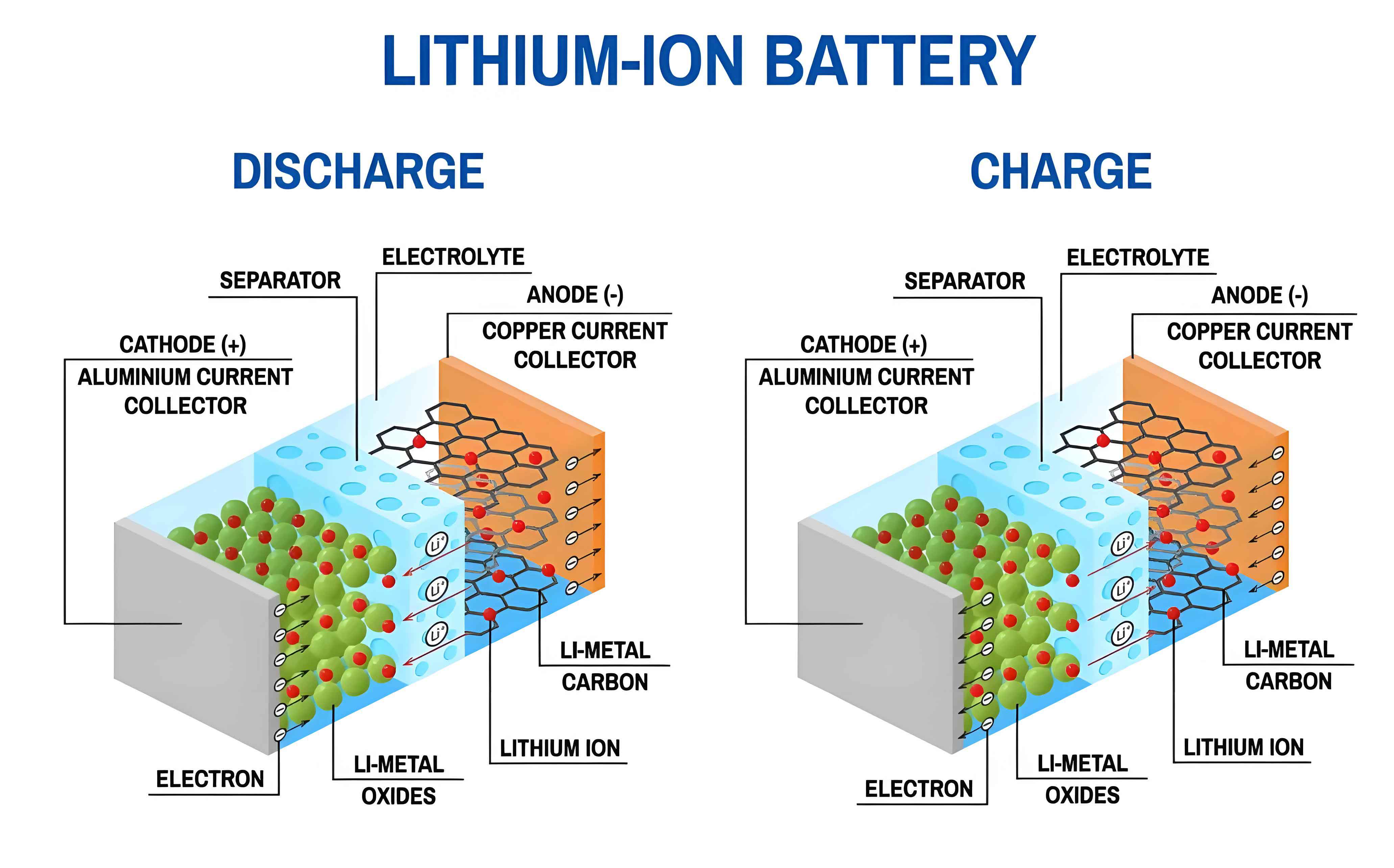
The cathode material is the source of lithium ions and largely determines the energy density, voltage, and significant portions of the cost and safety profile of a lithium ion battery. Over the years, a diverse family of cathode chemistries has been commercialized, each with its own advantages and challenges. The primary categories include layered oxides like Lithium Cobalt Oxide (LCO), Lithium Nickel Manganese Cobalt Oxide (NMC), and Lithium Nickel Cobalt Aluminum Oxide (NCA); olivine-type structures like Lithium Iron Phosphate (LFP); and spinels like Lithium Manganese Oxide (LMO) and high-voltage Lithium Nickel Manganese Oxide (LNMO). The accurate assessment of these materials requires a multi-faceted approach, which has gradually been codified into national and industry standards.
1. Standardization of Chemical Composition Analysis
The precise chemical makeup of a cathode material is paramount. Stoichiometry of the main elements directly influences the crystal structure and available lithium inventory, while trace impurities can catalyze deleterious side reactions, degrade cycle life, or pose safety risks. Standardization in this domain has progressed significantly, with dedicated method standards established for most major cathode families.
1.1 Lithium Cobalt Oxide (LCO)
As one of the earliest commercially successful cathodes, LCO set the precedent for standardization. The product standard GB/T 20252 establishes the requirements, and two dedicated analytical standards support it. Cobalt content, being the major and costly component, is determined by a classical EDTA titration, ensuring high precision. A comprehensive inductively coupled plasma optical emission spectrometry (ICP-OES) method is standardized for the simultaneous determination of lithium and a suite of metallic impurities (Ni, Mn, Mg, Al, Fe, Na, Ca, Cu), which is efficient and widely adopted in quality control labs.
| Analyte(s) | Standard Method | Technique |
|---|---|---|
| Cobalt (Co) | GB/T 23367.1 | EDTA Titration |
| Li, Ni, Mn, Mg, Al, Fe, Na, Ca, Cu | GB/T 23367.2 | ICP-OES |
1.2 Lithium Nickel Manganese Cobalt Oxide (NMC)
The complex ternary NMC system requires careful control of the Ni:Co:Mn ratio. The standardized approach uses EDTA titration to determine the total molar content of these three transition metals, which is crucial for calculating the stoichiometric balance. A more extensive ICP-OES method is then used to quantify the individual amounts of Ni, Co, Mn, as well as Li and a broad panel of impurity elements including alkali and alkaline earth metals.
| Analyte(s) | Standard Method | Technique |
|---|---|---|
| Ni+Co+Mn Total | YS/T 1006.1 | EDTA Titration |
| Li, Ni, Co, Mn, Na, Mg, Al, K, Cu, Ca, Fe, Zn, Si | YS/T 1006.2 | ICP-OES |
1.3 Lithium Nickel Manganese Oxide (LNMO)
The high-voltage spinel LNMO has a distinct chemistry, and its analysis standards reflect this. Dedicated methods are prescribed for its major components: a gravimetric method for nickel (using dimethylglyoxime), a potentiometric titration for manganese, and flame atomic absorption spectroscopy (FAAS) for lithium. Particular attention is given to anion impurities, with separate standards for sulfate (ion chromatography) and chloride (ion-selective electrode). Metallic impurities are covered by a final ICP-OES method.
| Analyte(s) | Standard Method | Technique |
|---|---|---|
| Nickel (Ni) | YS/T 1569.1 | Gravimetry (Dimethylglyoxime) |
| Manganese (Mn) | YS/T 1569.2 | Potentiometric Titration |
| Lithium (Li) | YS/T 1569.3 | Flame Atomic Absorption Spectroscopy (FAAS) |
| Sulfate (SO₄²⁻) | YS/T 1569.4 | Ion Chromatography |
| Chloride (Cl⁻) | YS/T 1569.5 | Ion-Selective Electrode |
| K, Na, Ca, Mg, Fe, Cu, Cr, Cd | YS/T 1569.6 | ICP-OES |
1.4 Lithium Nickel Cobalt Aluminum Oxide (NCA)
Similar to NMC, the analysis of NCA focuses on its key metallic constituents. Gravimetry (for Ni), potentiometric titration (for Co), and FAAS (for Li) form the core for major element analysis. A comprehensive ICP-OES method covers aluminum and other metallic impurities, which is essential for this Al-containing chemistry.
| Analyte(s) | Standard Method | Technique |
|---|---|---|
| Nickel (Ni) | YS/T 1263.1 | Gravimetry (Dimethylglyoxime) |
| Cobalt (Co) | YS/T 1263.2 | Potentiometric Titration |
| Lithium (Li) | YS/T 1263.3 | FAAS |
| Al, Fe, Ca, Mg, Cu, Zn, Si, Na, Mn | YS/T 1263.4 | ICP-OES |
1.5 Lithium Iron Phosphate (LFP)
LFP’s olivine structure, devoid of cobalt and nickel, necessitates a different analytical suite. The oxidation state of iron is critical, leading to standards for total iron (by redox titration) and specifically for Fe³⁺ content in nano-LFP. Phosphorus is determined gravimetrically, and carbon content (from conductive additives in composites) is measured via combustion infrared absorption. Lithium and metallic impurities are determined by flame photometry and ICP-OES, respectively.
| Analyte(s) | Standard Method | Technique |
|---|---|---|
| Total Iron (Fe) | YS/T 1028.1 | Redox Titration (TiCl₃ / K₂Cr₂O₇) |
| Trivalent Iron (Fe³⁺) in Nano-LFP | GB/T 33828 | Redox Titration |
| Lithium (Li) | YS/T 1028.2 | Flame Photometry |
| Phosphorus (P) | YS/T 1028.3 | Gravimetry (Quinoline Phosphomolybdate) |
| Carbon (C) | YS/T 1028.4 | High-Frequency Combustion Infrared Absorption |
| Ca, Mg, Zn, Cu, Pb, Cr, Na, Al, Ni, Co, Mn | YS/T 1028.5 | ICP-OES |
1.6 Universal Chemical Property Tests
Beyond elemental composition, several chemical properties are critical for processing and performance of any lithium ion battery cathode material.
- Moisture Content: Absorbed water can react with the electrolyte and LiPF₆ salt, generating HF and causing capacity fade. The nearly universal standard method is the Karl Fischer titration (GB/T 6283), known for its high sensitivity to trace water.
- pH of Aqueous Suspension: This is a practical, indirect measure of surface alkalinity resulting from residual lithium compounds (like Li₂CO₃ and LiOH). High pH can cause gelation of PVDF-based electrode slurries. The standard method is now GB/T 5211.6.
- Residual Alkali Content: This provides a direct quantitative measure of surface residual lithium, typically via acid titration. A recent and significant unification is the publication of GB/T 41704-2022, which provides a standardized potentiometric titration method applicable to all cathode material types.
- Magnetic Impurity Content: Ferromagnetic metal particles (Fe, Ni, Co) introduced during production are severe safety hazards, as they can pierce separators and cause internal shorts. Historically, methods were borrowed from anode standards. Now, GB/T 41704-2022 and SJ/T 11795-2022 provide dedicated methods using ICP-OES or SEM-EDS to quantify these dangerous contaminants.
| Property | Standard Method | Technique | Significance |
|---|---|---|---|
| Moisture (H₂O) | GB/T 6283 | Karl Fischer Titration | Prevents gas generation and electrolyte decomposition. |
| pH | GB/T 5211.6 | pH Electrode | Indicates surface alkalinity; affects slurry rheology. |
| Residual Alkali (as Li₂O) | GB/T 41704 | Potentiometric Titration | Quantifies detrimental surface lithium compounds. |
| Magnetic Impurities (Fe, Ni, Co) | GB/T 41704, SJ/T 11795 | ICP-OES, SEM-EDS | Critical for safety; prevents internal short circuits. |
2. Standardization of Physical Property Testing
The morphological and structural characteristics of cathode powders profoundly impact electrode manufacturing and cell performance. These properties are typically assessed using well-established, generalized standard methods that are referenced by the specific cathode material product standards.
- Particle Size Distribution (PSD): PSD influences tap density, electrode packing density, rate capability, and slurry rheology. Laser diffraction (GB/T 19077) is the universally referenced standard technique for its speed and statistical robustness.
- Tap Density: This is a simple but vital indicator of powder packing efficiency, correlating with achievable electrode density and thus volumetric energy density of the lithium ion battery. It is measured according to GB/T 5162.
- Specific Surface Area (SSA): SSA, typically measured by nitrogen adsorption using the BET theory (GB/T 13390), affects reactivity, rate performance, and also correlates with moisture uptake and residual lithium levels.
- Crystal Structure: Phase purity, crystal system, and lattice parameters are verified using X-ray diffraction (XRD). While the instrument operation is standardized, the analysis (Rietveld refinement for quantitative phase analysis) is often specified in product standards without a single overarching test method standard.
- Appearance: Visual inspection for color uniformity and the absence of agglomerates or foreign matter is a basic but necessary quality check.
| Property | Standard Method | Technique | Impact on Lithium Ion Battery |
|---|---|---|---|
| Particle Size Distribution | GB/T 19077 | Laser Diffraction | Electrode density, rate capability, slurry processing. |
| Tap Density | GB/T 5162 | Volumetric Measurement | Volumetric energy density, electrode manufacturing. |
| Specific Surface Area (BET) | GB/T 13390 | Nitrogen Adsorption | Reactivity, rate performance, moisture sensitivity. |
| Crystal Structure | Product-specific references | X-ray Diffraction (XRD) | Electrochemical activity, stability, Li⁺ diffusion paths. |
3. Standardization of Electrochemical Performance Testing
Ultimately, the value of a cathode material is determined by its performance in an electrochemical cell. Standardizing these tests is challenging due to the number of variable parameters (electrode formulation, cell type, testing protocol) but is essential for fair comparison. The core standardized metrics involve testing in laboratory-scale coin cells or small pouch cells.
3.1 First-Cycle Performance
The initial charge and discharge cycles reveal fundamental material properties. Two key metrics are standardized:
a) First Discharge Specific Capacity (C₁): This is the deliverable capacity per unit mass of the active cathode material during the first discharge, typically measured in mAh/g. It represents the practical lithium extraction/insertion capability.
b) Initial Coulombic Efficiency (ICE or η): This is the ratio of the first discharge capacity to the first charge capacity, expressed as a percentage.
$$ \eta (\%) = \frac{C_1\text{(discharge)}}{C_1\text{(charge)}} \times 100\% $$
A lower than theoretical ICE indicates irreversible capacity loss, often due to electrolyte decomposition or structural rearrangements.
Dedicated national standards now exist for testing these parameters for LCO (GB/T 23365), NMC (GB/T 37201), LMO (GB/T 39864), and LFP (GB/T 42161).
3.2 Discharge Profile and Cycle Life
Beyond the first cycle, the shape of the discharge curve and longevity are critical.
- Discharge Plateau Capacity Ratio (DPCR): This metric quantifies the “flatness” of the discharge plateau, which is desirable for stable voltage output. It is defined as the capacity delivered within a specified voltage window (e.g., ±X% of the median voltage) divided by the total discharge capacity.
$$ \text{DPCR} = \frac{C_{\text{within voltage window}}}{C_{\text{total}}} $$
Standards exist for LCO (GB/T 23366), NMC (GB/T 37207), and LMO (GB/T 39861). - Cycle Life: The most critical metric for durability is the number of charge-discharge cycles a material can endure before its capacity decays to a specified percentage (e.g., 80%) of its initial capacity. The fade rate is a key performance indicator for the longevity of the lithium ion battery. Standardized cycle life test methods are provided in GB/T 23366 (LCO), GB/T 37207 (NMC), GB/T 39861 (LMO), and GB/T 42260 (LFP).
| Performance Metric | Relevant Standard Methods | Key Cathode Materials Covered |
|---|---|---|
| First Discharge Capacity & Initial Efficiency | GB/T 23365, GB/T 37201, GB/T 39864, GB/T 42161 | LCO, NMC, LMO, LFP |
| Discharge Plateau Capacity Ratio | GB/T 23366, GB/T 37207, GB/T 39861 | LCO, NMC, LMO |
| Cycle Life | GB/T 23366, GB/T 37207, GB/T 39861, GB/T 42260 | LCO, NMC, LMO, LFP |
Note on Rate Capability Testing: While rate performance is universally tested in R&D and specifications, a unified, standardized national method for rate capability testing (e.g., capacity retention at C/3, 1C, 2C, 5C rates) is notably absent. This is currently typically governed by in-house or customer-specific protocols.
4. Personal Perspectives and Recommendations for Future Standardization
Based on my review and experience, the existing framework for analyzing lithium ion battery cathode materials is substantial and has played a crucial role in industry maturation. However, to support the next generation of materials and ensure global competitiveness, the standardization ecosystem must evolve. Here are my key recommendations:
4.1 Refinement and Consolidation of the Standard System
The current standards were developed at different times by different technical committees, leading to some fragmentation.
Recommendation 1: Harmonize and Update. A concerted effort should be made to review and harmonize standards across different cathode material types. For example, the principles for electrochemical testing (coin cell assembly, electrolyte volume, cycling protocols) could be unified into a series of overarching foundational standards, with material-specific appendices for voltage limits or loading densities. Outdated chemical methods (e.g., some gravimetric procedures) could be evaluated for potential replacement by faster, multi-element techniques like ICP-MS, where appropriate.
Recommendation 2: Fill Critical Gaps. Standards for critical yet currently unstandardized tests should be developed. The most prominent gap is a standardized rate capability testing protocol. Others might include standard methods for quantifying coating uniformity on core-shell particles, measuring ionic/electronic conductivity of powder compacts, or assessing thermal stability via Accelerating Rate Calorimetry (ARC) on charged materials.
4.2 Proactive Engagement in International Standardization
While China has developed a comprehensive domestic system, influencing the global stage is essential for trade and technology leadership.
Recommendation 3: Lead and Integrate. Experts and institutions should actively participate in international bodies like IEC and ISO, proposing to elevate mature and advanced Chinese standards (e.g., GB/T 41704 for magnetic impurities) to the international level. Simultaneously, it is vital to monitor and adopt beneficial international standards to maintain alignment and avoid technical trade barriers for lithium ion battery materials and cells.
4.3 Synergistic Development of Standards, Reference Materials, and Instrumentation
A standard method is only as good as the tools available to implement it consistently.
Recommendation 4: Develop Certified Reference Materials (CRMs). There is a severe shortage of CRMs for cathode materials. Developing CRMs with certified values for composition, particle size, and even specific capacity is urgently needed to enable laboratory accreditation, method validation, and instrument calibration across the supply chain.
Recommendation 5: Foster Standardized Instrumentation. Collaboration with instrument manufacturers could be encouraged to develop “standardized testing modules” or software profiles that automatically implement key standardized protocols (e.g., for residual alkali titration or specific electrochemical test profiles), reducing inter-operator variability and improving reproducibility across the lithium ion battery industry.
In conclusion, the standardization landscape for lithium ion battery cathode material testing is robust and functional, having grown alongside the industry it supports. It provides the essential common language for quality, performance, and safety. Moving forward, by focusing on system consolidation, international engagement, and the synergistic development of supporting tools, the standardization framework can transform from a reactive record of best practices into a proactive platform that accelerates the responsible innovation and global adoption of next-generation battery technologies.