
The relentless pursuit of higher energy density, superior rate capability, and longer cycle life continues to drive innovation in energy storage technologies. Among these, the rechargeable lithium ion battery stands as a cornerstone, powering everything from portable electronics to electric vehicles. Its success is attributed to its high specific energy, lack of memory effect, and environmental benignity compared to older battery chemistries. The performance of a lithium ion battery is intrinsically linked to the properties of its electrode materials. While graphite has served as the dominant anode material for decades, its relatively low theoretical capacity (372 mAh g⁻¹) and moderate rate performance increasingly fall short of the demands for next-generation high-power and high-energy applications. This performance ceiling has spurred intense research into alternative anode materials.
Porous carbon materials have emerged as highly promising candidates to replace or complement graphite. Their appeal lies in a unique set of structural advantages tailored for lithium ion battery applications. A high specific surface area provides abundant active sites for lithium ion adsorption and reactions. A well-developed pore network, particularly a hierarchical structure containing micropores (<2 nm), mesopores (2-50 nm), and macropores (>50 nm), facilitates rapid electrolyte infiltration and shortens the diffusion paths for ions, directly enhancing rate performance. Furthermore, the porous framework can effectively accommodate volume changes during the lithiation/delithiation cycles, improving structural integrity and cycling stability. The tunable surface chemistry of carbon also allows for enhanced interactions with electrolyte components. However, the commercial synthesis of such tailored porous carbons often relies on expensive precursors like phenolic resins or metal-organic frameworks, coupled with complex, energy-intensive templating methods, raising concerns about cost and scalability.
This economic and environmental challenge directs attention toward sustainable, low-cost carbon sources. Biomass waste, an abundant and renewable resource, presents an ideal solution. Utilizing agricultural, industrial, or food waste as a precursor for carbon materials aligns with the principles of a circular economy, transforming waste into value-added products. A vast array of biomass sources, including coconut shells, rice husks, walnut shells, and various plant stems, have been successfully converted into functional carbons for energy storage. In this context, spent lees, the primary solid residue from the traditional Chinese Baijiu (liquor) production process, represent a significant and underutilized waste stream. China’s annual output of Baijiu reaches millions of tons, with a lees-to-liquor production ratio estimated at approximately 3:1. This results in the generation of massive quantities of spent lees, which are typically acidic, have high moisture content, and are rich in fibrous components like cellulose and lignin from the rice husks used in fermentation. Disposal poses an environmental challenge, while resource utilization offers a path toward greener production.
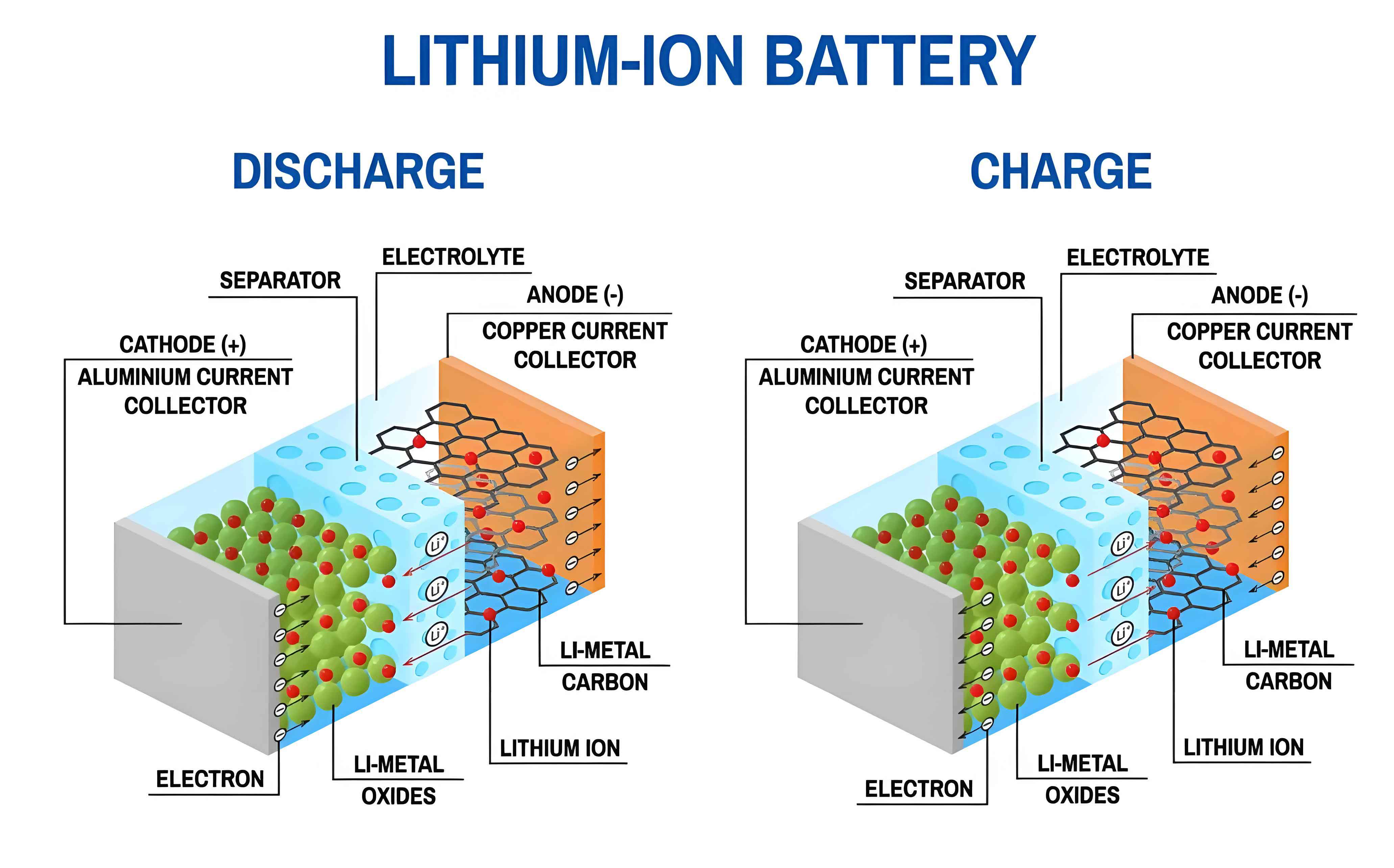
Intriguingly, the very composition of spent lees makes them a compelling precursor for advanced carbon materials. The fibrous organic content provides the carbon skeleton, while the inherent inorganic components, notably silicon dioxide (SiO₂) from the rice husks, act as a natural, self-sacrificing template. This intrinsic template can be selectively removed after carbonization to create a porous structure, eliminating the need for external templating agents. This study details a simple, scalable, and cost-effective strategy to transform spent lees into high-performance porous graphitic carbon for lithium ion battery anodes. The process involves direct pyrolysis followed by alkaline etching to remove the embedded SiO₂, resulting in a material with high surface area, favorable porosity, and excellent electrochemical properties, demonstrating a viable route for the valorization of this industrial byproduct.
1. Material Synthesis and Characterization Methodology
The synthesis of lees-derived porous carbon (LDPC) follows a straightforward two-step process: thermal conversion and template removal. Dried spent lees are first pulverized into a fine powder. This powder is then subjected to pyrolysis in an inert atmosphere (e.g., argon) at a controlled heating rate (e.g., 5 °C min⁻¹) up to a target carbonization temperature (T_c), where it is held for a set duration (e.g., 2 hours). This step carbonizes the organic constituents, resulting in a carbon/SiO₂ composite (C/SiO₂). The carbon matrix encapsulates the silica particles derived from the rice husks.
The subsequent step involves porogen removal. The C/SiO₂ composite is treated with a concentrated alkaline solution, typically sodium hydroxide (NaOH). The silica reacts with the hydroxide ions to form soluble silicate species (e.g., Na₂SiO₃), which are then washed away with deionized water. The chemical reaction can be summarized as:
$$ \text{SiO}_2(s) + 2\text{NaOH}(aq) \rightarrow \text{Na}_2\text{SiO}_3(aq) + \text{H}_2\text{O}(l) $$
After thorough washing to neutral pH and drying, the final porous carbon material (LDPC) is obtained. The entire process is elegantly simple and bypasses the complexity of adding and removing external templates.
1.1 The Role of Carbonization Temperature
The carbonization temperature (T_c) is a critical parameter governing the final material’s structure and properties. Thermogravimetric analysis (TGA) of the raw lees provides guidance. Typically, major mass loss occurs between 300°C and 650°C, corresponding to the decomposition of hemicellulose, cellulose, and lignin. Selecting a T_c above this degradation zone ensures complete carbonization. Common temperatures explored are 700°C, 800°C, and 900°C.
- Lower T_c (e.g., 700°C): Tends to produce carbons with a less ordered (more amorphous) structure, higher heteroatom (O, N) content from the precursor, and potentially higher specific surface area after etching due to less dense carbon walls.
- Higher T_c (e.g., 900°C): Promotes graphitization, leading to a more ordered carbon structure with higher electrical conductivity. However, it may also lead to partial collapse of the pore structure and reduced surface area due to excessive carbon densification and potential sintering of the silica template before removal.
The optimal T_c balances sufficient conductivity with a robust, high-surface-area porous network.
1.2 Structural and Physicochemical Characterization
A suite of characterization techniques reveals the transformation from waste to functional material.
Morphology (SEM/TEM): Scanning Electron Microscopy (SEM) vividly illustrates the morphological change. The pre-etched C/SiO₂ composite appears as solid, irregular blocks or particles. After NaOH treatment, the surface becomes rough and pitted, and cross-sectional images reveal a highly porous, interconnected network of cavities where the SiO₂ particles once resided. Energy-Dispersive X-ray Spectroscopy (EDS) mapping confirms the uniform distribution of Si and O in the composite and their effective removal in the final LDPC, leaving behind a predominantly carbon-based material with residual oxygen functional groups.
Porosity Analysis (BET): Nitrogen adsorption-desorption isotherms are essential for quantifying the porous structure. The isotherm for LDPC typically exhibits a Type IV curve with a distinct H₄ hysteresis loop, characteristic of mesoporous materials. The specific surface area (SBET), calculated using the Brunauer-Emmett-Teller (BET) model, shows a dramatic increase post-etching. For instance, while the C/SiO₂ composite may have an SBET of only 10-30 m² g⁻¹, the LDPC can achieve values exceeding 900 m² g⁻¹. Pore size distribution (PSD) analysis, often via the Barrett-Joyner-Halenda (BJH) method, reveals a dominant pore diameter in the mesoporous range (e.g., centered around 4 nm), confirming the successful creation of a mesopore-dominated structure from the SiO₂ template.
Crystalline Structure (XRD/Raman): X-ray Diffraction (XRD) patterns provide insights into the graphitic ordering. Both C/SiO₂ and LDPC show two broad peaks around 24° and 44°, corresponding to the (002) and (100) planes of graphitic carbon, indicating a turbostratic, somewhat disordered structure. The C/SiO₂ pattern includes sharp diffraction peaks assignable to crystalline SiO₂ (e.g., cristobalite), which disappear completely in the LDPC pattern, confirming thorough silica removal. Raman spectroscopy complements XRD by analyzing the disorder in the carbon lattice. The characteristic D band (~1350 cm⁻¹, representing defects and disordered carbon) and G band (~1580 cm⁻¹, representing graphitic, sp²-hybridized carbon) are present. The intensity ratio ID/IG gives a semi-quantitative measure of disorder; a lower ratio suggests higher graphitization, often achieved at higher T_c.
Surface Chemistry (XPS): X-ray Photoelectron Spectroscopy (XPS) analyzes the surface elemental composition and bonding states. Survey scans show dominant C 1s and O 1s peaks. High-resolution C 1s spectra can be deconvoluted into components for C-C/C=C (sp² carbon), C-O, C=O, and O-C=O bonds, revealing the presence of oxygen-containing functional groups. These groups can enhance wettability by the electrolyte and may provide additional pseudocapacitive lithium storage sites, contributing to the overall capacity.
| Sample | Carbonization Temp. (°C) | SBET (m² g⁻¹) | Total Pore Volume (cm³ g⁻¹) | Average Pore Width (nm) | ID/IG (Raman) |
|---|---|---|---|---|---|
| LDPC-700 | 700 | 945.6 | 0.85 | ~4.0 | 1.05 |
| LDPC-800 | 800 | 780.2 | 0.72 | ~3.8 | 0.98 |
| LDPC-900 | 900 | 520.5 | 0.51 | ~4.2 | 0.92 |
| C/SiO₂-700 (pre-etch) | 700 | 18.1 | 0.05 | N/A | 1.10 |
2. Electrochemical Performance as a Lithium Ion Battery Anode
The true value of the lees-derived porous carbon is revealed when it is configured as an anode in a lithium ion battery. Electrodes are typically fabricated by mixing the active LDPC material with a conductive agent (e.g., carbon black) and a polymer binder (e.g., polyvinylidene fluoride, PVDF) in a mass ratio of 8:1:1, then coating the slurry onto a copper foil current collector. Coin-type cells are assembled in an argon-filled glovebox using lithium metal as the counter/reference electrode, a porous polyolefin separator, and a standard electrolyte (e.g., 1 M LiPF₆ in a mixture of ethylene carbonate and dimethyl carbonate).
2.1 Lithium Storage Mechanisms
Unlike the classic intercalation mechanism in graphite, porous carbons often exhibit a hybrid storage mechanism:
- Intercalation into Graphitic Layers: Lithium ions insert between the graphene-like layers, described by the staging phenomenon. The capacity from this mechanism is limited and similar to graphite.
- Adsorption on Defect Sites and Surfaces: The high specific surface area and numerous defect sites (edges, vacancies) provide abundant locations for lithium ion adsorption. This is often associated with sloping voltage profiles in galvanostatic charge/discharge curves.
- <strong)pore filling: Lithium ions and possibly nanoclusters can fill the micropores and small mesopores. This mechanism can contribute significantly to extra capacity, especially at low voltages.
- Reversible Reaction with Heteroatoms (Pseudo-capacitance): Oxygen and nitrogen functional groups on the carbon surface can undergo faradaic reactions with lithium ions, contributing a capacitive-like, surface-controlled capacity that enhances rate performance.
The total reversible capacity (Ctotal) can thus be conceptually expressed as a sum of contributions:
$$ C_{total} = C_{intercalation} + C_{adsorption} + C_{pore\ filling} + C_{pseudocapacitance} $$
The porous, defect-rich, and heteroatom-doped nature of LDPC maximizes the contributions from the latter three terms.
2.2 Key Performance Metrics
Cyclic Performance and Capacity: Galvanostatic charge/discharge cycling between 0.01 V and 3.0 V vs. Li/Li⁺ is the primary test. High-performance LDPC anodes, particularly those derived at around 700°C, demonstrate exceptional initial capacities. A first-cycle charge (delithiation) capacity exceeding 1600 mAh g⁻¹ at a current density of 100 mA g⁻¹ is achievable, which is over four times the theoretical capacity of graphite. This high initial capacity is partly attributed to the formation of a solid electrolyte interphase (SEI) layer, which consumes some lithium irreversibly, leading to a first-cycle coulombic efficiency (CE) typically between 50-70%. After this initial stabilization, the CE quickly rises to over 99%. More importantly, LDPC exhibits outstanding long-term cycling stability. After 2000 cycles at a moderate rate, the capacity can remain above 1200 mAh g⁻¹, showcasing minimal capacity fade per cycle (often <0.015%).
Rate Capability: This measures the anode’s ability to deliver capacity at increasingly high current densities. LDPC excels in this aspect due to its hierarchical porosity. The interconnected mesopore network ensures efficient electrolyte access throughout the electrode bulk, while the shortened diffusion distances within the porous particles enable fast ionic transport. A typical rate performance test involves cycling the cell at progressively higher current densities (e.g., from 100 mA g⁻¹ to 2000 mA g⁻¹ or 5 A g⁻¹) and then returning to the initial low rate. LDPC anodes can retain a significant fraction (e.g., 60-70%) of their low-rate capacity even at very high rates. When the current is returned to the initial low value, the capacity almost fully recovers, demonstrating the high reversibility and robustness of the porous structure.
Electrochemical Impedance Spectroscopy (EIS): EIS data, presented as Nyquist plots, provide insights into the electrode kinetics. The plots typically consist of a depressed semicircle in the high-to-medium frequency region, representing the charge transfer resistance (Rct) at the electrode/electrolyte interface, and an inclined line in the low-frequency region, representing Li⁺ diffusion within the electrode (Warburg impedance). LDPC anodes consistently show a lower Rct compared to non-porous or composite C/SiO₂ electrodes. This reduced resistance is directly linked to the enlarged electrochemically active surface area and improved electrolyte wetting provided by the pores, facilitating faster charge transfer kinetics—a key factor for superior rate performance in a lithium ion battery.
| Anode Material | Current Density (mA g⁻¹) | Reversible Capacity (mAh g⁻¹) | Cycle Number & Capacity Retention | Key Feature |
|---|---|---|---|---|
| Lees-Derived Porous Carbon (This work) | 100 | ~1650 (1st cycle) ~1200 (after 2000 cycles) | 2000, ~73% retention from 2nd cycle | SiO₂ self-template, high mesoporosity |
| Commercial Graphite | ~37 (C/10) | ~360 | Stable at theoretical limit | Low cost, stable, low capacity |
| Coconut Shell Porous Carbon | 100 | ~1100 | 500, ~85% retention | Microporous dominant |
| Rice Husk Porous Carbon | 100 | ~1250 | 300, ~80% retention | Natural SiO₂ template, high ash content |
| Walnut Shell-Derived Hard Carbon | 50 | ~450 | 100, stable | Good for sodium-ion batteries |
2.3 Analysis of Performance Advantages
The outstanding performance of LDPC can be deconstructed and attributed to its unique structural features:
1. High Surface Area and Pore Volume: The SBET of ~945 m² g⁻¹ provides an immense landscape for lithium storage via adsorption and pore filling mechanisms, directly contributing to the high specific capacity. The total pore volume (~0.85 cm³ g⁻¹) accommodates electrolyte and provides space to mitigate local strain.
2. Optimal Pore Size Distribution: A dominant mesoporous structure (~4 nm) is particularly advantageous. Micropores (<2 nm), while offering high surface area, can sometimes lead to slow ion kinetics and irreversible trapping. Macropores (>50 nm) facilitate bulk electrolyte transport but offer less surface area. Mesopores strike an ideal balance, providing substantial accessible surface area while ensuring rapid ion transport. The interconnected nature of these pores creates a “highway system” for lithium ions.
3. Defect Engineering and Heteroatom Doping: The relatively low carbonization temperature (700°C) preserves a degree of structural disorder and heteroatom (O, N) content from the protein and carbohydrate precursors in the lees. These defects and functional groups create additional active sites for lithium storage and enhance the material’s wettability, reducing interfacial resistance.
4. Structural Robustness: The carbon framework derived from the rigid, fibrous components of lees (lignin, cellulose) exhibits good mechanical strength. This, combined with the buffering effect of the pore space, allows the anode to withstand the repeated volume changes associated with lithium insertion/extraction, ensuring long-term cycling stability—a critical requirement for practical lithium ion battery applications.
3. Broader Implications and Future Perspectives
The successful demonstration of spent lees as a precursor for high-performance anode material carries significant implications beyond the laboratory.
Environmental and Economic Impact: This work provides a concrete pathway for the valorization of a major industrial waste stream. By converting waste into a valuable component for energy storage, it addresses waste management challenges and contributes to the circular economy in the traditional liquor industry. The process is inherently low-cost, as it utilizes a free or low-cost feedstock and avoids expensive chemical templates. The alkaline etching step, while using NaOH, is a standard industrial process, and the resulting silicate solution can potentially be recovered or processed, further improving the green credentials.
Generalizability of the Strategy: The “self-template” strategy using inherent inorganic species (SiO₂, CaCO₃, etc.) in biomass is widely applicable. Many agricultural wastes like rice husk, wheat straw, and bagasse contain significant silica or other minerals. The methodology developed here—pyrolysis followed by selective acid or base leaching—can be adapted to these other feedstocks, enabling the tailored production of porous carbons from diverse regional waste sources. This decentralizes and democratizes the production of advanced battery materials.
Challenges and Optimization Paths: While the results are promising, several areas offer room for improvement and further study:
- First-Cycle Coulombic Efficiency (ICE): The relatively low ICE (~50-65%) compared to graphite (>90%) is a common challenge for high-surface-area porous carbons, primarily due to extensive SEI formation. Strategies like pre-lithiation, surface coating, or electrolyte additive engineering are being explored to mitigate this initial loss, which is crucial for full-cell energy density in a commercial lithium ion battery.
- Tap Density and Volumetric Capacity: Highly porous materials often have low tap density, meaning they are “fluffy.” This can lead to lower volumetric energy density compared to denser graphite. Engineering the morphology (e.g., creating denser secondary particles or spheres) without sacrificing pore accessibility is an important engineering goal.
- Understanding the Dominant Storage Mechanism: Precise quantification of the contributions from adsorption, pore filling, and pseudocapacitance remains a topic of active research. Advanced in-situ characterization techniques and detailed electrochemical modeling can provide deeper insights to guide material design.
- Scalability and Consistency: Transitioning from lab-scale synthesis to industrial production requires ensuring batch-to-batch consistency of the waste feedstock and optimizing the thermal and chemical processes for energy and reagent efficiency.
4. Conclusion
In summary, this exploration demonstrates a compelling and sustainable route to transform spent lees, an abundant and problematic waste product, into a high-value porous carbon material for advanced energy storage. The simple, two-step synthesis leveraging the intrinsic SiO₂ as a self-sacrificing template successfully creates a carbon anode with a high specific surface area (~945 m² g⁻¹), a favorable mesopore-dominated architecture, and a degree of beneficial heteroatom doping. When evaluated as an anode in a lithium ion battery, this lees-derived porous carbon exhibits a remarkably high reversible capacity (exceeding 1600 mAh g⁻¹ initially, stabilizing around 1200 mAh g⁻¹), excellent rate capability, and outstanding long-term cycling stability over 2000 cycles.
The performance stems from the synergistic effects of its structure: the pores provide highways for rapid ion transport and extra storage sites, the defects and functional groups contribute additional capacity, and the robust carbon framework ensures durability. This work not only presents a high-performance anode material candidate but also establishes a viable model for the green and cost-effective valorization of biomass waste, aligning material science innovation with environmental sustainability. It underscores the potential of looking at waste streams not as an endpoint, but as the beginning of a new cycle—in this case, a cycle that powers the future of lithium ion battery technology. Further optimization focusing on initial coulombic efficiency and volumetric performance will bring this promising material closer to practical application, potentially impacting the economics and environmental footprint of future energy storage systems.