
In recent years, the demand for efficient energy storage systems has surged, driven by the proliferation of portable electronics, electric vehicles, and renewable energy integration. Among various technologies, lithium-ion batteries (LIBs) have emerged as a cornerstone due to their high energy density, lightweight design, and long cycle life. However, traditional LIBs face significant challenges, including low reversible capacity, poor cycling stability, high cost, and safety concerns, which necessitate advancements in electrode materials. Transition metal oxides (TMOs), such as copper oxide (CuO), have garnered attention as promising anode materials for next-generation LIBs, offering theoretical capacities 2–3 times higher than conventional graphite and enhanced safety profiles due to higher lithiation potentials. The integration of nanostructured materials into LIB electrodes has revolutionized performance by shortening ion diffusion paths, increasing surface area for electrochemical reactions, and mitigating volume expansion during charge-discharge cycles. In this article, I explore the research progress on CuO and other TMO nanostructures for LIB applications, emphasizing their synthesis, morphological advantages, and electrochemical properties. I will discuss various dimensionalities of nanostructures—zero-dimensional (0D), one-dimensional (1D), two-dimensional (2D), and three-dimensional (3D)—and their impact on LIB performance, supported by tables and formulas to summarize key findings. The keyword ‘li ion battery’ will be frequently highlighted to underscore its relevance throughout this review.
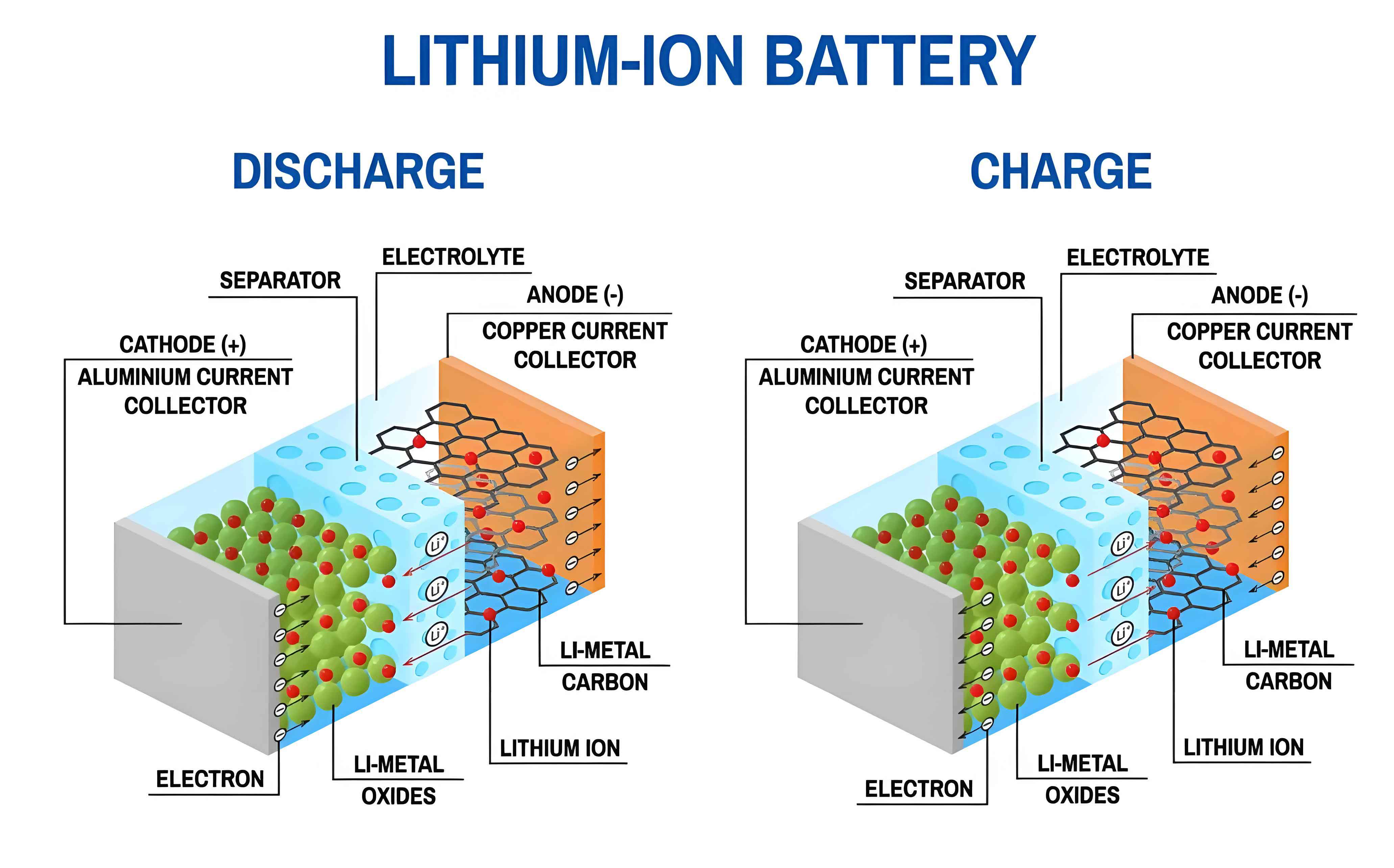
The evolution of lithium-ion battery technology hinges on the development of advanced anode materials. Graphite, the commercial standard, suffers from limited capacity (∼372 mAh/g) and safety issues like lithium dendrite formation. Transition metal oxides, particularly CuO, present a viable alternative with a theoretical capacity of 674 mAh/g based on conversion reactions. The fundamental reaction for CuO in a li ion battery involves lithium insertion and extraction, represented by the equation:
$$ \text{CuO} + 2\text{Li}^+ + 2e^- \leftrightarrow \text{Cu} + \text{Li}_2\text{O} $$
This reversible process underpins the high energy storage capability of CuO-based anodes. However, bulk CuO exhibits poor electrical conductivity and significant volume changes (∼100–200%) during cycling, leading to rapid capacity fade. Nanostructuring addresses these drawbacks by enhancing ion/electron transport kinetics and providing structural flexibility. For instance, nano-sized materials reduce the diffusion length for lithium ions, as illustrated in comparative studies between nanofilm and bulk electrodes. The effective current density is lowered, promoting uniform lithium deposition and reducing mechanical stress. In this context, I delve into the properties of CuO and its nanostructured variants, followed by an examination of other TMOs like MnO₂, Fe₂O₃, and NiO, which also show promise for high-performance li ion battery applications.
CuO is a p-type semiconductor with a monoclinic crystal structure and a bandgap of 1.2–1.9 eV, making it suitable for electrochemical applications. Its inherent stability and natural abundance further bolster its appeal for li ion battery anodes. The crystal lattice consists of Cu²⁺ ions coordinated in a square-planar configuration with O²⁻ ions, facilitating lithium ion intercalation. When designed as nanostructures, CuO leverages unique physical and chemical properties that differ markedly from bulk forms. For example, the increased surface area of nanoparticles accelerates reaction rates, while porous frameworks accommodate volume expansion. The dimensionality of nanostructures plays a critical role in determining performance metrics in lithium-ion batteries. Below, I summarize the general advantages and challenges of nanostructured anodes for LIBs in Table 1.
| Aspect | Advantages | Challenges |
|---|---|---|
| Nanoscale Dimensions | Shortens Li⁺ diffusion paths, reduces volume strain | High surface area leads to excessive SEI formation |
| Conductive Networks | Enhances electron transport (e.g., with graphene or carbon nanotubes) | Increased manufacturing complexity and cost |
| Morphological Diversity | Allows tailored designs for specific li ion battery needs | Particle agglomeration can degrade performance |
| Porosity | Improves electrolyte infiltration and ion accessibility | Lower packing density reduces volumetric energy density |
The electrochemical performance of CuO in a li ion battery is closely tied to its nanostructure. I categorize the discussion into 0D, 1D, 2D, and 3D morphologies, each offering distinct benefits. Starting with 0D nanostructures, such as nanoparticles, these materials typically range from 1 to 100 nm in size and provide minimal diffusion distances for lithium ions. For instance, K⁺-doped CuO nanoparticles synthesized via solvothermal methods exhibit sizes of 25–50 nm, compared to undoped particles at 50–100 nm. The doping enhances conductivity and cyclic stability, leading to improved rate capabilities in lithium-ion batteries. The capacity retention can be modeled using the formula for diffusion-limited processes:
$$ C = C_0 \cdot e^{-k \cdot t} $$
where \( C \) is the capacity at time \( t \), \( C_0 \) is the initial capacity, and \( k \) is the degradation constant influenced by nanostructure. However, 0D materials often suffer from agglomeration, which reduces active surface area and necessitates conductive additives. In contrast, 1D nanostructures like nanowires, nanorods, and nanotubes offer directional charge transport and better strain accommodation. A prime example is CuO nanowire arrays grown on copper foil, which create large gaps for lithium ion diffusion and buffer volume changes. These arrays demonstrate high discharge capacities and long cycle life in li ion battery tests. The reaction kinetics in 1D structures can be described by the Butler-Volmer equation:
$$ j = j_0 \left[ \exp\left(\frac{\alpha n F \eta}{RT}\right) – \exp\left(-\frac{(1-\alpha) n F \eta}{RT}\right) \right] $$
where \( j \) is the current density, \( j_0 \) is the exchange current density, \( \alpha \) is the charge transfer coefficient, \( n \) is the number of electrons, \( F \) is Faraday’s constant, \( \eta \) is overpotential, \( R \) is the gas constant, and \( T \) is temperature. This highlights the enhanced charge transfer in nanostructured electrodes for lithium-ion batteries.
Moving to 2D nanostructures, such as nanosheets and nanoplates, these materials provide large lateral dimensions with thicknesses in the nanometer range, offering abundant active sites and efficient ion transport pathways. CuO nanosheets anchored on reduced graphene oxide (RGO) form composites that synergize double-layer capacitance and faradaic reactions, boosting capacity and stability in li ion battery applications. The specific capacity of such hybrids often exceeds theoretical values due to interfacial storage mechanisms. For example, CuO/RGO nanosheets with thicknesses of 1.17–1.57 nm deliver high reversible capacities and rate performance. The storage capacity can be approximated by:
$$ Q = \frac{n F A}{M} $$
where \( Q \) is the specific capacity, \( n \) is the number of Li⁺ ions involved, \( F \) is Faraday’s constant, \( A \) is the active surface area, and \( M \) is the molar mass. This equation underscores the importance of high surface area in 2D nanomaterials for lithium-ion batteries. Additionally, 3D nanostructures, including nanoflowers, spheres, and porous networks, integrate multiple dimensional advantages to create robust frameworks. Hierarchical CuO nano-labyrinths with interconnected pores exhibit exceptional cycling stability (e.g., 320 mAh/g after 800 cycles at 1 A/g) and high-rate capability in li ion battery tests. The porous volume fraction \( \phi \) influences performance, as given by:
$$ \phi = \frac{V_{\text{pores}}}{V_{\text{total}}} $$
where higher \( \phi \) values enhance electrolyte penetration but may reduce density. Table 2 summarizes the electrochemical properties of various CuO nanostructures in lithium-ion batteries, based on recent studies.
| Material | Nanostructure Type | Specific Capacity (mAh/g) | Current Density (mA/g) | Cycle Stability | Key Feature for li ion battery |
|---|---|---|---|---|---|
| K⁺-doped CuO nanoparticles | 0D | ∼480 | 100 | 66% retention after 248 cycles | Enhanced conductivity via doping |
| CuO nanowire arrays | 1D | ∼800 | 500 | Nearly 100% retention after 120 cycles | Large gaps for volume buffering |
| CuO/RGO nanosheets | 2D | ∼650 | 500 | High stability over 100 cycles | Synergistic interface with graphene |
| Hierarchical CuO nano-labyrinths | 3D | ∼320 | 1000 | Excellent retention after 800 cycles | Interconnected porous network |
| CuO-Cu₂O-TiO₂ hollow nanocages | 3D composite | ∼700 | 50 | 58% retention after 85 cycles | Hollow structure for strain relief |
Beyond CuO, other transition metal oxides have been extensively researched for li ion battery anodes. Manganese-based oxides, such as MnO₂, offer high theoretical capacity (∼1230 mAh/g) and environmental benignity. Nanostructured MnO₂, particularly in 2D forms like nanosheets, provides short ion diffusion paths and porous architectures that enhance cyclic performance. The lithiation reaction for MnO₂ is:
$$ \text{MnO}_2 + 4\text{Li}^+ + 4e^- \leftrightarrow \text{Mn} + 2\text{Li}_2\text{O} $$
Composite designs, like MnO₂/graphdiyne hybrids, leverage interfacial storage to achieve capacities beyond theoretical limits, crucial for advancing lithium-ion battery technology. Similarly, iron-based oxides like Fe₂O₃ are attractive due to high abundance and capacity (∼1007 mAh/g). However, Fe₂O₃ suffers from low conductivity and volume expansion. Nanostructuring, such as hollow sea urchin-like Fe₂O₃ coated with MOF-derived carbon, mitigates these issues by providing conductive pathways and void spaces. The capacity fade in Fe₂O₃-based li ion battery anodes can be modeled with a power-law decay:
$$ C(t) = C_0 \cdot t^{-\beta} $$
where \( \beta \) is the decay exponent, reduced in nanostructured variants. Nickel-based oxides, including NiO, exhibit high theoretical capacity (717 mAh/g) and are often combined with carbon materials to improve performance. For instance, NiO/Co₃O₄ hybrid nanoflowers deliver high capacities (∼1428.8 mAh/g at 0.1 A/g) and stable cycling in lithium-ion batteries, attributed to their flower-like morphology that offers large surface area and pore volume. The reaction for NiO in a li ion battery is:
$$ \text{NiO} + 2\text{Li}^+ + 2e^- \leftrightarrow \text{Ni} + \text{Li}_2\text{O} $$
Table 3 compares the performance of various TMO nanostructures in lithium-ion batteries, highlighting their potential as anode materials.
| Transition Metal Oxide | Nanostructure Form | Theoretical Capacity (mAh/g) | Achieved Capacity (mAh/g) | Rate Performance | Application in li ion battery |
|---|---|---|---|---|---|
| MnO₂ | Nanosheets/graphdiyne hybrid | 1230 | >1300 (interfacial storage) | Good at high currents | High-capacity anode with enhanced kinetics |
| Fe₂O₃ | Hollow sea urchin with carbon coating | 1007 | 1551.3 at 0.1 A/g | 1208.6 mAh/g at 1 A/g | Stable cycling via porous design |
| NiO | Nanoflowers (NiO/Co₃O₄ composite) | 717 | 1428.8 at 0.1 A/g | 668.6 mAh/g at 1 A/g after 600 cycles | High surface area for lithium storage |
| Co₃O₄ | Nanowires or porous spheres | 890 | ∼1191 in composites | Excellent at varied rates | Used in hybrid anodes for li ion battery |
The integration of nanostructured TMOs into lithium-ion batteries also involves addressing practical challenges. For example, the high surface area of nanomaterials can lead to excessive solid electrolyte interphase (SEI) formation, reducing initial coulombic efficiency and consuming lithium inventory. This is particularly critical for li ion battery longevity. Strategies to overcome this include designing core-shell structures or using pre-lithiation techniques. Additionally, nanoparticle agglomeration during cycling can degrade performance, necessitating stable conductive matrices like carbon nanotubes or graphene. The overall energy density of a li ion battery with nanostructured anodes is influenced by packing density, which can be optimized through 3D hierarchical designs. From a synthesis perspective, methods such as solvothermal growth, chemical etching, and template-assisted processes enable precise control over nanostructure morphology, but they often increase manufacturing costs. Future research should focus on scalable production techniques that balance performance and economics for commercial lithium-ion battery applications.
In terms of electrochemical modeling, the behavior of nanostructured anodes in a li ion battery can be described using diffusion equations. For instance, the lithium ion diffusion coefficient \( D \) in a nanoparticle is given by Fick’s second law:
$$ \frac{\partial C}{\partial t} = D \nabla^2 C $$
where \( C \) is the lithium concentration. In nanostructures, \( D \) is effectively higher due to shorter paths, improving rate capability. Furthermore, the volume change during lithiation can be quantified by the strain \( \epsilon \):
$$ \epsilon = \frac{\Delta V}{V_0} $$
where \( \Delta V \) is the volume change and \( V_0 \) is the initial volume. Nanostructures with porous designs reduce \( \epsilon \), enhancing cycle life in lithium-ion batteries. To illustrate the synergy between different TMOs, I consider composite anodes like CuO-Fe₂O₃-mesocarbon microbeads, which combine conversion reactions of multiple oxides to achieve high capacities (∼500 mAh/g) and stability. Such composites are promising for high-energy-density li ion battery systems.
Looking ahead, the development of CuO and other TMO nanostructures for lithium-ion batteries faces several opportunities and challenges. Advanced characterization techniques, such as in situ transmission electron microscopy and X-ray diffraction, can provide insights into real-time structural changes during cycling. Machine learning approaches may optimize nanostructure design for specific li ion battery requirements. Moreover, the integration of these materials into all-solid-state batteries could enhance safety and energy density. However, issues like low tap density, high cost, and complex fabrication must be addressed to enable widespread adoption. In conclusion, nanostructured transition metal oxides represent a transformative avenue for improving lithium-ion battery performance. By tailoring dimensionality, porosity, and composite formation, researchers can unlock higher capacities, faster charging, and longer lifetimes. As the demand for efficient energy storage grows, continued innovation in this field will be pivotal for the next generation of lithium-ion batteries.
To summarize key points, I present a formula for the overall performance metric \( P \) of a nanostructured anode in a li ion battery:
$$ P = \frac{C \cdot S \cdot E}{\rho \cdot R} $$
where \( C \) is the specific capacity, \( S \) is the cycling stability, \( E \) is the energy efficiency, \( \rho \) is the density, and \( R \) is the cost factor. Optimizing these parameters through nanostructuring is essential for advancing lithium-ion battery technology. As I have discussed, CuO and other TMOs offer tremendous potential, and ongoing research will likely yield breakthroughs that redefine energy storage landscapes. The journey toward better li ion battery anodes is fueled by the endless possibilities of nanotechnology, and I am excited to see how these materials evolve to meet future energy demands.