
The safety of li-ion batteries throughout their entire service life is a paramount concern, especially as their deployment scales in electric vehicles and stationary energy storage systems. While fresh li-ion batteries undergo rigorous safety certification, their properties degrade over time and with use. This aging process significantly alters their thermal stability and response to abuse conditions. This review synthesizes current understanding of the degradation mechanisms in li-ion batteries and critically analyzes how these aging pathways fundamentally change thermal runaway behavior. By adopting a first-person perspective, I aim to consolidate knowledge on this critical safety issue, highlighting key findings, contrasting viewpoints, and identifying crucial gaps for future research. A central theme is the evolving risk profile of the li-ion battery as it ages, necessitating lifecycle-aware safety protocols.
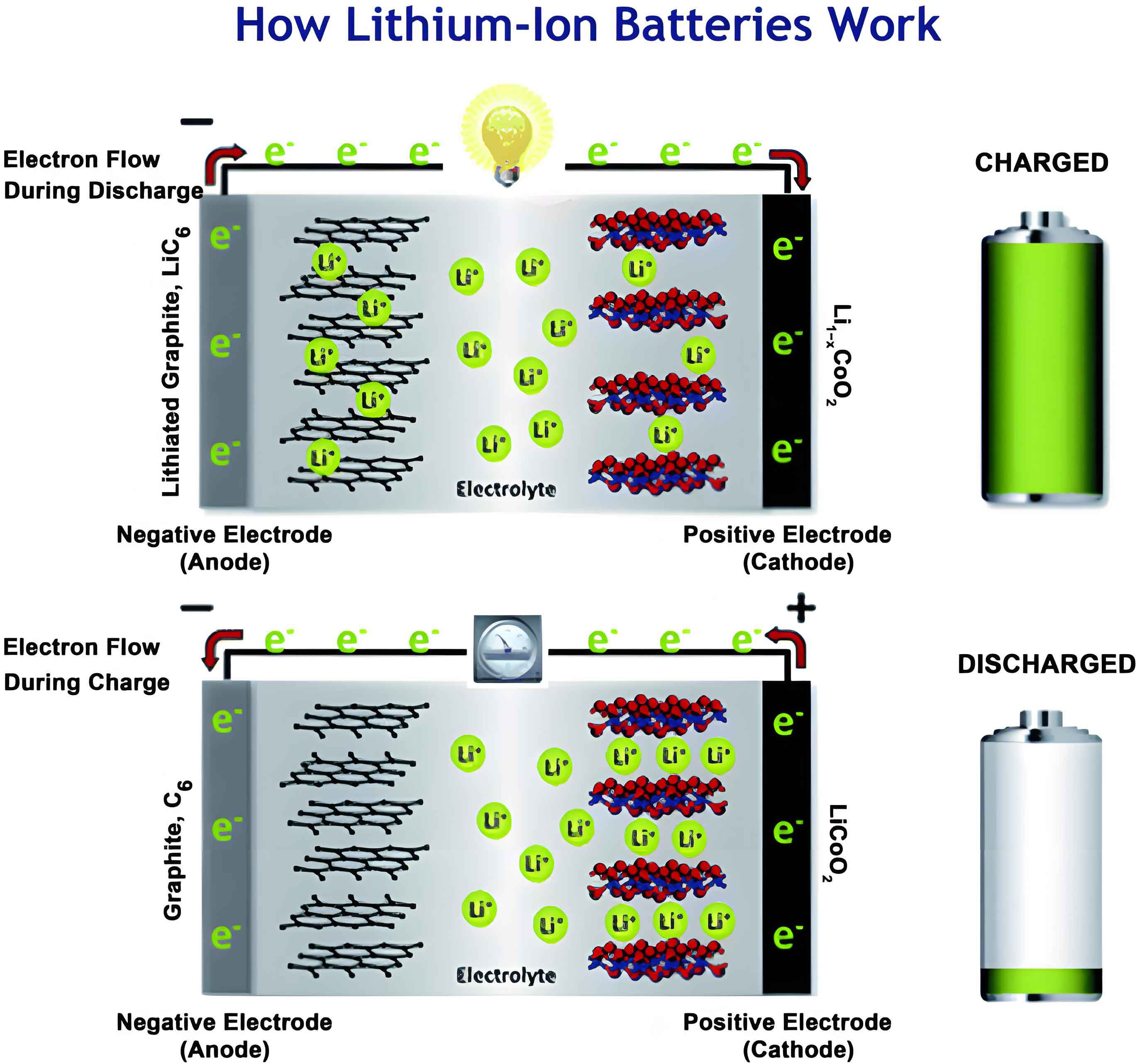
1. Degradation Mechanisms in Li-ion Batteries
The performance fade of a li-ion battery is an inevitable consequence of electrochemical operation and storage. Degradation proceeds via two primary pathways: cycle aging (due to repeated charge/discharge) and calendar aging (due to storage at a certain state of charge, SOC). The mechanisms, while interconnected, manifest differently under various stressors, leading to distinct capacity fade laws and internal changes in the li-ion battery.
1.1 Capacity Fade Under Cyclic Aging
Cyclic aging is influenced by operational parameters such as temperature, charge/discharge rate (C-rate), voltage limits, and depth of discharge. The capacity fade accelerates under more severe conditions.
| Stress Factor | Observed Capacity Fade Trend | Postulated Dominant Aging Mechanism(s) |
|---|---|---|
| Elevated Temperature | Exponential increase in fade rate with temperature. | Accelerated growth of the Solid Electrolyte Interphase (SEI) on the anode; Cathode material dissolution (e.g., Mn in LMO). |
| Low Temperature | Increased fade, especially at high C-rates. | Lithium plating (electrodeposition of metallic Li on the anode surface) due to sluggish Li+ kinetics. |
| High Charge/Discharge Rate (C-rate) | Fade rate increases with C-rate. Often shows an initial slight capacity increase followed by linear or accelerated loss. | Lithium plating; Particle cracking due to mechanical stress; Rapid SEI growth. |
| Overcharge (Elevated Upper Cut-off Voltage) | Sharp, step-like capacity drop after an initial stable period. The onset of rapid fade occurs earlier with higher voltage. | Phase 1: Anode-driven (SEI growth, electrolyte decomposition). Phase 2: Cathode-driven (Loss of Active Material, LAM, structural degradation). |
The underlying electrochemical and mechanical processes can be described phenomenologically. For instance, SEI growth, a primary contributor to capacity loss and impedance rise, is often modeled as a diffusion-limited process, where the SEI thickness $L_{\text{SEI}}$ increases with the square root of time or cycle number $n$:
$$ L_{\text{SEI}}(n) = L_0 + k_{\text{SEI}} \sqrt{n} $$
where $L_0$ is the initial SEI thickness and $k_{\text{SEI}}$ is a temperature-dependent rate constant following an Arrhenius relationship. The associated irreversible capacity loss $Q_{\text{loss, SEI}}$ is proportional to the Li+ consumed in SEI formation:
$$ Q_{\text{loss, SEI}} \propto \rho_{\text{SEI}} A (L_{\text{SEI}}^3(n) – L_0^3) $$
where $\rho_{\text{SEI}}$ is a proportionality constant and $A$ is the electrode area.
Lithium plating, a major risk factor at low temperatures and high C-rates, represents a direct loss of cyclable Li+. The propensity for plating can be related to the anode overpotential $\eta_a$. When $\eta_a$ drops below 0 V vs. Li/Li+, thermodynamic conditions favor Li deposition:
$$ \eta_a = \phi_a – U_a – \frac{I R_{\text{int}}}{A} $$
where $\phi_a$ is the anode potential, $U_a$ is the equilibrium potential, $I$ is the current, and $R_{\text{int}}$ is the internal resistance. High currents and low temperatures increase the $IR_{\text{int}}$ drop and reduce $U_a$, making $\eta_a < 0$ more likely. This deposited Li is often highly reactive, contributing to subsequent SEI growth and local hot spots.
For the cathode, mechanical degradation and phase transitions during overcharge can be severe. In layered oxides (NCM, NCA), high-voltage operation pushes Li+ extraction to limits, causing oxygen release, cation mixing (Ni migrating to Li sites), and structural collapse from layered to spinel or rock-salt phases. This loss of active host structure directly reduces capacity. In LiFePO4 (LFP), the degradation is more subtle, often involving particle fracture and loss of electronic contact.
1.2 Capacity Fade Under Calendar Aging
Calendar aging occurs even when the li-ion battery is not in use. The primary driver is the thermodynamic instability of the charged electrodes, especially the anode, against the electrolyte.
| Storage Condition | Observed Capacity Fade Trend | Postulated Dominant Aging Mechanism |
|---|---|---|
| High Temperature | Accelerated, often exponential fade. Higher SOC accelerates fade. | Paradigm: Accelerated SEI growth. The chemical potential of Li in the graphite anode drives continuous electrolyte reduction. |
| Moderate/Low Temperature | Slower, near-linear or square-root time dependence fade. | Slow, continuous SEI growth and stabilization. Minimal other side reactions. |
| State of Charge (SOC) | Fade rate is non-monotonic with SOC; often peaks at mid-to-high SOC (e.g., 50-70%). At very high SOC, fade may slow slightly due to kinetic limitations. | Higher SOC increases the anode potential (vs. Li/Li+), increasing the thermodynamic driving force for electrolyte reduction. However, at very high SOC, the available reactive sites or electrolyte transport may become limiting. |
The capacity loss during calendar aging is predominantly linked to SEI growth. A common empirical model describes the recoverable capacity $C(n)$ as a function of time $t$ and absolute temperature $T$:
$$ C(t, T) = C_0 – A_0 \cdot \exp\left(-\frac{E_a}{k_B T}\right) \cdot \sqrt{t} $$
where $C_0$ is the initial capacity, $A_0$ is a pre-exponential factor, $E_a$ is the apparent activation energy for the aging process, and $k_B$ is the Boltzmann constant. The square-root time dependence suggests a diffusion-limited process, consistent with SEI growth being limited by solvent diffusion through the existing SEI layer.
In summary, whether through cycling or storage, the li-ion battery undergoes irreversible changes. Capacity loss is primarily due to Li+ inventory loss (via SEI growth or plating) and Loss of Active Material (LAM) at the electrodes. Crucially, these aging mechanisms alter the fundamental materials within the li-ion battery, setting the stage for modified—and often degraded—thermal runaway behavior.
2. Thermal Runaway Mechanism in Li-ion Batteries
Thermal runaway (TR) is the most severe safety failure of a li-ion battery, characterized by an uncontrollable increase in temperature and pressure, often leading to fire or explosion. The process is a complex interplay of exothermic chemical reactions triggered by abuse (thermal, electrical, mechanical). Understanding this mechanism is essential for contrasting the behavior of fresh and aged li-ion batteries.
The classical TR process for a standard li-ion battery with a graphite anode and layered oxide cathode (e.g., NCM) under thermal abuse can be segmented into stages with key characteristic temperatures $T_1$, $T_2$, and $T_3$:
- Stage I: Initial Self-heating (T ~ 80°C – 120°C). This begins with the breakdown of the metastable SEI layer. The SEI, primarily composed of Li2CO3, (CH2OCO2Li)2, etc., decomposes exothermically:
$$ \text{SEI (e.g., Li}_2\text{CO}_3) \rightarrow \text{Li}_2\text{O} + \text{CO} + 0.5\text{O}_2 \quad (\Delta H < 0) $$
This releases heat and exposes the highly reactive lithiated graphite (LixC6) to the electrolyte. - Stage II: Anode-Electrolyte Reaction (T ~ 120°C – 200°C). With the SEI gone, the intercalated lithium in the anode reacts exothermically with the organic electrolyte (e.g., EC, DEC):
$$ \text{Li}_x\text{C}_6 + \text{Electrolyte} \rightarrow \text{Li-salts, hydrocarbons, heat} $$
Simultaneously, the polymer separator (PE/PP) begins to melt (~135°C for PE, ~165°C for PP), potentially leading to internal short circuits (ISC). - Stage III: Cathode Decomposition & Major Gas Generation (T > 200°C). The charged cathode material (e.g., Li1-xNiyCozMn1-y-zO2) becomes thermally unstable, releasing oxygen:
$$ \text{Li}_{1-x}\text{Ni}_{y}\text{Co}_{z}\text{Mn}_{1-y-z}\text{O}_2 \rightarrow \frac{1-x}{2}\text{Li}_2\text{O} + y\text{NiO} + z\text{CoO} + \frac{1-y-z}{2}\text{Mn}_2\text{O}_3 + \frac{x}{2}\text{O}_2 \uparrow $$
This released oxygen violently oxidizes the organic electrolyte and decomposition products (e.g., solvents, hydrocarbons from the anode reaction), generating immense heat and flammable gases (CO, H2, C2H4, etc.). - Stage IV: Combustion and Explosion (Tmax up to >800°C). The vented gases, mixed with air, can ignite, leading to jet fires. The maximum temperature $T_3$ is reached in this phase.
The entire process can be described by an energy balance equation during the self-heating phase before thermal runaway becomes uncontrollable:
$$ \rho C_p \frac{dT}{dt} = \dot{Q}_{\text{gen}} – \dot{Q}_{\text{loss}} $$
where $\rho C_p$ is the volumetric heat capacity of the li-ion battery, $\dot{Q}_{\text{gen}}$ is the total heat generation rate from internal reactions (SEI decomposition, anode-electrolyte, cathode decomposition, ISC), and $\dot{Q}_{\text{loss}}$ is the heat dissipation rate to the surroundings (convection, conduction). Thermal runaway occurs when $\dot{Q}_{\text{gen}} > \dot{Q}_{\text{loss}}$ for a sustained period, causing a positive feedback loop: temperature increase → faster reaction kinetics → more heat → higher temperature.
For a LiFePO4 (LFP) li-ion battery, the mechanism differs notably in Stage III. The LFP cathode is thermally more stable and releases little to no oxygen upon decomposition (it decomposes to Fe2P2O7 and Li3PO4). Therefore, while Stages I and II are similar, the violent gas-phase combustion fueled by cathode oxygen is absent. This typically results in lower TR maximum temperatures (<~400°C for fresh cells) but can still involve significant heat and toxic gas (mainly CO, H2) generation from electrolyte and anode reactions.
3. Comparative Analysis of TR Behavior: Fresh vs. Aged Li-ion Batteries
Aging fundamentally alters the internal chemistry and physics of a li-ion battery, which in turn modifies its thermal runaway characteristics. The nature of the aging pathway (cyclic vs. calendar, and the specific conditions) dictates how the TR behavior changes. Key parameters for comparison include the characteristic temperatures ($T_1$, $T_2$, $T_3$), total heat release, gas composition/volume, and propensity for ignition.
3.1 Impact of Calendar and Temperature-Cycle Aging
Li-ion batteries aged under high-temperature storage or cycling generally show a reduced thermal stability. The thickened SEI layer, while increasing impedance, contains more metastable components that decompose at a slightly lower temperature. This can lead to a decreased $T_1$. However, for LFP batteries, some studies note that a very thick SEI might delay anode reactivity, slightly increasing $T_1$.
A critical and consistent finding is that aged li-ion batteries, having lost cyclable lithium to SEI growth and/or plating, often exhibit a less severe thermal runaway event in terms of peak temperature $T_3$ and total energy released. The “fuel” for the exothermic reactions—especially the reactive lithium in the anode (LixC6)—is diminished. This is summarized in the table below:
| Aging Condition | Effect on Characteristic Temperatures | Effect on TR Severity (Heat, $T_3$, Flame) | Root Cause Linked to Aging Mechanism |
|---|---|---|---|
| High-Temp Calendar / Cycling | $T_1$ may decrease slightly. $T_2$ often advances. | Generally Reduced. Lower $T_3$, less total heat release. | Loss of reactive Li inventory due to SEI growth. Possible cathode degradation alters oxygen release kinetics. |
| Low-Temp / High-C-rate Cycling | $T_1$ can significantly decrease. | Can be more unpredictable. Plated Li is highly reactive, potentially causing very fast onset. Overall energy may still be lower than fresh cell. | Presence of metallic lithium deposits provides a highly reactive, low-temperature ignition source. |
The energy release during TR for an aged cell can be conceptually modeled by modifying the heat generation term $\dot{Q}_{\text{gen, anode}}$ related to the anode-electrolyte reaction. If the capacity fade $\Delta C$ is primarily due to Li inventory loss, the effective concentration of reactive LixC6 is reduced:
$$ \dot{Q}_{\text{gen, anode, aged}} \approx \dot{Q}_{\text{gen, anode, fresh}} \times \left(1 – \frac{\Delta C}{C_0}\right)^\alpha $$
where $\alpha$ is an empirical exponent. This leads to a lower overall $\dot{Q}_{\text{gen}}$ and thus a potentially lower $T_3$.
3.2 Impact of Overcharge Cycling Aging
Overcharge aging pushes the li-ion battery beyond its designed voltage window, causing unique and often severe degradation. The TR behavior reflects this damage.
- Fresh Cell Undergoing Single Overcharge Event: This is an electrical abuse scenario. The cell experiences severe lithium plating on the anode and massive cathode degradation. TR is often triggered by the highly reactive plated Li, leading to very early onset ($T_1$, $T_2$ drastically reduced) and extreme violence due to simultaneous, massive decomposition reactions.
- Aged Cell from Repeated Micro-Overcharge Cycling: Cells aged under slight overcharge (e.g., 4.4V vs. 4.2V cutoff) show a complex behavior. Initially, the unstable, thick SEI formed during cycling lowers $T_1$. However, as aging progresses and the cathode degrades significantly (LAM), the total energy releasable during TR may decrease. The risk shifts: while the TR event might be slightly less energetic, the cell becomes much more susceptible to triggering (lower onset temperature). The voltage stress accelerates all degradation modes, making the li-ion battery less safe throughout its life.
3.3 General Trends and Material Dependence
The interplay between aging mechanism and TR behavior is highly dependent on the li-ion battery chemistry.
For NCM/NCA batteries: Aging typically reduces thermal stability (lower $T_1$, $T_2$) but can also reduce the peak severity due to lithium loss. However, cathode degradation might alter the oxygen release profile, making the TR behavior less predictable. Aged NCM batteries remain capable of producing violent, flaming TR events.
For LFP batteries: The intrinsic stability of the LFP cathode dominates. Aging primarily reduces the lithium inventory. Therefore, aged LFP li-ion batteries generally show a further reduction in an already lower $T_3$. The TR event becomes more of a violent venting of hot gases with limited sustained combustion, as the oxygen-supplying cathode reaction is minimal. However, the hazard from toxic gas emission remains high.
The state of health (SOH) is a critical but imperfect indicator of TR risk. A li-ion battery at 70% SOH may have a significantly different internal state (e.g., dominated by anode Li loss vs. cathode LAM) depending on its aging history, leading to different TR behaviors even at the same SOH. This underscores the need for aging-pathway-informed safety assessment.
4. Research Gaps and Future Perspectives
Despite significant progress, the field of aging and safety in li-ion batteries faces several challenges that must be addressed to ensure the reliable and safe deployment of next-generation energy storage.
4.1 Current Research Limitations
- Single-Factor Studies vs. Real-World Complex Aging: Most experimental studies focus on one aging stressor (e.g., temperature OR C-rate). In reality, a li-ion battery in an electric vehicle experiences simultaneous cycling at varying rates, temperature fluctuations, and different states of charge. The synergistic or antagonistic effects of combined stressors are not well quantified.
- Disconnect from Field Data: Laboratory aging protocols, while controlled, may not accurately replicate the statistical distribution of usage profiles seen in the field. Correlating lab-observed TR behavior changes with real-world failure statistics is challenging but necessary.
- Lack of Standardized Safety Tests for Aged Batteries: Existing safety standards (e.g., UL, IEC) are designed for fresh li-ion batteries. There is a pressing need to develop and standardize safety assessment protocols specifically for li-ion batteries at different states of health and with known aging histories.
- Scarcity of Data on Large-Format and Next-Generation Cells: Most published studies use small cylindrical (18650, 21700) or small pouch cells. The TR dynamics of large-format prismatic or pouch cells (e.g., >100 Ah) common in modern EVs and storage systems are less understood, especially after aging. Furthermore, the aging and TR behavior of emerging chemistries (high-Ni NCM, NCMA, Si-based anodes, solid-state batteries) is an open area of research.
- Incomplete Microstructural Prognosis: While post-mortem analysis is common, predictive models that link operational conditions to the evolution of specific microstructural features (SEI composition, crack networks, pore closure) and finally to TR propensity are still in development.
4.2 Recommended Future Research Directions
- Multi-Stress Aging and Machine Learning: Implement comprehensive design-of-experiments studies to age li-ion batteries under combined stresses (temperature, C-rate, DOD, SOC swing). Use machine learning on the resulting electrochemical, thermal, and post-mortem data to build predictive models for both remaining life and TR risk based on usage history.
- Advanced In-Operando Diagnostics: Employ synchrotron X-ray, neutron diffraction, and cryo-electron microscopy techniques to observe the evolution of electrode microstructure, SEI morphology, and lithium plating in situ or operando during aging cycles. This will provide direct causal links between operational parameters and material degradation.
- Development of Aging-Aware TR Models: Enhance existing electrochemical-thermal TR models by incorporating state-of-health (SOH) dependent parameters. For example, model the SEI not just as a static layer but as a growing entity with evolving composition and thermal properties that influence $T_1$ and initial heat rate. The model could take the form of a coupled system:
$$ \frac{d(\text{SOH})}{dt} = f(T, I, \text{SOC}, \text{materials}) $$
$$ \dot{Q}_{\text{gen, TR}} = g(T, \text{SOC}, \text{SOH}, \text{materials}) $$
where function $g$ explicitly depends on the SOH state variable. - Safety-Centric Second-Life Assessment: For li-ion batteries retired from EV service (typically at 70-80% SOH) and intended for stationary storage, safety must be the primary re-qualification criterion. Research should focus on non-destructive evaluation (NDE) techniques (e.g., advanced impedance spectroscopy, ultrasound, gas sensors) that can reliably predict the TR behavior of a second-life li-ion battery without triggering failure.
- Focus on System-Level Safety for Aged Packs: Investigate how the changed behavior of aged individual cells (e.g., higher impedance, different heat capacity) affects thermal propagation in a module or pack. Does a more homogeneous aging state make propagation faster or slower? How should thermal management systems be adjusted for aging battery packs?
In conclusion, the li-ion battery is not a static entity. Its journey from a fresh, compliant cell to an aged, degraded one is paved with complex electrochemical transformations that redefine its thermal safety boundaries. While aging often depletes the “fuel” for the most violent TR stages, it simultaneously lowers the ignition temperature and makes the system more fragile and unpredictable. A nuanced, chemistry-specific, and lifecycle-oriented understanding is crucial. Future research must move beyond single-stress aging studies and fresh-cell safety tests, embracing complexity and developing predictive tools to manage the inherent safety evolution of the li-ion battery from production to retirement. Only through such a comprehensive approach can we ensure the safe integration of these powerful energy storage devices into our sustainable energy future.