
As an analyst in the energy storage industry, I have witnessed the rapid expansion of the li-ion battery market, driven by global demands for electrification and renewable energy integration. The proliferation of li-ion batteries across electric vehicles, consumer electronics, and grid-scale storage systems necessitates robust traceability frameworks to ensure environmental sustainability and resource efficiency. In this article, I will delve into the standards, regulations, and emerging trends shaping the traceability management of li-ion batteries, emphasizing the need for holistic lifecycle oversight. The term “li-ion battery” will be frequently referenced to underscore its centrality in this discourse, and I will incorporate tables and formulas to summarize key insights. Traceability for li-ion batteries is not merely a regulatory requirement but a cornerstone for circular economy practices, enabling tracking from production to end-of-life recycling.
The global production of li-ion batteries has surged, with estimates indicating output exceeding 750 GWh in recent years, largely fueled by the electric vehicle and energy storage sectors. This growth, however, poses significant challenges in managing battery waste and maximizing resource recovery. Without effective traceability, retired li-ion batteries may end up in informal recycling channels, leading to environmental contamination and loss of valuable materials like lithium, cobalt, and nickel. From my perspective, establishing a comprehensive traceability system is imperative to monitor the flow of li-ion batteries, enforce producer responsibilities, and facilitate safe recycling. Governments and industry bodies worldwide are responding with regulations and standards, though disparities exist between regions and battery types. For instance, while traction batteries for electric vehicles have seen progressive policy development, other li-ion battery categories, such as those for consumer devices and stationary storage, lag in unified management. I will explore these nuances, highlighting how traceability mechanisms can be extended to all li-ion battery applications.
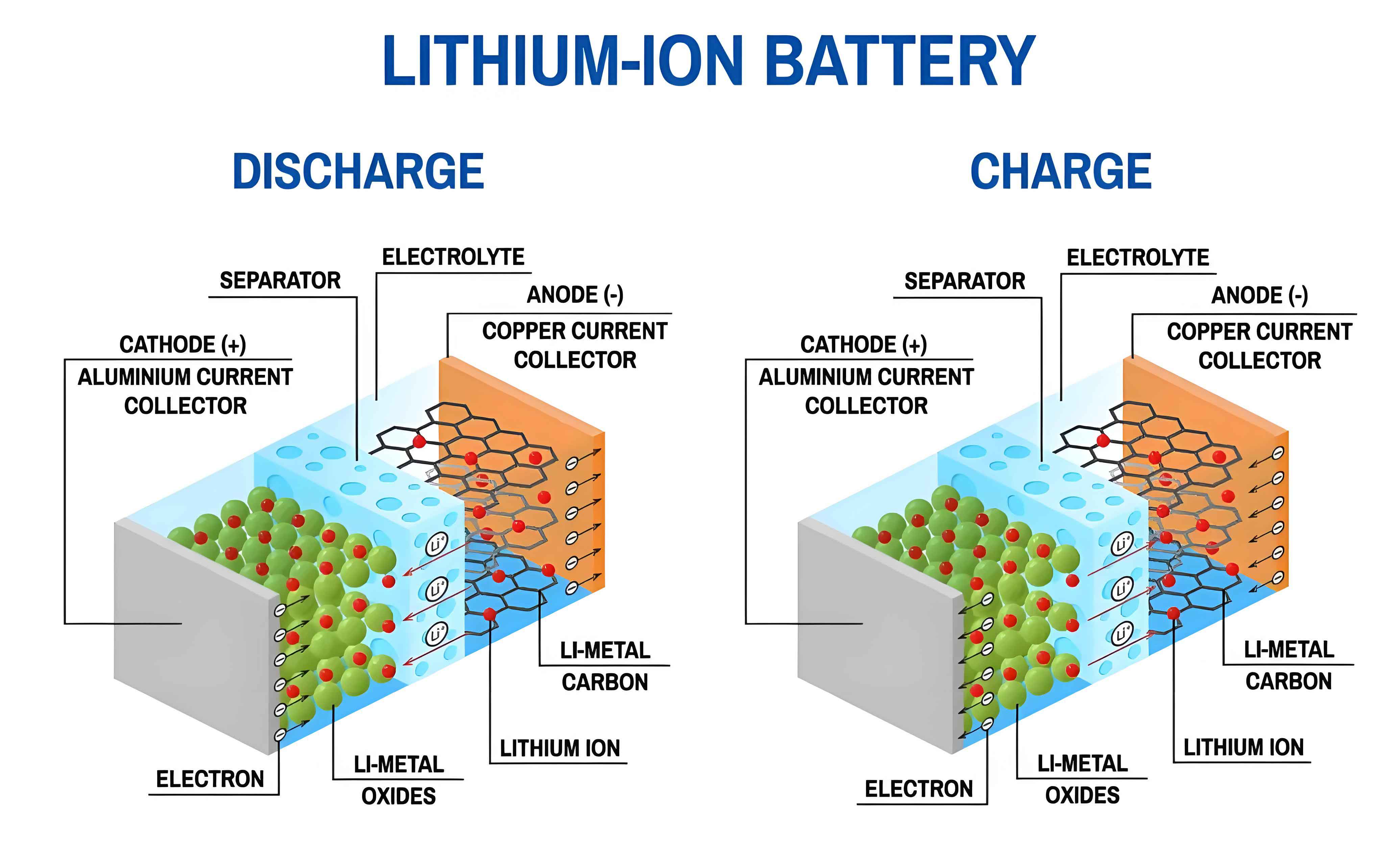
In analyzing traceability standards, I focus first on regulatory frameworks. China has been a frontrunner with policies like the “Interim Provisions on Traceability Management for Recycling and Utilization of Power Storage Batteries for New Energy Vehicles,” which mandates encoding and information reporting for traction li-ion batteries. This aligns with national standards such as GB/T 34014-2017, defining coding rules for automotive power batteries. The traceability platform, known as the National Monitoring and Traceability Integrated Management Platform, enables real-time tracking from manufacturing to recycling. However, for consumer and energy storage li-ion batteries, similar mandates are absent, creating gaps in lifecycle management. The “Lithium-ion Battery Industry Specification Conditions (2021 Edition)” encourages encoding and traceability for all li-ion batteries, but implementation remains voluntary. Contrast this with the European Union’s new battery regulation, which introduces a “battery passport” for industrial and electric vehicle batteries, requiring digital records of composition, performance, and recycling history. This reflects a growing trend toward digital traceability solutions that enhance transparency across supply chains. From my analysis, the convergence of these approaches could lead to global standards for li-ion battery traceability, though challenges persist in harmonizing data formats and privacy concerns.
To illustrate key regulations, I present Table 1, summarizing traceability-related policies for li-ion batteries in various contexts. This table underscores the evolving landscape and the need for broader application beyond traction batteries.
| Region/Policy | Scope | Key Requirements | Status |
|---|---|---|---|
| China: Interim Provisions on Traceability Management | Traction li-ion batteries for EVs | Mandatory encoding per GB/T 34014; data reporting to national platform; lifecycle tracking from production to recycling. | Implemented (2018 onwards) |
| China: Lithium-ion Battery Industry Specification Conditions | All li-ion batteries (consumer, traction, storage) | Encourages encoding and traceability systems; promotes active tracing technologies. | Voluntary guidance (2021 edition) |
| EU: New Battery Regulation | Industrial and EV li-ion batteries | Battery passport with digital ID; requirements for recycled content, carbon footprint, and due diligence. | Proposed/under adoption |
| International: IEC Standards (e.g., IEC 62933) | Energy storage systems including li-ion batteries | Guidelines for safety and performance, with traceability aspects under development. | Ongoing standardization |
The technical backbone of traceability lies in encoding schemes and digital platforms. For li-ion batteries, a unique identifier is essential to link physical units with digital records. Drawing from China’s experience, the coding structure for traction batteries includes manufacturer details, battery type, production date, and serial numbers. This can be expressed as a formal encoding rule: let a li-ion battery code $C$ be composed of segments for enterprise ID $E$, battery category $B$, model $M$, production batch $P$, and sequential number $S$. Thus, $$C = f(E, B, M, P, S)$$ where $f$ represents a concatenation function standardized by regulations. For consumer and storage li-ion batteries, similar encoding is proposed but lacks uniformity. I advocate for a unified approach where the code encapsulates critical attributes like chemistry (e.g., lithium iron phosphate or NMC), capacity, and intended application. This enables seamless tracking across diverse li-ion battery streams. Moreover, traceability platforms must integrate with enterprise systems to automate data exchange. In my view, blockchain technology offers promise for enhancing trust in li-ion battery traceability by creating immutable ledgers of transactions, from raw material sourcing to recycling. A simple model for traceability efficiency can be derived: if $T$ denotes the traceability coverage rate (percentage of li-ion batteries tracked), and $R$ the recycling rate, empirical data suggests a correlation $$R \propto \ln(T)$$ indicating that improved traceability boosts circular outcomes. However, this relationship requires validation through lifecycle assessments specific to li-ion batteries.
Table 2 compares encoding standards for different li-ion battery types, highlighting gaps and potential harmonization areas. This analysis stems from my review of existing frameworks and industry practices.
| Battery Type | Standard/Code | Encoding Elements | Traceability Platform |
|---|---|---|---|
| Traction (EV) Li-ion Battery | GB/T 34014-2017 (China) | Manufacturer code, product type, dimensions, production info, unique serial. | National platform (mandatory) |
| Energy Storage Li-ion Battery | DL/T 2082-2020 (China, for electrochem. systems) | System-level codes, but limited adoption; lacks cell-level granularity. | Voluntary or proprietary systems |
| Consumer Li-ion Battery | No universal standard; ad-hoc from manufacturers | Often simple serial numbers; inconsistent across brands. | Mostly absent; reliant on point-of-sale records |
| Proposed Unified Code | Hypothetical international standard | Integrates: region code, chemistry (e.g., LFP for li-ion), capacity (Ah), date, recyclability index. | Cloud-based global registry |
Looking ahead, future trends in li-ion battery traceability will likely revolve around digitalization, regulatory expansion, and international collaboration. The concept of a “battery passport,” as championed by the EU, could become a global norm for li-ion batteries, providing a digital twin that records environmental, social, and technical data. From my perspective, this requires standardizing data fields and interoperability protocols. For instance, a li-ion battery passport might include parameters like carbon footprint $CF$, calculated via lifecycle analysis: $$CF = \sum_{i} (E_i \times EF_i)$$ where $E_i$ is energy input at stage $i$ (e.g., mining, manufacturing) and $EF_i$ is the emission factor. Similarly, recycled content $RC$ for critical materials in li-ion batteries could be tracked using mass balance formulas: $$RC = \frac{M_{recycled}}{M_{total}} \times 100\%$$ where $M_{recycled}$ is mass from recycled sources and $M_{total}$ is total mass in the battery. Integrating such metrics into traceability systems will drive sustainability gains for li-ion batteries. Additionally, advances in IoT and AI could enable real-time monitoring of li-ion battery health, predicting end-of-life and optimizing collection routes. I envision a scenario where every li-ion battery, regardless of application, carries a scannable code linked to a cloud database, accessible to stakeholders across the value chain. This aligns with the “Internet of Batteries” paradigm, enhancing resource efficiency for li-ion batteries.
Another critical trend is the extension of traceability to raw materials. As demand for li-ion batteries escalates, ensuring ethical sourcing of lithium, cobalt, and other elements becomes paramount. Traceability systems must therefore span from mines to recycling plants, incorporating due diligence checks. In my analysis, this could involve blockchain-based supply chain platforms that record transactions and certifications, reducing risks of conflict minerals in li-ion batteries. For example, a material traceability score $S_m$ for a li-ion battery could be defined as: $$S_m = \alpha \cdot T_{geo} + \beta \cdot T_{env}$$ where $T_{geo}$ tracks geographical origin compliance, $T_{env}$ measures environmental impact, and $\alpha, \beta$ are weighting factors. Standardizing such scores would empower consumers and regulators to make informed choices about li-ion batteries.
To quantify the benefits of comprehensive traceability, consider a model for recycling efficiency. Let $N$ be the total number of li-ion batteries produced annually, and $n_t$ be the number traced through a system. The recovery rate of valuable materials $V$ (e.g., cobalt, lithium) can be expressed as: $$V = \eta \cdot \frac{n_t}{N} \cdot M_{avg}$$ where $\eta$ is the recycling efficiency factor (typically 0.8-0.95 for modern li-ion battery recycling), and $M_{avg}$ is the average material content per li-ion battery. This underscores how scaling traceability $n_t/N$ directly enhances resource circularity for li-ion batteries. Policymakers can use such models to set targets, such as achieving 90% traceability for all li-ion batteries by 2030.
In conclusion, the traceability management of li-ion batteries is at a pivotal juncture. While traction batteries have led the way with regulatory frameworks, consumer and energy storage li-ion batteries require urgent attention to avoid environmental backlash. From my standpoint, the future lies in unifying standards across battery types, leveraging digital tools like battery passports, and fostering global cooperation. As the li-ion battery market continues to grow, robust traceability will be key to unlocking sustainable value chains. I recommend that industry players invest in encoding technologies and data sharing platforms, while governments enact phased regulations to cover all li-ion battery categories. By doing so, we can ensure that every li-ion battery contributes to a circular economy, minimizing waste and maximizing resource utility. The journey toward full lifecycle traceability for li-ion batteries is complex but imperative for a greener tomorrow.