
As a cornerstone of modern portable electronics, electric vehicles, and grid-scale energy storage, the lithium-ion battery represents a pivotal energy storage technology. Its advantages, including high energy density, excellent cycle stability, environmental friendliness, and the capability for fast charging and discharging, have cemented its dominance. A standard li ion battery is constructed from four key components: the cathode, anode, electrolyte, and separator. During the charging process, lithium ions de-intercalate from the cathode material, travel through the electrolyte across the separator, and are inserted into the anode lattice; the process reverses during discharge. This fundamental rocking-chair mechanism can be broadly described by the reaction at the positive electrode: $$ \text{LiMO}_2 \rightleftharpoons \text{Li}_{1-x}\text{MO}_2 + x\text{Li}^+ + x e^- $$ where M typically represents transition metals like Co, Ni, Mn, or their combinations.
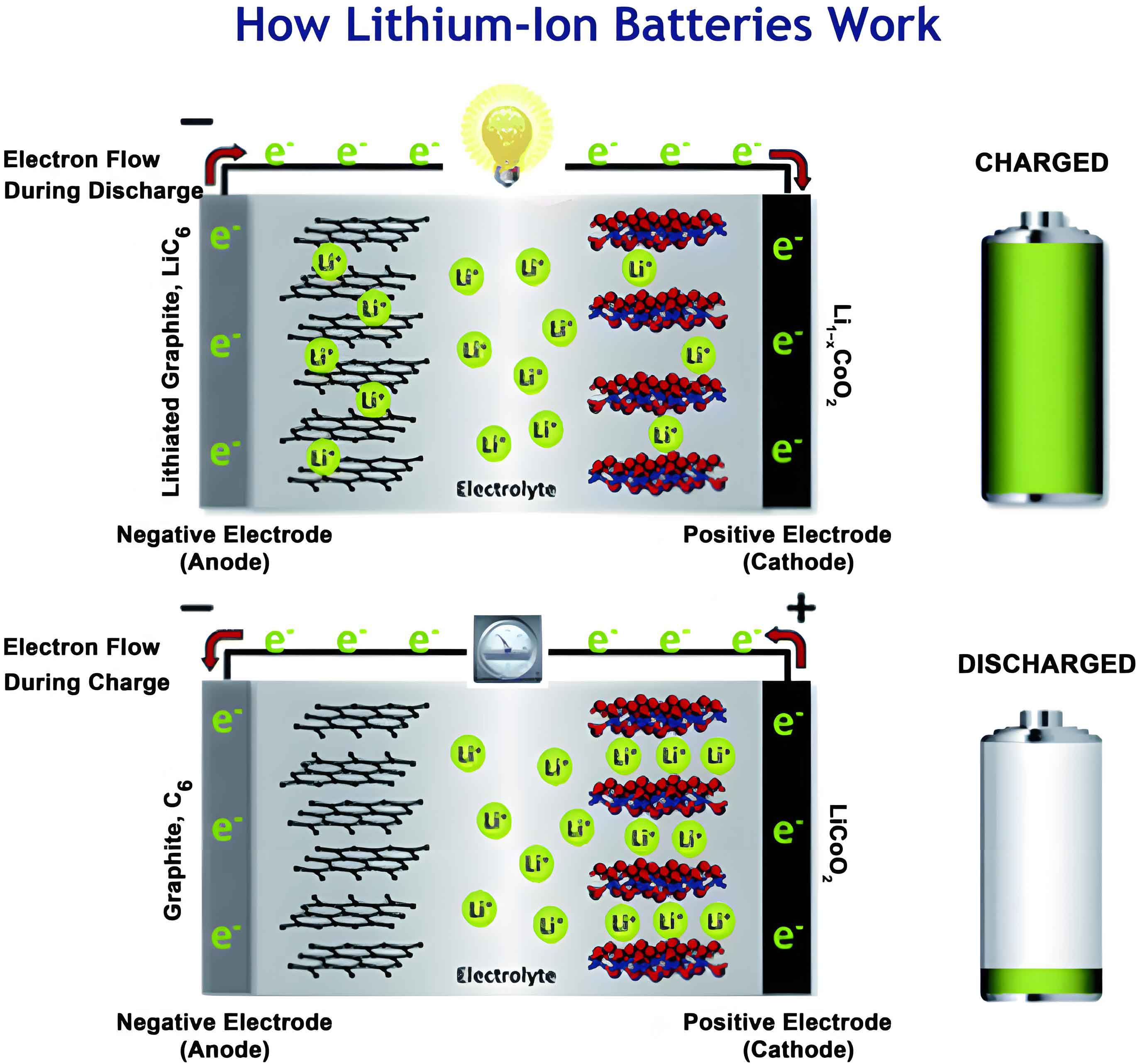
Despite continuous advancements, a significant intrinsic challenge persists: irreversible capacity loss during the initial charge cycle. This loss primarily stems from the formation of the solid electrolyte interphase (SEI) on the anode surface. The electrolyte components are reduced upon contact with the low-potential anode, consuming active lithium ions from the cathode to form this passive, yet ionically conductive, layer. This irreversible consumption directly reduces the amount of cyclable lithium, thereby lowering the initial Coulombic efficiency (ICE) and the overall energy density of the li ion battery. This issue is particularly acute for next-generation anode materials like silicon or silicon oxides, which exhibit much higher theoretical capacities but suffer from severe volume expansion and consequently greater SEI formation and lithium consumption. To mitigate this loss and unlock the full potential of high-capacity electrodes, prelithiation, or lithium replenishment, technologies have been developed. In this analysis, I will explore the major prelithiation strategies, with a deep focus on cathode prelithiation additives, examining their progress, comparative performance, associated challenges, and future prospects.
Prelithiation Methodologies: An Overview
Prelithiation aims to introduce additional active lithium into the cell before or during the first cycle to compensate for the lithium lost to SEI formation. The main approaches can be categorized into three groups.
1. Electrochemical Prelithiation
This method involves electrically pre-charging (lithiating) the anode against a lithium metal source in a temporary cell configuration before assembling the final li ion battery. While effective, this process is operationally complex, requires cell disassembly and reassembly, and poses strict requirements on electrode mechanical integrity, making it unsuitable for large-scale industrial production.
2. Chemical Prelithiation (Anode-Based)
This approach directly incorporates active lithium into the anode material prior to cell assembly. Common techniques include:
- Lithium Foil: Physically attaching a thin lithium foil to the anode. It can significantly improve ICE but offers poor control over the degree of lithiation.
- Stabilized Lithium Metal Powder (SLMP): Lithium powder particles coated with a thin layer of Li₂CO₃ to enhance air stability. It allows for more controlled prelithiation and is compatible with slurry processing, but it is expensive and its effectiveness can be limited.
- Chemical Reagents: Using solutions containing lithium salts or organolithium compounds (e.g., Li naphthalenide) to chemically lithiate the anode. This requires careful handling and solvent compatibility.
3. Prelithiation Additives (Cathode-Based)
This method involves blending a sacrificial lithium-rich compound directly with the cathode active material during electrode slurry preparation. During the first charge, this additive decomposes at a voltage within the cathode’s operating window, releasing its lithium ions to migrate to the anode and compensate for SEI loss. This approach is highly attractive due to its simplicity, compatibility with existing li ion battery manufacturing processes, and relatively low cost compared to anode prelithiation. The additive must meet several key criteria: (1) Its delithiation potential should fall within the cathode’s operational voltage range; (2) It must possess high specific capacity; (3) It should be chemically compatible with the electrolyte and other cell components; (4) Its decomposition products should be electrochemically inert and not detrimental to long-term cycling.
The following table provides a comparative summary of these major prelithiation methods:
| Method | Principle | Key Advantages | Major Drawbacks | Industrial Scalability |
|---|---|---|---|---|
| Electrochemical | Pre-charging anode vs. Li metal in a temporary cell. | High degree of control, effective. | Complex, requires cell dis-/re-assembly, costly. | Low |
| Chemical (Anode) | Direct incorporation of Li (foil, powder, solution) into anode. | Can be effective, some methods (SLMP) are slurry-processable. | Poor control (foil), high cost (SLMP), reactivity/safety concerns. | Moderate (for SLMP) |
| Cathode Additive | Sacrificial Li-rich compound blended into the cathode. | Simple, low-cost, compatible with standard manufacturing. | Requires stable, high-capacity additives; potential gas release. | High |
Given the operational and economic advantages, the development of high-performance cathode prelithiation additives has become a central research focus for enhancing li ion battery performance. The subsequent sections will delve into the different classes of these additives.
Classes of Cathode Prelithiation Additives
Cathode prelithiation additives are primarily classified based on their chemical composition and reaction mechanism. The quest is to find materials with the optimal balance of high lithium content (capacity), appropriate decomposition voltage, and sufficient stability for handling and processing.
1. Lithium-Rich Ternary Compounds (LixMyOz)
These are compounds containing lithium, oxygen, and one or more transition metals (M). They release lithium ions during the first charge via an irreversible electrochemical decomposition reaction. Their general delithiation can be represented as: $$ \text{Li}_x\text{M}_y\text{O}_z \rightarrow \text{M}_y\text{O}_{z-\delta} + \frac{x}{2}\text{Li}_2\text{O} + (x)\text{Li}^+ + (x)e^- $$ or to other transition metal oxide/higher oxidation state products. Prominent examples include Li₂NiO₂, Li₅FeO₄, Li₂CuO₂, and Li₆CoO₄.
| Additive | Theoretical Capacity (mAh/g) | Typical Delithiation Voltage vs. Li/Li⁺ | Key Characteristics | Major Challenge |
|---|---|---|---|---|
| Li₂NiO₂ | ~460 | ~3.6 – 4.3 V | Moderate capacity, improves ICE effectively. | Poor air stability; reacts with H₂O/CO₂ to form Li₂CO₃ and LiOH. |
| Li₅FeO₄ (LFO) | ~867 | ~3.0 – 4.5 V | Very high capacity (5 Li⁺ per formula), low cost (Fe-based). | Moderate air stability; can release O₂ upon decomposition. |
| Li₂CuO₂ | ~400 | > 4.0 V | Good air stability reported. | High decomposition voltage limits use with low-voltage cathodes; lower practical capacity. |
| Li₆CoO₄ | > 900 | ~3.8 – 4.5 V | Extremely high theoretical capacity. | Very sensitive to moisture and CO₂, expensive (Co-based). |
Performance and Modifications: Li₅FeO₄ is one of the most widely studied additives due to its high capacity and iron abundance. When blended with an NCM cathode, it has been shown to increase the initial discharge capacity of a full li ion battery with a Si-based anode by tens of mAh/g and boost ICE from ~91% to over 98%. To address the air stability issue of materials like Li₂NiO₂ and Li₆CoO₄, surface coating strategies have been employed. For instance, coating Li₂NiO₂ with a thin layer of Al₂O₃ via atomic layer deposition significantly improves its stability in air while maintaining its prelithiation capability. Another innovative approach involves creating core-shell composite additives. A composite of Li₆CoO₄@Li₅FeO₄ was reported to deliver a high capacity of ~736 mAh/g while exhibiting markedly improved air stability, as the shell provided protection. Similarly, conformal shells of LiO₂/Co on LiCoO₂ particles have been created, yielding a high-capacity, air-stable prelithiation agent.
2. Lithium-Rich Binary Compounds
These compounds consist only of lithium and another non-metal element (e.g., N, O, S). They offer the highest theoretical specific capacities because they contain no heavy transition metals. Their decomposition is typically a conversion reaction.
| Additive | Theoretical Capacity (mAh/g) | Delithiation Reaction (Example) | Key Characteristics | Major Challenge |
|---|---|---|---|---|
| Li₂O₂ | ~1,168 | $$ \text{Li}_2\text{O}_2 \rightarrow 2\text{Li}^+ + \text{O}_2 + 2e^- $$ | Ultra-high capacity. | Releases O₂ gas; reacts with moisture (Li₂O₂ + H₂O → 2LiOH + ½O₂). |
| Li₃N | ~2,309 | $$ \text{Li}_3\text{N} \rightarrow 3\text{Li}^+ + \frac{1}{2}\text{N}_2 + 3e^- $$ | Highest theoretical capacity; releases inert N₂ gas. | Extremely poor air/moisture stability (Li₃N + 3H₂O → 3LiOH + NH₃). |
| Li₂S | ~1,166 | $$ \text{Li}_2\text{S} \rightarrow 2\text{Li}^+ + \text{S} + 2e^- $$ | High capacity, operates at lower potentials (~2.1V). | Toxicity of sulfur and polysulfides; electrolyte compatibility issues. |
Performance and Modifications: The phenomenal capacity of Li₃N makes it highly attractive, with practical capacities exceeding 1,100 mAh/g reported. The release of nitrogen gas, which is electrochemically inert, is a safety advantage over oxygen-releasing compounds. However, its extreme reactivity with air is a major roadblock. Research has focused on developing stabilization methods. One successful strategy involves the controlled surface passivation of Li₃N particles. By exposing them to a dry-air or controlled N₂/O₂/CO₂ atmosphere, a protective native layer of Li₂O and Li₂CO₃ forms on the surface. This passivated Li₃N can retain a significant portion of its capacity after short-term air exposure, making handling feasible. The search for stable, high-capacity binary compounds remains a key area in li ion battery prelithiation research.
3. Nanocomposites Based on Conversion Reactions (M/LiX)
This class aims to circumvent the problems of gas evolution and instability by designing composites where a lithium compound (LiX, X = F, O, S) is nanoscopically combined with a transition metal (M = Fe, Co, Ni). During the first charge, a conversion reaction occurs that leaves behind a metal fluoride/oxide/sulfide and releases lithium ions, without generating gaseous O₂ or N₂.
The general reaction scheme is: $$ \text{LiX} + \text{M} \rightarrow \text{MX} + \text{Li}^+ + e^- $$ For example, with LiF/Co nanocomposites: $$ \text{Co} + 3\text{LiF} \rightarrow \text{CoF}_3 + 3\text{Li}^+ + 3e^- $$ The resulting CoF₃ is electrochemically inactive in the typical voltage window of a li ion battery cathode, preventing re-lithiation and further lithium consumption.
| Additive | Composition | Practical Capacity (mAh/g) | Key Characteristics | Major Challenge |
|---|---|---|---|---|
| LiF/Co | Cobalt nanoparticles embedded in/coated with LiF. | ~500 – 600 | No O₂ gas emission; relatively high capacity. | LiF is insulating; requires nanostructuring for kinetics; cost of Co. |
| LiF/Fe | Iron-based nanocomposite with LiF. | ~400 – 550 | Lower cost (Fe-based), no O₂ emission. | Similar conductivity issues; stability can be a concern. |
| Li₂O/LiF/Fe | Complex nanocomposite with multiple Li phases. | Varies | Designed for enhanced air stability via protective Li₂O/LiF layers. | Synthesis complexity; trade-off between capacity and stability. |
Performance and Outlook: These nanocomposites represent a sophisticated engineering approach. The in-situ chemical synthesis of LiF/Co, for example, yields a material with a capacity over 500 mAh/g. The Li₂O/LiF/Fe system was specifically engineered for air stability, reportedly retaining 65% of its capacity after 48 hours in air with 20% relative humidity. While these materials solve the gas issue, their synthesis is more complex than simple solid-state reactions for ternary compounds, and achieving uniform nanocomposites at scale is a challenge. Furthermore, the electronic conductivity of the conversion products must be managed to ensure efficient delithiation.
Safety Challenges and Mitigation Strategies
Integrating prelithiation additives into a commercial li ion battery is not without potential safety hazards. Proactive identification and mitigation of these risks are crucial for practical application.
| Safety Hazard | Root Cause | Potential Consequences | Mitigation Strategies |
|---|---|---|---|
| Gas Evolution | Decomposition of additives releasing O₂ (e.g., from Li-rich oxides) or other gases. Reaction of residual active material with electrolyte. | Cell swelling, pressure build-up, potential venting or rupture. Accelerated electrolyte degradation. | Use of gas-free additives (e.g., M/LiF composites, Li₃N releasing N₂). Optimizing additive amount to minimize excess. Incorporating gas-scavenging additives in the electrolyte or separators. |
| Electrolyte Side Reactions | Reactive decomposition products (e.g., high-valent metal oxides, radicals) or residual unreacted additive attacking the electrolyte. | Continuous electrolyte consumption, thick CEI/SEI growth, increased impedance, capacity fade. | Surface coating/encapsulation of the additive particles. Use of electrolyte additives that form stable interfaces on both electrodes. Designing additives with inert decomposition products. |
| Thermal Runaway Risk | Exothermic reactions between the additive/decomposition products and electrolyte under abuse conditions (heat, overcharge). | Lowered thermal stability threshold, increased severity of thermal runaway. | Thorough safety testing (ARC, DSC) of cathodes containing additives. Incorporating thermal-stable coatings. Careful balancing of cathode thermal stability with additive function. |
| Over-Prelithiation & Lithium Plating | Adding an excessive amount of prelithiation agent, leading to more Li⁺ supplied than the anode can accommodate in the first cycle. | Lithium metal plating on the anode surface, formation of lithium dendrites, internal short circuits, rapid failure. | Precise calculation and strict control of additive loading based on the anode’s irreversible capacity. Using additives with well-defined, stable voltage plateaus for controlled delithiation. |
Coating as a Universal Solution: Surface engineering emerges as a powerful strategy to address multiple challenges simultaneously. As previously mentioned, coatings like Al₂O₃, Li₂CO₃, or even conductive polymers can be applied. These coatings serve multiple functions: (1) they act as a physical barrier against moisture and CO₂ during storage and processing, improving air stability; (2) they can minimize direct contact between the reactive additive and the electrolyte, suppressing side reactions; (3) they may help capture harmful radicals generated during cycling. For instance, a coating containing a piperidine-based polymer was reported to not only protect the prelithiation additive but also trap free radicals, effectively reducing gas generation and improving cycling stability in the li ion battery.
Conclusion and Future Perspectives
Prelithiation technology, particularly through the use of cathode additives, stands as an essential enabler for pushing the energy density of lithium-ion batteries beyond current limits. By directly compensating for the irreversible lithium consumed in forming the initial SEI layer, these additives can dramatically improve the first-cycle Coulombic efficiency and usable capacity, especially when paired with next-generation anode materials. The journey of developing an ideal prelithiation agent involves navigating a complex trade-off triangle between specific capacity, environmental stability, and safety/compatibility.
From this analysis, a clear evolution in research focus is evident: moving from simple, high-capacity but unstable binary compounds (Li₃N, Li₂O₂) towards more stable ternary compounds (Li₅FeO₄), and finally to engineered nanocomposites (M/LiF) designed to eliminate gaseous byproducts. The performance of these materials can be summarized by their key metrics: while Li-rich binaries offer the highest theoretical capacity ($$ C_{\text{theo}} > 1000 \text{ mAh/g} $$), their practical use is gated by stability. Ternary compounds like LFO offer a compelling balance ($$ C_{\text{theo}} \approx 867 \text{ mAh/g} $$, moderate stability). Nanocomposites, though potentially lower in specific capacity, provide a pathway toward safe integration ($$ \Delta G_{\text{gas}} \approx 0 $$).
Looking forward, several key research and development trends will shape the future of prelithiation additives for the li ion battery industry:
- Advanced Stabilization Techniques: The development of robust, scalable, and ultrathin coating technologies that do not impede lithium-ion diffusion is critical. Atomic/molecular layer deposition, controlled surface passivation, and in-situ polymer encapsulation are promising avenues.
- Additive-Electrolyte Co-Design: Future work must consider the additive as part of a holistic system. Designing new electrolyte formulations or additives that are compatible with the decomposition products of prelithiation agents will be vital for long-term cycling stability.
- Cost Reduction and Scalable Synthesis: For widespread adoption, especially in electric vehicles and large-scale storage, the cost of the additive must be minimized. This favors iron-based compounds (Li₅FeO₄) and necessitates the development of low-cost, high-yield synthesis routes for all promising additives, including nanocomposites.
- Precision Integration: Research into optimal blending techniques, particle size distribution matching with the main cathode material, and precise dosing methodologies will be necessary to ensure homogeneous performance and avoid local over-lithiation in commercial cells.
- Beyond Conventional Cathodes: Exploring prelithiation strategies for emerging cathode chemistries, such as sulfur or high-nickel layered oxides, presents new challenges and opportunities that will require tailored additive solutions.
In conclusion, cathode prelithiation additives have transitioned from a laboratory concept to a near-commercial necessity for high-energy-density cells. Their successful implementation hinges on continued materials innovation focused on stability and safety, coupled with seamless integration into existing li ion battery manufacturing workflows. As these challenges are systematically addressed, prelithiation additives are poised to play a fundamental role in powering the next generation of energy storage devices.